Content Area 2
 Call Kai
 Learn
 Practice Test
 Spaced Repetition
 Match
 Flashcards
 Knowt Play
1/39

Earn XP
Description and Tags
Images & Vocab
40 Terms
c. 3000-2920 BCE
greywacke
Hierakonpolis, Egypt
Hierarchical proportion, unification of Egypt, frontalism
Palette of King Narmer (13)

c. 2700 BCE
gypsum inlaid with shell and black limestone
Tell Asmar, Iraq
Sumerian, cache, eternal devotion to a deity
Statues of Votive Figures (from the Square Temple at Eshnunna, modern Tell Asmar, Iraq) (14)

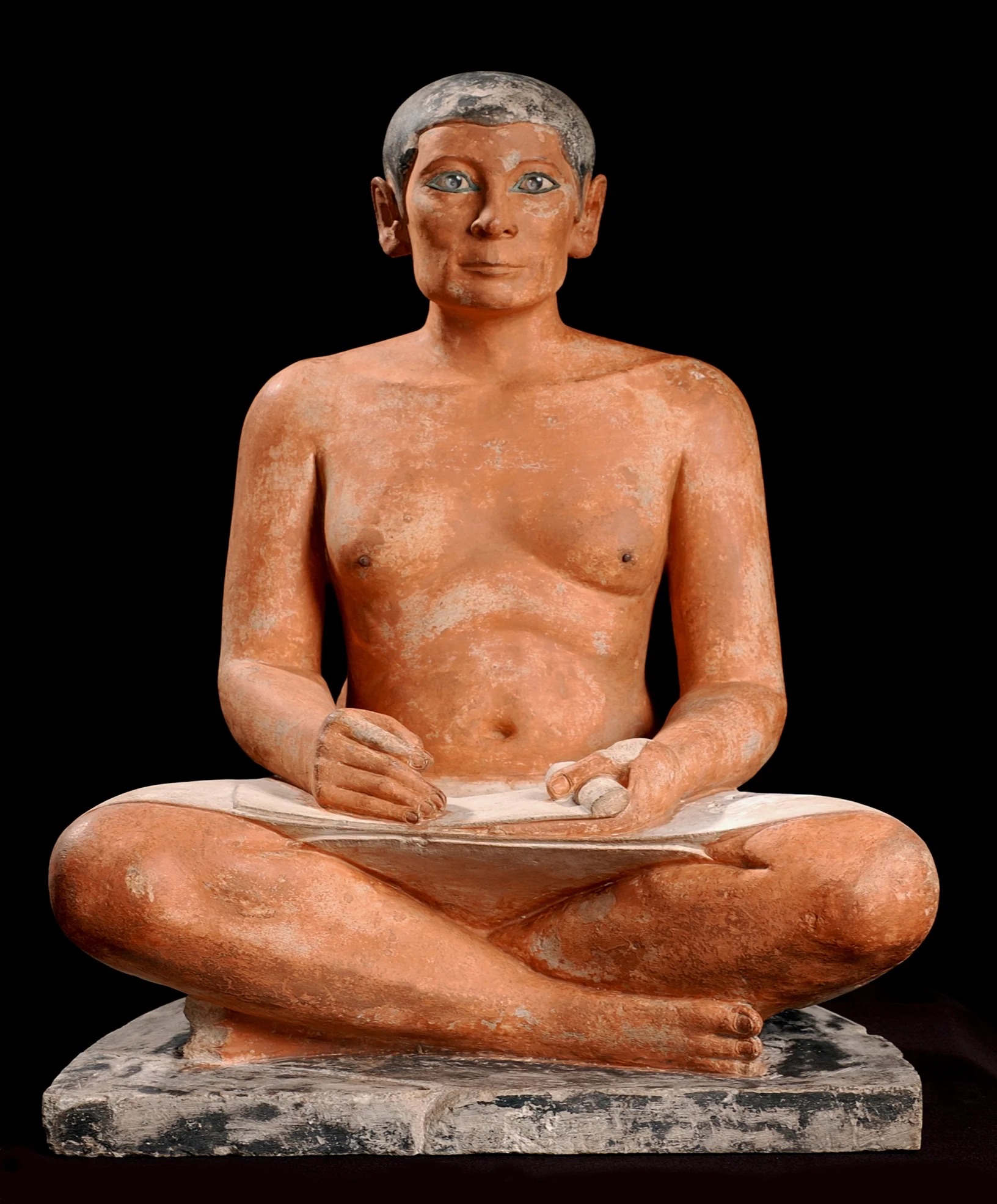
c. 2620-2500 BCE
painted limestone
Saqqara, Egypt
realism of the non-elite
Seated Scribe (15)
c. 2600-2400 BCE
wood inlaid with shell, lapis lazuli, and red limestone
Royal Tombs at Ur, Uruk
peace side and war side, registers
Standard of Ur from the Royal Tombs at Ur (modern Tell el-Muqayyar, Iraq) (16)

c. 2490-2472 BCE
greywacke sculpture with traces of red and black paint
Giza, Egypt
“ka sculpture”, frontalism in 3D form, idealism
King Menkaure & Queen (18)

c. 1792-1750 BCE
basalt
Babylon (modern Iran)
relief section, stele, first written laws
The Code of Hammurabi (19)

c. 1473-1458 BCE
red granite
from Mortuary Temple of Hatshepsut
woman pharoh, destroyed
Kneeling Statue of Hatshepsut (21a)

c. 1353-1335 BCE
limestone relief sculpture
Amarna, Egypt
Amarna style, sunken relief, new religion
Akhenaton, Nerfititi, and Three Daughters (22)

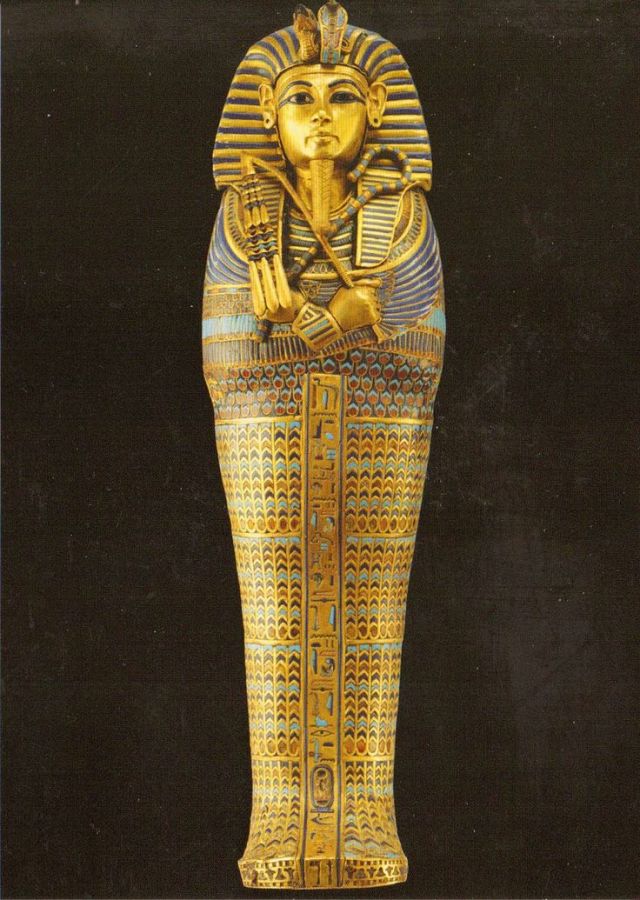
c. 1323 BCE
gold with enamel inlay and semiprecious stones
Valley of the Kings near Luxor, Egypt
boy pharaoh, holds a crook and a flail
Tutankhamun’s Tomb, Innermost Coffin (23)
c. 1275 BCE
painted papyrus scroll
Thebes, Egypt
hieroglyphics, cartouche, frontalism
Last Judgement of Hunefer, from his Tomb (page from the Book of the Dead) (24)

c. 720-705 BCE
alabaster
Dur Sharrukin
Neo-Assyrian, therianthrope, composite
Lamassu from the Citadel of Sargon II, Dur Sharrukin (modern Khorsabad, Iraq) (25)

c. 530 BCE
marble with remnants of paint
Anavysos, Greece
Archaic Greek, kouros, encaustic, idea of youth
Anavysos Kouros (27)

c. 530 BCE
marble with remnants of paint
Athens, Greece
Archaic Greek, kore
Peplos Kore from the Acropolis (28)

c. 520 BCE
painted terracotta
Cerveteri, Italy
Etruscan, upper-half emphasis, women had higher status
Sarcophagus of the Spouses (29)

c. 480-470 BCE
tufa and fresco
Tarquinia, Italy
Etruscan, funeral rite celebration
Tomb of the Trinclinium (32)

c. 4460-450 BCE
red-figure calyx krater
Orvieto, Italy
Classical Greek, Apollo, Artemis, Heracles
Niobides Krater (33)

c. 450-440 BCE
marble
Pompeii, Italy
Classical Greek, Roman marble copy, chi=x, contrapposto, proportions
Doryphoros (Spear-Bearer), Polykleitos (34)

c. 410 BCE
marble and paint
Athens, Greece
Kallimachos, pilasters, stele
Grave Stele of Hegeso (36)

c. 190 BCE
marble
Samothrace, Greece
Hellenistic Greek, involved the elements
Winged Victory of Samothrace (37)

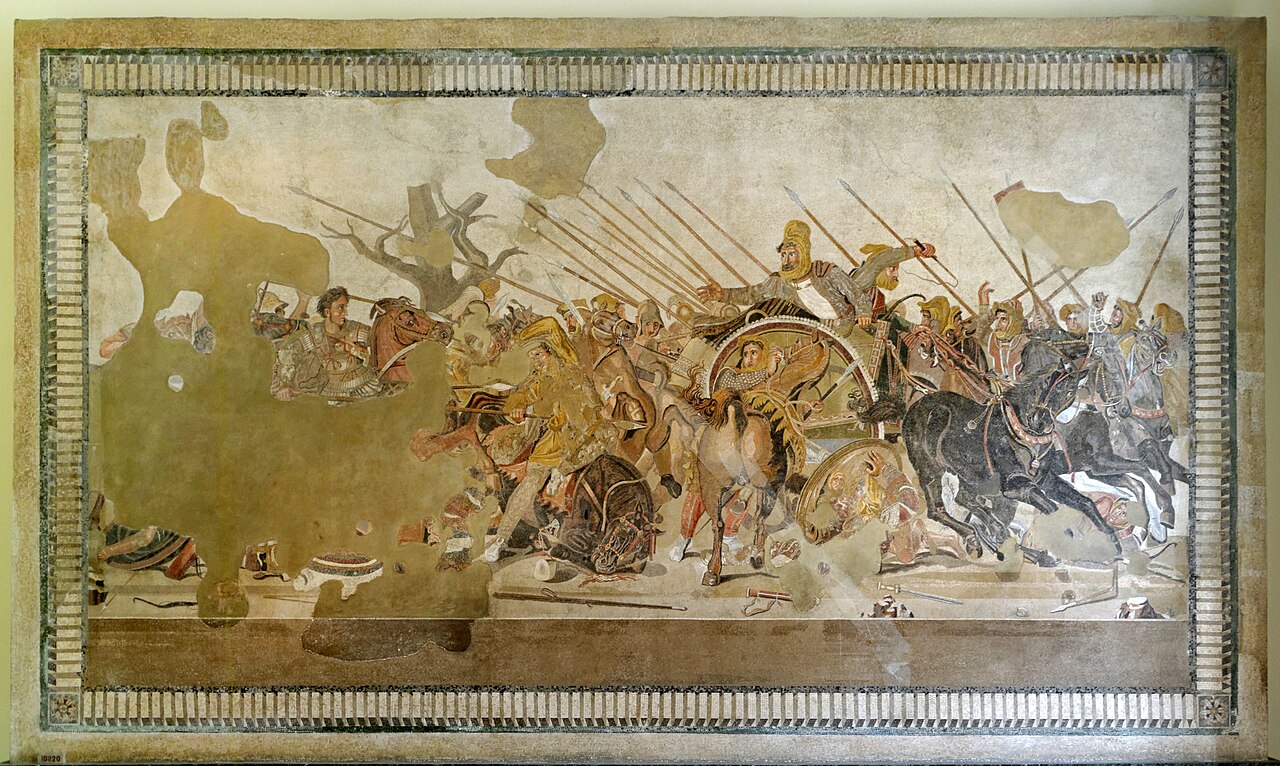
c. 100 BCE
mosaic
Pompeii, Italy
Republican Roman, “Battle of Issus”, showcase of power
Alexander Mosaic from the House of the Faun, Pompeii (40)
c. 100-50 BCE
bronze
Rome, Italy
Hellenistic Greek, realism, emotional
Seated Boxer (41)

c. 75-50 BCE
marble
Ancona, Italy
Republican Roman, verism, patrician class
Head of a Roman Patrician (42)
Veristic Male Portrait (42a)

c. 100-75 BCE
marble, originally colored
Rome, Italy
Roman Empire, idealism, military cuirass
Augustus of Prima Porta (43)

c. 250 CE
marble
Rome, Italy
Late Roman Empire, chaotic, emotive, anti-Classical perspective
Ludovisi Battle Sarcophagus (47)

hierarchical proportion (hieratic scale)
difference in size of figures based on their importance
composite view / twisted perspective
depicting a figure from multiple viewpoints at once
ancient vs prehistoric
difference is literacy, ancient art has written records and prehisotric art is from a time with no written record
cache / hoard
deliberately hidden deposit of valuable objects buried underground
funerary tomb
a work of art that forms, decorates, or is placed inside of a tomb for the dead
cuneiform
ancient Mesopotamian writing system
meander
geometric border motif made from a continuous line
Hellenistic
wild, drama, emotional
323 - 30 BCEs
archaeology
study for past human societies through their remains like tools, ruins and artifacts
registers
horizontal band or row stacked one above another that organizes figures, narrative scenes, or decorative motifs in a work
idealism
depicting subjects according to a mental standard of perfection, harmony and beauty
Arkhenaton / Amarna style
fluid, elongated forms, naturalism, intimate family scenes, and worship of Aten
red figure technique
an ancient Greek pottery style that features red figures set against a black background (reversed original colors)
stele
upright slab of stone or wood used as a monument and decorated
krater
verism