AH3 Exam 1: Chest Trama

0.0(0)
Studied by 11 people
call kaiCall Kai
learnLearn
examPractice Test
spaced repetitionSpaced Repetition
heart puzzleMatch
flashcardsFlashcards
GameKnowt Play
Card Sorting

1/24

encourage image

There's no tags or description

Looks like no tags are added yet.

Last updated 1:10 AM on 9/23/26
Name
Mastery
Learn
Test
Matching
Spaced
Call with Kai
Chat

No analytics yet

Send a link to your students to track their progress

25 Terms

1
New cards

What would a nurse specifically look for when assessing a pt with Chest Tube? (5)

  1. resp assessment

  • crackles?

  • symmetrical chest rise?

  • tracheal deviation?

  • RR?

  • hesitant breaths?

  1. air leak?

  • check seal

  1. subQ air? aka emphysema/crepitus

  2. tidaling present?

  • fluctuation when breathing in water seal chamber

  1. bubbling in water seal chamber?

  • occasional (normal)

  • continuous (BAD = air leak)


2
New cards

What to asses when tidaling’s absent:

What does bubbling in water seal mean?

  1. assess obstruction, clot, kink

  2. bubbling=air leak → pneumothorax


3
New cards

4 mechanisms of blunt chest trauma and define:

  1. acceleration:

  • moving object hits chest (punched)

  • stationary, then gets thrown into motion

    • fall

    • assault


  1. deceleration

  • abrupt stop

    • MVC

  1. shearing

  • tissues/organs get pulled in different directions = tears

    • heart and lungs move at diff speeds even after you are stopped abruptly (MVC)

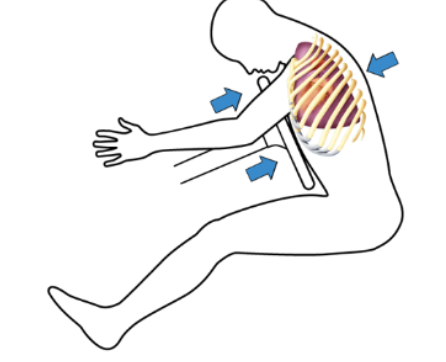
  1. compression

  • DIRECT blow to chest

    • construction

    • crushed


<ol><li><p><span style="color: rgb(234, 196, 196);"><strong>acceleration</strong>:</span></p></li></ol><ul><li><p><span style="color: rgb(237, 202, 202);"><strong>moving </strong></span><span style="color: rgb(23, 17, 17);">object</span><span style="color: rgb(23, 17, 17);"> hits chest (punched)</span></p></li><li><p><span style="color: rgb(237, 202, 202);"><strong>stationary</strong>, </span><span style="color: rgb(14, 11, 11);">then gets</span><span style="color: rgb(237, 202, 202);"> </span><span style="color: rgb(237, 202, 202);"><strong>thrown</strong></span><span style="color: rgb(248, 202, 202);"><strong> </strong></span>into motion </p><ul><li><p>fall</p></li><li><p>assault</p></li></ul></li></ul><p></p><ol start="2"><li><p><span style="color: rgb(40, 100, 164);"><strong>deceleration</strong></span></p></li></ol><ul><li><p><span style="color: rgb(47, 82, 156);"><strong>abrupt </strong></span>stop</p><ul><li><p><span style="color: rgb(17, 11, 11);">MVC</span></p></li></ul></li></ul><ol start="3"><li><p><span style="color: rgb(37, 151, 75);"><strong>shearing</strong></span></p></li></ol><ul><li><p><span style="color: rgb(37, 151, 75);"><strong>tissues/organs</strong></span> get pulled in different directions = tears</p><ul><li><p>heart and lungs move at diff speeds even after you are stopped abruptly (MVC)</p></li></ul></li></ul><ol start="4"><li><p><span style="color: rgb(207, 161, 28);"><strong>compression</strong></span></p></li></ol><ul><li><p><span style="color: rgb(207, 161, 28);"><strong>DIRECT</strong></span><strong> </strong>blow to chest </p><ul><li><p>construction</p></li><li><p>crushed</p></li></ul></li></ul><p></p>
4
New cards

Most common penetrating chest trauma: 2

  1. GSW

  • high velocity

  1. stab wounds

  • low velocity


<ol><li><p><span style="color: rgb(219, 96, 96);"><strong>GSW</strong></span></p></li></ol><ul><li><p><span style="color: rgb(219, 96, 96);">high velocity</span></p></li></ul><ol start="2"><li><p><span style="color: rgb(78, 22, 184);"><strong>stab </strong>wounds</span></p></li></ol><ul><li><p>low velocity</p></li></ul><p></p>
5
New cards

What are important initial assessments of chest trauma: (7)

  1. How injury occurred

  2. Time passed since injury

  3. airway, thorax, neck veins

  4. breathing effort, stridor, drooling

  5. tracheal shift

  6. accessory muscles use

  7. symmetrical chest rise and fall


6
New cards

8 Complications of Chest Trauma:

  1. sternal and rib fractures

  2. flail chest

  3. closed pneumothorax

  4. open pneumothorax

  5. tension pneumothorax

  6. hemothorax

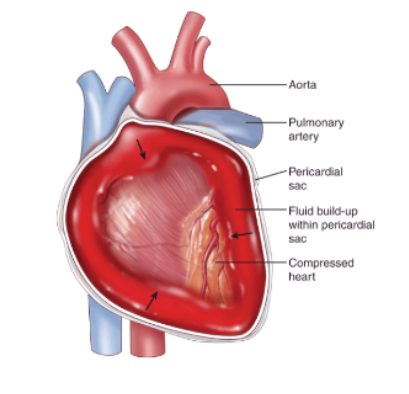
  7. cardiac tamponade

  8. pulmonary contusions


7
New cards

Sternal and Rib fx

  • tx

  • organ involvement

  • s/s


  1. usually benign, treated conservational (rest, ice, pain meds, heals on its own)

  2. fx lower ribs associated w. spleen and liver lacerations

  3. diminished ventilation, atelectasis, progress to ARF

ex: MVC complication from direct blow to sternum from steering wheel


8
New cards

Sternal/rib fracture findings: (6)

  1. Overlying tenderness

  • soft tissue around injured bone

  1. ecchymosis

  2. crepitus

  3. point tenderness

  • directly over fractured bone

  1. muscle spasms

  2. punctured lung


<ol><li><p><span style="color: rgb(216, 111, 111);"><strong>Overlying </strong></span>tenderness</p></li></ol><ul><li><p>soft tissue around injured bone </p></li></ul><ol start="2"><li><p><span style="color: rgb(151, 142, 37);"><strong>ecchymosis</strong></span></p></li><li><p><span style="color: rgb(50, 154, 37);"><strong>crepitus</strong></span></p></li><li><p><span style="color: rgb(55, 135, 188);"><strong>point </strong></span>tenderness</p></li></ol><ul><li><p>directly over fractured bone</p></li></ul><ol start="5"><li><p><span style="color: rgb(61, 41, 188);"><strong>muscle spasms</strong></span></p></li><li><p><span style="color: rgb(155, 22, 204);"><strong>punctured lung </strong></span></p></li></ol><p></p>
9
New cards

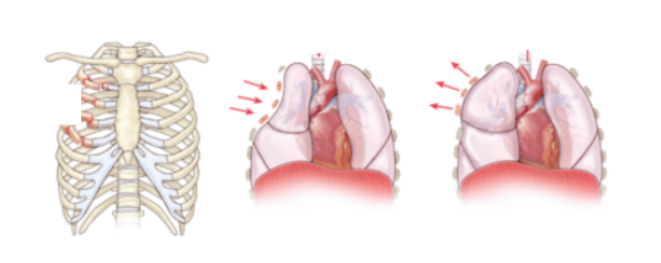
Flail chest findings: (3)

  1. 3+ adjacent ribs break in @ least 2+ places each

  • free-floating segment of chest wall

  1. HALLMARK: Paradoxical mvmt

  2. HALLMARK: MEDIASTINUM shifts AFFECTED side


<ol><li><p><span style="color: rgb(51, 154, 195);"><strong>3+ adjacent ribs break in @ least 2+ places</strong></span><strong> </strong>each </p></li></ol><ul><li><p><strong>free-floating</strong> segment of chest wall</p></li></ul><ol start="2"><li><p><strong>HALLMARK: </strong><span style="color: rgb(60, 144, 44);"><strong>Paradoxical </strong></span><strong>mvmt</strong></p></li><li><p><strong>HALLMARK: </strong><span style="color: rgb(213, 45, 144);"><strong>MEDIASTINUM </strong>shifts <strong>AFFECTED </strong>side</span></p></li></ol><p></p>
10
New cards

Define paradoxical mvmt:

part of the chest moves OPPOSITE to the normal mvmt of the rest of the chest during breathing

→ normal:

  • inhale: chest moves out

  • exhale: chest retracts


→ bad:

  • inhale: injured part moves IN

  • exhale: injured part moves OUT


<p>part of the chest moves <span style="color: rgb(201, 25, 25);"><strong>OPPOSITE </strong></span><strong>to the normal mvmt of the rest of the chest during breathing</strong></p><p>→ <span style="color: rgb(85, 155, 58);"><strong>normal</strong>:</span></p><ul><li><p><span style="color: rgb(85, 155, 58);"><strong>inhale</strong>: chest moves <strong>out</strong></span></p></li><li><p><span style="color: rgb(85, 155, 58);"><strong>exhale</strong>: chest <strong>retracts</strong></span></p></li></ul><p></p><p>→ <span style="color: rgb(193, 46, 46);"><strong>bad</strong>:</span></p><ul><li><p><span style="color: rgb(193, 46, 46);"><strong>inhale</strong>: injured part moves <strong>IN</strong></span></p></li><li><p><span style="color: rgb(193, 46, 46);"><strong>exhale</strong>: injured part moves <strong>OUT</strong></span></p></li></ul><p></p>
11
New cards

Closed pneumo findings: (5)

  1. air escapes from laceration in lung and enters pleural space

  2. sudden pleuritic CP

  3. absent breath sounds on AFFECTED side

  4. ⬇chest expansion

  5. HYPERresonance (air)


<ol><li><p>air escapes from <strong>laceration </strong>in lung and <span style="color: rgb(32, 163, 194);"><strong>enters pleural space</strong></span></p></li><li><p>sudden <span style="color: rgb(233, 146, 146);"><strong>pleuritic CP</strong></span></p></li><li><p><strong>absent breath sounds on </strong><span style="color: rgb(29, 135, 40);"><strong>AFFECTED</strong></span> side</p></li><li><p><span style="color: rgb(177, 69, 206);"><span data-name="arrow_down" data-type="emoji">⬇</span><strong>chest </strong>expansion</span></p></li><li><p><span style="color: rgb(170, 175, 29);"><strong>HYPERresonance</strong></span><strong> </strong>(air)</p></li></ol><p></p>
12
New cards

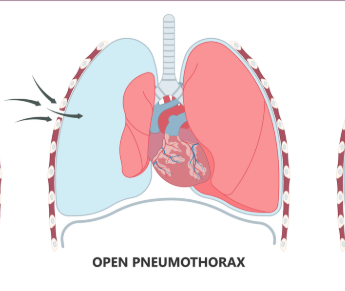
Open pneumo: (3)

  1. air enters and exits (less dangerous)

  2. hallmark: sucking/whistling sound

  3. 3-sided occlusive dressing


<ol><li><p>air <span style="color: rgb(109, 130, 241);"><strong>enters and exits</strong></span> (less dangerous)</p></li><li><p><span style="color: rgb(2, 2, 2);"><strong>hallmark</strong></span><span style="color: rgb(65, 157, 29);"><strong>: sucking</strong>/whistling sound</span></p></li><li><p><span style="color: rgb(225, 119, 226);"><strong>3-sided occlusive dressing</strong></span></p></li></ol><p></p>
13
New cards

Tension pneumo findings: (2)

  1. air enters pleural space from injured lung gets TRAPPED!!

  2. Hallmark: each breath ⬆thoracic pressure, shifting TRACHEA towards UNaffected side!
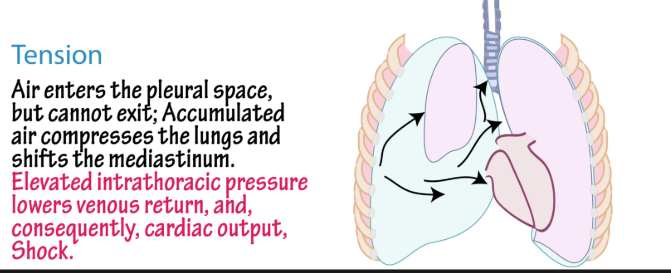

<ol><li><p>air enters pleural space from injured lung gets <span style="color: rgb(213, 24, 24);"><strong>TRAPPED</strong></span>!!</p></li><li><p><strong>Hallmark</strong>: each breath <span data-name="arrow_up" data-type="emoji">⬆</span>thoracic pressure, <span style="color: rgb(90, 170, 237);"><strong>shifting TRACHEA towards UNaffected side</strong></span>!</p></li></ol><p></p>
14
New cards

If chest tube not available for tension pneumo, what do you do?

  • Needle decompression!!

  • 14/16G (longer better)

    • just over top of 3rd rib, (2nd intercostal space), midclavicular line


<ul><li><p>Needle decompression!!</p></li><li><p><span style="color: rgb(229, 25, 25);"><strong>14/16G</strong></span> (longer better)</p><ul><li><p>just over top of <strong>3rd rib</strong>, (<span style="color: rgb(43, 178, 121);"><strong>2nd intercostal space), midclavicular line</strong></span></p></li></ul></li></ul><p></p>
15
New cards

hemodynamic compromise in Hemothorax: (3)

  1. drainage >1.5L considered massive and pt becomes hemodynamically unstable

  2. >0.4 L = may become symptomatic

  3. tx: thoracotomy, transfusion


<ol><li><p><span style="color: rgb(38, 79, 204);"><strong>drainage &gt;1.5</strong></span><strong>L</strong> considered <strong>massive </strong>and pt becomes hemodynamically unstable</p></li><li><p><span style="color: rgb(10, 170, 116);"><strong>&gt;0.4 </strong></span><strong>L </strong>= may become symptomatic</p></li><li><p>tx: <span style="color: rgb(181, 103, 60);"><strong>thoracotomy, transfusion</strong></span></p></li></ol><p></p>
16
New cards

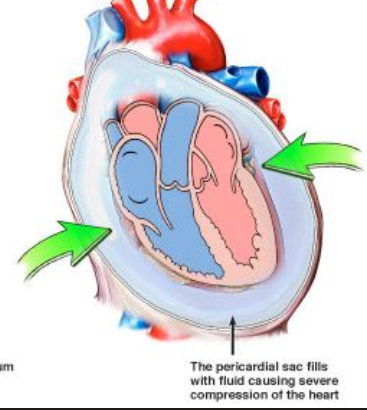
Cardiac tamponade hallmark:

Becks Triad!!!!

  1. hypotension (narrowed pulse pressure)

  2. muffled heart sounds

  3. JVD


<p><strong>Becks </strong>Triad!!!!</p><ol><li><p><span style="color: rgb(144, 83, 214);"><strong>hypotension</strong> (narrowed pulse pressure)</span></p></li><li><p><span style="color: rgb(144, 83, 214);"><strong>muffled heart sounds</strong></span></p></li><li><p><span style="color: rgb(144, 83, 214);"><strong>JVD</strong></span></p></li></ol><p></p>
17
New cards

Pulmonary contusion findings: (8)

  1. bruised lung

  2. hypoxemia

  3. hemoptysis

  4. crackles

  5. ecchymosis

  6. rib fx

  7. Alkalosis: Hyperventilation (⬇PaCO2)

  8. MINIMIZE IV fluids!!!


18
New cards
term image

Penetrating

  • classified by velocity

    • appearance may be deceptive

    • extent of damage can be wide spread


19
New cards
term image

Blunt (deceleration/shearing)

  • Sudden decrease in rate/speed/ velocity

  • MVC


20
New cards
term image

rib/sternal fx

  • 3+ adjacent ribs break in 2+ sites (free floating ribs)

  • chest wall unstable

    • MEDIASTINUM shifts to AFFECTED side

    • PARADOXICAL mvmt


21
New cards
term image

Open pneumo

  • chest wall large enough to allow air to pass freely in/out of thoracic cavity

  • “sucking” sound


22
New cards
term image

Tension pneumo

  • air enters pleural space, TRAPPED

  • ⬆thoracic pressure = mediastinum + TRACHEA shifts to UNAFFECTED side

23
New cards
term image

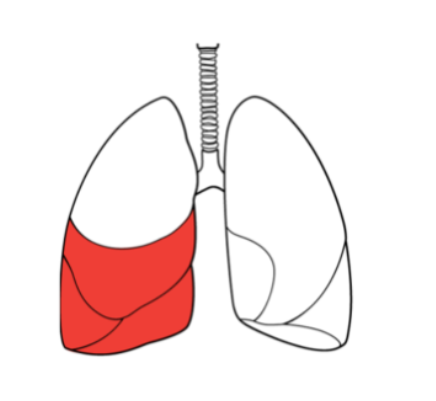
Hemothorax

  • rib fractures

  • tx w/ thoracostomy (CT) and autotransfusion

  • Hemodynamic compromise

    • > 1.5 L = massive hemorrhage

    • < 0.4 L = can be symptomatic


24
New cards
term image

Cardiac tamponade

  • fluid/air/blood in pericardial sac

  • Becks triad!!!!

  • will cause obstructive shock


25
New cards
term image

Pulmonary contusions

  • lungs absorb energy from trauma

  • capillary blood leaks into lung = edema and inflammation

  • Hemoptysis, ecchymosis, ⬇PaCO2

  • progress @ 4-6hr; 24-48hr to fully develop