(MMI) Lab Module 2: Aseptic Transfers
 Call Kai
 Learn
Learn Practice Test
 Spaced Repetition
 Match
Match Flashcards
 Knowt Play
1/33

There's no tags or description
Looks like no tags are added yet.
Name | Mastery | Learn | Test | Matching | Spaced | Call with Kai | Chat |
|---|
No analytics yet
Send a link to your students to track their progress
34 Terms
Culture (Source)
Medium containing live microorganisms
Two types:
Pure culture: culture containing only one species of microbe
Mixed culture: culture containing two or more species of microbe
Medium (Destination)
•Acts as a base for microorganisms to grow
•Supplies microorganisms with nutrients needed to grow
Subculture
transfer of microbe/s from one medium to another
Aseptic and aseptic technique
free of contamination, preventing contamination by carefully controlling your movements

Agar
solidifying agent in a medium (Extracted from seaweed)
•Not degraded by bacteria
•NO nutritional value

Liquid/Broth
lacks solidifying agent; 0% agar

Semi-solid
has a small amount of agar; < 1% agar

Solid
has enough agar to maintain a solid shape; > 1%

Allows the growth of most bacteria with no inhibition…
•Tryptic Soy Broth (TSB)
•Tryptic Soy Agar (TSA)
•Tryptic Soy Agar Slants (TSA/)

Added nutrients to help grow “picky” organisms
•TSA with 5% Sheep Blood (SBA)
Inoculation (loop with large amount(
the purposeful aseptic transfer of microbes to a medium

Bunsen burner
•Creates an aseptic environment by using heat, in the form of fire
•Used to sterilize inoculating loops and needles

Autoclave
•Creates an aseptic environment by using heat, in the form of steam, and pressure

•Uniform Fine Turbidity
the medium is evenly turbid, or cloudy, throughout
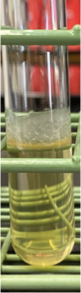
•Pellicle
a film or membrane that forms on the top of the broth at the interface between oxygen and liquid
(•Many aerobic bacteria will form pellicles as they require oxygen for metabolism)

•Flocculent
growth in clumps that may or may not be suspended in the broth

Sediment
growth that is localized to the bottom of the tube
Autotrophs
•Require the least assistance from the environment to survive
•Need CO2 or other simple carbon source
Heterotrophs
•Require pre-formed organic compounds from their environment, Most bacteria are some form of chemoheterotroph
•Fastidious
require a heavy supply of ready-made organic compounds from the environment to survive ("'picky eaters)
•Non-fastidious
still require ready-made organic compounds, but not as much
Think of non-fastidiousorganisms as NOT “picky eaters
•Defined Media
have exact proportions of each ingredient defined
•Usually chemical names or formulas
•Undefined Media
have an ingredient, or multiple ingredients, in which the exact proportions are not clearly defined
•Usually things like peptones, calf brain/heart, pancreatic digest, etc.
(SUPPORTS BOTH NON AND FASTIDIOUS)

Media for Experiment Procedure 2-3
•Brain-Heart Infusion Broth (BHIB): very nutritious; many sources for nutrients
•Glucose Salts Broth (GSB): only glucose & few nitrogen sources for nutrition
•Nutrient Broth (NB): good all-purpose nutrition; some sources of nutrients
Fluid thioglycollate broth Abilities
Produces an oxygen gradient to support the growth of various microbes
Utilizes two different means to limit the diffusion of oxygen throughout the medium.
Fluid thioglycollate broth (physical means)
Uses a small percentage of agar is added to the medium to slow the rate of oxygen diffusion
Fluid thioglycollate broth (chemical means)
sodium thioglycollate and L-cysteine are added to reduce oxygen to water

What indicator does the Fluid Thioglycollate Broth to determine oxygenation?
•Resazurin is a redox indicator (O2 indicator) that is a faint pink color when oxidized (O2 present) and colorless when reduced (no O2 present)

•Aerotolerant anaerobe
grows in the presence of oxygen but does not use it metabolically

•Facultative anaerobe
grows in the presence and absence of oxygen due to its ability to utilize both fermentation and respiration

•Obligate anaerobe
requires the complete absence of oxygen; oxygen is lethal

•Obligate aerobe
requires oxygen to survive and grow
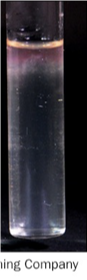
•Microaerophile
requires oxygen but can not survive atmospheric levels of it
FTB (Fluid thioglycollate broth) What is it and what is it used for?
Fluid Thioglycollate Medium (FTM) is an enriched differential broth used primarily to determine the oxygen requirements (aerotolerance) of microorganisms.