Rosh BOOST: Women's Health
 Call Kai
 Learn
 Practice Test
 Spaced Repetition
 Match
 Flashcards
 Knowt Play
1/119

There's no tags or description
Looks like no tags are added yet.
120 Terms
Inhibition of bacterial cell wall synthesis and inhibition of protein synthesis by binding with the 50S ribosomal subunit
A 39-year-old G4P3 woman presents to the clinic for her first prenatal visit. She has no concerns today but reports having unprotected intercourse with several different men over the last month. As part of her routine prenatal labs, you collect cervical cultures testing for Neisseria gonorrhoeae and Chlamydia trachomatis. The culture is positive for N. gonorrhoeae, but the results for C. trachomatis are still unknown. The patient has no drug allergies. What are the mechanisms of action of the two antibiotics you will prescribe?
AInhibition of bacterial cell wall synthesis and damage to bacterial DNA
BInhibition of bacterial cell wall synthesis and inhibition of protein synthesis by binding with the 30S ribosomal subunit
CInhibition of bacterial cell wall synthesis and inhibition of protein synthesis by binding with the 50S ribosomal subunit
DInhibition of protein synthesis by binding with the 50S ribosomal unit and damage to bacterial DNA
photoprotection
A 33-year-old woman presents to the office for a routine prenatal visit. She is 24 weeks pregnant and is concerned about skin changes in pregnancy. With her first pregnancy, she developed hyperpigmentation on her mid to lateral cheeks. Which of the following is an appropriate recommendation for her condition?
AAdapalene
BIntense pulsed light laser
CPhotoprotection
DTretinoin
threatened abortion
A 19-year-old woman who is known to be 10 weeks pregnant presents with concerns about her pregnancy. She has had some vaginal bleeding and suprapubic cramping for the last three hours. Physical exam shows that the cervix is not dilated. Which of the following is the most likely diagnosis?
AComplete abortion
BIncomplete abortion
CInevitable abortion
DThreatened abortion
serum total testosterone
An 18-year-old woman presents to the clinic for irregular menstrual cycles, acne, and excessive growth of facial hair for several years. She has a history of type 2 diabetes mellitus, and her current medications include metformin 500 mg by mouth twice daily. Vital signs include a heart rate of 74 bpm, blood pressure of 118/74 mm Hg, respiratory rate of 16/minute, oxygen saturation of 98% on room air, and a temperature of 98.6°F. Physical examination reveals dark hair above her upper lip and under her chin, a moderate amount of dark hair on her chest and back, severe facial acne, and a thick, dark line across her posterior neck. Which of the following laboratory tests will be abnormal in the suspected diagnosis?
AInsulin-like growth factor 1
BSerum prolactin
CSerum total testosterone
DThyroid-stimulating hormone
reduced risk of osteoporotic fracture
A 52-year-old woman presents to the office to discuss worsening vaginal dryness, dyspareunia, and intolerable hot flashes. She reports feeling flushed and sweating profusely 10-15 times a day and these symptoms are affecting her ability to perform her work and attend social functions. Additionally, she is experiencing stress in her marriage due to a reduced amount of sexual activity due to pain with intercourse. Because of these things, she feels more anxious, depressed, and frustrated. She reports no family history of gynecologic cancer or breast cancer. She takes a daily multivitamin, does not use tobacco products, and drinks one glass of wine per week. Surgical history includes a hysterectomy at 46 years of age for benign leiomyomata. Her last mammogram and Pap smear were 7 months ago and were normal. Vital signs include a heart rate of 78 bpm, blood pressure of 120/81 mm Hg, respiratory rate of 14/minute, oxygen saturation of 98% on room air, and temperature of 98.5°F. Physical exam is normal. Recent lab findings include FSH of 35 mIU/mL, prolactin of 8 ng/mL, and TSH of 4.5 µU/mL. During her exam, she begins sweating profusely for 3-4 minutes on two separate occasions. Which of the following is a benefit of the best initial therapeutic option for the treatment of the suspected disorder?
AReduced risk of breast cancer
BReduced risk of endometrial cancer
CReduced risk of osteoporotic fracture
DReduced risk of stroke
insulin
A 29-year-old G3P2 woman presents to the clinic for a routine prenatal visit at 30 weeks gestational age. The patient had a two-step oral glucose tolerance test at 28 weeks gestation. Her glucose was 145 mg/dL after the first oral test, and she had elevated glucose readings at three of the four time points during the second oral test. Vital signs include a BP of 120/80 mm Hg, HR of 80 bpm, RR of 20/min, T of 98.6°F, and SpO2 of 99% on room air. The patient appears well on physical examination, with a regular heart rate and rhythm. Since her diagnosis, the patient has eliminated sugar-sweetened beverages and increased her aerobic exercise. Her fasting glucose levels have been approximately 130 mg/dL, and her 2-hour postprandial glucose measurements have been approximately 160 mg/dL. What is the recommended next step in her treatment?
AContinue with diet and exercise
BGlyburide
CInsulin
DMetformin
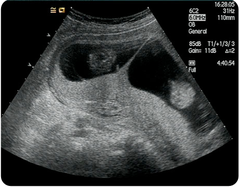
sudden onset of pelvic pain with nausea
**ovarian torsion
A 32-year-old woman presents to the emergency department with lower abdominal pain. She has a medical history of nephrolithiasis, for which she is not on any medications, and an abdominal surgical history of a cholecystectomy. Vital signs include a BP of 110/70 mm Hg, HR of 105 bpm, RR of 22/min, and SpO2 of 99% on room air. The patient appears uncomfortable on physical exam. She has bowel sounds in all four quadrants and has right lower abdominal tenderness.
White blood cell count: 10,000/µL
Lipase: 56 U/L
Total bilirubin: 1.0 mg/dL
Aspartate aminotransferase: 30 U/L
Alanine aminotransferase: 37 U/L
Glucose: 85 mg/dL
Urinalysis: trace leukocyte esterase and negative nitrites
The patient's pelvic ultrasound is pictured above. Which of the following is the typical presentation of the suspected diagnosis?
AAbrupt onset of pelvic pain after a missed menstrual cycle
BGradual onset of pelvic pain progressing over several days with associated fever and chills
CPeriumbilical pain with subsequent migration to the right lower quadrant
DSudden onset of pelvic pain with nausea

valacyclovir
A 25-year-old woman presents to the clinic with painful genital lesions for the past 3 days. The patient reports she has not previously had similar lesions and states she began having sexual intercourse with a new sexual partner a month ago. The patient has a medical history of seizures, for which she takes levetiracetam. Vital signs include a BP of 120/80 mm Hg, HR of 80 bpm, RR of 20/min, T of 98.6°F, and SpO2 of 99% on room air. Physical examination reveals the lesions shown above and tender inguinal lymphadenopathy. Which of the following is the recommended treatment?
AImiquimod
BPenicillin G
CTrichloroacetic acid
DValacyclovir

decreased risk of endometrial cancer
**breastfeeding
A 30-year-old G1P1 woman presents for her first postnatal appointment. She delivered a healthy baby boy 3 weeks ago. The vaginal delivery was uncomplicated, and both mother and baby were doing well at the time of discharge. Since she was discharged, she completed cord blood donation, underwent copper IUD insertion, switched to an organic prenatal vitamin, successfully established breastfeeding, completely eliminated formula use, and began seeing a mental health counselor. Which of the following is an expected long-term effect of her decisions?
ADecreased risk of endometrial cancer
BDecreased risk of osteoporosis
CIncreased risk of diabetes mellitus
DIncreased risk of ovarian cancer
Dicloxacillin 500 mg four times daily and continue breastfeeding
**lactational mastitis
A 25-year-old woman who is 5 weeks postpartum after giving birth to her first baby presents to the clinic with left-sided breast pain for the past 3 days. She has no significant medical history. She states that she has been having difficulty with breastfeeding and has had some trauma to the left nipple. Now the breast is red, swollen, and painful, and she has started to notice fever and chills since last night. She has been taking ibuprofen and using cool compresses, which results in temporary improvement of symptoms, but she feels that the symptoms are worsening overall. Vital signs include a heart rate of 88 bpm, blood pressure of 122/78 mm Hg, respiratory rate of 20/minute, oxygen saturation of 100% on room air, and temperature of 101.0°F. Physical examination reveals erythema and tenderness on the lateral side of the left breast. The left breast appears slightly larger than the right, and mild left axillary lymphadenopathy is noted without fluctuance. Which of the following is the most appropriate next step in management?
AAmoxicillin 500 mg twice daily and discontinue breastfeeding on the left side
BCiprofloxacin 500 mg twice daily and continue breastfeeding on the right side
CClindamycin 450 mg three times daily and discontinue breastfeeding
DDicloxacillin 500 mg four times daily and continue breastfeeding
administer magnesium sulfate immediately and proceed for prompt cesarean delivery
**eclampsia
A 36-year-old G2P1 woman presents to the emergency department by ambulance at 35 weeks gestational age after having a seizure. The patient reports that she had a headache and intermittent blurred vision over the past 2 days. The patient has had prenatal care during this pregnancy and has been diagnosed with gestational hypertension but is not on any pharmacologic therapy. Vital signs include a BP of 152/103 mm Hg, HR of 108 bpm, RR of 24/min, T of 98.6°F, and SpO2 of 95% on room air. Physical examination reveals an alert and oriented patient who is no longer seizing. She has no focal neurological deficits. Her abdomen is gravid but nontender. Bedside ultrasound shows no sign of placental abruption or previa, and the fetus is in a breech position. Which of the following is the recommended treatment for this patient?
AAdminister magnesium sulfate immediately and perform induction for trial of labor
BAdminister magnesium sulfate immediately and proceed for prompt cesarean delivery
CPerform induction and administer magnesium sulfate if the patient begins to seize again
DProceed for prompt cesarean delivery and administer magnesium sulfate after delivery
chondrodysplasia
A 24-year-old woman with a history of deep vein thrombosis of the left femoral vein presents to the clinic for a prepregnancy planning visit. Current medications include rivaroxaban and a prenatal vitamin. She has some bleeding gingiva while brushing her teeth and increased bruising. She has not had a bleeding event significant enough to warrant emergency evaluation while taking rivaroxaban. Vital signs today include a heart rate of 84 bpm, blood pressure of 120/80 mm Hg, respiratory rate of 16/minute, oxygen saturation of 98% on room air, and temperature of 98.0°F. Physical examination reveals a regular rate and rhythm, no stridor or signs of respiratory distress, no abdominal tenderness to palpation, and no active bleeding. You discontinue her rivaroxaban and initiate subcutaneous low-molecular-weight heparin because she is planning pregnancy. She inquires about using warfarin instead, as she would like to avoid injections. Which of the following is a fetal side effect of warfarin administration during pregnancy?
AChondrodysplasia
BEbstein anomaly
CEnamel hypoplasia
DNeural tube defects
breastfeeding
A 35-year-old G1P1 woman presents for her annual examination with her gynecologist. She is 9 months postpartum and stopped breastfeeding 3 months ago. She is concerned about potential breast cancer, as she has noticed a lump intermittently over the last several months in her right breast. She describes it as mildly painful and without erythema, skin changes, or nipple discharge. She has no associated fever, chills, chest pain, chest wall tenderness, enlarged lymph nodes, or unintentional weight loss. Vital signs are a temperature of 98.2°F, heart rate of 78 bpm, blood pressure of 120/76 mm Hg, respiratory rate of 12 breaths/min, and oxygen saturation of 98% on room air. Breast exam reveals no erythema, nipple retraction, or discharge, with small nontender lumps in the upper-inner quadrant. Which of the following factors is associated with decreased risk of breast cancer?
ABreastfeeding
BFirst full-term pregnancy at > 35 years old
CMenarche at age 11
DNulliparity
diabetes screening
A 34-year-old pregnant woman with a medical history of obesity presents to her obstetric and gynecologic clinician for an initial prenatal visit. Obstetric history is G2P1A0 with previous pregnancy and delivery complicated by macrosomia and shoulder dystocia. Her last menstrual period was 8 weeks ago. Vital signs today include a heart rate of 78 bpm, blood pressure of 118/74 mm Hg, respiratory rate of 16/minute, oxygen saturation of 98% on room air, and temperature of 98.2°F. Physical examination reveals a regular rate and rhythm, no stridor or signs of respiratory distress, and no abdominal tenderness to palpation. Current medications include a prenatal vitamin and hydrochlorothiazide. Which diagnostic study will be of special importance in this patient to reduce the risk of the perinatal complications that she experienced in her previous pregnancy?
ADiabetes screening
BHIV antigen/antibody immunoassay
CThyroid-stimulating hormone
DUrine culture
9-12 weeks
A 27-year-old woman presents to the obstetrics clinic after having a positive pregnancy test at home 1 week ago. Her menstrual cycles are irregular, and she is unsure of the date of her most recent period. Her vital signs are a blood pressure of 110/70 mm Hg, a heart rate of 92 bpm, a respiratory rate of 16/min, an oxygen saturation of 98%, and a temperature of 97.8°F. A physical exam reveals lungs clear to auscultation, and her cardiac exam reveals a regular rate and rhythm with no murmurs. Bowel sounds are noted in all four quadrants, and the abdomen is nontender to palpation. The remainder of the exam is within normal limits. A handheld transabdominal Doppler is used to evaluate for fetal heart tones, which are noted to be 168 bpm. A quantitative human chorionic gonadotropin level is 80,000 mIU/mL. What is the estimated gestational age of the patient?
A3 weeks
B4.5-5 weeks
C5-6 weeks
D9-12 weeks
premature separation of the placenta from the uterus
**placental abruption
A 34-year-old G2P1 woman at 30 weeks gestation presents to the emergency department with sudden-onset vaginal bleeding, abdominal pain, and abdominal cramping. There was no trauma or precipitating event prior to the onset of symptoms. She has a history of chronic hypertension and takes 200 mg labetalol orally twice daily, but she reports she frequently forgets to take it. Her previous pregnancy was uncomplicated, and she delivered vaginally at 39 weeks gestation. Vital signs include a heart rate of 116 bpm, blood pressure of 105/60 mm Hg, respiratory rate of 19/minute, oxygen saturation of 98% on room air, and a temperature of 98.5°F. Physical examination reveals tenderness over the lower abdomen, a firm uterus, and a moderate amount of bright red vaginal blood. Which of the following leads to the suspected diagnosis?
AComplete disruption of all uterine layers
BPartial detachment of the chorionic membranes from the uterine wall
CPlacenta partially covering the cervical os
DPremature separation of the placenta from the uterus
the day menses begins
A 37-year-old G3P0 woman presents for an infertility evaluation. She has been trying to conceive for 3 years. She reports three prior positive pregnancy tests, but she experienced spontaneous abortions between 6 and 8 weeks gestation with all three. She reports no significant gynecologic history, including pelvic inflammatory disease, uterine fibroids, ovarian cysts, gynecologic or abdominal surgeries, contraceptive device use, and uterine anomalies. She currently takes a prenatal multivitamin and no other medications. She does not use alcohol or tobacco products. While she has never personally pursued an infertility evaluation, she reports family members who required in vitro fertilization to conceive, so she is somewhat familiar with the process. She asks to better understand normal menstrual physiology and the role different hormones play. When does the follicular phase of the menstrual cycle begin?
AThe day before the luteinizing hormone surge
BThe day menses begins
CThe day menses ends
DThe day of ovulation
breast abscess
A 22-year-old woman presents to the emergency department with localized pain on her right breast that developed over the past 2 days. The patient reports associated malaise. She is 5 months postpartum and is breastfeeding. Her last menstrual period was about 25 days ago, and she is expecting to start her next menstrual cycle within a couple of days. Vital signs include a BP of 120/80 mm Hg, HR of 125 bpm, RR of 20/min, T of 101.6°F, and SpO2 of 99% on room air. Physical examination reveals an erythematous, tender, and fluctuant mass in the upper and outer quadrant of her right breast. The remainder of the examination of her right and left breasts is unremarkable, with no erythema or tenderness. Which of the following is the most likely diagnosis?
ABreast abscess
BCyclic breast pain
CFibroadenoma
DMastitis
administer antibiotics
**chorioamnionitis
A 32-year-old G2P1 woman at 37 weeks gestation presents to the women's health center after she felt some fluid leaking from her vagina for the past 2 days. She explains that she has also been experiencing pain in the pelvic region. Her vital signs are a blood pressure of 126/86 mm Hg, a heart rate of 113 bpm, a respiratory rate of 18/min, an oxygen saturation of 95%, and a temperature of 102.8°F. On physical examination, her lungs are clear to auscultation, and a cardiac exam reveals a regular rhythm with tachycardia and no murmurs. Tenderness to palpation is appreciated over the lower abdomen. On pelvic examination, fluid leakage is noted from the cervical os, and her cervix is 8 cm dilated. Doppler examination reveals a fetal heart rate of 175 bpm. Laboratory results reveal a WBC of 15,500/µL. What is the most important step in management?
AAdminister antibiotics
BAdminister antipyretics
CCesarean section
DInitiate oxytocin
Repeat blood pressure measurement of 145/92 mm Hg 4 hours later with 2+ protein on urine dipstick
A 27-year-old G1P0 woman presents to the clinic for a routine prenatal visit at 36 weeks gestational age. The patient has no history of hypertension and has previously had normal blood pressure measurements during this pregnancy. Vital signs include a BP of 158/107 mm Hg, HR of 80 bpm, RR of 20/min, T of 98.6°F, and SpO2 of 99% on room air. Physical examination findings include a regular heart rate and rhythm, soft and nontender gravid abdomen, no peripheral edema, and no neurological deficits. Which of the following additional findings would confirm a diagnosis of preeclampsia?
ARepeat blood pressure measurement of 135/84 mm Hg 4 hours later and laboratory evidence of elevated liver transaminases
BRepeat blood pressure measurement of 145/92 mm Hg 4 hours later with 2+ protein on urine dipstick
CRepeat blood pressure measurement of 152/108 mm Hg 4 hours later with the patient postictal from seizure
DRepeat blood pressure measurement of 155/105 mm Hg 4 hours later with no new symptoms or laboratory abnormalities
failure to progress during labor
A 32-year-old nulliparous woman has been in labor for 22 hours. Vital signs are T 97.3°F oral, HR 98 bpm, BP 124/84 mm Hg, RR 20/min, and SpO2 99% on room air. On pelvic exam, the cervix is dilated 6 cm with 50% effacement. The fetal heart rate tracing is shown above. On ultrasound, the fetus is measuring at 4,000 g and in vertex position. Which of the following is an indication for a cesarean section?
AFailure to progress during labor
BFetal malpresentation
CFetal weight of 4,000 g
DNonreassuring fetal status

Doxycycline 100 mg PO twice a day for 7 days and ceftriaxone 500 mg IM for one dose
A 23-year-old woman with a medical history of asthma presents to her gynecologist for evaluation of cervical discharge. She reports it has been ongoing for approximately 1 week and describes the discharge as malodorous and thick. She has associated dysuria, urinary urgency, and frequency and reports no associated abdominal pain, nausea, vomiting, vaginal bleeding, or anal pain. She has mild dyspareunia. She cannot recall her last menstrual cycle, as she does not usually have one. She had a hormonal IUD placed 2 years ago with no complications. She is sexually active with a new male partner for the last 3 weeks and does not use condoms. She does not use tobacco or drink alcohol daily. She reports occasional marijuana use. Vital signs are a temperature of 98.2°F, heart rate of 68 bpm, blood pressure of 120/82 mm Hg, respiratory rate of 12 breaths/min, and oxygen saturation of 99% on room air. On physical examination, the external genitalia is without lesions, abrasions, and excoriations. Inspection of the vaginal vault reveals no trauma, though purulent drainage coming from the cervical os is noted and mild bleeding is seen while obtaining cervical swabs. IUD strings are intact. Bimanual examination reveals no adnexal tenderness or cervical motion tenderness. Cervical swabs are obtained and sent for vaginal wet mount and cultures. Urine pregnancy test is negative. Urinalysis is positive for leukocytes without nitrites. Wet mount reveals no abnormalities. What is the most appropriate treatment for the suspected diagnosis?
AAzithromycin 1 g PO for one dose and ceftriaxone 500 mg IM for one dose
BBenzathine penicillin G 2.4 million units IM for one dose
CDoxycycline 100 mg PO twice a day for 7 days and ceftriaxone 500 mg IM for one dose
DMetronidazole 500 mg PO twice a day for 7 days
ultrasound
A 29-year-old woman reports mastalgia that increases during the first few days of her menstrual cycle. She identifies the upper inner quadrant as the primary source of her pain and states the lump in this area increases in size prior to her menstrual cycle, returning to baseline after menstruation begins. Palpation of the indicated area reveals a tender, smooth, and mobile mass. Which of the following is the best initial diagnostic test?
AFine needle aspiration
BMagnetic resonance imaging
CScreening mammogram
DUltrasound
no screening recommended
A 33-year-old G2P2 woman presents to the clinic for her annual examination. She reports no acute concerns but is wondering if she should be screened for ovarian cancer because a friend recently passed away from ovarian cancer. She has no known family history of ovarian cancer or breast cancer and has never been on hormone replacement therapy. She has no significant medical history, and the only medication she currently takes is a daily combined oral contraceptive pill. She has no history of an abnormal Pap exam. Current vital signs include a heart rate of 77 bpm, blood pressure of 118/60 mm Hg, temperature of 98.6°F, respiratory rate of 15/minute, and oxygen saturation of 98% on room air. What is the most appropriate next step for this patient regarding ovarian cancer screening?
ANo screening recommended
BOrder cancer antigen 125 blood testing
CPerform a pelvic examination with Pap smear
DPerform a transvaginal ultrasound
paroxetine
**vasomotor symptoms of menopause (nonhormonal because of DVT risk)
A 48-year-old woman presents to the clinic with night sweats for the past 2 months. She also reports having sensations of heat on her upper chest and face lasting approximately 2 to 4 minutes and not sleeping as well at night. The interval between her menstrual cycles has been gradually increasing over the past year. The patient has a medical history of factor V Leiden and recurrent deep vein thrombosis for which she takes apixaban. Vital signs include a BP of 120/80 mm Hg, HR of 80 bpm, RR of 20/min, T of 98.6°F, and SpO2 of 99% on room air. On physical examination, the patient has a regular heart rate and rhythm, lungs clear to auscultation, and a soft and nontender abdomen. Which of the following is the recommended treatment for this patient's condition?
AOral estrogen
BOral estrogen and progestin
CParoxetine
DTopical estrogen
Admission and intravenous cefoxitin and doxycycline
**pelvic inflammatory disease
A 34-year-old woman presents to the emergency department with severe bilateral lower abdominal pain, nausea and vomiting, and malodorous vaginal discharge that started 3 days ago and has gradually worsened. The patient reports that she recently had intercourse without protection with a new sexual partner. The patient has a history of genital herpes, for which she takes acyclovir episodically. She reports having no medication allergies. Vital signs include a BP of 135/85 mm Hg, HR of 117 bpm, RR of 20/min, T of 102.6°F, and SpO2 of 99% on room air. Physical examination findings include mild bilateral lower abdominal tenderness, purulent discharge at the cervical os, and cervical motion tenderness on exam. The patient's beta-human chorionic gonadotropin is < 5 IU/L, and her transvaginal ultrasound shows symmetrically sized ovaries without adnexal masses but with tubal hyperemia. Which of the following is the best treatment for this patient?
AAdmission and intravenous cefoxitin and doxycycline
BAdmission and intravenous clindamycin and gentamicin
CDischarge with azithromycin after administering a parenteral dose of ceftriaxone
DDischarge with doxycycline and metronidazole after administering a parenteral dose of ceftriaxone
bilateral breast pain that occurs the week prior to menses
A 38-year-old woman presents to the clinic with breast pain. The patient has a history of asthma that is treated with albuterol taken as needed. Vital signs include a BP of 120/80 mm Hg, HR of 80 bpm, RR of 20/min, T of 98.6°F, and SpO2 of 99% on room air. You evaluate the patient and suspect that the breast pain is due to normal hormonal changes associated with ovulation. Which of the following describes the classic presentation of your suspected diagnosis?
ABilateral breast pain that occurs the week prior to menses
BHard and immobile breast mass with irregular borders
CPainless, mobile, and well-defined breast mass
DTender and fluctuant breast mass in a febrile patient
placental dysfunction
**late decelerations
A 23-year-old G1P0 woman presents in active labor. She is 39 1/7 weeks gestation, and her pregnancy has been uncomplicated. She has labored for 8 hours and is in the first stage of labor. Contractions are 3 minutes apart. She is 7 cm dilated, 100% effaced, and at −1 station. Epidural anesthesia was administered 20 minutes ago. Vital signs currently include a heart rate of 91 bpm, blood pressure of 89/68 mm Hg, respiratory rate of 20/minute, oxygen saturation of 99% on room air, and temperature of 98.3°F. Fetal heart rate tracing is shown above. What is the most likely cause for this presentation?
AFetal head compression
BNuchal cord entanglement
CPlacental dysfunction
DUmbilical cord compression

human papillomavirus strains 6 and 11
A 21-year-old woman presents to the clinic for genital lesions that have been present for several weeks. She states there is no associated pain, discharge, or bleeding. She is sexually active with multiple partners and does not always use protection. She has no significant medical history. Vital signs today include a temperature of 98.8°F, heart rate of 66 bpm, blood pressure of 118/76 mm Hg, and respiratory rate of 14/min. Physical examination reveals a soft, nontender abdomen with no palpable masses, rebound, or guarding. Pelvic examination reveals multiple soft brown and erythematous plaque-shaped lesions on the labia majora, no fluctuance or warmth, no vaginal discharge, no vaginal bleeding, and no cervical motion tenderness. What microorganism is responsible for causing the suspected diagnosis?
AHerpes simplex virus type 2
BHuman papillomavirus strains 16 and 18
CHuman papillomavirus strains 6 and 11
DTreponema pallidum
trichloroacetic acid
A 28-year-old G2P1 woman presents to the clinic at 32 weeks gestation with worsening painful genital lesions. The patient reports the genital lesions were present prior to pregnancy, but they have increased significantly in size over the past couple of months. Vital signs include a BP of 120/80 mm Hg, HR of 80 bpm, RR of 20/min, T of 98.6°F, and SpO2 of 99% on room air. Physical examination findings include verrucous, skin-colored lesions of 3-5 cm on the patient's vulva and vagina. The patient has about 10 lesions, which are starting to obstruct the birth canal. Which of the following is the recommended treatment for this patient?
AImiquimod
BObservation until after pregnancy
CPodophyllotoxin
DTrichloroacetic acid
history of a molar pregnancy
**gestational trophoblastic disease
A 42-year-old woman presents to the clinic with heavy vaginal bleeding for the past 3 days. The patient also reports pelvic pressure. She had a spontaneous abortion 2 months ago that was treated with expectant management, and her bleeding had completely stopped until 3 days ago. Vital signs include a BP of 120/80 mm Hg, HR of 80 bpm, RR of 20/min, T of 98.6°F, and SpO2 of 99% on room air. On physical exam, the patient has a soft and nontender abdomen. There is a moderate amount of blood in the vaginal vault, and the cervical os is closed. Pelvic ultrasound shows a heterogeneous mass enlarging the uterus that has areas of necrosis and hemorrhage. The mass is biopsied and, histology shows sheets of anaplastic cytotrophoblasts and syncytiotrophoblasts without chorionic villi. Which of the following is a risk factor for this condition?
ACigarette smoking
BDiethylstilbestrol prenatal exposure
CExcessive alcohol consumption
DHistory of a molar pregnancy
extrauterine gestational sac with a yolk sac on ultrasound
A 27-year-old woman presents to the emergency department for evaluation of left-sided pelvic pain and vaginal bleeding. Further history confirms her last menstrual period was 2 months prior. Vital signs include a heart rate of 102 bpm, blood pressure of 128/80 mm Hg, respiratory rate of 19/minute, oxygen saturation of 99% on room air, and temperature of 98.6°F. Physical examination reveals cervical motion tenderness and a left adnexal mass. Which of the following findings is most likely to confirm the diagnosis?
AAbdominal pain and vaginal bleeding with a history of endometriosis
BAn abnormally rising beta-human chorionic gonadotropin level
CExtraovarian adnexal mass or intraperitoneal bleeding on ultrasound
DExtrauterine gestational sac with a yolk sac on ultrasound
methicillin-susceptible staphylococcus aureus
A 24-year-old G0P0 woman with no significant medical history presents to the emergency department with a general feeling of being unwell. She reports nonfocal abdominal pain, vomiting, body aches, rash, and a headache. She reports no dysuria, urinary urgency, urinary frequency, flank pain, or back pain. She reports no sick contacts, recent travel, or new or different foods. Her menstrual cycle started 2 days ago, and she is using tampons. She does not use tobacco, drink alcohol daily, or use any other substances. She is sexually active. Vital signs are a temperature of 103.2°F, heart rate of 108 bpm, blood pressure of 88/62 mm Hg, respiratory rate of 18 breaths/min, and oxygen saturation of 98% on room air. On physical examination, she appears sick and has a diffuse, erythematous maculopapular rash across her abdomen. Her abdomen is soft and diffusely tender, with negative McBurney, Rovsing, and Murphy signs and no costovertebral angle tenderness. Vaginal examination reveals a tampon, which is removed, and a scant amount of blood in the vaginal vault. She has no bilateral adnexal tenderness and no cervical motion tenderness. Lab tests reveal a white blood cell count of 11,000/µL, 96% neutrophils, blood urea nitrogen of 30 mg/dL, creatinine of 2.1 mg/dL, elevated creatine phosphokinase, alanine aminotransferase of 50 U/L, aspartate aminotransferase of 75 U/L, and alkaline phosphatase of 200 U/L. Which of the following is the pathogen most commonly associated with the suspected condition?
AChlamydia trachomatis
BMethicillin-susceptible Staphylococcus aureus
CNeisseria gonorrhoeae
DTrichomonas vaginalis
white, clumpy vaginal discharge
A 16-year-old girl presents to the clinic with vulvar and vaginal itching that has been worsening over the last 3 days. She also notes a mild vaginal odor and discharge. She has no significant medical history and is up to date on her immunizations. She is sexually active and uses combined oral contraceptives for birth control. On physical exam, you find white, clumpy vaginal discharge and excoriations on her vulva. Her temperature is 98.8°F, blood pressure is 115/68 mm Hg, heart rate is 70 bpm, respiratory rate is 20/min, and oxygen saturation is 98% on room air. What part of her history or physical exam is most suggestive of the suspected diagnosis?
AExcoriations on her vulva
BVaginal itching
CVaginal odor
DWhite, clumpy vaginal discharge
reassurance and lifestyle changes
A 35-year-old woman with no significant medical history presents to the clinic with multiple painful breast masses bilaterally. She is not sure exactly when she first noticed the symptoms, but she says they seem worse at the start of her menses each month. She has no known family history of breast cancer. The only medication that she takes regularly is an oral contraceptive. Vital signs include a heart rate of 80 bpm, blood pressure of 120/78 mm Hg, respiratory rate of 20/minute, oxygen saturation of 98% on room air, and temperature of 98.6°F. Physical examination reveals diffuse mild tenderness of the breasts bilaterally with no discrete mass appreciated. No erythema, swelling, or skin changes were noted. Which of the following is the most appropriate initial management?
ACephalexin 500 mg four times daily
BDanazol 200 mg daily
CReassurance and lifestyle changes
DTamoxifen 10 mg daily
transvaginal ultrasound
**placenta previa
A 33-year-old woman who is 30 weeks pregnant presents to the ED with vaginal bleeding. She reports one instance of painless, bright red, vaginal bleeding that began after intercourse the previous night. She estimates the amount of blood would not saturate a tampon or small pad, and the bleeding spontaneously stopped within a few hours. She reports no abdominal cramping or pain, uterine contractions, headache, nausea, vomiting, or peripheral edema. Which of the following is the best next step in evaluation of this patient for the most likely diagnosis?
AAbdominal ultrasound
BBimanual exam with palpation of the uterine fundus
CSpeculum exam
DTransvaginal ultrasound
misoprostol
A 29-year-old G1P0 woman presents to the obstetrics clinic at 40 weeks and 2 days gestational age. She reports no contractions, vaginal bleeding, headaches, vision changes, or abdominal pain. She does report increasing discomfort and difficulty sleeping. She is wondering if she can be induced. Vital signs include a BP of 135/70 mm Hg, HR of 102 bpm, RR of 20/min, T of 98.6°F, and SpO2 of 99% on room air. Cervical exam reveals her cervix to be dilated to 1 cm, effaced 40%, and with a station of −3. The cervical consistency is firm, and it is located in midposition. Which of the following medications is an appropriate next step in the treatment of this patient?
ABetamethasone
BLabetalol
CMisoprostol
DOxytocin
watchful waiting
A 25-year-old woman presents to the outpatient clinic for an annual pelvic exam. She is feeling well without concerns. She does not take any medications, is in a monogamous relationship, and does not smoke. She rarely drinks alcohol. Vital signs are T 98.7°F oral, HR 98 bpm, BP 118/84 mm Hg, RR 14/min, and SpO2 98% on room air. Examination reveals right lower quadrant tenderness to palpation without rebound or guarding. Pelvic exam reveals a palpable adnexal mass on the right side. Urine pregnancy test is negative. Ultrasound findings include a smooth, thin-walled unilocular cyst on the right ovary measuring approximately 4 cm in diameter and an unremarkable appendix. Which of the following is the most appropriate next step in management?
AOrder cancer antigen 125
BRepeat ultrasound in 6 months
CSurgical exploration
DWatchful waiting
IV clindamycin and gentamicin
**postpartum endometritis
A 25-year-old woman presents to the emergency department with a fever and lower abdominal pain. The patient reports that she had a cesarean delivery 5 days ago and was discharged 3 days ago without any complications. She reports no nausea, vomiting, diarrhea, or dysuria. Vital signs include a BP of 120/80 mm Hg, HR of 118 bpm, RR of 20/min, T of 101.9°F, and SpO2 of 96% on room air. Physical examination findings include tachycardia, uterine tenderness to palpation, and purulent lochia. Laboratory studies include a WBC count of 20,000/μL and glucose of 136 mg/dL. The patient's group B Streptococcus screening was negative. Which of the following is the recommended initial treatment?
AIV clindamycin and gentamicin
BIV clindamycin, gentamicin, and ampicillin
CIV gentamicin and ampicillin
DIV penicillin G
irregular vaginal bleeding
**cervical carcinoma
A 42-year-old woman presents for a routine gynecological exam. She reports a history of HPV. Her last Pap smear was 5 years ago and was atypical. Since her last exam, she reports five new sexual partners. Her current medications include metformin, bupropion, and combination oral contraception. Vital signs include a heart rate of 91 bpm, blood pressure of 135/82 mm Hg, respiratory rate of 17/minute, oxygen saturation of 99% on room air, and temperature of 98.4°F. Speculum exam reveals a hemorrhagic lesion on the cervix. Bimanual exam findings are normal. What is the most common symptom of the suspected diagnosis?
AHematuria with increased urinary frequency
BIrregular vaginal bleeding
CMalodorous, purulent vaginal discharge
DPelvic pain
metformin
**PCOS
A 19-year-old woman presents with metrorrhagia. She reports menarche at 12 years of age and irregular menses with cycles lasting 23-37 days. Vital signs include a heart rate of 97 bpm, blood pressure of 118/78 mm Hg, respiratory rate of 20/minute, oxygen saturation of 97% on room air, and temperature of 98.5°F. Her BMI is 34 kg/m2. Recent blood work results include a TSH of 3.5 µU/mL and testosterone of 110 ng/dL. Review of her medical record reveals a history of insulin resistance. Physical exam reveals a woman with obesity, moderate inflammatory facial acne, and hirsutism. You suspect reduced ovarian androgen production. Upon speaking with the patient about treatment goals, she expresses a desire to restore normal menstrual cyclicity, lose weight, and reduce the risk of diabetes. Which of the following is the most appropriate treatment option for this patient?
AClomiphene
BLetrozole
CMetformin
DSpironolactone
category 4
A 57-year-old woman presents to the clinic for her routine mammogram results. Which of the following Breast Imaging Reporting and Data System categories indicates a suspicion for malignancy?
ACategory 2
BCategory 3
CCategory 4
DCategory 5
at age 65
A 55-year-old G2P2 woman with a medical history of well-controlled hypertension on lisinopril presents to her gynecologist for an annual examination. She has no specific concerns today. She is currently working as a teacher and is sexually active with her husband. She has a surgical history of appendectomy. She reports no tobacco, daily alcohol, or substance use. Her family history is unremarkable for breast, ovarian, cervical, and uterine cancer. She has no history of abnormal Pap smear or HPV infection. She has not received a vaccination against HPV. Her last menstrual cycle was 10 months ago. Vital signs are a temperature of 99.2°F, heart rate of 88 bpm, blood pressure of 130/82 mm Hg, respiratory rate of 12 breaths/min, and oxygen saturation of 99% on room air. Breast exam is unremarkable, and the patient's mammogram performed earlier this year was not concerning. Genitourinary examination reveals no cervical erythema, discharge, discomfort, prolapse, or bilateral adnexal tenderness. A Pap smear and HPV cotesting is performed today. When can cervical cancer screening be discontinued in this patient if the tests are negative?
AAt age 65
BAt present
CIn 3 years
DIn 5 years
Functional hypothalamic gonadotropin-releasing hormone deficiency
A 14-year-old girl presents to the clinic with a 7-month history of amenorrhea. She is a gymnast and has increased her training over the past 12 months to prepare for a national competition. Menarche was at age 11. Her periods occurred every 25-30 days until 7 months ago. She has no history of dysmenorrhea or menorrhagia. She is currently taking no medications and reports no sexual activity. Vital signs today include a heart rate of 62 bpm, blood pressure of 118/70 mm Hg, respiratory rate of 16/minute, oxygen saturation of 100% on room air, and temperature of 98.7°F. She has a height of 5 ft 8 in, and her weight is 114 pounds. Physical examination reveals a regular rate and rhythm, no stridor or signs of respiratory distress, and no abdominal tenderness to palpation. Terminal hair fills the entire pubic triangle, and breasts have a double scoop contour, with the areola elevated above the contour of the breast. Urine pregnancy test is negative. Which of the following is the most likely cause for her diagnosis?
ACushing syndrome
BFunctional hypothalamic gonadotropin-releasing hormone deficiency
CGrowth hormone deficiency
DPolycystic ovary syndrome
observation
A 32-year-old G2P2 woman presents to the office for a routine gynecologic exam. Both of her pregnancies were complicated by macrosomia and shoulder dystocia, resulting in third-degree tears. She reports a menstrual cycle of 28 days with mild dysmenorrhea. She reports no bladder or bowel difficulties. Routine Pap smears since 21 years of age have been normal. Vital signs include a heart rate of 79 bpm, blood pressure of 110/68 mm Hg, respiratory rate of 13/minute, oxygen saturation of 98% on room air, temperature of 98.2°F, and body mass index of 23 kg/m2. Vaginal exam reveals a healthy-appearing vaginal vault without concerning lesions or abnormal bleeding or discharge. Bimanual exam reveals a small, smooth, symmetric uterus. Her ovaries are not palpable. With Valsalva, there is fullness at the anterior vaginal wall. Which of the following interventions is the best next step?
AObservation
BPelvic floor therapy
CPessary insertion
DSurgical repair
needle aspiration and antibiotic therapy
A 45-year-old woman with a medical history of diabetes mellitus treated with metformin as well as a 20 pack-year history of smoking presents to the clinic with painful localized inflammation of the right breast. She notes that she has also started to feel generally unwell and has measured a fever for the past 2 days. Vital signs today include a heart rate of 90 bpm, blood pressure of 130/80 mm Hg, respiratory rate of 20/minute, oxygen saturation of 98% on room air, and temperature of 101.2°F. Physical examination reveals a fluctuant, tender, palpable mass of approximately 3.5 cm on the right breast. What is the best choice for management?
ACold compresses and cephalexin 500 mg four times daily
BNeedle aspiration and antibiotic therapy
CNeoadjuvant chemotherapy followed by mastectomy and postmastectomy radiation
DWarm compresses and massaging of the breast toward the nipple
White, lichenified, and adherent 2-3 cm plaques on the bilateral labia minora
A 78-year-old woman presents to the office with vulvar pain. She reports a three-month history of worsening vulvar tenderness, pruritis, and burning with urination. On physical exam, you discover an 8 mm erythematous, friable, and textured papule with central ulceration and yellow crust located on the mucosal surface of the left labia majora. What additional physical exam finding would suggest a diagnosis of vulvar carcinoma?
AA friable, bright red 7 mm papule at the urethral meatus
BInflamed, red, dome-shaped 2-3 mm papules in clusters with central umbilication and a white core at the clitoral hood
CPink, sharply marginated, smooth, and flat-topped 1-2 cm moist papules and small plaques at the labial sulcus
DWhite, lichenified, and adherent 2-3 cm plaques on the bilateral labia minora
primary dysmenorrhea
An 18-year-old woman presents to the clinic with recurrent painful menstrual cycles for the past several years. She says the pain begins the day before menses and consists of midline lower abdominal pain, described as crampy. Bimanual examination is normal, and transvaginal ultrasound is unremarkable. Which of the following is the most likely diagnosis?
AAdenomyosis
BFibroids
COvarian cysts
DPrimary dysmenorrhea
Trastuzumab
A 44-year-old woman presents to the clinic for evaluation of a breast lump. She reports regular menstrual cycles and has no personal or family history of breast cancer. Her menstrual cycles began at age 14, and she has had three children, all of whom she breastfed. Biopsy of the suspected lesions indicates malignancy, with negative tissue markers for estrogen and progesterone receptors and positive overexpression of the human epidermal growth factor receptor 2. Which of the following is an appropriate agent to add to chemotherapy?
ALetrozole
BLeuprolide
CTamoxifen
DTrastuzumab
perform infertility workup after 3 more months of attempting to conceive
**> 35 can be 6 months long
A 36-year-old woman presents to the fertility clinic. She and her partner are concerned about their inability to conceive for the past 3 months. The patient reports menses every 28 days that lasts 5 days at a time, and she reports no severe cramping, heavy bleeding, or clotting. They have been having frequent, unprotected intercourse. Vital signs are T 97.2°F oral, HR 62 bpm, BP 116/80 mm Hg, RR 14/min, and SpO2 100% on room air. Pelvic exam is unremarkable, and sexually transmitted infection tests are negative. What is the most appropriate next step in management?
ABegin clomiphene citrate
BOrder semen analysis and hysterosalpingogram
CPerform infertility workup after 3 more months of attempting to conceive
DPerform infertility workup after 9 more months of attempting to conceive
oxytocin
A mother brings her newborn to the clinic for her first examination. While discussing breastfeeding, she expresses concerns about her nursing sessions. In particular, she describes difficulty in initiating breast milk flow. Which of the following hormones is responsible for the letdown reflex that allows ejection of breast milk?
AEstrogen
BOxytocin
CProgesterone
DProlactin
abnormal neurotransmitter response to luteal phase hormonal changes
A 24-year-old woman presents with concerns about her recent depressed mood. She reports feeling tearful and emotionally sensitive 2 weeks before her menses begins. She describes menarche at 15 years of age and irregular menses until her twenties. Since then, menses have been every 28 days. She experiences 5-6 days of moderate bleeding and moderate to severe abdominal cramping. She reports severe breast tenderness (rated on a scale of 8/10), worsening acne, frequent headaches, and uncomfortable bloating before menses begins. During this time, she feels sadder than usual and is less interested in spending time with friends or going to the gym for her workout classes. After menses is complete, she reports complete resolution of all symptoms. She reports no suicidal ideation or thoughts of self-harm but is frustrated with the cyclic nature of these symptoms and how they negatively impact her life. Which of the following best describes the pathogenesis of the suspected disorder?
AAbnormal neurotransmitter response to luteal phase hormonal changes
BCyclic changes in progesterone production by the ovaries
CReduction in testosterone production by the ovaries
DVitamin A and E deficiencies caused by luteal phase hormonal changes
the human papillomavirus vaccine prevents initial human papillomavirus infection
A 14-year-old girl presents to the emergency room, refusing to give a history of her present illness. She is accompanied by her mother, who states that her daughter "has genital warts and needs the vaccine." Which of the following best represents appropriate health counseling for this patient?
AThe human papillomavirus vaccine causes remission of human papillomavirus lesions
BThe human papillomavirus vaccine is contraindicated for immunocompromised patients
CThe human papillomavirus vaccine is recommended for girls only, ages 15 years and older
DThe human papillomavirus vaccine prevents initial human papillomavirus infection
6-8 weeks postpartum
A 36-year-old G3P3 woman presents for a 6-week postpartum appointment. She delivered a healthy baby girl 6 weeks ago via cesarean section at 38 weeks gestation. The indication for cesarean section was complete placenta previa. She is doing well, has reached her prepregnancy weight, and is enjoying this time with her newborn. She continues to take a prenatal multivitamin daily, is abstaining from alcohol and tobacco products, and has observed all activity and vaginal restrictions. She has decided not to breastfeed. Her preferred contraceptive method is currently abstinence, but she plans to switch to male condoms once she is cleared for sexual activity. She reports no vaginal bleeding, headaches, or abdominal pain. Vital signs include a heart rate of 66 bpm, blood pressure of 121/58 mm Hg, respiratory rate of 12/minute, oxygen saturation of 99% on room air, and temperature of 98.4°F. Her physical exam is normal with closure of the cervical os, complete involution of the uterus, and nonlactating breasts without suspicious masses or retractions. Her abdominal incision site is well healed without erythema or pain. There is some paresthesia along the scar. When will this patient most likely experience the return of menstruation?
A12 weeks postpartum
B28 days postpartum
C6 months postpartum
D6-8 weeks postpartum
lymphogranuloma venereum
A 31-year-old woman with no significant medical history presents to the clinic with pain in the groin for 3 days. The patient states she noticed a painless ulcer on her vulva 6 days ago that resolved on its own. Since then, she reports swelling and pain on the left side of her groin that is progressively worsening. Vital signs include a heart rate of 89 bpm, blood pressure of 124/81 mm Hg, respiratory rate of 16/minute, oxygen saturation of 99% on room air, and temperature of 98.4°F. Upon physical examination, there are left-sided inguinal buboes noted. Upon palpation, there is fluctuance of the lymph nodes. There are no surrounding rashes to the genital region, trunk, or extremities noted. Which of the following is the most likely diagnosis?
AChancroid
BGranuloma inguinale
CLymphogranuloma venereum
DPrimary syphilis
insertion of levonorgestrel-releasing IUD
A 54-year-old woman with obesity presents to the office with reports of worsening menses. She reports a history of lighter and less frequent menses over the last 5 years. However, for the last 3 months, bleeding has lasted 10 days, and menstrual cycles have been 20 days long. Her medical history includes polycystic ovary syndrome diagnosed in her 30s, anxiety that is managed with fluoxetine, and hypercholesterolemia. Her abdominal surgical history includes two cesarean sections and a bilateral tubal ligation over 20 years ago. Vaginal speculum exam and bimanual exam are unremarkable. Transvaginal ultrasound reveals a thickened endometrial lining, and endometrial biopsy reveals endometrial hyperplasia without atypia. Which of the following is the best next step?
AAbdominal hysterectomyYour Answer
BEndometrial ablation
CInsertion of levonorgestrel-releasing IUD
DRepeat endometrial biopsy in 6 months
tranexamic acid
A G1P1 woman with no significant medical history and no current medications reports lightheadedness and palpitations, with concerns about continued bleeding following her vaginal delivery 1 hour ago. Her blood loss was estimated to be 750 mL during delivery, and she has ongoing excessive blood loss without an identifiable source. Vital signs include HR of 120 bpm, RR of 20/min, BP of 95/66 mm Hg, T of 98.9°F, and SpO2 of 98% on room air. Which of the following is an appropriate pharmacotherapeutic adjunct to reduce the risk of death for this patient after initiating resuscitation with crystalloid fluids and preparing blood for transfusion, as needed?
AMethylergonovine
BMisoprostol
CRecombinant human factor VIIa
DTranexamic acid
lochia serosa
**rubra=red-brown (initial phase pp)
**serosa=pink-brown (lasts for 2-3 weeks pp)
**alba=yellowish-white (2-3 weeks pp)
A woman presents to the clinic 7 days after delivery for concerns about unusual vaginal discharge. She reports no foul odor but notes a watery, pinkish-brown discharge. She has not resumed sexual activity and is breastfeeding. Which of the following best describes this discharge?
ALochia alba
BLochia rubra
CLochia serosa
DPhysiologic leukorrhea
second stage
A 29-year-old G2P1 woman at 39 3/7 weeks gestation presents to the women's center for contractions that have occurred every 3 minutes for the past hour. Her vital signs are a blood pressure of 122/80 mm Hg, a heart rate of 90 bpm, a respiratory rate of 14/min, an oxygen saturation of 99%, and a temperature of 98.8°F. On physical examination, her lungs are clear to auscultation, and a cardiac exam is without abnormality. On pelvic examination, the cervix is noted to be 10 cm dilated and 100% effaced. A fetal heart tracing reveals a heart rate of 145 bpm. Based on the results of the pelvic examination, what stage of labor is this patient in?
AFirst stage
BFourth stage
CSecond stage
DThird stage
Low alpha-fetoprotein, high human chorionic gonadotropin, low estriol, and high inhibin
A 25-year-old G2P1 woman presents to the clinic for her first prenatal visit. She is 16 weeks pregnant according to her last menstrual period, and ultrasound examination is consistent with this dating. Vital signs include a BP of 120/80 mm Hg, HR of 80 bpm, RR of 20/min, T of 98.6°F, and SpO2 of 99% on room air. Exam findings include a soft and nontender abdomen with a palpable fundal height between the pubic symphysis and umbilicus. The patient is interested in screening for Down syndrome. Which of the following findings on the recommended biochemical marker screening test would be most consistent with Down syndrome?
AHigh alpha-fetoprotein, high human chorionic gonadotropin, low estriol, and high inhibin
BHigh alpha-fetoprotein, low human chorionic gonadotropin, high estriol, and low inhibin
CLow alpha-fetoprotein, high human chorionic gonadotropin, low estriol, and high inhibin
DLow alpha-fetoprotein, low human chorionic gonadotropin, low estriol, and unchanged inhibin
colposcopy
A 45-year-old woman presents to the clinic for a wellness exam. She has a remote history of an abnormal Pap smear but is unsure of the results and did not follow up. She has not seen a gynecologist in about 6 years. You determine that she is due for cervical cancer screening and collect a Pap smear with cotesting today. Cytology results are positive for HPV and atypical squamous cells of undetermined significance. What is the best next step?
AColposcopy
BLoop electrosurgical excision procedure
CRepeat Pap smear in 1 year
DRepeat Pap smear in 3 years
staphylococcus aureus
An 18-year-old G1P1 woman presents to the clinic with pain and firmness in her right breast for 2 days. She also notes fever and chills. She is currently breastfeeding. She is 3 weeks postpartum and had a normal spontaneous vaginal delivery. She notes that her newborn has had difficulty latching, but she is determined to continue breastfeeding. On exam, her left breast is engorged without erythema or tenderness. Her right breast is warm to the touch, hard, and tender. You note both nipples are cracked. Her temperature in the office is 101.8°F. Her heart rate is 89 bpm, blood pressure is 122/66 mm Hg, and oxygen saturation is 99% on room air. What pathogen is responsible for her symptoms?
AStaphylococcus aureus
BStaphylococcus epidermidis
CStreptococcus agalactiae
DStreptococcus pyogenes
second-degree laceration
A 20-year-old primigravid woman at 42 weeks gestation has just delivered a 9-pound 7-ounce infant boy. She was induced 12 hours ago with oxytocin and received an epidural 6 hours ago. Once she reached 10 cm dilation, she pushed for 2 hours and delivered successfully without mechanical intervention. Following delivery of the fetus, the placenta was delivered intact and without issue. On exam, the distal vaginal vault, vaginal mucosa, and underlying rectovaginal fascia are lacerated. The bulbocavernosus and perineal transverse muscles are also lacerated. The external anal sphincter is visualized and undisturbed. A Gelpi retractor is used for better visualization, and the repair begins at the apex of the vaginal laceration using an unlocked running 3-0 polyglactin 910 suture. Which of the following best describes this condition?
AFirst-degree perineal laceration
BFourth-degree perineal laceration
CSecond-degree perineal laceration
DThird-degree perineal laceration
extension of the fetal head
A 28-year-old primigravid woman has been laboring for 5 hours. Her membranes were ruptured 1 hour ago, and she has declined epidural anesthesia. Fetal heart rate tracing has been normal with expected decelerations coinciding with uterine contractions. Maternal vital signs include a heart rate of 98 bpm, blood pressure of 116/78 mm Hg, respiratory rate of 20/minute, oxygen saturation of 98% on room air, and temperature of 98.4°F. She does not appear in distress and is managing her pain with meditation and appropriate breathing techniques. The fetus is presenting longitudinally in the cephalic position and is occiput anterior. On a recent ultrasound, the fetus measured 7 lbs. On exam, the patient is fully dilated, 100% effaced, and the fetal head is at +1 station. Which of the following mechanics of labor represents an active process during delivery?
AExtension of the fetal head
BExternal rotation of the fetal head
CFlexion of the fetal head
DInternal rotation of the fetal head
fluoxetine
A 27-year-old woman presents to the office for her annual exam with symptoms of irritability, bloating, anxiousness, depressed mood, tearfulness, and fatigue during the week prior to her period each month. She has missed work and social activities due to symptoms monthly over the last 5 months. Medical history includes deep vein thrombosis of the femoral vein during a prior pregnancy. She is otherwise healthy. She is not currently pregnant, nor is she planning pregnancy. She has been sexually active with one partner for the last 6 years. Menstrual history includes menarche at age 10, 30-day intermenstrual intervals, and menses lasting 5-7 days with moderate flow. She is not taking any medications. Vital signs today include a heart rate of 80 bpm, blood pressure of 120/70 mm Hg, respiratory rate of 16/minute, oxygen saturation of 99% on room air, and temperature of 98.7°F. Physical examination reveals a regular rate and rhythm, no wheezing or signs of respiratory distress, and no abdominal tenderness to palpation. Vaginal exam is unremarkable. Which of the following is the most appropriate next step in management?
ACombined oral contraceptive
BFluoxetine
CIbuprofen
DLifestyle modification
soft, boggy uterine corpus identified on bimanual examination
A 24-year-old woman gives birth to a term infant vaginally without complications. After 12 hours, she develops tachycardia, tachypnea, and orthostatic hypotension. Blood loss from the delivery is estimated at 450 mL, and absorbent pads indicate continued loss of blood. Which of the following findings is most likely?
A2 cm cervical laceration identified on inspection
BDefect of the anterior uterine wall identified on palpation
CMissing placental cotyledons identified on inspection of the expulsed placenta
DSoft, boggy uterine corpus identified on bimanual examination
left occiput posterior
After presentation to the labor and delivery ward with active contractions, a G2P1 patient undergoes a digital vaginal examination, which reveals an 8 cm dilated cervix with the posterior fontanel located at 4-5 o'clock relative to the maternal pelvis in the lithotomy position. To evaluate fetal position, an ultrasound is obtained with confirmation of vertex presentation, and the suspected presentation above is confirmed. Which of the following correctly identifies the fetal position?
ALeft occiput anterior
BLeft occiput posterior
CRight occiput anterior
DRight occiput posterior
premenstrual dysphoric disorder
A 22-year-old woman presents to the clinic with concerns about her mental health. She states that beginning about four days before the beginning of her menstrual cycle, she begins to have mood swings, an increase in anxiety, and difficulty concentrating. She states that these symptoms are in addition to breast tenderness, pelvic cramping, and bloating that accompanies menstruation. She feels like these symptoms have worsened over time. What is the most likely diagnosis?
AGeneralized anxiety disorder
BHypothyroidism
CPremenstrual dysphoric disorder
DPremenstrual syndrome
Amoxicillin 875 mg orally twice daily for 5 days
A 35-year-old woman presents to the clinic for evaluation after a recent positive home pregnancy test 1 week ago. Her last menstrual period was 6 weeks ago. She does not have any concerns at this time and is feeling well. She reports no vaginal bleeding, discharge, dysuria, urgency, or abdominal pain. This is her first pregnancy. She has no significant medical history, does not take any medications, and has no allergies. Vital signs today include a temperature of 98.6°F, heart rate of 80 bpm, blood pressure of 122/84 mm Hg, respiratory rate of 14/minute, and oxygen saturation of 99% on room air. Physical examination reveals no significant findings. Laboratory studies reveal a human chorionic gonadotropin level of 1,500 mIU/mL. Urine culture reveals the presence of > 100,000 CFU/mL of Escherichia coli. Which of the following is the most appropriate management option for this patient?
AAmoxicillin 875 mg orally twice daily for 5 days
BMetronidazole 500 mg orally twice daily for 7 days
CNo antibiotic therapy is needed
DTrimethoprim-sulfamethoxazole 800/160 mg orally twice daily for 3 days
vaginal estrogen
A 63-year-old woman presents to the clinic with dyspareunia and vaginal pruritus. She reports she has tried an over-the-counter vaginal hyaluronic acid preparation and a lubricant during sexual intercourse without improvement in her symptoms. She reports no hot flashes or vaginal or postcoital bleeding. Medical history includes hypertension treated with losartan-hydrochlorothiazide. Vital signs are notable for a temperature of 98.6°F, blood pressure of 134/80 mm Hg, heart rate of 82 beats/minute, respiratory rate of 20 breaths/minute, and oxygen saturation of 98% on room air. Physical exam reveals vaginal tissue that is dry and atrophic. Which of the following treatments is the most appropriate next step?
AOral estrogen
BOral ospemifene
CVaginal dehydroepiandrosterone
DVaginal estrogen
pregnancy
A 23-year-old patient presents for a routine gynecologic exam. She feels well and has no concerns. She reports no abdominal pain, abnormal uterine bleeding, dysmenorrhea, or dyspareunia. She has had three instances of light postcoital bleeding that resolved within 1-2 hours of intercourse. She has two lifetime sexual partners and uses condoms consistently. Vital signs include a heart rate of 81 bpm, blood pressure of 119/78 mm Hg, respiratory rate of 17/minute, oxygen saturation of 98% on room air, and temperature of 98.6°F. A bimanual exam is normal. A vaginal exam is performed, and there is a 3 mm friable lesion on the cervix at 4 o'clock. A colposcopy is performed and reveals aceto-white changes at the site of this lesion of concern. Which of the following is a contraindication of the best next step in diagnostic evaluation?
APregnancy
BPrior cone biopsy
CRecent azithromycin use
DRecent treatment of chlamydia
BMI of 32 kg/m2
A 60-year-old woman presents to the clinic with a vaginal bulge. She has noticed the bulge for a year, but it has worsened over the past several months. The patient also reports that she leaks some urine when she sneezes or laughs and that the bulge causes her to feel embarrassed during sexual intercourse. She has a medical history of hypothyroidism, for which she takes levothyroxine, and hypertension, for which she takes lisinopril and chlorthalidone. Vital signs include a BP of 120/80 mm Hg, HR of 80 bpm, RR of 20/min, T of 98.6°F, and SpO2 of 99% on room air. Pelvic examination reveals mild vulvovaginal atrophy and a bulge at the apical part of the vaginal vault. Which of the following is an established risk factor for the suspected condition?
ABMI of 32 kg/m2
BCigarette smoking
CDiabetes mellitus
DUnopposed oral estrogen
rubella titer
**only test recommended at initial prenatal visit
A 24-year-old woman presents to the office for her first prenatal appointment. This is her first pregnancy. She reports her last menstrual period was 7 weeks ago, and she had a positive home pregnancy test 2 weeks ago. She has increased breast tenderness and mild nausea. She reports no changes in appetite, increased thirst, temperature intolerance, sleep disturbances, abdominal pain, vomiting, changes in bowel habits, palpitations, irregular heartbeat, vaginal bleeding, headaches, changes in skin, new rashes, or recent illnesses. She currently takes a prenatal vitamin and 50 mg sertraline daily for anxiety, which is well controlled. She reports having an excellent relationship with her family who are all healthy. She has one lifetime sexual partner, no history of abnormal Pap smears, and no sexually transmitted infections. She reports no alcohol, tobacco, or drug use. Vital signs include a heart rate of 76 bpm, blood pressure of 122/78 mm Hg, respiratory rate of 14/minute, oxygen saturation of 98% on room air, and temperature of 98.4°F. Her body mass index is 21 kg/m2, and she reports participating in mild to moderate exercise most days of the week. A physical exam is performed with no abnormal findings, and the results of a transvaginal ultrasound are pictured above. Which of the following laboratory tests is the best next step for this patient?
AGlucose tolerance
BRubella titer
CTrichomonas vaginalis screening
DTSH

delayed return to fertility
A 24-year-old woman presents to the office to discuss contraceptive methods. She recently became sexually active and wishes to prevent pregnancy. Her medical history includes a history of migraine headaches and factor V Leiden deficiency. Pertinent family history includes a mother and two maternal aunts with breast cancer. They were all diagnosed in their 40s. The patient reports no smoking and light social drinking once or twice a week. Vital signs include a heart rate of 83 bpm, blood pressure of 112/74 mm Hg, respiratory rate of 17/minute, oxygen saturation of 98% on room air, and temperature of 98.2°F. After discussing options for contraception, she elects depot medroxyprogesterone acetate. Which of the following is a disadvantage of depot medroxyprogesterone acetate use?
ADelayed return to fertility
BIncreased risk of urinary tract infection
CRisk of tubal infertility
DRisk of venous thromboembolism
metronidazole 500 mg orally twice daily for 7 days
A 17-year-old girl presents to urgent care with a foul-smelling vaginal discharge for 5 days. She is sexually active with multiple partners. She has no significant medical history, and she has a levonorgestrel-releasing IUD. Vital signs include a temperature of 98.7°F, heart rate of 68 bpm, blood pressure of 114/70 mm Hg, respiratory rate of 15/minute, and oxygen saturation of 99% on room air. Physical examination reveals a soft, nontender abdomen with no palpable masses, and pelvic examination reveals thin vaginal discharge with a fishy odor, no cervical motion tenderness, and no vaginal bleeding. A human chorionic gonadotropin test is negative for pregnancy. Wet mount reveals the presence of clue cells, and the pH of vaginal secretions is 5.8. Which of the following is most appropriate to treat the suspected diagnosis?
ABenzathine penicillin G 2.4 million units intramuscularly once
BFluconazole 150 mg orally once
CMetronidazole 2 g orally once
DMetronidazole 500 mg orally twice daily for 7 days
doxycycline 100 mg oral twice daily for 14 days
A 30-year-old woman presents to the clinic with a nonpainful genital ulcer. She states her husband recently tested positive for syphilis. She takes no medications, is not pregnant, and had an anaphylactic reaction to amoxicillin as a child. Which of the following represents the best treatment for this patient?
AAzithromycin 1 g oral in one dose
BCeftriaxone 1 g intramuscular once daily for 5 days
CDoxycycline 100 mg oral twice daily for 14 days
DPenicillin G benzathine 2.4 million units intramuscular in one dose
descent of the apex noted on examination with a bivalve speculum
A 71-year-old woman with a medical history of COPD with chronic cough presents to the clinic with a feeling of bulging in the vagina that has slowly progressed over several months. She also notes a feeling of increased pelvic pressure and dyspareunia. Vital signs today include a heart rate of 82 bpm, blood pressure of 136/84 mm Hg, respiratory rate of 20/minute, oxygen saturation of 96% on room air, and temperature of 98.6°F. Based on the patient's symptoms, you decide to perform a visual inspection, speculum exam, bimanual exam, rectovaginal exam, and neuromuscular exam. If the patient has uterine prolapse, which of the following exam findings would be expected?
ABulging of the posterior wall with palpable loops of small bowel
BCollapsible pouch-like fullness of the posterior vaginal wall
CDescent of the apex noted on examination with a bivalve speculum
DSoft fullness of the anterior vaginal wall
600 IU of vitamin D daily
A 24-year-old woman presents for IUD removal. The levonorgestrel-releasing device has been in place for 5 years and provided contraception successfully over that time. While the device was in place, the patient experienced very infrequent vaginal bleeding that lasted 1-2 days. She reports no history of sexually transmitted infections, pelvic pain, dyspareunia, or difficulties with her bowels or bladder. On physical exam, two IUD strings are visible and are extending 2 cm outside the external cervical os. The cervix appears normal and there is no abnormal bleeding. Bimanual exam reveals no adnexal masses and the uterus is nonpalpable. The vaginal speculum is reinserted, the strings of the IUD are grasped with ring forceps, and the device is completely removed without issue. After the procedure, when discussing future plans for contraception, the patient reports she and her spouse are interested in trying to conceive immediately. Which of the following nutritional recommendations should the clinician provide?
A100 mcg of folic acid daily
B120 mg of iron daily
C300 mg of calcium daily
D600 IU of vitamin D daily
uterine leiomyoma
A 36-year-old woman presents to the clinic with a 6-month history of increasing abdominal girth. She has used continuous oral contraceptive pills for 3 years but reports she occasionally skips doses. She does not remember the date of her last menstrual period. Abdominal exam reveals a firm abdominal mass, and you estimate the fundal height at 14 cm. Bimanual exam reveals an enlarged uterus with a smooth contour with irregular shape. Which of the following is the most likely diagnosis?
AIntrauterine pregnancy
BOvarian teratoma
CUterine adenomyosis
DUterine leiomyoma
smoking
A 34-year-old woman with a medical history of obesity and diabetes mellitus treated with metformin presents to the clinic with pain, increased warmth, and erythema of the right breast near the areola. The patient notes that these symptoms have been slowly progressing over the past 2 weeks. She also notes that she has had similar symptoms on two occasions over the past few years. Each time she was treated successfully with antibiotics, and she underwent an incision and drainage once. Vital signs today include a heart rate of 84 bpm, blood pressure of 132/80 mm Hg, respiratory rate of 20/minute, oxygen saturation of 99% on room air, and a temperature of 98.6°F. Physical examination reveals tenderness, increased warmth, and erythema in the right periareolar area. Slight nipple retraction is also noted. What is the most common risk factor for this condition?
ABreastfeeding problems
BHistory of BRCA1 mutation
COlder age
DSmoking
constipation
A 62-year-old woman presents to the clinic with pelvic pressure for the past year. She reports the pressure is gradually worsening and that it feels like she is "sitting on an egg" when she sits down. The patient has a prior obstetric history of five vaginal deliveries without any complications. Her BMI is 35 kg/m2. Vital signs include a BP of 120/80 mm Hg, HR of 80 bpm, RR of 20/min, T of 98.6°F, and SpO2 of 99% on room air. Physical examination findings include a soft and nontender abdomen with bowel sounds in all four quadrants. Pelvic examination reveals a bulge at the posterior vaginal wall. Which of the following symptoms is most often associated with this condition?
AConstipation
BIncontinence
CSense of incomplete bladder emptying
DSlow urinary stream
offer the patient external cephalic version
A 29-year-old G1P0 woman at 36 weeks gestation presents to her obstetrician for a prenatal visit. Her pregnancy has been uncomplicated thus far. Vital signs in the office include a heart rate of 80 bpm, blood pressure of 118/78 mm Hg, respiratory rate of 18/minute, oxygen saturation of 99% on room air, and temperature of 98.8°F. The Leopold maneuver is performed to determine the position and presentation of the fetus. With the first maneuver, a hard, round mass is palpated at the uterine fundus. Ultrasound evaluation confirms the fetal head in the fundus of the uterus. Ultrasound also demonstrates fetal buttocks in the lower uterine segment, with both hips flexed, both knees extended, and both feet near the fetal head. Which of the following is the most appropriate next step in management?
AOffer the patient external cephalic version
BPerform an emergent cesarean section
CSchedule a cesarean section at 39 weeks gestation
DSchedule an induction at 39 weeks gestation
inflammatory breast cancer
A 42-year-old woman presents to the clinic for a follow-up of pain, pruritus, and redness of the left breast for several weeks. Last week, she completed a 10-day course of dicloxacillin, but she states her symptoms are only worsening. She has no significant medical history, and she was adopted, so her family history is unknown. Vital signs today include a temperature of 98.8°F, heart rate of 80 bpm, blood pressure of 128/84 mm Hg, respiratory rate of 15/minute, and oxygen saturation of 99% on room air. She is well appearing and in no acute distress. On physical examination, the lower outer quadrant of the left breast has a 5 cm area of erythema, edema, warmth to the touch, and tenderness to palpation with axillary lymphadenopathy. What is the most likely diagnosis based on her history and physical examination findings?
AFibroadenoma
BInflammatory breast cancer
CMastitis
DPaget disease of the breast
medication nonadherance
A 28-year-old woman presents to the obstetrician-gynecologist for an infertility evaluation. She and her husband have been trying to conceive for 4 months without success. Her husband has fathered two children in a previous relationship and thus claims there must be a serious medical issue with the patient that is preventing them from conceiving. She reports regular menses every 28 days with mild to moderate bleeding. Menses is preceded by 1 week of mood swings, breast tenderness, fatigue, and irritability. She smokes cigarettes infrequently and is currently trying to quit. She reports no significant medical history. The only medication she takes is 20 mg of fluoxetine, but she reports she is inconsistent with taking her pills. At this point in the appointment, her husband interjects that she is not depressed and the medication is unnecessary. Vital signs include a heart rate of 108 bpm, blood pressure of 129/88 mm Hg, respiratory rate of 20/minute, oxygen saturation of 98% on room air, and temperature of 98.4°F. Her physical exam is normal. Which of the following is the most concerning aspect of this patient interview?
ABreast tenderness
BMedication nonadherence
CTobacco use
DTrying to conceive for 4 months
no antihypertensive pharmacologic therapy
**chronic hypertension
A G1P0 22-year-old woman with no chronic medical conditions presents to the clinic at 34 weeks estimated gestational age for a routine obstetrics appointment. Her systolic blood pressure has consistently been between 140-150 mm Hg and her diastolic blood pressure has been 95-99 mm Hg. Urinalysis reveals no proteinuria, normal creatinine, and normal transaminases. What is the recommended management of her hypertension?
AExtended-release nifedipine
BLabetalol
CMethyldopa
DNo antihypertensive pharmacologic therapy
dietary intake of 1,200 mg of calcium daily
A 55-year-old woman presents to the clinic for a wellness visit. She is concerned about bone loss because her mother had an osteoporotic fracture, and she asks what lifestyle measures can be undertaken to prevent bone loss. The patient has a medical history of hypertension, for which she takes lisinopril, and hyperlipidemia, for which she takes atorvastatin. She takes 800 IU per day of vitamin D. Vital signs include a BP of 120/80 mm Hg, HR of 80 bpm, RR of 20/min, T of 98.6°F, and SpO2 of 99% on room air. Exam findings include a regular heart rate and rhythm, lungs clear to auscultation bilaterally, and a soft and nontender abdomen. Which of the following additional lifestyle measures is recommended to prevent bone loss in patients who are postmenopausal?
ADietary intake of 1,000 mg of calcium daily
BDietary intake of 1,200 mg of calcium daily
CDietary intake of 1,600 mg of calcium daily
DDietary intake of 800 mg of calcium daily
core-needle biopsy
**simple fibroadenomas
A 35-year-old woman presents to the clinic with a left-sided breast mass. The mass is painless, and the patient initially noticed it in the shower. There is no history of trauma to the area. The patient has hypertension, for which she takes chlorthalidone, and a maternal family history of breast cancer. Vital signs include a BP of 130/88 mm Hg, HR of 70 bpm, RR of 20/min, T of 98.6°F, and SpO2 of 99% on room air. Physical examination findings include a regular heart rate and rhythm and lungs that are clear to auscultation. A palpable and mobile mass is noted in the left breast that is well-defined, nontender, and without overlying skin changes. There is no palpable axillary lymphadenopathy. Which of the following studies is recommended to definitively diagnose the patient's breast mass?
ACore-needle biopsy
BFine-needle aspiration biopsy
CMammogram
DUltrasound
admit the patient to the hospital for urgent surgical intervention
**ovarian torsion
A 28-year-old woman presents to the emergency department with sudden-onset left-sided abdominal pain, nausea, and vomiting that started 2 hours ago. She has a history of infertility and recently started treatment for in vitro fertilization. Current vital signs include a heart rate of 110 bpm, blood pressure of 138/90 mm Hg, temperature of 98.6°F, respiratory rate of 20/minute, oxygen saturation of 98% on room air, and a Glasgow Coma Scale score of 15. The patient appears uncomfortable and is intermittently retching. Physical examination reveals tenderness to light palpation of the left lower quadrant, a large palpable adnexal mass on bimanual examination, no vaginal bleeding or discharge, and no cervical motion tenderness. Laboratory findings reveal a white blood cell count of 8,000/µL and a human chorionic gonadotropin of 3.5 mIU/mL. What is the most appropriate management for the suspected diagnosis?
AAdminister a single dose of methotrexate with an outpatient follow-up in 3 days
BAdmit the patient to the hospital for urgent surgical intervention
CAdmit to the hospital and begin intravenous ceftriaxone, doxycycline, and metronidazole
DRecommend ibuprofen and an outpatient gynecology follow-up
asymptomatic bacteriuria
**prelabor rupture of membranes
A 36-year-old G3P2 woman at 36 weeks gestation presents to labor and delivery, reporting her water has broken. She has two healthy children, and both deliveries occurred at 36 weeks and 5 days. She reports no significant medical history. Her surgical history includes an emergency appendectomy at age 22 and a history of abnormal Pap smears, requiring one cone biopsy at age 24. Her pregnancy has been uncomplicated. She reports no vaginal bleeding or uterine contractions. She works 40 hours a week as a certified nursing assistant and has experienced mild peripheral edema for the last trimester that resolves with consistent compression hose use. Vital signs include a heart rate of 84 bpm, blood pressure of 113/68 mm Hg, respiratory rate of 19/min, oxygen saturation of 98% on room air, and temperature of 98.2°F. A vaginal exam is performed using a sterile speculum. The cervical os appears closed, and there is pooling of a clear yellow fluid in the vaginal vault. Microscopy of vaginal fluid from the vaginal vault is shown above. Which of the following is the greatest risk factor for the suspected diagnosis?
AAdvanced maternal age
BAsymptomatic bacteriuria
CBMI of 32 kg/m2
DWorking 40 hours per week

early menarche
**endometriosis
A 24-year-old woman presents to the clinic reporting a several-year history of painful menstruation, painful intercourse, and frequent pelvic pain. Vital signs are T 97.9°F oral, HR 72 bpm, BP 112/78 mm Hg, RR 14/min, and SpO2 99% on room air. Pelvic exam reveals adnexal tenderness without discharge or lesions. An exploratory laparoscopy reveals several blood-filled cysts on both ovaries. Which of the following conditions would be considered a risk factor for this patient's development of the suspected diagnosis?
AEarly menarche
BHigh body mass index
CMultiparity
DShort stature
april 17
A 25-year-old woman presents to the clinic for her first obstetric visit. She reports nausea and breast tenderness. Her medical history includes a diagnosis of depression, and her current medications include sertraline and a prenatal vitamin. Vital signs today are a temperature of 98.2°F, blood pressure of 122/76 mm Hg, heart rate of 86 bpm, respiratory rate of 16/minute, and oxygen saturation of 99% on room air. On physical exam, cyanosis of the vagina is noted and the uterine fundus is not palpable above the pubic symphysis. Her last menstrual period began on July 10 and ended on July 16. What is her estimated date of delivery?
AApril 17
BApril 23
CApril 3
DApril 9
Trichomonas vaginalis
A 25-year-old woman presents to the clinic with abnormal vaginal irritation and discharge for 2 days. The patient reports that she recently had unprotected intercourse with a new sexual partner. The patient has no significant medical history. Vital signs include a BP of 120/80 mm Hg, HR of 80 bpm, RR of 20/min, T of 98.6°F, and SpO2 of 99% on room air. Physical examination findings include a soft and nontender abdomen with mild vaginal discharge in the vaginal vault and no cervical motion tenderness. Which of the following infections, if diagnosed by laboratory testing, would require treatment for the patient's sexual partners, even if asymptomatic?
ABacterial vaginosis
BGenital herpes
CTrichomonas vaginalis
DVulvovaginal candidiasis
a bulge originating from the anterior vaginal wall
A 62-year-old G5P5 woman presents to the clinic concerned about a bulge in her vagina that was first noticed several months ago. She describes constant pressure in her vagina and often feels a mass while washing herself. Sometimes she pushes the mass back into her vagina, but the relief is minimal. She also notes leaking urine when she coughs, sneezes, or jumps. She reports no constipation or diarrhea. She also has no vaginal bleeding, vaginal odor, or vaginal pain. Her medical history is significant for obesity and type II diabetes. Her surgical history is significant for one cesarean section. In terms of obstetric history, she has had four vaginal deliveries followed by the cesarean section, with no delivery complications. What do you expect to find on a physical exam?
AA bulge originating from the anterior vaginal wall
BA bulge originating from the posterior vaginal cul-de-sac
CA bulge originating from the posterior vaginal wall
DA cervix protruding to the vaginal introitus
administer antibiotics and corticosteroids and admit for expectant management
A 25-year-old G1P0 woman presents to the labor and delivery unit at 33 weeks gestational age with leakage of clear fluid that started today. She reports no vaginal bleeding, contractions, or changes in fetal movement. The patient has had prenatal care during her pregnancy and has had no complications. Vital signs include a BP of 110/70 mm Hg, HR of 95 bpm, RR of 20/min, T of 98.6°F, and SpO2 of 99% on room air. On physical examination, speculum examination reveals pooled fluid in the posterior vaginal fornix with clear fluid leaking from the cervical os. The patient has a gravid abdomen but no abdominal or uterine tenderness. Ultrasound shows a low-normal amniotic fluid index, and a nonstress test is reassuring. Which of the following is the best treatment approach?
AAdminister antibiotics and admit for induction of labor
BAdminister antibiotics and corticosteroids and admit for expectant management
CAdminister antibiotics and corticosteroids and admit for induction of labor
DAdminister antibiotics and corticosteroids and discharge on bed rest with serial temperature and heart checks
azithromycin 1 g PO once
A 37-year-old woman presents to the clinic for evaluation of a painful ulcer on her labia. Examination reveals a 2 cm diameter deep yellowish ulceration on the left labia majora. The ulceration has an erythematous base that is tender to palpation and bleeds when scraped. Vital signs are T 99.5°F oral, HR 92 bpm, BP 122/88 mm Hg, RR 16/min, and SpO2 99% on room air. Which of the following is the most appropriate treatment?
AAzithromycin 1 g PO once
BDoxycycline 100 mg PO twice daily for 7 days
CPenicillin G benzathine 2.4 million units IM once
DValaciclovir 1 g PO twice daily for 7 days
Rh D-negative patient at 13 weeks gestation who presents with vaginal bleeding
For which of the following is administration of anti-D immune globulin indicated?
ARh D-negative patient at 13 weeks gestation who presents with vaginal bleeding
BRh D-negative patient at 21 weeks gestation
CRh D-positive patient at 28 weeks gestation
DRh D-positive patient within 72 hours of delivery
NSAIDs
A 26-year-old woman presents to the clinic with painful cramping pain during her menstrual cycles. The patient reports that the pain occurs monthly and begins with the onset of menses. It is located midline in her pelvic region. The patient reports she has tried applying warm compresses, but this has not alleviated pain. The pain makes it difficult for her to function at her job. The patient has a medical history of plaque psoriasis, for which she uses topical corticosteroids. Vital signs include a BP of 120/80 mm Hg, HR of 80 bpm, RR of 20/min, T of 98.6°F, and SpO2 of 99% on room air. Physical examination findings include a soft and nontender abdomen, regular heart rate and rhythm, and lungs that are clear to auscultation. Which of the following is the best next step for this patient?
AAcetaminophen
BLeuprolide
CNSAIDs
DTranscutaneous electrical nerve stimulation
record symptoms prospectively for 2 months
**premenstrual syndrome (PMS)
A 25-year-old G0P0 woman presents to the clinic for her annual checkup. She reports she has been experiencing bloating, mood swings, and fatigue just before her menstrual cycle begins for the past 6 months, which has caused her to miss 3 days of work. These symptoms improve once her menstrual cycle begins. She has no significant medical history and is not taking any medications. Vital signs today include a heart rate of 80 bpm, blood pressure of 116/78 mm Hg, respiratory rate of 17/minute, oxygen saturation of 99% on room air, and a temperature of 98.8°F. Physical examination is unremarkable. A point-of-care pregnancy test is negative. Which of the following is most appropriate for confirming the suspected diagnosis?
APelvic ultrasound
BRecord symptoms prospectively for 2 months
CSerum total testosterone
DTrial of combined oral contraceptive
prior tamoxifen treatment
A 72-year-old woman presents to the clinic with a 5-month history of intermittent, light vaginal bleeding. She has a medical history of breast cancer diagnosed 12 years ago that was treated with chemotherapy, radiation, and tamoxifen. Vital signs today include a heart rate of 84 bpm, blood pressure of 122/86 mm Hg, respiratory rate of 16/minute, oxygen saturation of 98% on room air, and temperature of 98.0°F. Physical examination reveals a regular rate and rhythm, no stridor or signs of respiratory distress, and no abdominal tenderness to palpation. There is a small amount of brown discharge near the cervical os. The ovaries are nonpalpable, and the uterus is nontender but slightly enlarged. Which of the following puts this patient at the highest risk for the suspected diagnosis?
AHistory of breastfeeding
BHistory of HPV infection
CMenopause at age 55
DPrior tamoxifen treatment
multiple gestation
A woman at 12 weeks gestation according to her last menstrual period presents to the OB/GYN clinic for a routine evaluation. She did not have a first-trimester sonogram, and her pregnancy was confirmed with a qualitative serum human chorionic gonadotropin level. During the evaluation, the woman's fundal height is measured greater than anticipated based on gestational age. Quantitative serum human chorionic gonadotropin results in a higher than expected concentration. Her transvaginal ultrasound is shown above. Which of the following is the most likely diagnosis?
AHydatidiform mole
BMultiple gestation
CPolyhydramnios
DUterine leiomyoma