Fall 26 Indigenous Architectures, Sites, and Environments
 Call Kai
 Learn
 Practice Test
 Spaced Repetition
 Match
 Flashcards
 Knowt Play
1/36

Earn XP
Description and Tags
Slide Identifications
37 Terms

Olmec artist, seated figure, ca. 900-300 BCE. Jadeite.

Olmec artist(s), Massive Offering/ Mosaic Pavement, ca. 700 BCE. Serpentine blocks and colored earth. La Venta. State of Tabasco, Mexico.
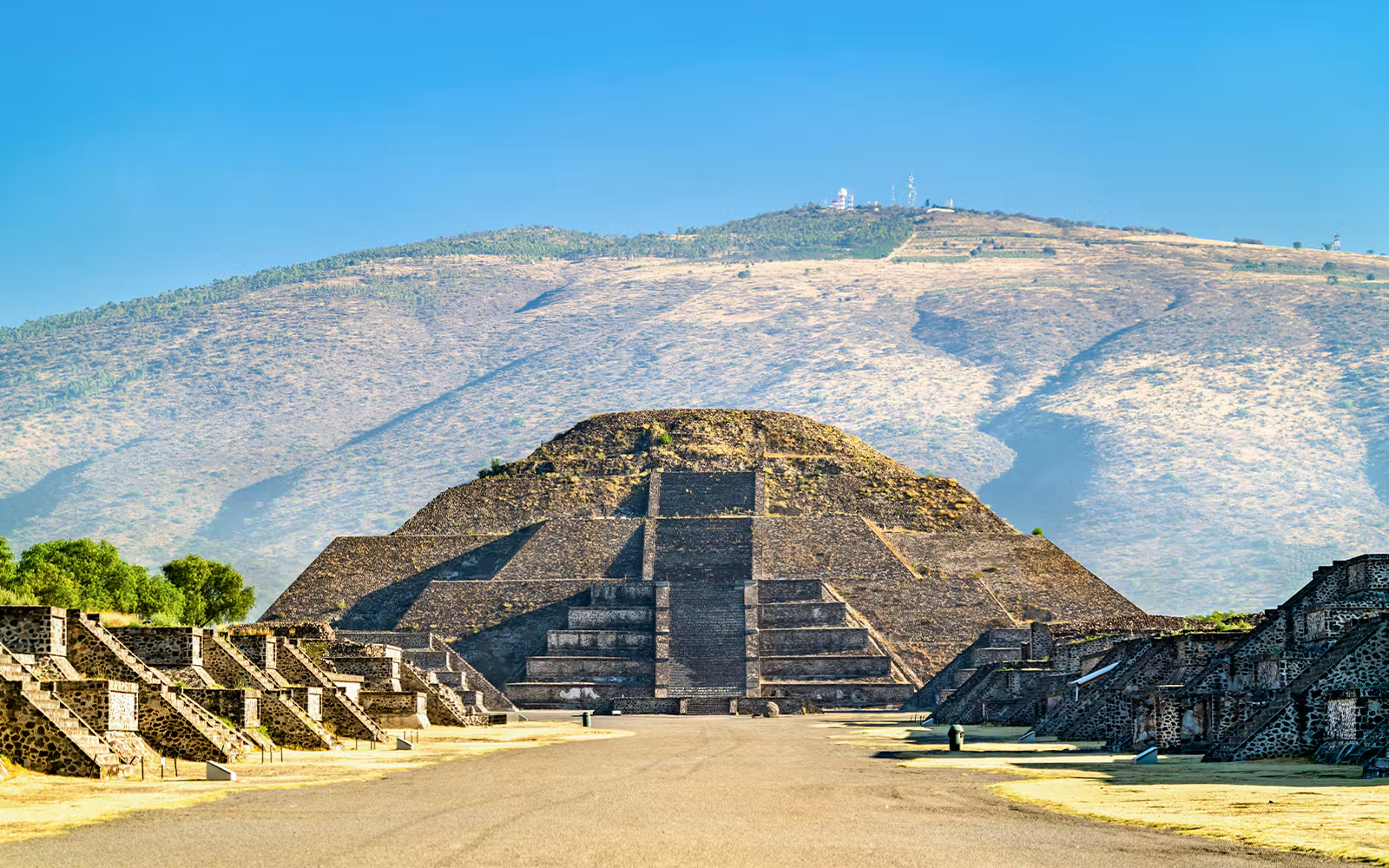
Teotihuacan architects, Pyramid of the Moon, ca. 100-300 CE. Stone, stucco, and earth infill. State of Mexico, Mexico.
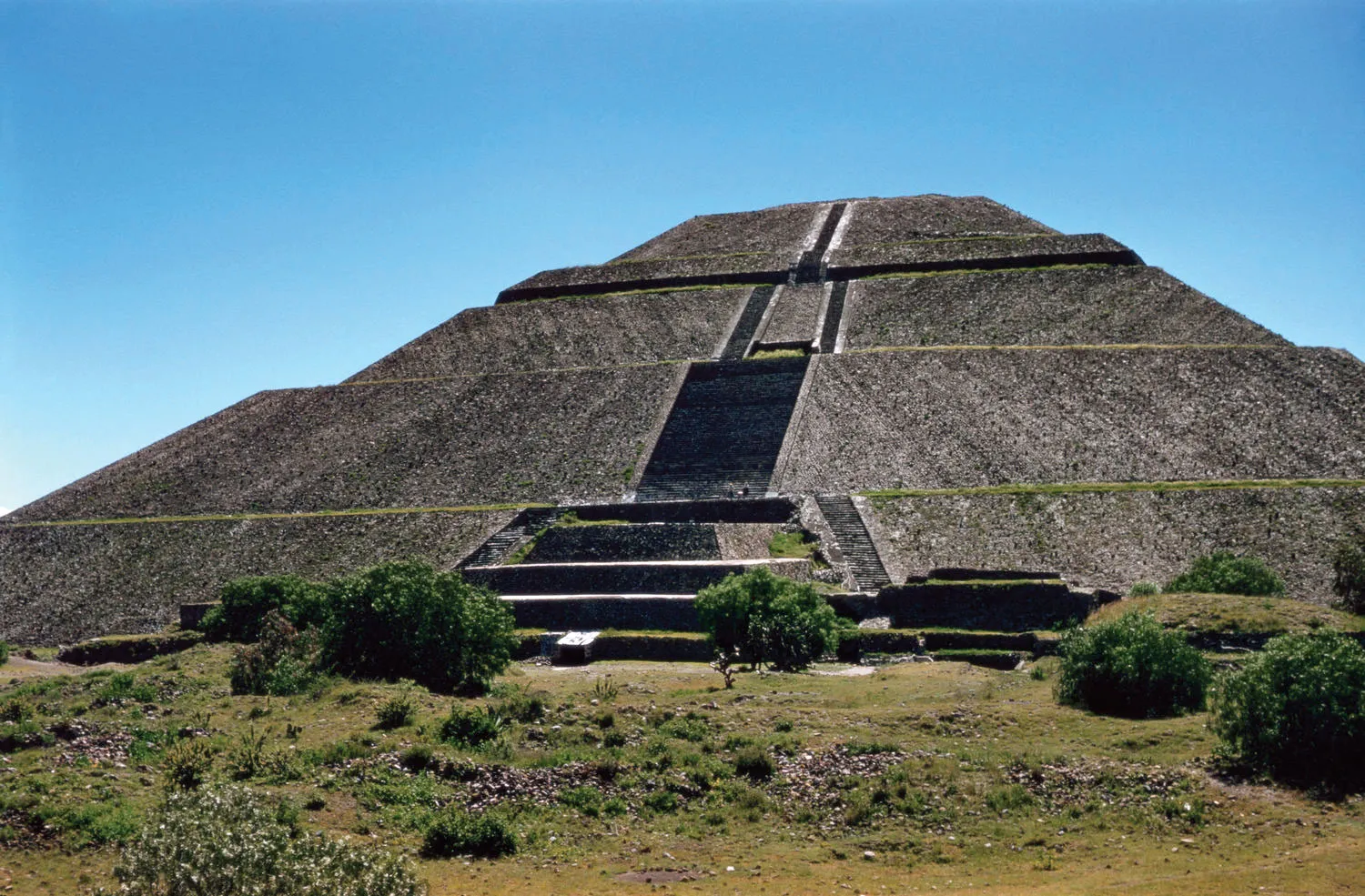
Teotihuacan architects, Pyramid of the Sun, ca. 100 CE. Stone, stucco, and earth infill.

Teotihuacan architects, Temple of Quetzalcoatl (or the “feathered serpent”), ca. 100 CE. Stone, stucco, and earth infill with tenon heads.

Teotihuacan artist(s), Great Goddess Mural, ca. 100-300 CE. Stucco and pigment. State of Mexico, Mexico.

Maya artist, Lintel 24, 723-26 CE. Limestone. Structure 23, Yaxchilan, State of Chiapas, Mexico.

Maya artist, Lintel 25, 723-26 CE. Limestone. Structure 23, Yaxchilan, State of Chiapas, Mexico.
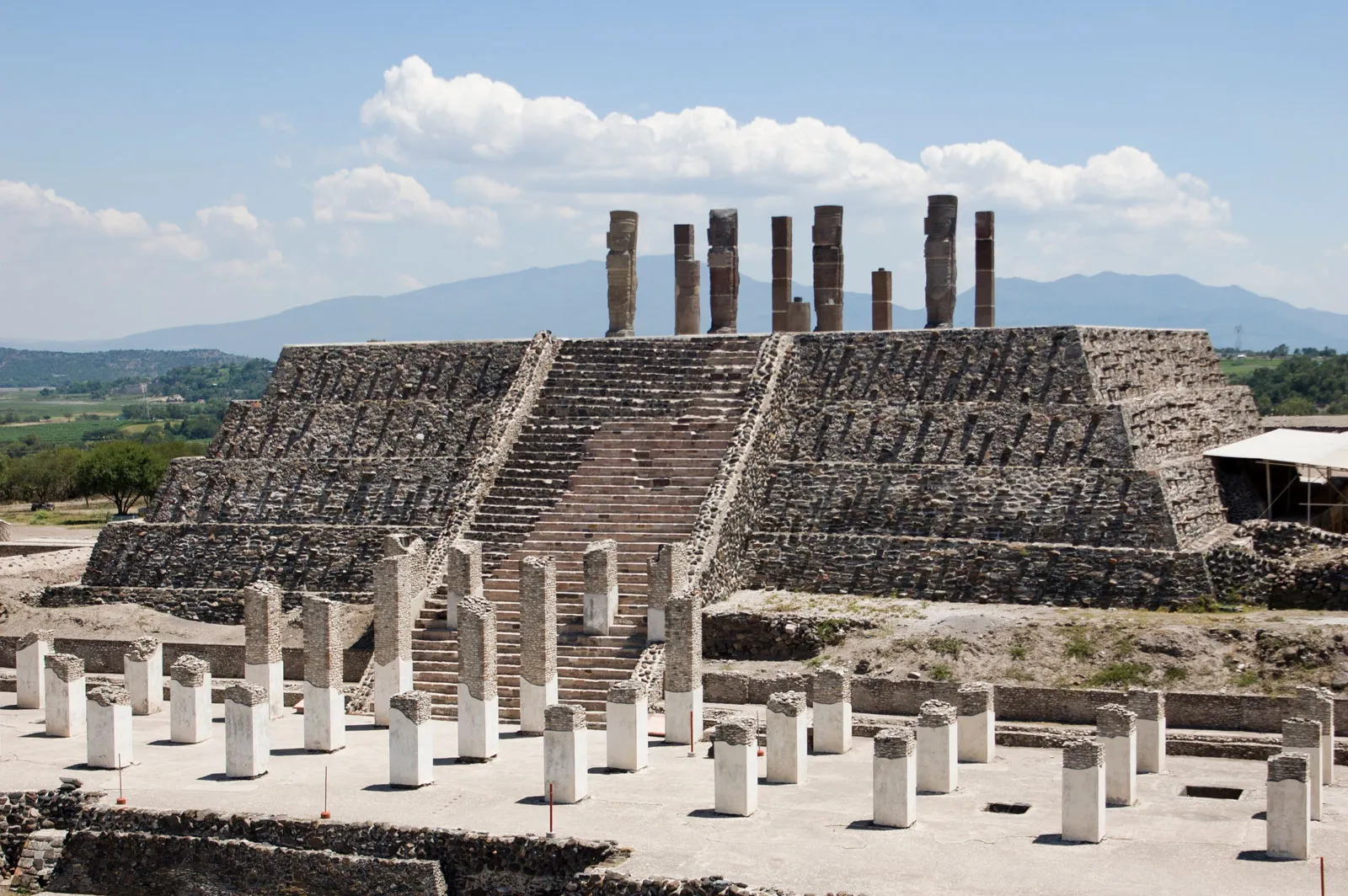
Toltec architects, Pyramid B, ca. 850-1150 CE. Stone masonry, columns, and painted stucco reliefs. Tula de Allende, State of Hidalgo, Mexico.

Toltec architects, Atlantean Columns (or “Atlantes”), ca. 850-1150 CE. Basalt. Tula de Allende, State of Hidalgo, Mexico.

Toltec artists, Jaguar and Eagle Reliefs, ca. 850-1150 CE. Stone and traces of pigment. Tula de Allende, State of Hidalgo, Mexico.

Maya architects, Temple of Kukulcan, ca. 900-1100 CE. Limestone masonry. Chichen Itza, State of Yucatán, Mexico.

Indigenous artists and scribes, The Foundation of Tenochtitlan (frontispiece of the Codex Mendoza), ca. 1542. Indigenous pigments and ink on amate paper.

Indigenous artist, Departure from Aztlán (from the Codex Boturini), ca. 1530. Indigenous ink on amate paper.

European artist(s), The “Nuremberg” Map of Tenochtitlan and the Gulf Coast (from Cortés’ Second Letter), 1524. Woodblock print with hand-colored pigments. Germany.

Indigenous scribes and artists, The Founding of Tenochtitlan (from the Codex Aubin), mid-1570s. Indigenous pigments and ink on European paper.

Diego Durán, The Founding of Tenochtitlan (from the History of the Indies of New Spain), 1579. Indigenous pigments and ink on amate paper.

Luis Covarrubias, View of the Valley of Mexico, ca. 1955. Mural.

Mexica (or Aztec) artist, Coatlicue Monument, 15th century CE. Andesite.

Mexica (or Aztec) artist, The Coyolxauhqui Stone, ca. 1473 CE. Andesite with trace pigments.

Mexica (or Aztec) architects, Templo Mayor (or Huey Teocalli), 15th to 16th century. Masonry, stucco, and pigment.

Indigenous artists, The Birth of Huitzilopochtli and The Battle of Coatepec (from The Florentine Codex), 1577. Indigenous pigment and ink on amate paper.
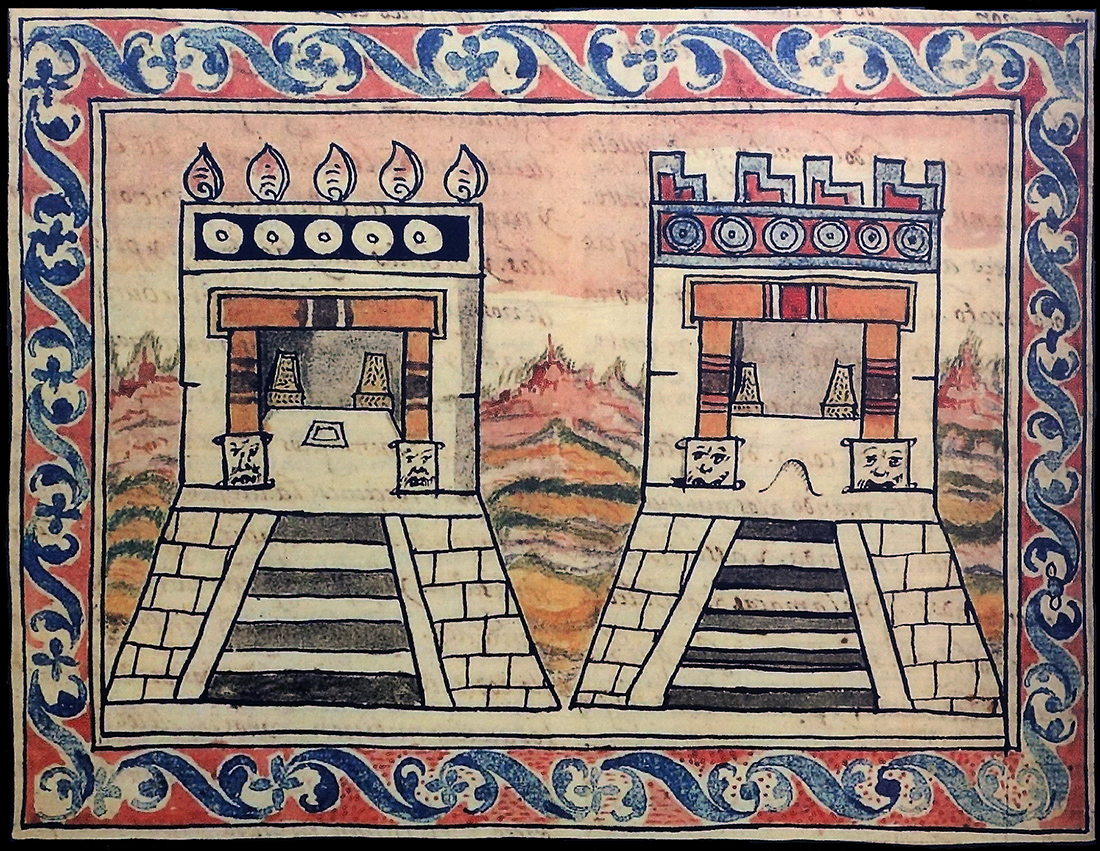
Diego Durán, The Temples of Tlaloc and Huitzilopochtli (from the History of the Indies of New Spain), 1579. Indigenous pigments and ink on amate paper.

Chavín architects, Chavín de Huántar, ca. 900-200 BCE. Stone masonry.

Chavín artists, tenon heads (or “cabezas clavas”), ca. 900-500 BCE. Volcanic tuff. Department of Ancash, Perú.
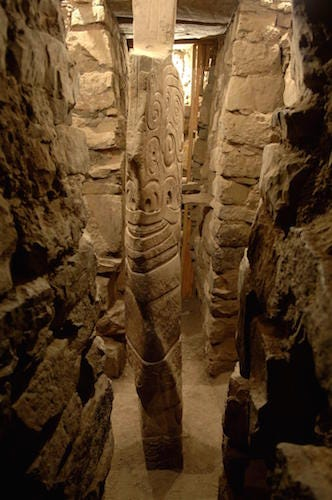
Chavín artist, Lanzón (“The Great Lance”), ca. 900-500 BCE. Stone stela. Department of Ancash, Perú.

Chavín artist, The Raimondi Stela, ca. 900-200 BCE. Stone.

Andean artist, Textile Fragment with Condor Design, ca. 2500 BCE. Cotton fiber. Huaca Prieta, Department of La Libertad, Perú.

Wari architects, Pikillacta, ca. 500-800 CE. Stone masonry. Department of Cusco, Perú.

Wari artists, Tunic with Geometric Motifs, ca. 650-1000 CE. Cotton and camelid fiber.

Wari artist(s), Wall Banner, ca. 600-900 CE. Macaw feathers, cotton fiber, and camelid fiber. Department of Arequipa, Perú.

Moche artist(s), Mural E, ca. 650-800 CE. Low-relief incised adobe and pigment. Pañamarca, Department of Ancash, Perú.

Moche artist(s), Stepped Vessel with Triangle Motif, ca. 200-600 CE. Clay and pigment.

Moche artist, Mural A, ca. 650-800 CE. Low-relief incised adobe and pigment. Pañamarca, Department of Ancash, Perú.
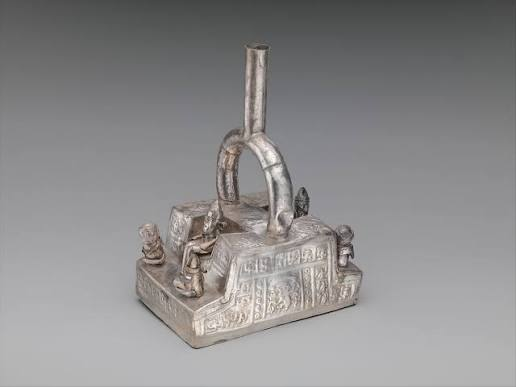
Chimú artist, Vessel with Palatial Scene, ca. 1000-1470 CE. Silver.

Chimú artist(s), Wall Hanging, ca. 1300-1470 CE. Cotton fiber.

Chimú artists, Pelican Frieze, ca. 1000-1470 CE. Sculpted adobe. Chan Chan, Department of La Libertad, Perú.