ASTR 350 Final Exam HW Questions correct
 Call Kai
 Learn
Learn Practice Test
 Spaced Repetition
 Match
Match Flashcards
 Knowt Play
1/267

There's no tags or description
Looks like no tags are added yet.
Name | Mastery | Learn | Test | Matching | Spaced | Call with Kai | Chat |
|---|
No analytics yet
Send a link to your students to track their progress
268 Terms
Which of the options is a scientific argument for the geocentric model?
Select one:
a. No stellar parallax is observable (with the naked eye).
b. Based on everyday experience, not obvious that any objects in sky are larger than Earth. Lunar eclipses show Moon smaller than Earth. One would need accurate distances to know that Sun is larger; not obvious that planets and stars have any size at all. So perhaps Earth is the largest object in the Universe!?!? and thus, of course it should be at the center.
c. All of these options.
d. If the Earth was orbiting the Sun, we would feel it moving. Since we don't feel motion, it must not be moving.
e. Everything (Sun, stars, planets) appears to orbit Earth.
c. All of these options.
Which of the statements is true about parallax?
Select one:
a. All of the options.
b. If the baseline length remains constant, the parallax increases as the object gets closer.
c. Parallax is described as an angle.
d. Parallax is the apparent shift in the position of a nearby object relative to faraway objects when the locations of observation point are changed.
e. If the distance to an object remains constant, the parallax increases as the baseline gets longer.
a. All of the options.
Which of the options is the strongest evidence against a theory predicting sunrise at 6:07 a.m.?
Select one:
a. An observation of sunrise at 6:20 ± 20 minutes.
b. An observation of sunrise at 6:03 ± 5 minutes.
c. An observation of sunrise at 6:09 ± 1 minutes.
c. An observation of sunrise at 6:09 ± 1 minutes.
Suppose some astronomers announce that they just discovered a deadly asteroid that's expected to come dangerously close to the Earth. Concerning the speed of the asteroid, which of the scenarios is better for all of us?
Select one:
a. The slower the asteroid is moving.
b. It doesn't make any difference.
c. The faster the asteroid is moving.
c. The faster the asteroid is moving.
Are Kepler's laws purely descriptive, or do they contain causal information?
Select one:
a. Kepler's laws are purely descriptive.
b. Kepler's laws are purely causal.
c. Kepler's laws are descriptive as well as causal.
d. Kepler's laws are neither descriptive nor causal.
a. Kepler's laws are purely descriptive.
In the geocentric cosmology, the Sun goes around the Earth with what period?
Select one:
a. In the geocentric cosmology, the Sun is still and the Earth moves.
b. 1 day.
c. 1 month.
d. 1 year.
b. 1 day.
Which of the statements is true about a scientific theory?
Select one:
a. A theory is never proven beyond doubt, but more supporting evidence makes a theory stronger.
b. All of the options.
c. A theory is a proposed explanation for how some aspect of the universe behaves.
d. The best theories generally explain many phenomena with a small set of rules.
e. Sometimes, when a theory is first proposed, it's called a hypothesis. Another term often used in place of "theory" is "model": Strictly, a theory must be testable, and a model can be just an idea that's used simply for convenience. In practice, however, the two terms are often interchangeably. Most of the time, scientists expect models to be accurate and testable, too.
b. All of the options.
A planet with no axial tilt is located in another solar system. It circles its sun in a very elliptical orbit so that the temperature varies greatly throughout the year. If the year there has 612 days and the inhabitants celebrate the coldest day on day 1 of their calendar, when is the warmest day?
Select one:
a. Day 306
b. Day 153
c. Day 365
d. Day 1
e. Day 459
a. Day 306
What makes a cosmology scientific?
Select one:
a. It explains observed phenomena in an economical fashion.
b. All of these.
c. It is weighed against competing ideas; reasons are advanced for holding it.
d. It makes quantitative predictions that are subsequently tested by experiment or observation.
e. It seeks regular causes in terms of ideas that may themselves be examined.
b. All of these.
Thinking scientifically, which of the following should give us the most confidence in a new cosmological theory?
Select one:
a. It predicts things that can't be proven or disproven by experiments.
b. It makes several different consistent predictions that are later confirmed observationally.
c. It incorporates a philosophical principle we think should be true.
d. It explains all known observational data.
d. It explains all known observational data.
Which of the statements is true about stellar parallax?
Select one:
a. One parsec (short for "PARallax SECond") is defined as the distance at which an object will have a parallax of 1 arc second when viewed with a 1 AU baseline.
b. All of the options.
c. The concept of stellar parallax is not strange or unfamiliar; it's just the measurement of stellar parallax requires extreme precision. The limitation on measuring distances by parallax is a limit on how precisely we can measure angles and how long a baseline we can use.
d. Even from opposite sides of the Earth, there is no noticeable parallax associated with any stars relative to each other. They must be so far away that the change in angle is too small to notice.
e. Because the distances to stars are so great, the parallax angles we deal with in astronomy are much smaller than the angles we are used to in everyday life.
d. Even from opposite sides of the Earth, there is no noticeable parallax associated with any stars relative to each other. They must be so far away that the change in angle is too small to notice.
Which of the statements is true about Kepler's laws?
Select one:
a. All of the options.
b. Planetary orbits sweep out equal areas in equal times.
c. Planetary orbits are ellipses, with the Sun located at one focus.
d. The size (a) and period (P) of a planetary orbit around the Sun are mathematically related by P^2 = a^3, where P represents the time elapsed in years for a complete orbit, and a denotes the length of the semi-major axis (half the length of the major axis), measured in AU.
a. All of the options.
Explain why Earth does actually appear to be the center of the solar system.
Select one:
a. Earth appears to be at the center of the solar system because Earth is at the center of the solar system and all the heavenly bodies revolve around it.
b. Earth appears to be at the center of the solar system because Earth is located at one of the foci of the elliptical orbit of the sun, moon, and other planets.
c. Earth appears to be the center of the solar system because Earth is at the center of the universe, and everything revolves around it in a circular orbit.
d. Earth appears to be the center of the solar system because, in the reference frame of Earth, the sun, moon, and planets all appear to move across the sky as if they were circling Earth.
d. Earth appears to be the center of the solar system because, in the reference frame of Earth, the sun, moon, and planets all appear to move across the sky as if they were circling Earth.
Fix a camera on a tripod, open lens and expose to night sky as each star moves, leaves "trail" on film. Imagine you could see all trails made by all stars over one night, as seen from Champaign-Urbana.
What pattern would you see?
Select one:
a. parallel line segments
b. none of the options
c. arcs of circles
d. arcs of ovals
c. arcs of circles
Which of the options is in scientific notation?
Select one:
a. 10 x 100
b. 10^-4
c. 2500
d. 0.00001
e. 0.096
b. 10^-4
Which of the following statements is true about escape velocity and circular velocity?
Select one:
a. For a bound, circular orbit, the magnitude of gravitational energy is exactly double that of kinetic energy. The circular orbit velocity is about 1.4 times smaller than escape velocity.
b. Circular and elliptical orbits are bound. Hyperbolic paths are not bound. Parabolic paths are not bound, in that something following a parabolic path away from the Sun never returns. However, a trajectory is parabolic when there is zero total energy, right on the boundary between bound and unbound.
c. If the gravitational energy exactly equals the kinetic energy, then the system is on the borderline between bound and unbound.
d. While orbits can be elliptical instead of circular, the circular orbit velocity is still very important.
e. All of the options.
e. All of the options.
Suppose the interpupillary distance between your eyes is about 60 mm. What is the parallax in arc seconds (″) of an object 100 m away as viewed with your right and left eyes?
(Hint: 180 degrees = 3.14 radians, 1 degree = 3600″)
Select one:
a. 0.034″
b. none of these options
c. 2.1″
d. 0.0006″
e. 120″
e. 120"
Consider an asteroid with an orbit entirely outside 1 AU, is its period (P) longer or shorter than a year?
Select one:
a. P > 1 year, no matter what eccentricity the orbit has.
b. Can't answer without knowing eccentricity of the orbit.
c. P < 1 year, no matter what eccentricity the orbit has.
a. P > 1 year, no matter what eccentricity the orbit has.
The image shows a multiple-choice question about scientific experiments. The question asks: "Which of the statements is true about a scientific experiment?"
There are five options provided:
a. The practice of science respects the roles of repeatability and peer review, so that other scientists can check the work and verify that if they perform the experiment, they, too, will get consistent results.
b. Uncertainty is a numerical expression of the precision of a measurement. The uncertainty specifies the repeatability of the method of measurement.
c. Observation and experiment have the final word in settling disagreements. We pose the questions, but only observation and experiment can provide answers, i.e., experimental results.
d. An experiment is an observation made under conditions arranged so as to isolate and test a particular prediction made by a theory.
e. All of the options.
e. All of the options
An asteroid orbits the Sun with period P = 27 years. The asteroid has a semi-major axis of?
Select one:
a. 3 AU
b. 27 AU
c. None of these options
d. 81 AU
e. 9 AU
e. 9 AU
A bound electron is an electron that inhabits an atom. There is an analogy between a bound electron and that of the Earth and the Sun. There are major differences between the planet and the electron analogy which arise from the laws of quantum mechanics. Which of the statements is true about the differences?
Select one:
a. The planet moves in an orbit along which it travels in a recurring, predictable way. The electron moves in an orbital and its behavior at any given moment is partially random as described by an "electron cloud".
b. Bound electrons are picky about how much energy they want to have but planets are not. A bound electron has a fixed set of possible orbitals and it will not reside in between (i.e., the electron can have only certain specific energies or the electron's energy is quantized).
c. All of the options.
c. All of the options.
Star IR has a spectrum that peaks in infrared at 10^-6 meters. Star UV has a spectrum that peaks in ultraviolet at 10^-7 meters. Based only on this information, we conclude that
Select one:
a. Star IR is hotter than star UV.
b. Star IR has a smaller radius than star UV.
c. Star IR is cooler than star UV.
d. Star IR has a larger radius than star UV.
c. Star IR is cooler than star UV.
What is the temperature of the Sun's surface?
(Hint: the Sun looks yellowish with λmax≈500 nmλmax≈500nm, where 1 cm=10^7 nm. Wien's Law, the wavelength of peak emission is λmax≈0.29 cm⋅K/T)
Select one:
a. 58000 K
b. 580 K
c. 5800 K.
d. 580000 K.
c. 5800 K.
A star is observed one night with the mighty U of Illinois telescope at the campus Observatory. Which of these properties of the star can be known without knowing the star's distance?
I. flux
II. luminosity
III. surface elemental composition
Select one:
a. II only.
b. III only.
c. I only.
d. I and III only.
d. I and III only.
If the Sun disappeared, what would happen to the Earth's orbit?
Select one:
a. Earth would fly off a straight line into space.
b. Earth would continue its current orbit
a. Earth would fly off a straight line into space.
An object moves in a circle of radius R at a constant speed v. Is its acceleration zero?
Select one:
a. Maybe
b. No
c. Yes
b. No
The astronomical distance ladder is a system of measurement combining several methods for measuring distances. To get to the upper rungs in the distance ladder, one needs all the rungs below to calibrate against. Which of the options is in the right order of increasing distance at which a technique can work in the astronomical distance ladder?
Select one:
a. Radar, parallax, cepheid variables, supernovae.
b. Cepheid variables, supernovae, parallax, radar.
c. Supernovae, cepheid variables, parallax, radar.
d. Radar, parallax, supernovae, cepheid variables.
a. Radar, parallax, cepheid variables, supernovae.
Deneb is the brightest star in the constellation of Cygnus and the 19th brightest star in the night sky. Its parallax is estimated as ~1 mas, where 1 mas = 0.001 arcsecond. What is its distance from us?
(Hint: d (pc)=1 / p(arcsecond) )
Select one:
a. 100 pc.
b. 1000 pc.
c. 10 pc.
d. 1 pc.
b. 1000 pc.
A star gets dimmer as seen on the sky. Which of the options, if true, could explain why?
Select one:
a. Its distance from Earth decreased.
b. Its apparent brightness decreased.
c. Its intrinsic brightness decreased.
c. Its intrinsic brightness decreased.
Betelgeuse is a red supergiant set to go supernova. It might explode within the next ~1000 years, or the next million years. How bright will Betelgeuse be when it explodes as a supernova?
(Hint: Supernova luminosity LSN is ∼10^10LSun.
The distance of Betelgeuse from us is about 600 light years.
The Sun is about 400,000 times brighter than the full moon.)
Select one:
a. A million times fainter than the Sun, or fainter than the full moon.
b. 100,000 times fainter than the Sun, or brighter than the full moon.
c. A billion times fainter than the Sun, or fainter than the full moon.
b. 100,000 times fainter than the Sun, or brighter than the full moon.
Which of the following is true concerning the capabilities of telescopes?
Select one:
a. Big mirrors collect lots of light in a given time, and so the bigger the mirror, the fainter we can see.
b. Telescopes improve clarity, or the angular resolution of images, so that the bigger the mirror, the sharper the focus.
c. All of the options.
d. Telescopes collect light quickly, in large quantities.
c. All of the options.
Would life change for us if Earth's radius were doubled? How?
Select one:
a. No
b. Yes. My weight would be 4 times as strong.
c. Yes. My weight would be 1/4 as strong, i.e,. 4 times weaker.
c. Yes. My weight would be 1/4 as strong, i.e,. 4 times weaker.
Which of the options is in the correct order of increasing distances relative to us?
Select one:
a. The Andromeda Galaxy, the center of the Milky Way, Proxima Centauri, the Sun.
b. The Sun, Proxima Centauri, the Andromeda Galaxy, the center of the Milky Way.
c. The Sun, Proxima Centauri, the center of the Milky Way, the Andromeda Galaxy.
d. The Sun, the center of the Milky Way, Proxima Centauri, the Andromeda Galaxy.
c. The Sun, Proxima Centauri, the center of the Milky Way, the Andromeda Galaxy.
Which of the following is the right order of decreasing wavelength?
Select one:
a. Radio, microwave, infrared, visible, ultraviolet, x-rays, gamma rays.
b. Gamma rays, x-rays, ultraviolet, visible, infrared, radio, microwave.
c. Microwave, radio, infrared, visible, ultraviolet, x-rays, gamma rays.
d. Gamma rays, x-rays, ultraviolet, visible, infrared, microwave, radio.
a. Radio, microwave, infrared, visible, ultraviolet, x-rays, gamma rays.
What is the wavelength corresponding to your body's peak blackbody emission?
(Hint: Human body T 98 F, or 37 C, corresponds to 310 K.
Wien's Law, the wavelength of peak emission is λmax ≈ 0.29 cm K/T)
Select one:
a. 10.7 m
b. 9.4 μm
c. 78.4 μm
d. 29.4 μm
b. 9.4 μm
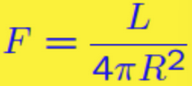
Deneb is ~1000 pc away from us. Its flux FDeneb=5×10^−12FSun, where FSun is the flux from the Sun. What do its distance and flux imply about its luminosity LDeneb compared to the Sun's luminosity LSun?
(Hint: 1 pc ≈ 200,000 AU. F = L/(4πr2)F=L/(4πr^2))
Select one:
a. LDeneb≈200,000 LSun
b. LDeneb≈20,000 LSun
c. LDeneb≈200 LSun
d. LDeneb≈2000 LSun
a. LDeneb≈200,000 LSun
Which of the statements is true about spectroscopy (i.e., the study of spectral lines)?
Select one:
a. We can recognize spectral patterns in different sources, such as stars or galaxies, and identify the elements that they contain and in what relative amounts they exist.
b. All of the options.
c. We can determine, based on how spectral lines can be altered, the environment of elements, including important properties such as surface gravity, temperature, and pressure.
d. We can use spectral lines to measure how fast an object is moving relative to us using the Doppler effect.
b. All of the options.
A star (or other source) whose actual light output we know is called a standard candle. The name is intended to indicate a known, fixed light output, similar to a candle. Standard candles are useful for cosmology because we can use them to measure distances to celestial objects. If we know how bright a certain type of objects is, then we could figure out how distant it is on the basis of how bright it looks. Which of the following is a standard candle in cosmology?
Select one:
a. The Tully-Fisher and Faber-Jackson relations.
b. Supernovae.
c. Cepheid variables.
d. All of the options.
d. All of the options
NASA's Voyager spacecraft has flown away from the Solar System, and is moving very fast (much faster than the Earth's speed around the Sun). Voyager sends signals to us with a radio emitting at wavelength 10 cm. On Earth, the signals are received with wavelength
Select one:
a. Less than 10 cm.
b. Greater than 10 cm.
c. Equal to 10 cm.
b. Greater than 10 cm.
Which of the following is true concerning planet motion around the Sun?
Select one:
a. Free-fall acceleration only depends on Sun's mass and Sun-planet orbit distance.
b. At same distance, all objects accelerate the same way.
c. Free-fall acceleration is independent of planet mass or size.
d. All of the options.
d. All of the options.
Which of the options is NOT a consequence of general relativity?
Select one:
a. Light has both inertial mass and gravitational mass, and they're the same number.
b. Time slows down as you move faster through space.
c. Light bends in gravitational fields.
d. Time slows down when a gravitational field gets stronger.
e. Time dilation occurs when you approach a black hole.
b. Time slows down as you move faster through space.
Do we have evidence for the presence of supermassive black holes?
Select one:
a. No We only have evidence for stellar mass black holes.
b. Yes! The largest can be billions of solar masses.
c. Not sure.
b. Yes! The largest can be billions of solar masses.
Consider a moving light bulb, according to Einstein, if the light bulb has velocity v, then bystander sees light move at what speed?
(note: c stands for the speed of light.)
Select one:
a. c + v.
b. c.
b. c.
Which of the following statements is true considering gravitational microlensing searches for MACHOs?
I. If MACHO exactly aligned with our line of sight, then all incoming rays bent equally. So we should see a ring: the Einstein ring.
II. Because more light is deflected towards us, the total flux will be higher. So it produces brightness amplification.
III. If MACHO comes close to sightline but not aligned, the ring will split into 2 images (arcs of circles) and the brightness amplification will still be observed.
IV. In practice, rings and arcs from MACHOs are too small to resolve, but we can detect amplification of brightness as a function of time.
Select one:
a. None of the above.
b. I, II, and III.
c. All of the above.
c. All of the above.
What is spacetime?
Select one:
a. The combination of the three dimensions of space with time.
b. Gravitation
c. The time it takes an object to travel in space.
a. The combination of the three dimensions of space with time.
The conclusions of the special theory of relativity
Select one:
a. are believed to be true for all motions of all objects.
b. apply only to tiny atomic particles.
c. are true only for objects moving at very high speeds.
d. have not yet been experimentally verified.
a. are believed to be true for all motions of all objects.
Observers moving relative to one another can disagree on the simultaneity of distance events. TRUE or FALSE?
a. TRUE.
b. FALSE.
c. Unable to tell.
a. TRUE.
Which of these can all observers agree on regardless of their state of motion?
I. Albert Einstein was born 141 years ago
II. Chambana and Chicago are 141 miles apart
III. radio signals from spacecraft move at speed c
Select one:
a. II only.
b. III only.
c. I only.
d. None of I, II, and III.
e. All of I, II, and III.
b. III only.
Can you accelerate a particle to a speed faster than the speed of light?
Select one:
a. No.
b. Yes
a. No.
Astronauts Michelle and Ann are in two identical spaceships, moving towards each other with relative speed v=c/2. Michelle measures her spaceship to have a length of 10 meters. Michelle will observe Ann's spaceship to have length ________, while Ann will observe Michelle's spaceship to have length ________.
Select one:
a. less than 10 meters, less than 10 meters.
b. less than 10 meters, greater than 10 meters.
c. greater than 10 meters, less than 10 meters.
d. greater than 10 meters, greater than 10 meters.
a. less than 10 meters, less than 10 meters.
You go to your fiftieth college reunion. There you meet your college roommate who has spent the entire time since graduation traveling to a nearby star and back in a spaceship at constant speed. Your roommate says that it is nice to be at the fortieth reunion. You say, "No, it's the fiftieth reunion!" Your roommate says, "But I've kept careful track on my spaceship clock, and it's been exactly 40 years since our graduation." I: How fast was his spaceship going (in a fraction of the speed of light)? II: How far away was the star he visited (in light years, as measured by you)? (Hint: γ = 1/sqrt(1−v2/c2) = TObs/TRest)
Select one:
a. I. 0.8c. II. 20 light years.
b. I. 0.6c. II. 30 light years.
c. I. 0.8c. II. 40 light years.
d. I. 0.6c. II. 15 light years.
d. I. 0.6c. II. 15 light years.
A particle travels at the speed of light. We conclude that
Select one:
a. its rest mass is zero.
b. its energy is zero.
c. its energy is infinite.
d. it violates special relativity.
a. its rest mass is zero.
How do we measure the mass of a black hole if it is black?
Select one:
a. Use the Doppler effect to measure how fast the companion star or gas is orbiting.
b. Infer the mass by measuring how fast the companion stars are orbiting the unseen object.
c. Infer the mass by measuring how fast the hot gas is orbiting the unseen object.
d. All of the options.
d. All of the options.
In this problem, we will derive the gravitational light bending effect from general relativity.
Consider a rocket in otherwise empty space (i.e., no gravity) moving with constant acceleration a. Astronaut A, standing on the floor of the rocket, has a flashlight and holds it at height h, points horizontally, and shines towards the wall. At what height will the beam of light hit the opposite wall?
(Hint: it's easier to think about from the non-accelerating viewpoint.)
Select one:
a. Lower than h.
b. Higher than h.
c. At same h.
c. At same h.

Astronauts Angelina and Brad each hover near a black hole, but at different distances. They have identical clocks, and identical lasers that emit red light. Angelina observes Brad's laser beam to have a blue color. Who is closer to the black hole?
Select one:
a. Brad.
b. Neither.
c. Angelina.
c. Angelina.
Future industrial accident ("mistakes were made") causes Sun to be crushed into a black hole without gain or loss of mass. What would happen to Earth's orbit?
Select one:
a. Weaker gravity, orbit closer, more elliptical, but does not fall in.
b. Stronger gravity, orbit closer, more elliptical, but does not fall in.
c. Nothing: same orbit.
d. Spirals in: aaargh!
c. Nothing: same orbit.
Escape speed is defined as the minimum speed to move indefinitely far from a source of gravity (when starting from radius R). What is the escape speed from the surface of Earth?
Select one:
a. 110 km/s
b. 11 km/s
c. 1.1 km/s
b. 11 km/s

In everyday life, we don't see the effects of relativity because
Select one:
a. they are too small to detect easily.
b. they only occur when near c (c is the speed of light).
c. we have become accustomed to them, so we don't notice.
a. they are too small to detect easily.
Consider a moving train in a thunderstorm. Conduct the following thought experiment: the train (length L), with passenger A sitting in the middle of the train, is moving at some speed v past bystander B. Two lightning bolts strike the front and back of the train. B stands at midpoint of the burn marks and sees flashes simultaneously.
Reminder: everyone sees light moving at the same speed.
I: Does bystander B think the lightning bolts were simultaneous?
II: Does A sitting in the train midpoint think the lightning bolts were simultaneous?
Select one:
a. I. Yes. II. Yes.
b. I. No. II. Yes.
c. I. No. II. No.
d. I. Yes. II. No.
d. I. Yes II. No

What is the Schwarzschild radius of a black hole with the mass of the Earth?
Hint: the first equation gives expression of the Schwarzschild radius in terms of the mass of the object, M, divided by mass of the Sun (which is denoted as a circle with a dot in the middle). The second equation gives the mass of the Earth (denoted as a circle with a cross) in units of the mass of the Sun.
Select one:
a. 1 cm.
b. 1 m.
c. 1 mm.
d. 1 km.
c. 1 mm.

Einstein's Principle of Equivalence states
Select one:
a. that light is deflected as it passes by a large mass by the mass' gravitational field.
b. that the inertial mass is identical to the gravitational mass.
c. that constant acceleration is completely equivalent to a uniform gravitational field.
d. that the space around a large mass is actually warped by the very presence of the mass.
c. that constant acceleration is completely equivalent to a uniform gravitational field.
In this problem, we will derive the general relativity gravitational time dilation effect.
Consider "light clocks" in a spaceship (manufactured identically in Switzerland). Each emits light pulse every 1 second. Astronauts A stationed in ceiling and B is on the floor. If the rocket is not accelerating, A and B see the other's clock to be ticking at the same rate as her/his own.
Now, let's fire the rockets and the spaceship has constant acceleration a. Compared to the non-acceleration light travel time, does the down-going flash take longer/shorter/same time to reach B?
Select one:
a. Shorter.
b. Longer.
c. Same time.
a. Shorter

Suppose we send a spaceship to the Andromeda Galaxy, which is 770 kilo-parsec away. The ship travels at 50% of the speed of light. For the purposes of this problem, you can ignore acceleration and deceleration.
I. As seen by observers on Earth, how long does it take for the ship to reach the Andromeda Galaxy?
II. As seen by observers on board the ship, how long does it take for the ship to reach the Andromeda Galaxy?
(Hint: 1 kilo-parsec ≈ 3300 light years.)
Select one:
a. I. 5.1 million years, II. 4.4 million years.
b. I. 5.1 million years, II. 5.1 million years.
c. I. 4.4 million years, II. 4.4 million years.
d. I. 4.4 million years, II. 5.1 million years.
a. I. 5.1 million years, II. 4.4 million years.
Two balls of different mass are simultaneously released in a vacuum in a spaceship which is subject to a constant acceleration in the upward direction. If the speed of the space ship is nearly equal to the speed of light as two balls are released from the same height, which one will hit the floor first?
Select one:
a. The heavier one.
b. They will both hit at the same time.
c. Because they are traveling with nearly the speed of light already, neither ball will fall at all.
d. The lighter one.
b. They will both hit at the same time.
In the Michelson-Morley experiments, two light beams were raced at right angles to each other to detect a possible slight difference in their speeds. The experiment showed that
Select one:
a. The races always ended in ties.
b. A slight speed difference was observed, but declared too small to be taken seriously.
c. The results depended on the season of the year (i.e., on the direction of earth's motion).
d. The beam traveling along the direction of the earth's motion always lost.
e. The beam traveling along the direction of the earth's motion always won.
a. The races always ended in ties.
Electrons cannot go as fast as light because
Select one:
a. they would expand to infinite size.
b. it would violate free will.
c. it would take infinite energy.
c. it would take infinite energy.
Suppose two teams of astronauts in sealed containers who think they are accelerating through space are actually sitting on the surfaces of Earth and Mercury. The gravitational field on Mercury is 60% of that near Earth. Which team thinks it has the larger acceleration?
Select one:
a. The team on Earth.
b. Both teams think their accelerations are the same.
c. The team on Mercury.
d. Both teams claim the largest acceleration, and neither can show that the other is wrong.
e. Both teams know that neither team can determine their acceleration.
a. The team on Earth.
If you dropped a hammer and a feather from the same height in a vacuum,
I. according to Galileo and Newton, which would hit the ground first?
II. According to Einstein, which would hit the ground first?
Select one:
a. I. hammer, II. neither one.
b. I. neither one, II. neither one.
c. I. hammer, II. hammer.
d. I. neither one, II. hammer.
b. I. neither one, II. neither one.
What is powering the energy of an accreting black hole so that its accretion disk is glowing bright in the X-rays?
Select one:
a. Gravitational potential energy.
b. Nuclear fusion.
c. Radioactive decay.
a. Gravitational potential energy
Astronauts Angelina and Brad each hover near a black hole, but at different distances. They have identical clocks, and identical lasers that emit red light. Angelina observes Brad's laser beam to have a blue color. From Brad's point of view, will Angelina's clock appear to tick faster than his, slower, or at the same rate?
Select one:
a. Slower.
b. At the same rate.
c. Faster.
a. Slower
To be a plausible theory of gravity, general relativity needs to agree with Newton when spacetime curvature and relative speeds are small. Where in the Solar System would we have the best chance of detecting differences between the two theories of gravity (i.e., Einstein's general relativity theory and Newton's gravity theory)?
Select one:
a. In the near vicinity of the Sun.
b. In a deep well on Earth.
c. At the center of the Sun.
d. At the edge of the Solar System.
a. In the near vicinity of the Sun.
A rocket ship that is 100 m long in its rest frame speeds past Earth. It appears to be 50 m long as seen from Earth. How fast is it moving (c is the speed of light)?
(Hint: γ=1/(sqrt(1−v2/c2)), so v=c*sqrt(1−1/γ2)). γ=LRest/LObs)
Select one:
a. 1.15c
b. 0.87c
c. 0.50c
d. 0.45c
b. 0.87c.
One consequence of general relativity says that the __________ mass is equal to the __________ mass.
Select one:
a. inertial, gravitational.
b. inertial, momentum
c. momentum, gravitational
a. inertial, gravitational.
Imagine a spaceship that is so far from any large masses that the effects of gravity are negligible. This spaceship has a forward velocity of 460 m/s and an acceleration in the forward direction of 6 m/s². What is the acceleration measured in this spaceship of a ball released at rest?
Select one:
a. 6 m/s²
b. 450 m/s²
c. 460 m/s²
d. 470 m/s²
a. 6 m/s/s.
Astronauts Angelina and Brad each hover near a black hole, but at different distances. They have identical clocks, and identical lasers that emit red light. Angelina observes Brad's laser beam to have a blue color. From Brad's point of view, will Angelina's clock appear to tick faster than his, slower, or at the same rate?
Select one:
a. Faster.
b. Slower.
c. At the same rate.
b. Slower.
An avenue for finding WIMPs is through indirect detection. Researchers postulate that WIMPs and anti-WIMPs should both exist, in equal amounts. But WIMPs don't interact strongly enough to annihilate very often. If dark matter is made of some WIMP particles that annihilate, where are annihilations most likely to occur?
Select one:
a. Galaxy outskirts.
b. In between galaxies, i.e., the intergalactic space.
c. Centers of galaxies.
c. Centers of galaxies
Which statement about stellar evolution is most correct?
Select one:
a. When a star is on the main sequence, it is fusing helium in its core.
b. Very massive stars use up their fuel slowly and live for billions of years.
c. The Sun will someday expire in a supernova explosion.
d. Very low-mass stars end their lives as white dwarfs.
d. Very low-mass stars end their lives as white dwarfs.
Why do neutrinos at least confirm the principle of exotic dark matter?
Select one:
a. Because neutrinos are a major constituent of dark matter.
b. Although neutrinos are not a major constituent of dark matter, they at least confirm the principle of exotic dark matter, because the well-documented existence of neutrinos makes it plausible that some other weakly interacting particle could also exist, and that particle could match what we know about dark matter.
c. Because the scientific community hasn't detected neutrinos yet.
d. Because neutrinos interact via the strong nuclear force.
b. Although neutrinos are not a major constituent of dark matter, they at least confirm the principle of exotic dark matter, because the well-documented existence of neutrinos makes it plausible that some other weakly interacting particle could also exist, and that particle could match what we know about dark matter.
We can only detect exoplanet transits when
Select one:
a. part of the planet's orbit is between the star and our line of sight.
b. the orbital plane of the planet is face-on and we can see the entire orbit of the planet.
c. the parent star of the planet aligns perfectly with a background star (rarely).
d. the system is 45 degrees from face-on to get the strongest signal and yet still seeing the effect.
e. the parent star wobbles.
a. part of the planet's orbit is between the star and our line of sight.
What is proof of nuclear reactions in the solar core?
Select one:
a. Detections of neutrinos.
b. The yellow color.
c. Solar winds and the aurorae.
d. Coronal mass ejections.
a. Detections of neutrinos.
Which of the following statements is true concerning the possible correlation between elemental abundances and stellar age?
I. Most elements are formed in the cores of stars, where it's hot enough for nuclear reactions. So, as time goes by and more stars live and die, more elements are formed.
II. When we look at older stars, we see smaller and smaller abundances of all elements.
III. When we look at older stars, we see smaller and smaller abundances of most elements but not hydrogen-1, hydrogen-2, hydrogen-3, helium-3, helium-4, or lithium-7.
IV. Abundances of most elements such as oxygen and iron keep decreasing as astronomers look to older and older stars.
Select one:
a. I, IV.
b. II.
c. I, II.
d. I, III, IV.
d. I, III, IV.
Matter and antimatter are brought together. What happens?
Select one:
a. A wormhole is created.
b. They repel each other because of like charges.
c. Nothing.
d. They annihilate each other.
e. They repel each other with huge force.
d. They annihilate each other.
The nuclear fusion in the Sun takes 4 hydrogen nuclei (4 positive charges) and makes 1 helium nucleus (2 positive charges). What holds the nucleons in helium nucleus together?
Select one:
a. Gravitational attraction between nucleons.
b. Coulomb force.
c. Strong nuclear force.
d. Sun's gravity.
e. Weak nuclear force.
c. Strong nuclear force.
What has more mass in our Solar System?
Select one:
a. Jupiter.
b. All of the asteroid belt objects.
c. The Sun.
d. All of the planets together.
c. The Sun.
When astronomers use the transit method to detect exoplanets, they are
Select one:
a. seeing a decrease in brightness of the star as it is gravitationally magnified by another star.
b. measuring a small decrease in the brightness of the star due to the planet blocking some light.
c. detect a planet as it reaches the farthest point of its orbit away from the star and is barely bright enough to be seen with modern cameras.
d. seeing an increase in brightness of the star as it is gravitationally magnified by another star.
e. observing a velocity shift as the planet makes the planet wobble.
b. measuring a small decrease in the brightness of the star due to the planet blocking some light.
Supernovae are powerful, very luminous explosions marking the deaths of massive stars. They are excellent cosmological tools. Which of the following statements is true?
Select one:
a. Supernovae are rare events. Since we don't know when they will blow up, we have to monitor many galaxies to have a good chance of finding one.
b. All of the options.
c. Since supernovae come from massive stars, they tell us about star formation at distant places and times.
d. Since telescopes are time machines, supernovae are beacons we use to learn about cosmic history.
e. Supernovae are very luminous and therefore can be seen from great distances across the universe.
b. All of the options.
Consider the Sun's total gravitational potential energy as its power source to maintain its current luminosity. How long would it take to radiate all of it away? (Hint: t=Energy/Luminosity; 1 W = 1 J/s, 1 J = 1 kg m^2 s^−2)
Select one:
a. 10 billion years.
b. Less than 1 year.
c. 30 million years.
d. 2 billion years.
c. 30 million years.

Protons are made out of
Select one:
a. Higgs bosons.
b. Quarks.
c. Coulombs.
d. Stuff
e. Electrons
b. Quarks.
Which of the following stars is the hottest?
Select one:
a. The Sun.
b. A yellow star.
c. A blue star.
d. A red star.
e. An orange star.
c. A blue star.
Life likely arose approximately how soon after the Earth was formed?
Select one:
a. 100,000 years.
b. 100 million years.
c. 1 million years.
d. 500 million years.
e. 1 billion years.
e. 1 billion years.
The Drake Equation tells us
Select one:
a. how to frame the questions so we can consider the possibility of advanced civilizations in the Galaxy.
b. how to frame the questions so we can consider the possibility of advanced civilizations in the Universe.
c. the precise number of advanced civilizations in the Universe.
d. the precise number of advanced civilizations in the Galaxy.
e. how many extraterrestrial civilizations might have visited our planet at some point during its existence.
a. how to frame the questions so we can consider the possibility of advanced civilizations in the Galaxy.
Which objects may be produced by a supernova explosion? (Hint: Could be more than one.)
Select one or more:
a. White dwarfs.
b. Black holes.
c. Supergiants.
d. Brown dwarfs.
e. Neutron stars.
b. Black holes. and
e. Neutron stars.
What does it take to make thermonuclear fusion happen inside the Sun and other stars?
I. A sufficient concentration of nuclear fuel in the form of light nuclei
II. A sufficient temperature so that the nuclei can overcome their electrostatic repulsion.
Select one:
a. II.
b. Both I and II.
c. I.
d. Either I or II.
b. Both I and II.
Quasars are tremendously luminous; a typical quasar has a luminosity 10^12 times that of the Sun! A main sequence G star (i.e., one with the properties of the Sun) at a distance of 3,000 light years and a quasar with luminosity 10^12 times that of the Sun have the same apparent brightness (i.e., same flux). What is the distance to the quasar?
(Hint: F=L/(4πd2))
Select one:
a. Three million light years away.
b. Three thousand light years away.
c. Three billion light years away.
c. Three billion light years away.
Which exoplanet would be more easily detected by the radial velocity method?
Select one:
a. A Neptune-sized planet.
b. An Earth-sized planet.
c. A Venus-sized planet.
d. A Saturn-sized planet.
e. A Jupiter-sized planet.
e. A Jupiter-sized planet.
Which one of the following is inarguably necessary for stars to form out of gas clouds?
Select one:
a. Heavy elements.
b. Magnetic field.
c. Gravity.
d. All the other choices.
e. Turbulence.
c. Gravity
What is the difference in the core of a high-mass star and low-mass star as they age?
Select one:
a. Only different colors.
b. Only higher temperatures.
c. Nothing fundamental.
d. More and more layers of fusion.
e. One is higher mass and one is lower mass.
d. More and more layers of fusion.
Which stage is NOT part of the Sun's life?
Select one:
a. Planetary nebula.
b. White dwarf.
c. Supernova explosion.
d. Main sequence star.
e. Red giant.
c. Which stage is NOT part of the Sun's life?
Betelgeuse is a red supergiant set to go supernova. It might explode within the next ~1000 years, or the next million years. How bright will Betelgeuse be when it explodes as a supernova?
(Hint: Supernova luminosity LSN∼10^10LSun, where LSun denotes Sun's luminosity. Betelgeuse distance: R∼600 light years.)
Select one:
a. 1,000 times fainter than the Sun.
b. A billion times fainter than the Sun.
c. 100,000 times fainter than the Sun.
d. A million times fainter than the Sun.
c. 100,000 times fainter than the Sun.
What is the central engine that powers the bright, distant quasars?
Select one:
a. A neutron star.
b. A supermassive black hole.
c. A normal stellar-mass black hole.
d. A white dwarf.
b. A supermassive black hole.