0.97 Sickle Cell and Heterozygous Advantage
 Call Kai
 Learn
Learn Practice Test
 Spaced Repetition
 Match
Match Flashcards
 Knowt Play
1/11

There's no tags or description
Looks like no tags are added yet.
Name | Mastery | Learn | Test | Matching | Spaced | Call with Kai | Chat |
|---|
No analytics yet
Send a link to your students to track their progress
12 Terms
Syllabus Point
the incidence of genetic diseases in particular populations illustrates the effects of different factors on the dynamics of gene pools, for example sickle-cell anaemia
Sickle Cell Anaemia
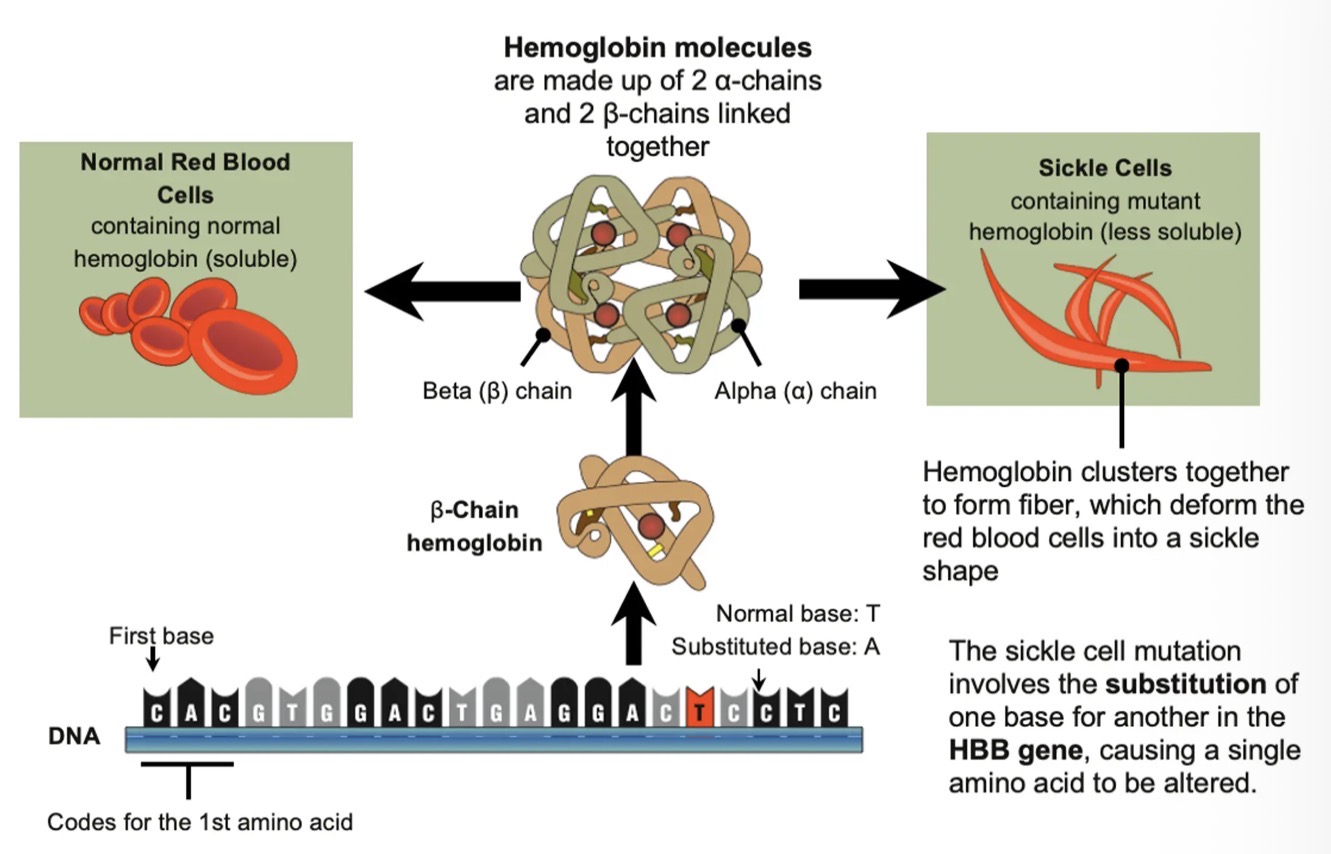
A point mutation/ substitution - a change in one nucleotidein the gene for haemoglobin on chromosome 11.
causes haemoglobin molecules to stick together which distorts red blood cells to a rigid, sickle shape (especially when deoxygenated).
Inhibits the ability of haemoglobin to carry oxygen, therefore reducing oxygen carrying capacity.
The sickle-shaped red blood cells die prematurely, which can lead to anaemia.
The inflexible, sickle-shaped cells can get stuck in small blood vessels and block blood flow - can cause serious medical complications.
Symptoms of Sickle Cell
anaemia
Pain crisis or sickle crisis
Acute chest syndrome
Anaemia
As sickled cells die prematurely, there are less red blood cells available in the body. This results in anaemia.
This can result in shortness of breath and fatigued.
Pain crisis, or sickle crisis
occurs when the flow of blood is blocked to an area because the sickled cells have become stuck in the blood vessel. This results in pain. The pain can occur anywhere, but most often occurs in the chest, arms, and legs.
Can also result in swelling and inflammation of the hands and feet.
Acute chest syndrome
occurs when sickling occurs in the chest. This can be life-threatening.
It often occurs suddenly when the body is under stress from infection, fever, or dehydration.
The sickled cells stick together and block the flow of oxygen in the tiny vessels in the lungs.
This can result in damage to the lungs.
Liver congestion
Sickle cells do not live as long as normal red blood cells and therefore, they are dying faster than the liver can filter them out.
This can result in liver congestion.
Sickle cell trait
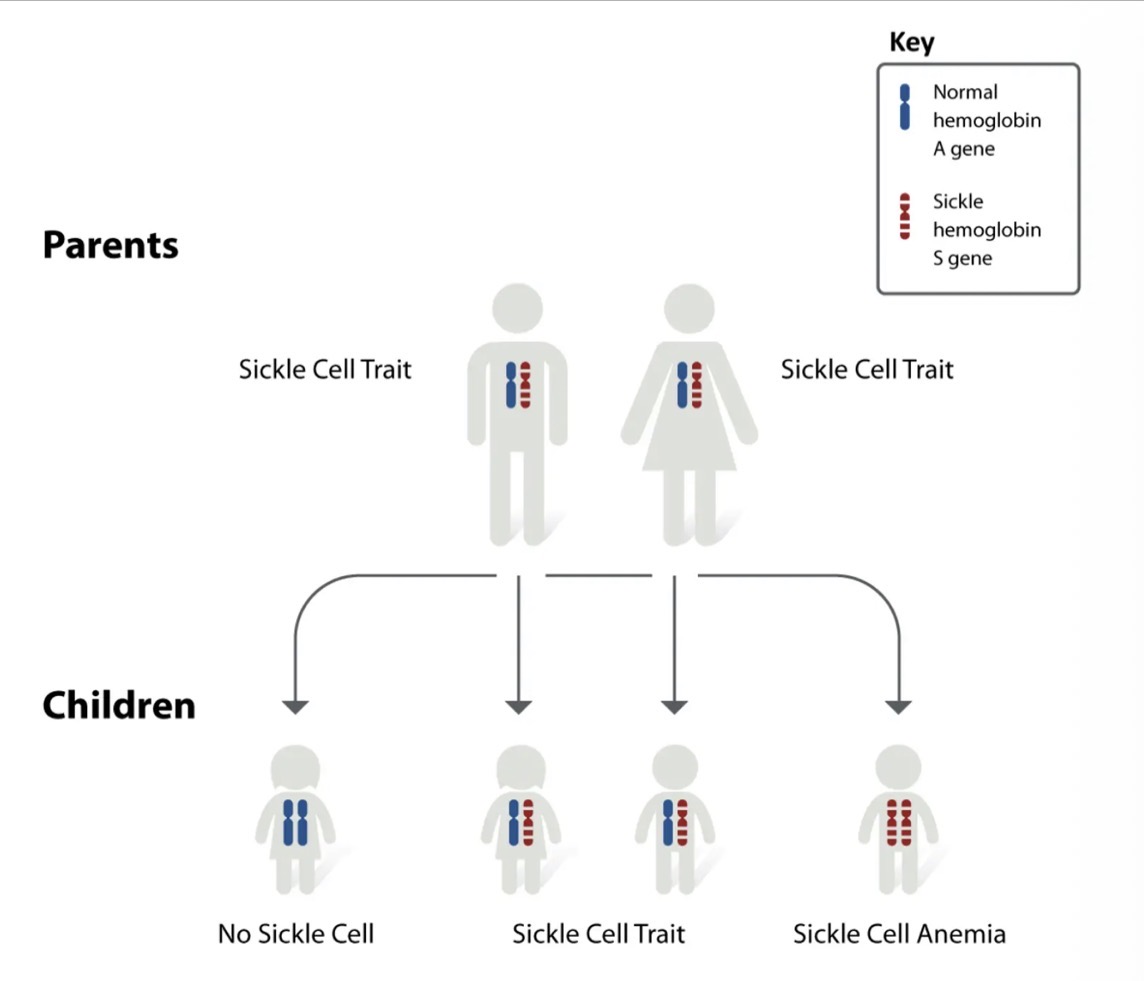
It is important to note that a person with only one sickle-cell allele are said to have the sickle cell trait.
These individuals do not usually have any symptoms but can in situations where oxygen is low in supply i.e. high altitudes experience breathing difficulties.
Transmission of Sickle Cell
Inherited in an autosomal recessive pattern, which means both copies of the gene in each cell have mutations.
The parents of an individual with an autosomal recessive condition each carry one copy of the mutated gene, but they typically do not show signs and symptoms of the condition.
Treatment of Sickle Cell
Early diagnosis and prevention of complications iscritical in sickle cell disease treatment.
Treatment aims to prevent organ damage, prevent infections and treat symptoms.
Treatment may include:
- Pain medications
- Blood transfusions
- Bone marrow transplant
The life expectancy for someone with sickle cell disease tends to be shorter than normal, but with advancements in treatments, it is improving.
Lethal recessives in populations
Lethal alleles arise when a mutation to a normal allele disrupts the function of an essential gene. Without this essential gene, the organism dies.
An allele that causes a fatal disease would be expected to be gradually eliminated from a population.
This is because people with this allele would die and therefore would not pass it onto the next generation.
However, some lethal alleles persist in certain populations.
Malaria and Heterozygous Advantage
Malaria is an infection characterised by fever, shivering, chills and anaemia.
It is caused by species of the Plasmodium parasite, passed on via the bite of an infected mosquito.
When a person is heterozygous for sickle cell it provides some protection from malaria by inhibiting the malaria parasite from reproducing in the body.
In countries where the incidence of malaria is high, the frequency of the sickle cell allele is also high. Malaria is acting as a selective pressure on the sickle cell allele.
Populations were there is a prevalence of the sickle cell trait is Black Africans populations, Indians, Southeast Asians and Italians.