Central Nervous System (copy)
 Call Kai
 Learn
 Practice Test
 Spaced Repetition
 Match
 Flashcards
 Knowt Play
1/81

Earn XP
Description and Tags
82 Terms
What composes the CNS?
Brain and spinal cord
What is the role of afferent nerves?
Receive stimuli from receptors and send to CNS
What is the role of efferent nerves?
Send information to effectors
What are the two types of effectors in the body?
Mechanical (muscle) and chemical (glands)
What are the three types of receptors in the brain?
Interoceptors, proprioceptors, and exteroceptors
Where do interoceptors receive information from?
Organs
Where do proprioceptors receive information from?
Limbs (touch)
Where do exteroceptors receive information from?
Sensory organs (vision, smell, hearing)
What are the three general functions of the brain?
Receive information, process information, and send instructions for response
What is the general function of the spinal cord?
Transmit stimuli to/from brain to PNS
What is the specialized lining of the CNS?
Meninges
Which embryonic layer are the meninges derived from?
Ectoderm
What are the three layers of meninges, from outside to inside?
Dura mater → arachnoid mater → pia mater
Describe the dura mater.
Tough and fibrous
Describe the pia mater.
Only a few cells directly on the surface of the brain.
What is the space between the arachnoid and pia mater?
Subarachnoid space
What does the subarachnoid space contain?
Cerebrospinal fluid
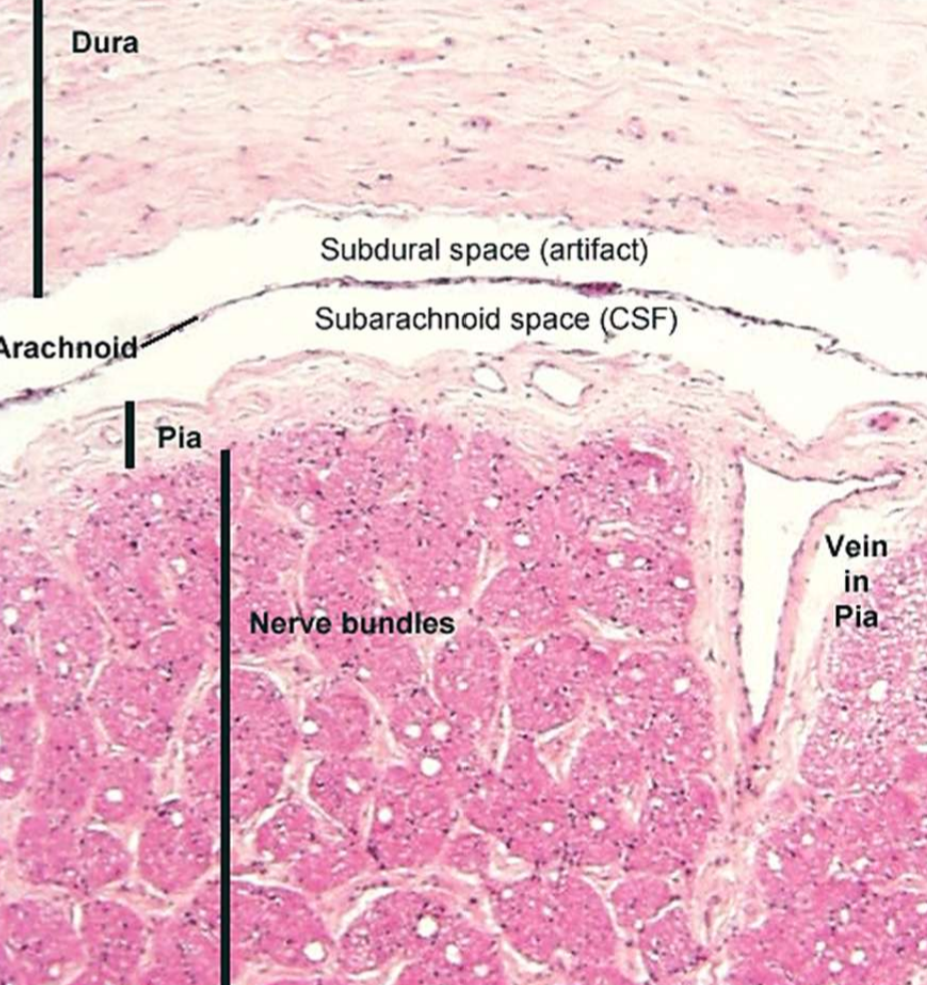
Look at the meninges
I have looked
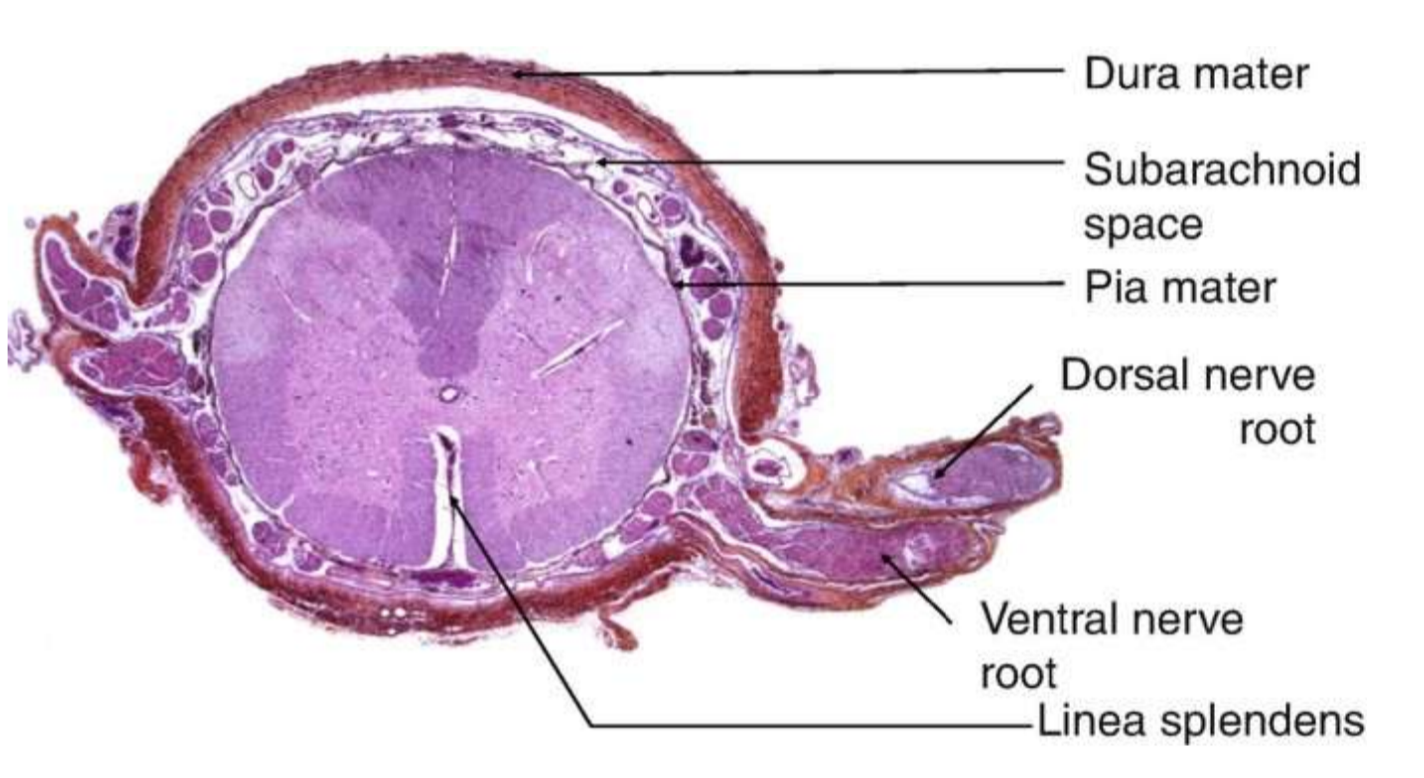
Look at the meninges again
I have looked again
What are the chambers within the brain called?
Ventricles
What are the ventricles in the brain filled with?
Cerebrospinal fluid
What structure makes CSF?
Choroid plexus
What are the three ventricles in the brain, from cranial to caudal?
Lateral → third → fourth
What is the function of CSF?
Protects brain
What is the structure of the choroid plexus?
Tufts of blood vessels
What type of cells form the choroid plexus?
Ependymal cells
What shape are ependymal cells?
Cuboidal
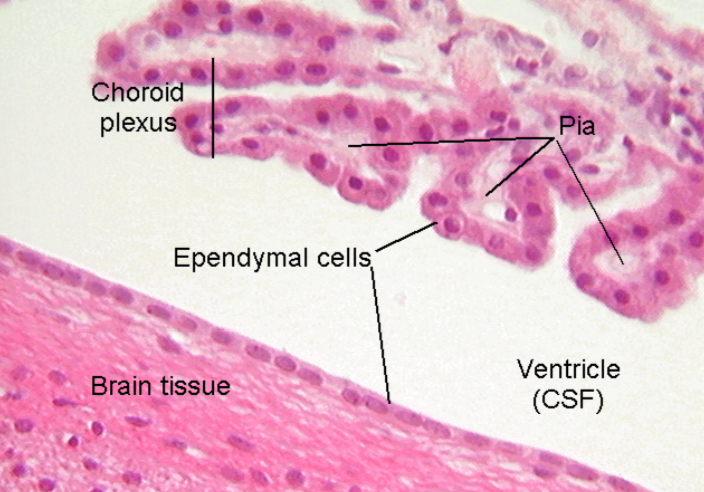
Look at this photo of the choroid plexus
I have looked at the choroid plexus
What is CSF composed of?
Fluid, electrolytes, small proteins/hormones, glucose, neurotransmitters
Which cells have a tight cellular junction and create the blood-brain barrier?
Ependymal cells
What is the blood-brain barrier? Why do we have it?
Separates brain from rest of body → prevents pathogens from entering brain
Fish only have one meninx.
ok
Amphibians, reptiles, and birds have which two layers of meninges?
Dura mater + secondary meninx
In mammals, what does the secondary meninx become?
Arachnoid and pia mater
Which embryonic layer is the brain derived from?
Ectoderm
What are the three embryonic regions of the brain, from cranial to caudal?
Prosencephalon (forebrain) → mesencephalon (midbrain) → rhombencephalon (hindbrain)
What does the prosencephalon divide into?
Telencephalon and diencephalon
What does the rhombencephalon develop into?
Metencephalon and myelencephalon
Why does the embryonic neural tube fold?
To increase surface area
What does the telencephalon differentiate into?
Cerebral hemispheres, hippocampus, and olfactory system
What does the diencephalon differentiate into?
Thalamus, hypothalamus, pituitary gland, pineal gland, retina, optic nerve, mammillary bodies
What does the mesencephalon differentiate into?
Midbrain
What does the metencephalon differentiate into?
Pons and cerebellum
What does the myelencephalon differentiate into?
Medulla
Which embryonic segment of the brain is ubiquitous among species?
Rhombencephalon
Which embryonic segment of the brain is enlarged in sharks, rays, and mammals?
Olfactory bulbs
Which embryonic segment of the brain is enlarged in tetrapods?
Forebrain
What are the three functions of the medulla oblongata?
Contains cranial nerve 6-12 cell bodies
Visceral, autonomic reflexes → respiration, heartbeat
Pathway for ascending stimuli to higher brain and descending stimuli to spinal cord
What is the function of the pons?
Transmit information between cerebellum and cerebral cortex
What type of information does the pons transmit?
Position
What are the functions of the cerebellum?
Maintain equilibrium/balance
Process sensory input
Motor action and learning
Which part of the brain is well-developed in organisms that must survive in currents and stay upright?
Cerebellum
What are the branches on the cerebellum known as?
Arbor vitae
What is the function of the mesencephalon?
Receive and process sensory stimuli
What are the superior and inferior portions of the mesencephalon?
Tectum and tegmentum
The optic tectum receives which type of stimuli?
Visual
The torus semicircularis (part of tectum) receives which type of stimuli?
Auditory
What is the function of cranial nerves three and four in the tegmentum?
Eye movement
Which species have a well-developed mesencephalon?
Fish and amphibians
What are cerebral peduncles (mesencephalon)?
Groups of white matter bodies
What are the “four bodies” in the mesencephalon?
Corpora quadrigemina
What is the narrow channel for CSF in the mesencephalon?
Cerebral aqueduct
What are the black-colored cell bodies in the mesencephalon?
Substantia nigra
What disease is caused by an absence of substantia nigra?
Parkinson’s
What are the names of the bodies that make up the corpora quadrigemina?
Superior and inferior colliculus
What is the function of the thalamus?
Relays sensory/motor info
What kind of function do the hypothalamus and pituitary gland have?
Endocrine
What is the pineal gland involved in?
Circadian rhythm
What are the mammillary bodies involved in?
Emotion, behavior, memory
What is the advantage of a cerebrum with more folds?
Increase surface area to fit more nerve bodies
What are the sulci of the brain?
Grooves on brain surface
What are the gyri of the brain?
Ridges/folds on cerebral surface
What is a proprioceptor?
Sensory receptor that detects position and movement
What are the general functions of the forebrain among species?
Olfaction, behaviors, muscle control
What are the general functions of the midbrain among species?
Vision, lateral line systems
What is grey matter?
Cell bodies of neurons
Where is grey matter found?
Outermost area of brain/innermost area of spinal cord
Where is white matter found?
Innermost area of brain/outermost area of spinal cord
What is white matter?
Myelinated axons
Which part of the grey matter receives incoming afferent sensory information and sends to the brain?
Dorsal horn
Which part of the grey matter controls motor neurons?
Ventral horn
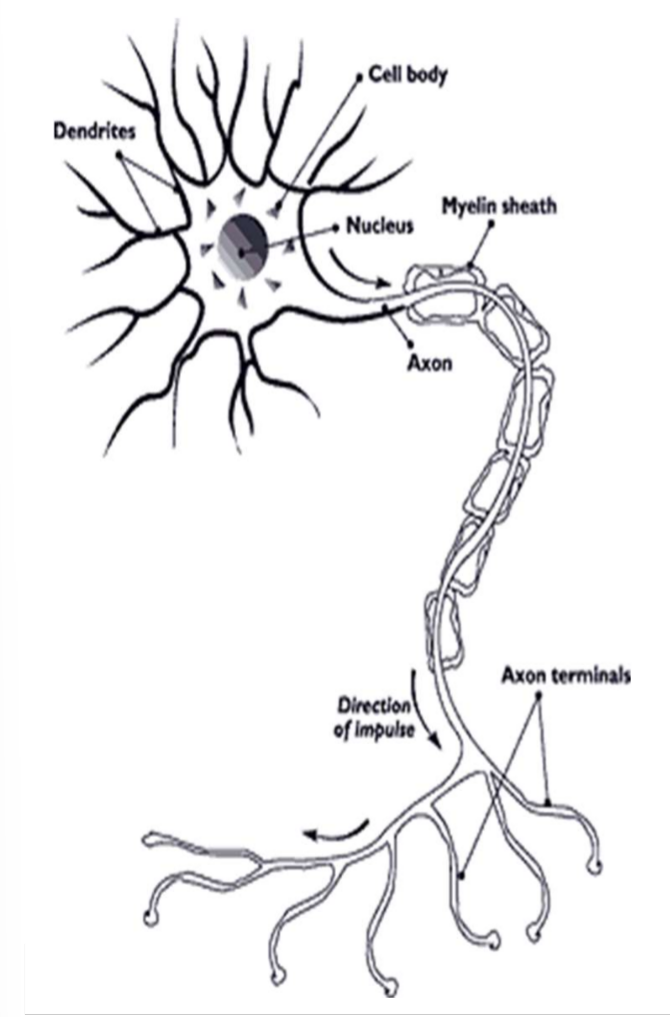
Look at the neuron
I looked at the neuron