Module 7
 Call Kai
 Learn
 Practice Test
 Spaced Repetition
 Match
 Flashcards
 Knowt Play
1/19

There's no tags or description
Looks like no tags are added yet.
20 Terms
what are the accelular pathogens?
viroids
prions
virus
describe viroids in terms of size, composition, & habitat
Smallest pathogens known
Composed of a short strand of circular, single-tranded RNA without a protein coat
All inhabit higher plants (some are economically important)
Composed of nucleic acid but do not code for any protein
describe prions in terms of its cause, composition, structure, & symptoms
Cause brain disease in mammals
Consist of abnormally folded prion protein
Normal prion protein is found throughout the brain & spinal cord in humans & mammals
Disease-causing prions induce abnormal folding patterns when coming into contact with other prion proteins
Symptoms:
Loss of motor control
Dementia
Wasting & eventual death
At post mortem, all animals that die from prion diseases have large vacuoles in the brain
describe virus in terms of composition, what it is, size range, examples (+ define bacteriophage)
Infectious agent made of nucleic acid (DNA or RNA) wrapped in a protein coat called a capsid
Have no nucleus, organelles, cytoplasm, cell membrane, & are non-cellular
Are parasites: an organism that depends entirely upon another living organism to live while harming that organism
size range: nanometres
E.g. flu (influenza), HIV, bacteriophage (viruses that infect bacteria, surrounded by capsid, contains RNA or DNA inside)

identify the shapes of viruses
helical
polyhedral (causes pink eye, pneumonia)
spherical
complex
what are viruses classified into?
Host cell type (they are host specific e.g. animal/plant/bacterial/fungal
Nucleus acid: DNA or RNA
Protein coat structure (shape/number)
how do viruses replicate?
Only reproduce in host cells
Once inside, nuclear material from the virus causes the cytoplasm to produce new viruses → kills host cell & new viruses escape from it
describe how the tobacco mosaic virus enters plant cells & transmits
First virus discovered & purified
Enters plant cells only through mechanical wounds which either temporarily opens the plasma membrane or allow pinocytosis
Transmitted through direct contact between plants or soils
describe how adenovirus is transmitted & what it causes
Receptor mediated endocytosis
Transmitted by contact or faecal oral route
Causes conjunctivitis
what are the cellular pathogens?
bacteria
describe the composition of bacteria
single celled
prokaryotic
cell wall
cell membrane
cytoplasm
circular DNA (no true nucleus)
draw & label a bacterial cell

how does bacteria cause disease?
by producing toxic compounds (exotoxins) or releasing the substances when destroyed (endotoxins)
why is bacteria often the cause of food poisoning?
As toxins retain their destructive capacity beyond bacterial death, they are often the cause of food poisoning
what do bacteria do?
Enter person (host)
Reproduce in a host (require adequate temperature, pH, food & water)
When in host, produce enzymes which break down tissues
where is DNA contained in bacteria?
contained in chromosomal DNA
what forms the nucleoid in bacteria?
the chromosome, several protiens & RNA molecules
describe plasmid DNA
small molecule within a cell
physically separated from chromosomal DNA
replicate independently
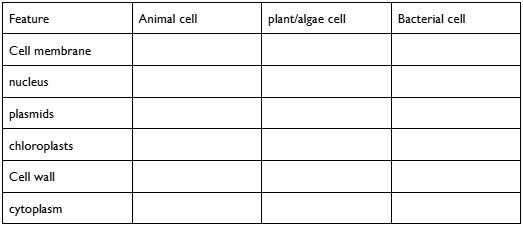
compare

describe tuberculosis: category, transmission, symptoms & effects
Bacteria
Airborne transmission → sneeze, cough, shout, speak, sing
Symptoms & effects
Infects lungs, causing a persistent cough (sometimes blood), fever, & fatigue
Dangerous because it can survive inside immune cells (macrophages) & become latent (non-replicating) & anaerobic