HBS Q2 Quest Unit 2.1 Nervous System, HBS 2.1.0-2.1.7 NS divisions, brain, dissection, neurons, action potentials, synapse, reflex/reactions
 Call Kai
 Learn
 Practice Test
 Spaced Repetition
 Match
 Flashcards
 Knowt Play
1/115

There's no tags or description
Looks like no tags are added yet.
116 Terms
Axon
A threadlike extension of a neuron that carries nerve impulses away from the cell body.

Dendrites
Branchlike parts of a neuron that are specialized to receive information.

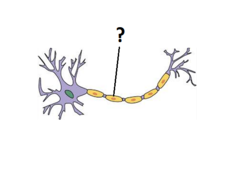
Myelin sheath
a fatty tissue layer segmentally encasing the axons of some neurons; enables vastly greater transmission speed as neural impulses hop from one node to the next
Axon terminals
Branches at the end of the axon that contain tiny pouches, or sacs, called synaptic vesicles.

Cell body/soma
the part of a neuron that coordinates information-processing tasks and keeps the cell alive with the nucleus inside

Glial cells
cells in the nervous system that support, nourish, and protect neurons

pseudounipolar neurons
have only one fused axon that extends from cell body and divides into two processes: one process carries sensory information from sensory receptors to cell body; other process carries sensory information from cell body to spinal cord; sensory neurons that carry information related to pain, touch, and pressure

Unipolar neurons
One process
Cell bodies are in ganglia
Sensory

Bipolar neurons
A neuron that has only two projections (one axon/one dendrite) from the cell body

Multipolar neurons
neuron with one axon and many dendrites; most common type of neuron

Nicotine
a stimulating agonist psychoactive drug in tobacco
Morphine
An agonist: a narcotic drug derived from opium, used to treat severe pain
Caffeine
an antagonist found in coffee, tea, and several other plant-based substances
Cocaine
A reuptake inhibitor drug derived from the coca tree.
GABA
The major inhibitory neurotransmitter in the brain
Glutamate
The major excitatory neurotransmitter in the brain
Serotonin
Affects mood/well-being, hunger, sleep. Undersupply linked to depression.
Acetylcholine (ACh)
A neurotransmitter that enables learning and memory and also triggers muscle contraction
Agonist
A chemical that mimics the action of a neurotransmitter.
Antagonist
a chemical substance that blocks or reduces the effects of a neurotransmitter
Inverse agonist
a substance that binds to a receptor and causes it to do the opposite of what the naturally occurring transmitter does
Reuptake inhibitor
substance that interferes with the transport of released neurotransmitter molecules back into the presynaptic terminal
Potassium channel
Lets (for free) K+ ions out of nerve cell axon into extracellular fluid. Uses passive transport.
Sodium channel
A protein channel in the nerve cell membrane that controls the free flow of Na+ ions into the cell. Uses passive transport.
sodium-potassium pump
a protein in the cell membrane of an axon that uses ATP to actively transport sodium ions out of a cell and potassium ions into the cell to reset the ion concentration gradients
Depolarization
The process during an action potential when sodium ions are allowed to flow down their concentration gradient into the cell causing the interior become less negative/more positive.

Repolarization
The process during an action potential when potassium ions are allowed to flow down their concentration gradient into the cell while sodium exits the cell causing the interior to become less positive/more negative.

Hyperpolarization
The movement of the membrane potential inside a neuron below resting potential where the sodium-potassium pump resets the ion concentrations to resting potential before the neuron can begin another action potential.

-70mV
resting membrane potential
Threshold potential
The minimum membrane potential -55mV that must be reached in order for an action potential to be generated.
Resting potential
The difference in electric charge between the inside and outside of a neuron's cell membrane -70mV when a neuron is not yet firing an action potential.
Action potential
the brief change in electrical potential (from negative to positive) associated with the passage of an impulse down the axon membrane of a nerve cell. AKA impulse
Frequency of an action potential
The amplitude (height) of an action potential is always the same so it is the frequency of an AP that conveys stimulus strength
-stronger stimulus = more frequent APs
ex: do you want to tap or kick a soccer ball
Hydrophobic
Having an aversion to water; tending to coalesce and form droplets in water. ex: oil, fat
Hydrophilic
Loves water, mixes well with water ex: dirt, soda
Phospholipid heads are
hydrophilic & polar
Phospholipid fatty acid tails are
hydrophobic & nonpolar
Synapse
the thin gap between the axon tip of the sending "pre-synaptic" neuron and the dendrite or cell body of the receiving "post-synaptic" neuron
Neurotransmitter
chemical used by a neuron to transmit a signal across a synapse to the next neuron
Calcium channels
a type of ion channel located on the axon terminals of a neuron. Are activated when the action potential reaches the end of the axon, then they cause vesicles full of neurotransmitters to fuse with the axon terminal and release their contents into the synapse.
homeostasis
A tendency to maintain a balanced or constant internal state; the regulation of any aspect of body chemistry, such as blood glucose, around a particular level
active transport
Energy-requiring process that moves material across a cell membrane against its concentration gradient
passive transport
Requires no energy, flow of molecules from a high to low concentration, Moves down their concentration gradient ex: diffusion
phospholipid
A molecule that is the main building block of of cell membranes; having a polar, hydrophilic head and 2 nonpolar, hydrophobic tails.
concentration gradient
A difference in the concentration of a substance across a distance or membrane ex: having more sodium outside a neuron at rest than inside the neuron means if a channel opens the sodium will flow INTO the cell, DOWN its concentration gradient
salty banana
When a neuron is at rest there is more sodium outside and more potassium inside the neuron
Reflex
a simple, automatic response to a sensory stimulus, only goes up to the spinal cord and back hence FAST
Reaction
a calculated response to something that required brain integration & processing, which takes more time the more complex the task is
Patellar tendon
the tendon that encompasses the patella and extends distally across the front of the knee, used in the patellar reflex test to lengthen the quad muscles
Stimulus
A change in an organism's surroundings that causes the organism to respond
Effector
An organ (a gland or muscle) that becomes active in response to nerve impulses.
Sensory/Afferent neuron
transmits action potentials from receptors to CNS to report a sensation
Motor/Efferent neuron
transmits action potentials from CNS to effectors (muscles, glands)
White matter
Whitish nervous tissue of the CNS consisting of neuron axons and their myelin sheaths.
Gray matter
Brain and spinal cord tissue that appears gray with the naked eye; consists mainly of neuronal cell bodies (nuclei), glial cells, blood vessels, and lacks myelinated axons.
Mean
the arithmetic average of a distribution, obtained by adding the scores and then dividing by the number of scores
Range
the difference between the highest and lowest scores in a distribution
Spinal nerve
a peripheral nerve attached to the spinal cord that connects the PNS and CNS

Interneuron
A nerve cell that relays messages (or stop them) between afferent and efferent nerve cells, especially in the brain and spinal cord. Usually have no myelin sheath (and often found in gray matter)

Outlier
A value much greater or much less than the others in a data set (>1.5 times the mean)
Reaction speed over lifespan
Fastest (lowest time) during ages 21-30
Reflex speed over lifespan
Stays about the same, maybe gets slightly slower as we age
What was the purpose of the neuropharmacology cricket lab in 2.1.5?
Show how different drugs affected the nervous system - excitatory or inhibitory to action potentials. Ex: nicotine increased action potential firing while glutamate reduced it
& to see if crickets are a good model organism for studying human physiology
Frontal Lobe
Responsible for problem-solving, reasoning, personality, and motor skills (movement).
Parietal Lobe
Contains the area where bodily sensations occur, such as touch and pain.
Temporal Lobe
Contains areas important to hearing and understanding speech/language.
Occipital Lobe
Contains areas important to vision.
Medulla Oblongata
Part of brain stem that controls vital autonomic processes like regulation of breathing, heart rate and blood pressure.
Cerebellum
Control of finely coordinated movements. Coordination center, voluntary movement and balance.
Cerebellum image

Cerebrum image

Frontal Lobe image

Medulla Oblongata image

Occipital Lobe image

Parietal Lobe image

Brain Stem image

temporal Lobe image

Spinal Cord
Sends signals between brain and rest of body, part of the CNS

Brain Stem
Oldest part of the brain, responsible for survival functions (e.g. breathing, heart beat, etc.); includes medulla and pons; aka "the lizard brain"

Pons
Responsible for coordination and movement (relays messages between cerebrum and cerebellum); involved in sleep, dreams, and attention.

Thalamus
Relays information from the senses and transmits the information to the cerebral cortex.

Limbic System
Collectively: the Hippocampus, Amygdala, Pituitary Gland, Hypothalamus; involved in emotion

Hippocampus
Helps to form memories ("hippo never forgets")

Amygdala
Fight or flight, emotional center, anger or fear, happy or sad

Hypothalamus
Controls body temperature (the body's thermostat), circadian rhythms, and thirst and hunger, and smell.

Pituitary gland
The "master" endocrine gland, responsible for growth.

Corpus Callosum
Thick band that connects left and right hemispheres of the brain.

Cerebrum
Information processing, outer layer of brain.

Lobes of the cerebrum
Occipital, Temporal, Parietal, Frontal

motor cortex
area at the rear of the frontal lobes that controls voluntary movements

sensory cortex
area at the front of the parietal lobes that registers and processes senses, body touch, and movement

Broca's area
controls language expression - an area in the frontal lobe, that directs the muscle movements involved in speech.

Role of the nervous system
-coordinates all body systems
-detects and responds to stimuli
-brain and spinal cord act as switching centers
-nerves carry messages to and from centers
CNS
central nervous system

PNS
peripheral nervous system

how do central and peripheral nervous system work together?
The nerves of the PNS extend from the central nervous system to the outermost areas of the body. The peripheral system allows the brain and spinal cord to receive and send information to other areas of the body, which allows us to react to stimuli in our environment.
How did Henry Molasion's surgery pave the way for further exploration?
While the surgery was successful, it led to H.M. suffering from anterograde amnesia, in which he could no longer form or keep new memories. His case was important as scientists figured out the function of the hippocampus and studied memory and cognitive abilities of the portions of the brain responsible for memory.
Why is the story of Phineas Gage considered so extraordinary? What does his story teach us about the brain?
He survived a pole through his head and his changed personality was linked with his head injury
Afferent Nervous System
consists of all ingoing sensory pathways from PNS to CNS, carrying information from receptors to brain or spinal cord for processing
Efferent Nervous System
consists of all outgoing motor pathways from CNS to organs/glands/etc. to initiate a response