310 exam 1
 Call Kai
 Learn
Learn Practice Test
 Spaced Repetition
 Match
Match Flashcards
 Knowt Play
1/122

There's no tags or description
Looks like no tags are added yet.
Name | Mastery | Learn | Test | Matching | Spaced | Call with Kai | Chat |
|---|
No analytics yet
Send a link to your students to track their progress
123 Terms
A complex physiologic process that keeps circulating blood in a fluid state:
Hemostasis
The hemostatic system:
All of the above
Procoagulant:
initiates clotting if required
Anticoagulant:
prevents undesirable clotting
Fibrinolytic:
clot breakdown
1˚ hemostasis
vascular system & platelets
2˚ hemostasis
coagulation system
mucocutaneous bleeding (petechiae, purpura, & echymosis) is a clinical manifestation of ___ hemostasis
1˚
anatomical bleeding and thrombosis (due to control protein deficiency) are clinical manifestations of ___ hemostasis
2˚
Which of the following are not involved in 1˚ hemostasis PLT function studies?
Bleeding time (PFA-100)
PBS eval & PLT count
PLT aggregometry
vWF analysis
ROTEM (magnetic)
PT/INR
ROTEM & PT/INR
Which of the following are not involved in 2˚ hemostasis lab investigations?
Bleeding time (PFA-100)
PLT aggregometry
ROTEM (magnetic)
PT/INR
Reflex testing
PLT function studies (PLT aggregometry) & Bleeding time (PFA-100)
What is the first response to damage in 1˚ hemostasis?
Blood vessel vasoconstriction
What produces a smooth, natural anti-coag lining when intact to facilitate blood flow?
Blood vessels
The larger the blood vessel, the _____ involvement of the hemostatic system to seal the breach
more
Correlate the correct vessel to the type of bleeding:
Capillaries, venules, and arterioles
Veins
Arteries
1.petechiae, 2.ecchymosis, 3.blowout hemorrhage
Capillaries generally require what for breach-sealing?
Generally direct sealing
Venules and arterioles generally require what for breach-sealing?
Mostly fused platelets
Veins and arteries generally require what for breach-sealing?
Vascular contraction & Hemostatic factor activation & Fused platelets
The BV layers from blood side to tissue side:
tunica intima, tunica media, tunica adventitia
The tunica intima layer consists of?
endothelial cells, sub-endothelium, basement membrane, collagen
The tunica media layer consists of?
elastic fibers of smooth muscle for vasoconstriction
The tunica adventitia layer consists of?
connective tissue and nerves for structural support
What three things maintain the integrity of a BV wall?
endothelial cells, connective tissue of the sub-endothelium, and platelets
Anticoagulant properties of an intact endothelium:
endothelium cells secrete prostacyclin (PGI2), nitric oxide (NO), heparin sulfate, tissue factor pathway inhibitor (TFPI), and tissue plasminogen activator (TPA). ECs also express endothelial protein C receptor (EPCR) and thrombomodulin
Procoagulant properties of an injured endothelium:
vasoconstriction, exposed collagen and tissue factor (TF), released vWF and plasminogen activator inhibitor (PAI)
vWF has the capability to connect to what 4 things?
FVIII, platelets, fibrinogen, and collagen
Platelets or thrombocytes are derived from cytoplasmic fragmentation of?
megakaryocytes (MK)
What differentiates megakaryocytes from osteoblasts?
megakaryocytes are multi-nucleated and fused
MK development and maturation follows the following sequence under the influence of cytokines such as:
IL-3, IL-6, IL-11, TPO: CMP, BFU-Meg, CFU-Meg, MK-I, MK-II, MK-III
MK development and maturation follows what type of division?
endomitosis & endoreduplication
Endomitosis occurs only at what stage(s)?
MK-I & MK-II
What facilitates subdivision of the MK cytoplasm during thrombocytopoiesis?
demarcation membrane system (DMS)
During thrombopoiesis, MK-III cells start shedding what?
proplatelets
Release of proplatelets occur at what stage of megakaryocyte development?
MK-III
What are anucleated cytoplasmic fragments (derived from MKs) with an average diameter of 2-4 µm and MPV 8-10 fL?
platelets
___% of platelets are in circulation while ___% are sequestered in the spleen
70; 30
The spleen will sequester more platelets if it is?
hyperactive
In order to perform a hemostatic task optimally, PLT must have normal function and count must be at least?
100,000
A patient with at least _______ normally functioning platelets can undergo most surgeries without major bleedings
50,000
Glycocalyx, platelet membrane, and open canalicular system (OCS) are all in what zone?
peripheral zone
circumferential microtubules and microfilaments are in what zone?
sol-gel zone
alpha & dense granules, mitochondria, dense tubular system (DTS), and peroxisomes are all in what zone?
organelle zone
ADP, ATP, calcium, and serotonin are examples of?
dense granules
plasminogen, α2-Antiplasmin, albumin, high molecular weight kininogen (HMWK), fibrinogen, vWF, and FVIII are examples of?
alpha granules: plasma proteins
thrombospondin, platelet factor 4, beta-thromboglobulin, and platelet-derived growth factor (PDGF) are examples of?
alpha granules: platelet-specific proteins
This glycoprotein receptor is for PLT adhesion to the subendothelium
GPIb/IX/V
This receptor is for PLT adhesion to each other (aggregation)
GPIIb/IIIa
P2Y1, PAR1, α2A, GPVI, and GPIb/IX/V
are all receptors for?
agonists
GPIb/IX/V is the receptor for?
vWF
GPIIb/IIIa is the receptor for?
fibrinogen
GPVI is the receptor for?
collagen
A patient with GPIb/IX/V deficiency will experience thrombosis upon exposure to the antibiotic ristocetin
False
Platelet plug formation span several responses which proceed sequentially and rapidly:
shape change, platelet adhesion, granular secretion, platelet aggregation
Platelet adhesion requires?
vWF, GPIb/IX/V, collagen fibers
arterioles have _____ ______ ______. so PLTs can directly bind to collagen easily
lower sheer force
arteries have _____ ______ ______. so PLTs require vWF and collagen binding through GPVI
higher sheer force
When platelets are exposed to agonists (like collagen, ADP, thrombin, and TXA2), they …?
change shape to spheres with pseudopodia
What is a critical step in triggering the secondary wave of aggregation?
ADP from dense granules is released to amplify PLT secretion and aggregation
Platelet aggregation requires?
calcium, fibrinogen, and GPIIb/IIIa
For the release reaction of ADP secretion to occur, …?
the stimulus must be strong enough
To stabilize an injury, the platelet plug requires activation of what?
2˚ hemostasis and formation of fibrin
What tests should be performed if the patient presents with bleeding history but the PLT count if normal?
PLT function studies
Bleeding time reference interval
2.5 - 9.5 mins
The bleeding time (BT) test …
is a screening test which evaluates 1˚ hemostasis issues but is prone to variations
Aspirin, NSAIDs, and antihistamines _____ BT
prolong
the screening test PFA-100 uses …?
citrated whole blood
the mechanism for PFA-100 is based on?
optical aggregometry
BT: in vivo
PFA-100: in vitro
True
What is the gold standard in PLT function studies?
Platelet aggregation (using PLT aggregometer)
How does light transmission platelet aggregometry (LTA) work?
As the agonists are added to PLT-rich plasma in constant agitation, higher % transmittance means higher aggregation rate
An LTA result of 30% is…?
Abnormal
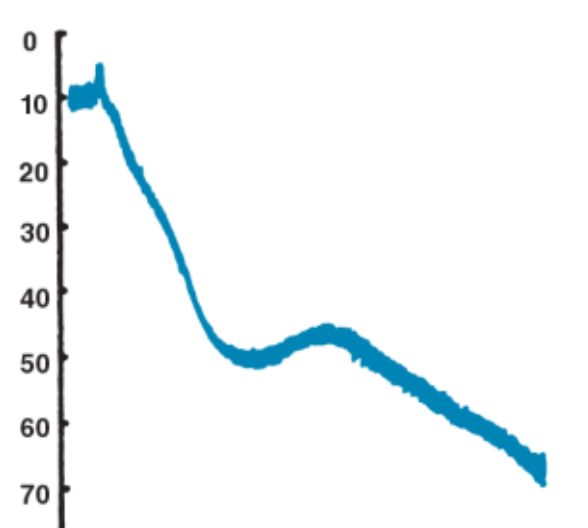
A biphasic aggregation trace pattern is produced by which agonist?
ADP

A primary wave followed by disaggregation trace pattern is produced by what level of ADP?
very low concentration

A single broad wave of aggregation trace pattern is produced by what level of ADP?
high concentration
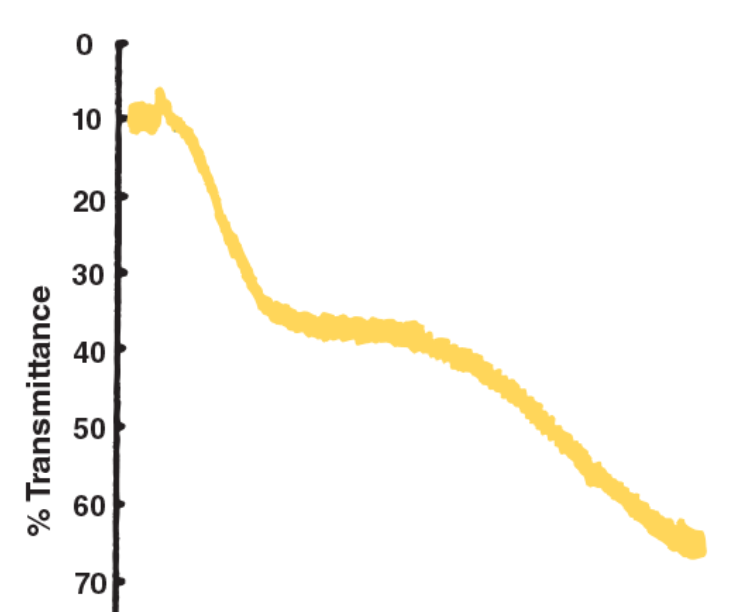
A biphasic aggregation trace pattern is produced by which two agonists (not ADP)?
epinephrine & thrombin
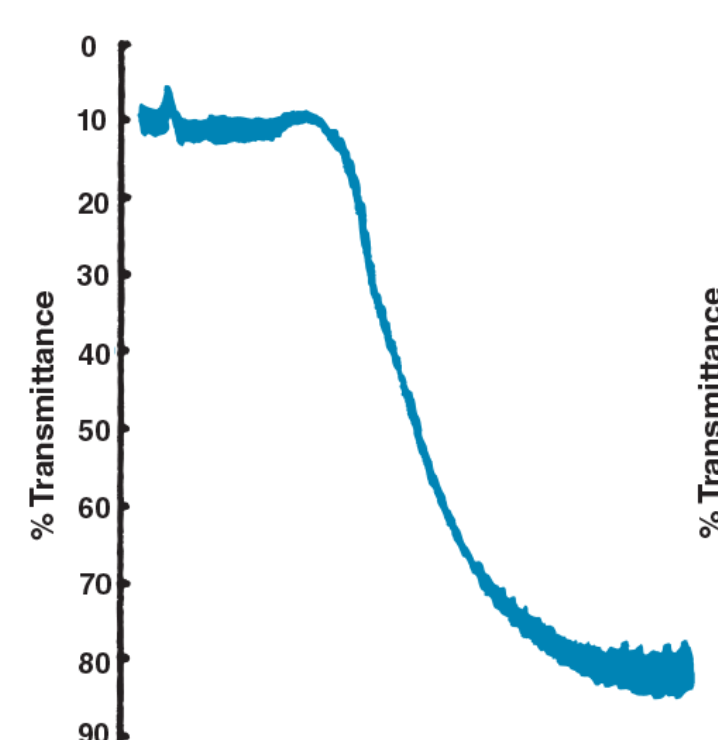
A lag phase followed by a single broad wave of aggregation trace pattern is produced by what agonist?
collagen
The LTA pattern for severe fibrinogen deficiency is?
No curve because no aggregation
The LTA pattern for storage pool disease is?
Single wave
The LTA pattern for GPIb/IX/V deficiency is?
Reduced aggregation
The LTA pattern for GPIIb/IIIa deficiency is?
No curve because no aggregation
The LTA pattern for vWF deficiency is?
Reduced aggregation
The LTA pattern for regular aspirin consumption is?
Reduced aggregation, no secondary wave
Adding healthy plasma to a patient sample that produces a reduced LTA trace pattern will…?
Normalize vWF deficiency but have no effect on GPIb/IX/V deficiency
thrombocytopenia is defined by?
PLT count below 150 × 10^3/µL
Which of the following coagulation proteins is a “co-factor”?
FVIII
Which of the following coagulation factors is a serine protease?
FX
This coagulation method test takes advantage of the protease activity of a coagulation factor to measure its activity
Chromogenic
Do the following have “anti-coagulant” properties?
PGI2 (prostacylcin)
NO (nitric oxide)
heparan sulfate
Yes, they are produced by intact endothelium cells
Which endothelium-derived factor is “thrombogenic”?
vWF
beta–thromboglobulin
alpha: platelet specific protein
fibrinogen
alpha: plasma protein
calcium
dense
plasminogen
alpha: plasma protein
In a patient who is deficient in PAR1 receptor, PLT response to which agonist will be impaired?
thrombin
In a patient who is deficient in P2Y1 receptor, PLT response to which agonist will be impaired?
ADP
In a patient who is deficient in alpha2-adregnergic receptor, PLT response to which agonist will be impaired?
arachidonic acid
In a patient who is deficient in GPVI receptor, PLT response to which agonist will be impaired?
collagen
which of the following has thrombogenic qualities?
TF
ROTEM:
magnetic detection
chromogenic
protease activity detection