brain structure and function
 Call Kai
 Learn
 Practice Test
 Spaced Repetition
 Match
 Flashcards
 Knowt Play
1/77

There's no tags or description
Looks like no tags are added yet.
78 Terms
Cranial nerve I – Olfactory
Sensory; sense of smell; passes through the olfactory foramina of the cribriform plate.
Cranial nerve II – Optic
Sensory; vision; passes through the optic canal.
Cranial nerve III – Oculomotor
Motor; controls eye movements, passes through the superior orbital fissure.
Cranial nerve IV – Trochlear
Motor: moves the eye downward; passes through the superior orbital fissure.

Cranial nerve V – Trigeminal
Mixed; facial sensation and chewing; passes through superior orbital fissure

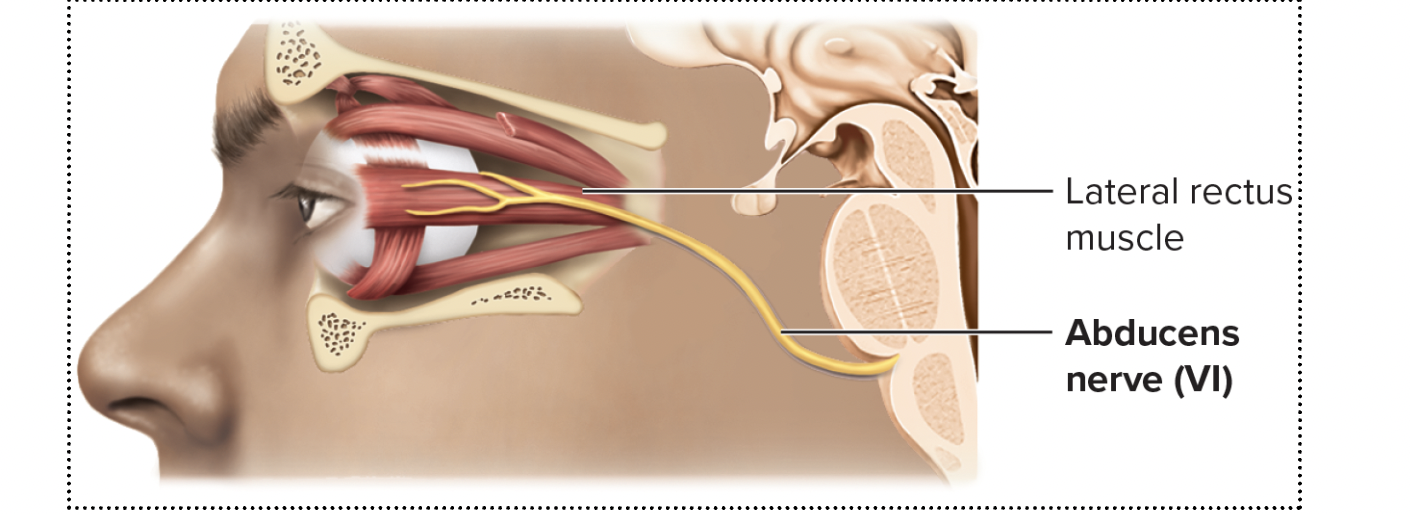
Cranial nerve VI – Abducens
Motor; moves the eye outward; passes through the superior orbital fissure.
Cranial nerve VII – Facial
Mixed; controls facial expressions; enters through the internal acoustic meatus

Cranial nerve VIII – Vestibulocochlear
Sensory; hearing; passes through the internal acoustic meatus.

Cranial nerve IX – Glossopharyngeal
Mixed; helps with swallowing; passes through the jugular foramen.

Cranial nerve X – Vagus
Mixed; controls digestion; passes through the jugular foramen.
Cranial nerve XI – Accessory
Motor; helps control head turning; enters through the foramen magnum
Olfactory tract
Carries smell information toward the brain.
Parietal lobe
Processes touch and sensory information
Temporal lobe
Processes hearing and memory
Longitudinal fissure
seperates the two cerebral hemispheres
Postcentral gyrus
processes touch sensations
Precentral gyrus
controls voluntary movement
Optic nerve (II)
Carries visual information to the brain.
Optic chiasma
allows some visual nerve fibers to cross
Optic tract
Carries visual information toward the thalamus
Hypothalamus
Regulates body temperature and hunger
Mammillary bodies
helps with memory processing
Pituitary gland
Releases hormones that regulate growth
Pineal gland
Produces melatonin
Midbrain
controls visual and auditory reflexes
Cerebral peduncles
carry motor signals from the cerebrum
Superior colliculi
controls visual reflexes
Inferior colliculi
control auditory reflexes
Pons
helps regulate breathing
Medulla oblongata
Controls heart rate and breathing
Olives
helps coordinate movement
Pyramids
carry voluntary motor signals
Cerebellum
Coordinates balance and movement
Vermis
helps control posture and balance
Arbor vitae
carries information within the cerebellum
Lateral ventricles
contains cerebral spinal fluid
Third ventricle
contains cerebral spinal fluid in the diencephalon.
Fourth ventricle
contains cerebral spinal fluid between brainstem and cerebellum
Cerebral aqueduct
connects the third and fourth ventricles
Choroid plexus
produces cerebral spinal fluid
Corpus callosum
connects the two cerebral hemispheres
Fornix
helps with memory
Frontal lobe
controls decision making and voluntary movement