ansc314 - carbohydrates pt 2
 Call Kai
 Learn
 Practice Test
 Spaced Repetition
 Match
 Flashcards
 Knowt Play
1/29

There's no tags or description
Looks like no tags are added yet.
30 Terms


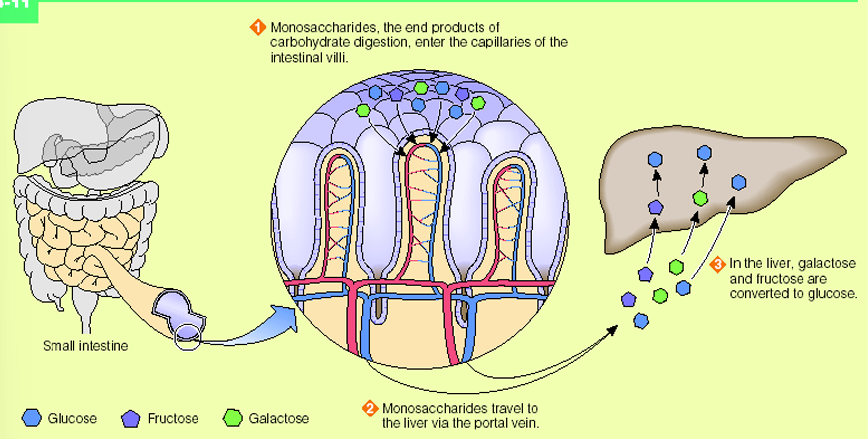
monosaccharide absorption
amylase
in saliva & small intestine
starts breaking down carbohydrates
notes to remember
results in oligo-, tri-, or disaccharides
intestinal wall (duodenum, jejunum)
maltase, lactase, sucrase, & oligoglucosidase → all MONOsaccharides
only MONOsaccharide forms absorbed
digestion of disaccharides happen on surface of brush border of s. intestine
glucose transport
glucose absorbed w/ active transport & diffusion
active transport uses ATP (Na-K-ATPase pump)
diffusion occurs when concentration of glucose is bigger outside mucosal cell compared to inside
glucose conversion
fructose & galactose are converted to glucose in the liver
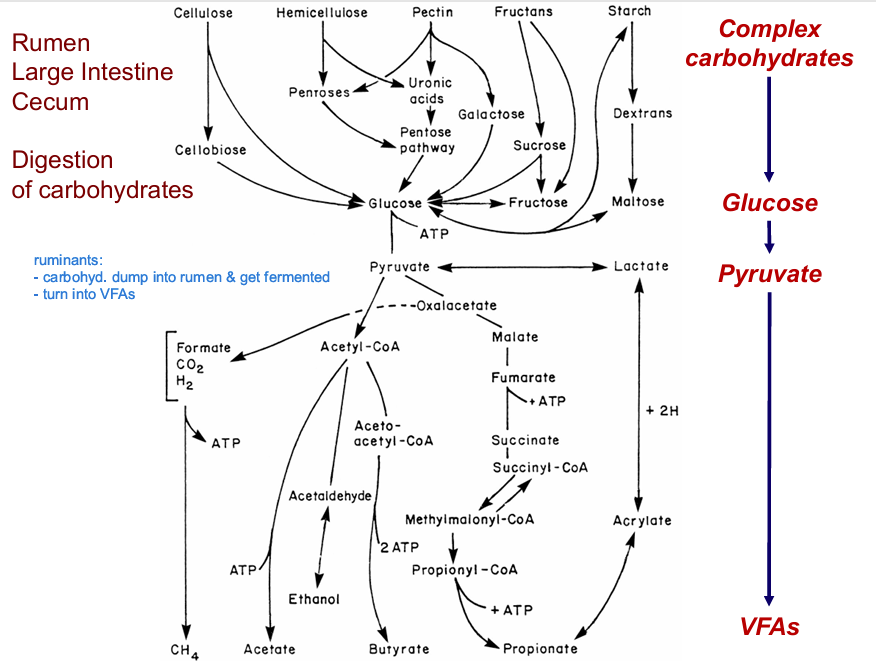
carbohydrate digestion
carbohydrate metabolism
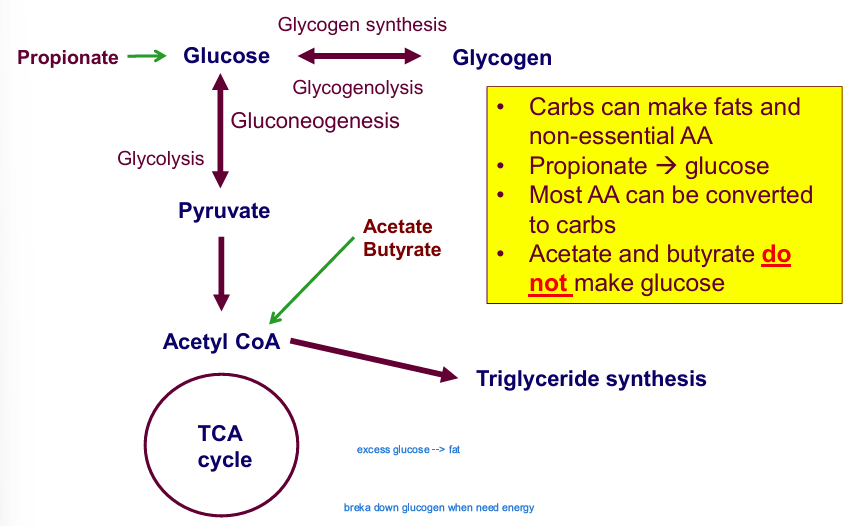
carbs make fats & non-essential amino acids (AA)
excessive glucose → fat
propionate → glucose
most AA converted → carbs
break own glucogen when need energy
acetate & butyrate DO NOT make glucose
story line: humming bird
extreme nutritional adaptations in a humming bird
Metabolism 77 times faster than human’s
equivalent of ~150,000 calories/ day
Extreme hyperglycemia
Fed glucose ~42 mM (740 mg/dL)
fasted ~17 mM (300 mg/dL)
Specialized evolution to handle high sugar loads
extreme mechanisms to sustain high rates of glycolysis
human glucose lvl: ~82 mg/dL
organ glucose metabolism

carbohydrate functions
provide energy
Brain and CNS (can use ketones too)
Mammary (lactose) of non-ruminants
e.g. humans
Fetal tissue
quick source of fuel
used energy in muscle (sprinting)
energy currency
sugars convert → glucose → used in muscle when available → made → glycogen & fat
part of DNA/RNA (ribose)
plant structure (cellulose)
glycemic response
effect of a food on the extend and/or duration of the rise in blood glucose levels
glycemic index (GI)
measured based on the extent to which a food containing 50g of carbohydrates increases blood glucose concentrations

fiber
nutritional
dietary components resistant to mammalian enzyme digestion
chemical
cellulose, hemicellulose, lignin, pectin
botanical
plant cell wall material
measure fiber
Plant cell wall
Structural carbohydrates
Cellulose, hemicellulose
Lignin
Pectin (soluble fiber)
NDF: cellulose, hemicellulose, lignin (no pectin)
ADF: cellulose, lignin (ADF increases digestibility decreases)
CF: cellulose, lignin, some hemicellulose, some pectin
There is a little protein & ash in both as well

fiber analysis
crude fiber
neutral detergent fiber (NDF)
acid detergent fiber (ADF)
crude fiber
not accurate estimate of nutritional fiber
legally required on food & feed labels
lignin, cellulose, some hemicellulose, some pectin
obtained by defatting sample (ether) and boiling in 1.5% H2SO4 for 30 min, and 1.5% NaOH for 30 min
neutral detergent fiber (NDF)
Used in accurate animal diet formulation
Lignin, cellulose and hemicellulose
Boil in pH-7 detergent solution for 60 min
Dry residue is NDF
acid detergent fiber (ADF)
Lignin and cellulose (dissolves hemicellulose)
Boil in pH-2 detergent solution for 60 min
alfalfa ADF/NDF
↑ maturity → ↑ fiber content in general

fiber functions
insoluble fiber (NDF)
soluble fiber (pectin)
insoluble fiber
NDF
Energy for ruminants and hindgut fermenters
Hydrate food and regulate passage
Gut fill, regulate intake
Increases rumination
Increases intestinal cell turnover, growth
Improves gut health
soluble fiber
pectin
Decrease blood sugar spikes
Decreases LDL by trapping cholesterol
fiber sources
Forages (grass, legume, whole-plant material)
Legume seeds (pectins)
Beans, peas
Bran (insoluble)
e.g. oatmeal, whole-wheat bread
Byproducts (cotton seed hulls, soy hulls)
Fruits
Apples, pears, plums
Vegetables
Artichoke, broccoli
ruminant fiber deficiency
Low milk fat
Decreased rumination
Low feed intake
Off feed
Low rumen pH, acidosis, laminitis
Displaced abomasum – death
horse fiber deficiency
colic
diarrhea
hunger
human fiber deficiency
Constipation
Irritable bowel
Weight gain (?)
Blood sugar fluctuations
Nausea and tiredness
excess fiber
Decreased energy intake
Weight loss
Decreased production and growth rate
Lower feed digestibility
Discomfort
effective fiber
Finely chopped fiber has less effect on passage and digestion
High fiber digestibility has less fiber effect
Low fiber digestibility can decrease DM and energy intake
If less than 20% of cows are ruminating, effective fiber may be low
Ruminants should have 1/3 fiber from source with particle length > 1.5” (not soy hulls)