Chemistry Unit 1
 Call Kai
 Learn
Learn Practice Test
 Spaced Repetition
 Match
Match Flashcards
 Knowt Play
1/63

Earn XP
Name | Mastery | Learn | Test | Matching | Spaced | Call with Kai | Chat |
|---|
No analytics yet
Send a link to your students to track their progress
64 Terms
Element Symbols
abbreviations for the chemical elements

Law of Constant Composition
A given compound always has the same composition regardless of where it comes from
Dalton's atomic theory
1. elements are made of atoms
2. all atoms of a given element are identical
3. atoms of one element combine with atoms of other elements toform compounds, which have the same relative numbers and types of atoms
4. atoms are not created or destroyed, chemical reactions change the grouping of atoms
Atom
Basic unit of matter

Compound
Substance made of atoms of two or more elements, always contains the same relative mass of elements
Chemical Formula
expresses types of atoms and number of each type in each molecule of a compound

Electron
A subatomic particle that has a negative charge (outside of nucleus)
Nuclear Atom
atom with a dense center of positive charge
Nucleus
Dense center of an atom

Proton
positively charged particle in the nucleus of an atom
Neutron
neutral charged particle (no charge) in the nucleus of an atom
Isotopes
atom of the same element with different mass number (different number of neutrons)
Atomic number (Z)
The number of protons in an atom, determines which element it is
Mass number (A)
The total number of neutrons and protons in an atom
Periodic Table
Shows all known elements and information about each
Group
Family of elements with similar characteristics
Alkali Metals
any metal in Group 1A of the periodic table

Alkaline earth metals
metallic elements in group 2 of the periodic table which are harder than the alkali metals and are also less reactive

Halogens
Group 7A

Noble Gases
the elements in Group 8A of the periodic table, don't usually combine with atoms of the same element

Noble metals
relatively nonreactive (gold, silver, platinum) found nearly pure in natural environments

Transition metals
elements that form a bridge between elements on the left and right sides of the periodic table

Metals
1. efficient conduction of heat/electricity
2. malleability
3. ductility
4. lustrous (shiny appearance)
Nonmetals
small number of elements, metals properties (most are gaseous at room temp.)
Metalloids
Elements that have properties of both metals and nonmetals (close to stair-step line)

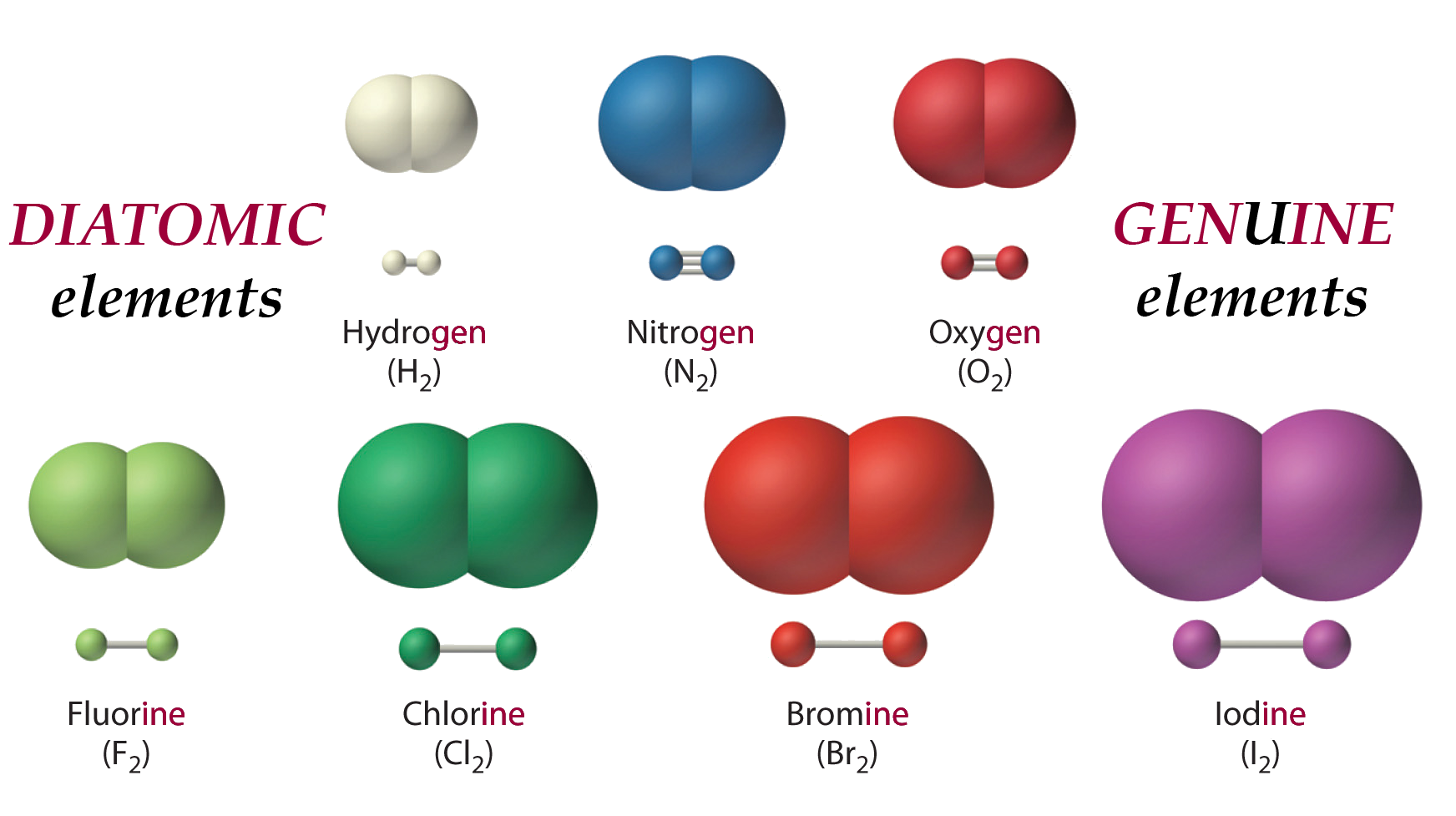
Diatomic molecule
Molecule made of two of the same element (nitrogen gas, oxygen gas)
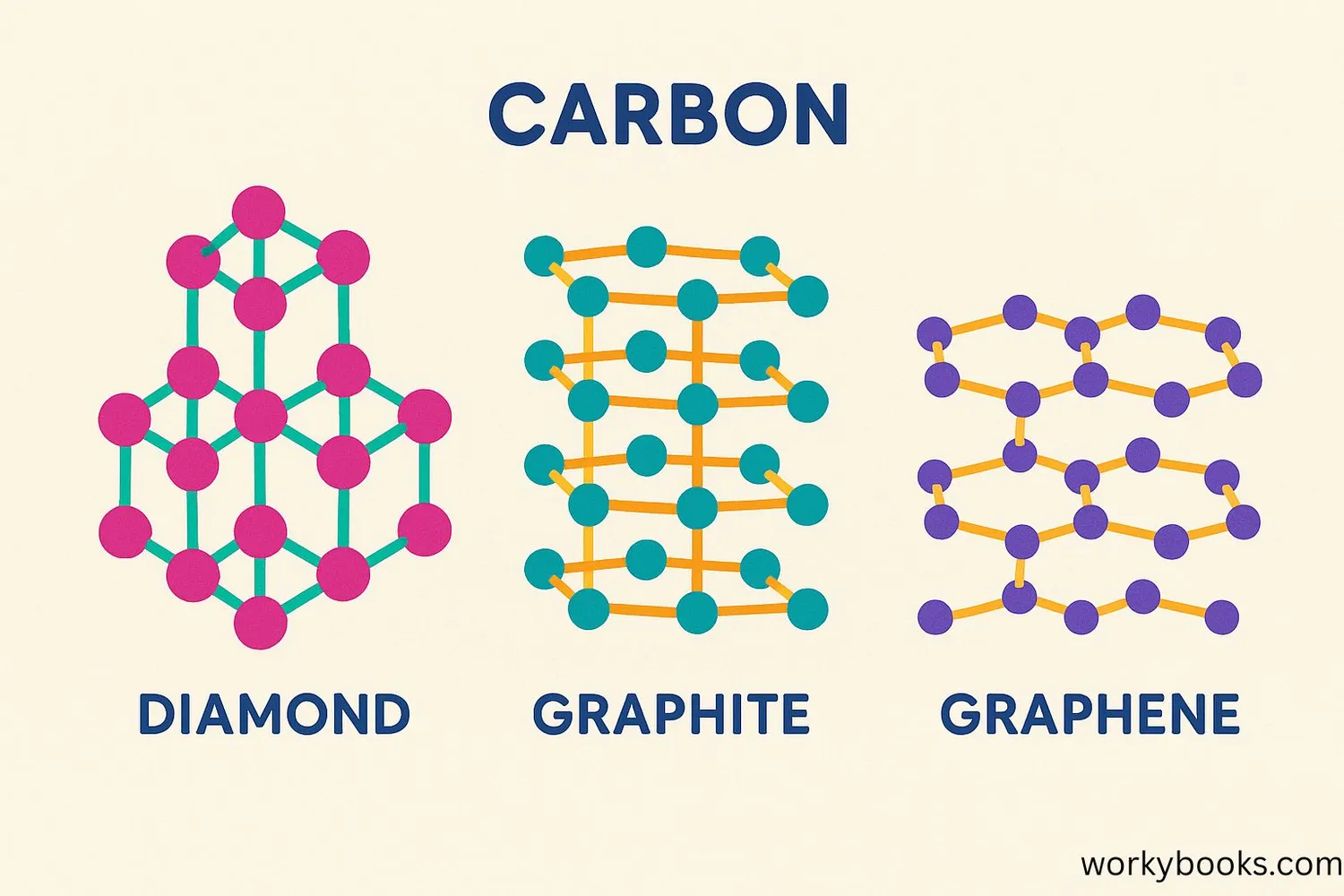
Allotrope
Different structural form of the same element
Ion
adding or removing an electron from a neutral atom
Cation
ion with a positive charge
Anion
atom with a negative charge
Ionic Compound
Compound forms between metal and nonmetal, must have a net charge of zero

J.J Thompson's experiments
atoms have tiny negative charged particles (electrons)
Plum pudding model
electrons are suspended in a positively charged cloud

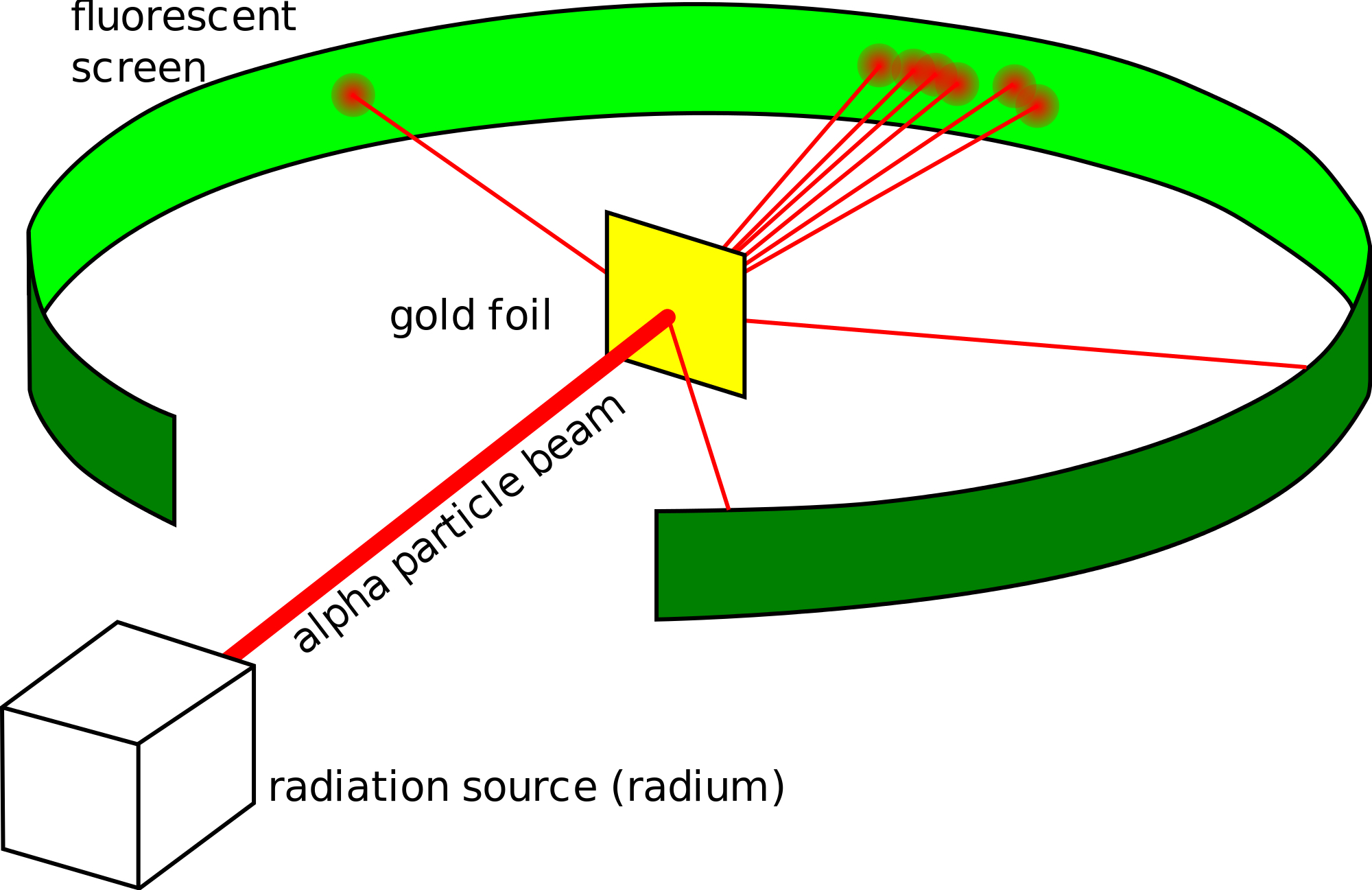
Rutherford's experiments
Atoms have a positively charged nucleus
Metals tend to…
lose electrons to form positive ions (cations)
Nonmetals tend to…
gain electrons to form negative ion (anion) and are named using the root of the atom + ide
Nuclide
general term for any isotope of any element
Radioactive
Nucleus SPONTANEOUSLY decompose
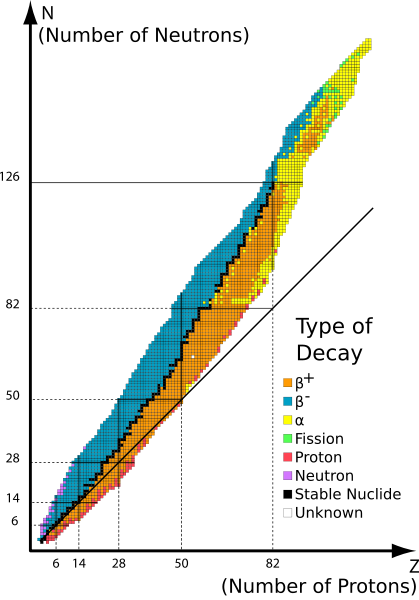
Band of stability
Reflects proton to neutron ratio in stable atomic nuclei
Elements that are radioactive
Have an atomic number greater than 83 (Bismuth)
Radioactive decay
spontaneous break down of an isotope's unstable atomic nucleus and other particles/energy
Beta particle
Electron emitted in decay

Nuclear equation
Atomic mass and mass number are conserved
Alpha particle
Helium nucleus

Alpha particle production
Happens with heavy radioactive nuclides
Beta particle production
Turns a neutron into a proton
Gamma ray
the high-energy photon emitted by a nucleus during fission and radioactive decay
Positron
particle with the same mass as an electron, but has a positive charge
Positron production
Turns a proton into a neutron
Electron capture
inner-orbital electrons is captured by the nucleus
Decay series
occurs until a stable nuclide is formed
Nuclear transformation
change of one element to another
transuranium elements
elements with atomic numbers greater than 92, made by man

Geiger-Muller counter (Geiger counter)
an instrument that measures the rate of radioactive decay based on the ions and electrons produced as a radioactive particle passes through a gas-filled chamber
Scintillation counter
Gives off light when struck by a high energy particle
Half-life
length of time required for half of the radioactive atoms in a sample to decay

Radiocarbon/Carbon-14 dating
method for determining age by comparing the amount of carbon-14 to the amount of carbon-12 in a sample
Radiotracers
radioactive nuclides introduced into organisms and subsequently tracked throughout the organism
Fusion
Combines two lighter nuclei to form a heavier nucleus, expels a lot of energy

Fission
Splitting apart a heavy nuclide by firing a neutron at high speed

Chain reactions
Occurs when the fission on one atom causes the fission of other atoms
Critical mass
certain mass of fissionable material is needed to achieve critical state
Breeder reactors
Fissionable fuel is produced while the while the reactor runs
Rem
Indicates the danger radiation poses to humans