1 - Kidney Stones / Nephrolithiasis
 Call Kai
 Learn
Learn Practice Test
 Spaced Repetition
 Match
Match Flashcards
 Knowt Play
1/73

There's no tags or description
Looks like no tags are added yet.
Name | Mastery | Learn | Test | Matching | Spaced | Call with Kai | Chat |
|---|
No analytics yet
Send a link to your students to track their progress
74 Terms

What is a kidney stone?
A hard stone/pebble-like deposit that forms in urine
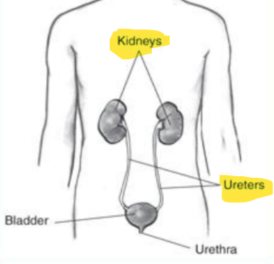
Can build up in the kidneys, renal pelvis, or ureters
What happens when kidney stones are small vs. large?
Small stones → May pass through the urinary tract and leave the body on their own
Large stones → May get stuck in the kidney or ureter
How much fluid do the kidneys filter vs. produce as urine daily?
Filter about → 120–150 quarts of blood
Produce about → 1–2 quarts of urine

What are ureters?
Thin tubes of muscle, one on each side of the bladder
They carry urine from each of the kidneys to the bladder

What is the function of the urinary tract?
Filters wastes and excess fluid from the blood
Removes them from the body as urine
How do kidney stones begin to form?
Urine contains water and dissolved substances
When salts or other molecules become supersaturated → (too concentrated for the amount of water) → they precipitate and form crystals
Crystals can grow into kidney stones
What is a universal way to prevent kidney stones?
Increase hydration!!!
It will dilute urine and reduce crystal formation
Any other ways of prevention require → knowing the specific type of stone
How common are kidney stones?
Relatively common
Affecting 9% of women and 11% of men in the US
What affects the amount of urine a person produces and the pH of it?
The amount of liquids/food a person consumes
Amount of fluid lost via sweating/breathing
Certain meds, conditions, and types of food/drink
Alcohol
Effects of caffeine
How does the amount of fluid lost through sweat/breathing affect the amount of urine produced?
More fluid loss → less, more concentrated urine
Fluid loss depends on temperature, activity level, and individual differences
So more sweat = more concentrated urine
What kind of certain medications can affect the amount of urine produced?
Diuretics and other drugs that impact urine production

What is ADH / Vasopressin ?
Antidiuretic hormone that signals the kidneys to retain water
Increases water reabsorption → decreases urine production
Released from the posterior pituitary → increases during dehydration
How does alcohol affect the amount of urine a person produces?
Ingested alcohol decreases ADH production
This decreases water reabsorption and increases the amount of urine produced
Overall → body loses more water than normal via increases in urination
How does caffeine affect the amount of urine a person produces?
Increases GFR → Blocks adenosine receptors, reducing afferent arteriole vasoconstriction
Decreases Na⁺ reabsorption in proximal tubules → more salt stays in urine, and water follows
Large amounts of caffeine are generally needed to cause significant dehydration
How can distal renal tubular acidosis (dRTA) affect kidney stone formation?
Inherited or acquired metabolic acidosis that increases the risk of kidney stone formation
When can crystals form in urine?
Low urine volume + high solute concentration → salts and compounds can form solid crystals in the kidneys
What is crystal nephropathy?
Kidney damage caused by crystals forming in the kidney tubules or tissues
What drugs can cause drug-induced crystal nephropathy?
Sulfadiazine → sulfonamide antibiotics
Acyclovir and Indinavir → two nucleoside-mimicking antivirals
Triamterene → diuretic used to reduce blood pressure and edema
Methotrexate → anti-cancer and anti-rheumatic arthritis uses
What is acute uric acid nephropathy?
Uric acid crystals forming in kidney tubules and tissues
Sometimes following certain types of cancer chemotherapy
What is nucleation in kidney stone formation?
The formation of a solid crystal nidus of an insoluble component formed from a precipitated solute
Basically → A dissolved substance forms a tiny solid crystal that becomes the starting point of a kidney stone
Homo-nucleation vs. hetero-nucleation?
Homo-nucleation → Crystal forms from the same substance
Hetero-nucleation → Crystal forms around a different substance
What happens after a solid crystal nidus forms?
Crystals deposit at the renal papilla and grow/aggregate over time
If displaced, the stone travels → ureter → bladder → urethra
If too large, it can block the ureter → causing pain and obstruction
What is the main treatment goal for most kidney stones?
Prevention!
Most stones cannot be dissolved with medication, especially once large and established
What is the exception to kidney stones that can be dissolved with medication?
Uric acid stones
Alkalinize the urine → make it less acidic → to help dissolve them
Endoscopic kidney stone removal/surgery ?
Physically removes stones from the urethra, bladder, or ureter
Used when the stone has moved out of the kidney and into the urinary tract
Shock Wave Lithotripsy (SWL)?
Uses targeted shock waves to break an established stone into tiny pieces
The pieces pass through the ureter → bladder → urethra
Common treatment for stones that have formed and are not passing on their own!
What is the goal of treatment after shock wave lithotripsy (SWL)?
Help pass the small stone pieces through urine
Chemolytic agents may dissolve or further shrink fragments, depending on stone type
Prevent new kidney stones from forming
What types of pharmacotherapy can be used to help pass stones?
Pain Relievers
Alpha-blockers → muscle relaxants
Pain reliever pharmacotherapy to help pass stones?
OTC
Can be prescription when needed → percocet, acetaminophen/oxycodone
Alpha blocker pharmacotherapy to help pass stones?
Muscle relaxants
Selective alpha-1 adrenergic receptor antagonists
Selectively relax smooth muscle in bladder, neck, and prostate → which typically restricts resistance to urine flow
How do alpha-1 blockers affect ureter smooth muscle and pressure?
Reduce basal tone → Relax baseline muscle tightness
Reduce peristaltic amplitude and frequency → Make ureter contractions weaker and less frequent
Decrease intraluminal pressure → Lower pressure inside the ureter
How do alpha-1 blockers help move a kidney stone through the ureter?
Increase fluid transport → Increase the rate of urine flow
Increase the intra-ureteral pressure gradient around the stone → creates a pressure difference that helps propel the stone out
What is Flomax / Tamsulosin ?
Uroselective for blocker for → α1A and α1D receptors
Relaxes smooth muscle in the lower ureter → helping the stone pass
Helps relieve stone-related pain
Used in all genders
What is Uroxatral / Alfuzosin ?
Less selective for α1A and α1D receptors than Flomax
Used less often for kidney stone passage across genders → typically used in men
Tamsulosin/Flomax VS Alfuzosin/Uroxatral ?
Head-to-head trials found no significant difference in stone-passage outcomes
Flomax is used more often and has good outcomes with a better safety profile
What is Tamsulosin/Flomax and Alfuzosin/Uroxatral also used for?
To treat benign prostatic hyperplasia
Symptoms of enlarged prostate
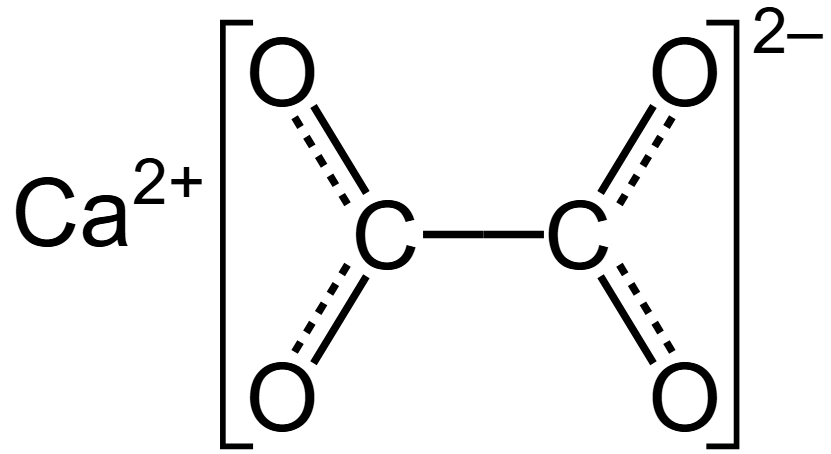
Calcium oxalate stones?
Most common
Have black/dark brown appearance
Radiopaque → shows up on x-rays as a white spot

When are calcium oxalate stones more likely to form?
In acidic urine
Use urine alkalinization and increasing urine volume to prevent !!!
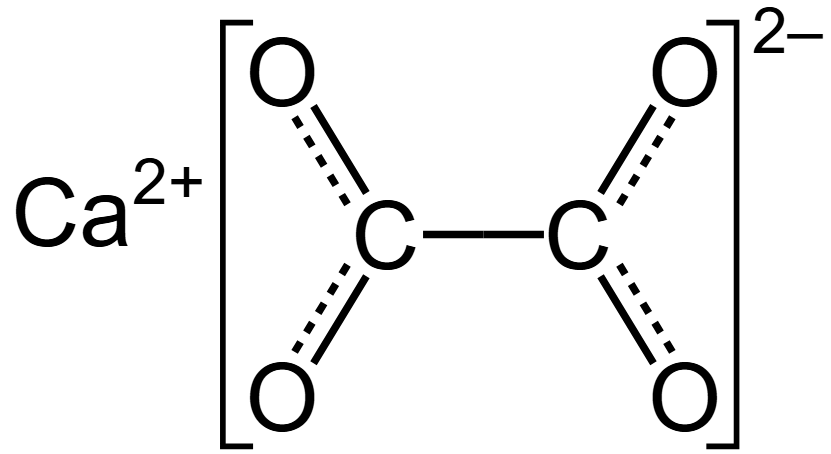
Hyperoxaluria?
Can occur by:
Genetic defects → Increase oxalate excretion into urine
Liver metabolism defects → Cause increased oxalate in urine
High-oxalate diet → Foods such as chocolate, nuts, and beer can increase oxalate intake

Complications of hyperoxaluria?
Can cause formation of calcium oxalate stones

Calcium phosphate stones?
Grungy white in color
Radiopaque → shows up on x-rays as a white spot

When are calcium phosphate stones more likely to form?
In alkaline urine
Use urine acidification and increased urine volume to prevent !!!
What factors can increase calcium levels in urine and promote stone formation of calcium-based stones?
Impaired renal tubular reabsorption of calcium → Less calcium is reabsorbed into the blood, so more remains in urine
This can promote both types of calcium-based stones
How can hyperparathyroidism contribute to calcium-based kidney stones?
Excess PTH can disrupt calcium regulation and increase urinary calcium
This increases the risk of calcium-based stone formation!!!
How are blood calcium, PTH, and calcium kidney stones related?
Low blood Ca²⁺ → increased PTH release
High blood Ca²⁺ → decreased PTH release
Excess PTH can increase calcium released from bones and increase urinary calcium
More urinary calcium → increased risk of calcium-based kidney stones
Uric acid stones?
10% of all kidney stones
Red/Brown color
Radiolucent → does not show up in x-rays
Composed of significant amounts of urate
How can uric acid crystals contribute to calcium oxalate stones?
Uric acid crystals act as a starting surface (seed) for calcium oxalate crystals to form and grow
This can promote calcium oxalate kidney stone formation!
What is uric acid, and how does the body eliminate it?
Is a waste product that is normally removed from the body through urine
What is the main risk factor for uric acid stones?
Low urine pH (below 5.5) → promotes uric acid crystallization
Other factors like → diet high in red meat/shellfish, low urine output

How to treat uric acid stones?
Uric acid is less water-soluble than its salt form (urate) when pH is below 6
Need to make urine more basic !! → alkalization
What is used for urine alkalization of uric acid stones?
Potassium citrate or sodium bicarbonate are highly effective → potassium citrate is treatment of choice for prevention of recurrence
Bring pH values between 6.2—6.8
One of the few stones that can be dissolved successfully !!!
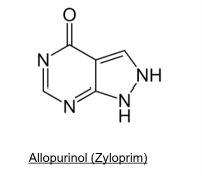
Allopurinol / Zyloprim?
Prescription treatment that reduces the frequency of stone formation in hyperuricosuria patients with recurrent uric acid stones and/or gout
Combined with urine-alkalinizing agents → sodium bicarbonate / potassium citrate

MOA of Allopurinol / Zyloprim ?
Blocks xanthine oxidase → so blocks productions of uric acid from xanthine and hypoxanthine in the liver
Basically → decreases productions of uric acid in the liver, which is the primary source of uric acid in the body/joints/urine/etc.

Struvite / Infection stones?
Grungy white in color
Radiopaque → shows up on x-rays as a white spot
Struvite → magnesium ammonium phosphate, a phosphate mineral with the formula NH4MgPO4∙6H2O

How do bacteria cause struvite kidney stones?
UTI bacteria produce urease → which breaks down urea into carbon dioxide and ammonia
Ammonia raises urine pH → makes urine more alkaline
Alkaline urine promotes precipitation of magnesium, ammonium, and phosphate → struvite stones

Cystinuria?
Inadequate reabsorption of cystine in the proximal tubules
Causing excess cystine in the urine that can precipitate in neutral or acidic urine and form stones

What is cystine, and what normally happens to it in the kidneys?
It is disulfide dimer of two L-cysteine molecules
It is formed under normal physiological conditions and normally reabsorbed after glomerular filtration

When do cystine kidney stones form?
When urinary cystine exceeds its solubility limit → about 250 mg/L
Causing cystine to precipitate and form crystals
What causes cystinuria?
Mutations in SLC3A1 or SLC7A9
This impairs reabsorption of cystine and basic amino acids → causing buildup in urine, only cystine forms stones
Males tend to develop stones more than females with the same genetic predisposition
What are the major risk factors for kidney stone formation?
Dehydration → #1 environmental risk; lowers urine volume.
High-sodium diet → Doubles risk; increases urinary calcium and decreases citrate
High animal-protein diet → Increases uric acid and decreases urinary citrate
Medications → Acetazolamide, ephedrine, guaifenesin, topiramate, and triamterene
How does magnesium help prevent kidney stones?
Magnesium binds oxalate and phosphate to form highly soluble complexes
Reducing their binding with calcium and lowering stone formation risk
How does citrate prevent calcium kidney stones?
Citrate binds Ca²⁺ more tightly than Na or K
Reducing calcium available to bind oxalate or phosphate
It inhibits crystal formation and alkalinizes urine
How do urinary stone inhibitors prevent kidney stones?
They bind stone-forming ions to slow crystal formation, growth, and clumping; low inhibitor levels increase stone risk
Ex → magnesium, citrate, glycosaminoglycans, and some proteins
What inherited disorders can cause hypercalciuria and calcium kidney stones?
Distal RTA → defective acid secretion → metabolic acidosis and increased urinary calcium.
Dent disease → X-linked recessive disorder → increased urinary calcium.
Bartter syndrome (types III/IV) → Ion-transport gene mutations → may increase urinary calcium.
Autosomal dominant hypocalcemic hypercalciuria → CASR mutation → low blood calcium and high urinary calcium
What genetic defects promote kidney stones through non-calcium mechanisms?
Hypocitraturia → Low urinary citrate → less stone inhibition
Primary hyperoxaluria → Excess oxalate production → calcium oxalate stones
Cystinuria → Defective kidney reabsorption transporter → excess urinary cystine → cystine stones
What diet and lifestyle changes prevent calcium oxalate and calcium phosphate stones?
Increase fluids and citrus consumption
Maintain citrate, magnesium, and normal dietary calcium intake.
Limit excess sodium, animal protein, and high-oxalate foods → spinach, beets, chocolate, nuts, seeds, potatoes
Avoid stone-promoting drugs and conditions
Eat calcium-rich foods with oxalate-rich foods to reduce oxalate absorption in the gut
How are diuretics used with calcium containing stones?
Thiazides block the NaCl symporter in the distal convoluted tubule → decreases urinary calcium excretion → reduce calcium stone formation
Works best for → Renal leak hypercalciuria (a kidney defect causing high urinary calcium)
How do NaCl symporter inhibitors affect kidney function and urination?
They increase sodium excretion and decrease urinary calcium
Does not affecting renal blood flow and only variably decreasing GFR
Increased urination occurs as the kidneys excrete more sodium and water
How does tiopronin/Thiola prevent cystine stones?
Tiopronin is a prescription chelating agent used when hydration and other measures fail or cystine levels are very high
It forms hetero-disulfides with cysteine to prevent cystine stone formation

Tiopronin / Thiola ?
Orphan drug
Forms a tiopronin-cysteine dimer that is more water-soluble than cystine
Helping prevent crystal and stone formation
Alkalinization of urine?
The target urine pH is around 6.5
pH above 7.0 increases the risk of calcium phosphate stones
Also increases urinary citrate level → helpful to reduce aggregation of calcium oxlate stones
Examples of alkalinization agents → Sodium bicarbonate, potassium citrate, magnesium citrate, or Bicitra

Potassium citrate?
Is an alkaline citrate load that increases urinary pH and raises urinary citrate
Also increase urinary potassium → can contribute to transient reduction in urinary calcium
pKa → 8.5

Potassium citrate supplement?
Cheap / available as a supple → but does not provide the longevity of excretion in urine needed to control stone formation unless a very regular dosing regime is followed
Urocit-K?
Extended-release citrate tablets
Ghost in the stool → citrate slowly diffuses out of the large wax matrix table while the tablet itself can then be excreted in the stool otherwise unchanged