Triple Play Skeletal System Part One Study Guide
 Call Kai
 Learn
 Practice Test
 Spaced Repetition
 Match
 Flashcards
 Knowt Play
1/105

There's no tags or description
Looks like no tags are added yet.
106 Terms
Open Fracture / Compound Fracture
Broken bone has come through the skin

Closed Fracture / Simple Fracture
The bone is broken but the skin is intact

Comminuted Fracture
Bone breaks into many fragments & requires surgery (Bone has splintered)

Greenstick Fracture
One side of bone breaks, other side is bent

Impacted Fracture
Fracture in which ends of bone forcefully driven into one another

Epiphyseal Fracture / Growth Plate Fracture
Epiphysis separates from diaphysis (which could result in abnormal bone growth)
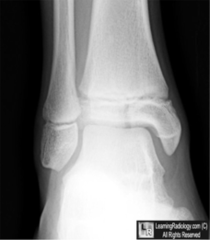
Compression Fracture
Bone is crushed

Where is a compression fracture common?
This type of fracture is common in the spinal column
Pott's Fracture
Fracture of the distal fibula, with injury of the tibia articulation. Common in jumping sports (makes sense, because if you jump high and land incorrectly on your ankle your distal fibula and tibia will have issues)

Colle's Fracture
Fracture of the distal radius at the wrist

Stress Fracture
Break caused by abnormal trauma (such as overuse, a fall, etc) to a bone

Bar Room Fracture
Fracture of the fifth digit (Guys who are drunk are likely to get it from punching walls)

Osteopenia
Thinner than average bone density due to decreased rate of bone synthesis
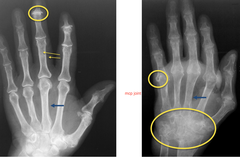
Osteomalacia / Rickets
Bone fails to calcify commonly caused by severe lack of vitamin D (can be genetic or dietary).

Osteomalacia vs Osteopenia
While osteomalacia is due to lack of vitamin D and bone has trouble calcifying and hardening, osteopenia is basically just a mild form of osteoporosis. Osteomalacia also can have pain, difficulty walking, but osteopenia is mostly okay.
PS: This definition kinda sucks, so don't rely on it to much. This is the best I could craft but this is on her study guide and you definitely need to know it. Here's a link for more info: https://www.medicinenet.com/osteopenia/article.htm#osteopenia_vs_osteomalacia
Osteoarthritis / Degenerative Joint Disease (DJD)
Degeneration of articular cartilage. Common in old people. Common in weight bearing joints that are used a lot such as the knees, elbows, fingers, etc.

Rheumatoid Arthritis
A chronic immune-system disorder that attacks interjoint space and destroys cartilage. Very odd looking features on exterior. Causes stiff and painful joints.

Osteoporosis
A condition in which the body's bones become weak and break easily due to density reduced.

Dowager's Hump
Abnormal curvature in the upper spine caused by osteoporosis

Shin Splints
Acute pain in the shin and lower leg caused by prolonged running, typically on hard surfaces. More common in women than men.
Black Eye
A bleed in the surrounding connective tissue of orbital (which is full of blood vessels). Common after trauma.
TMJ Syndrome
Painful jaw movement; can have muscle spasm, clicking, popping. Tender, headache, dull ear.
Sinusitis
Inflammation of the sinuses via disease or commonly from infection.
Carpal Tunnel Syndrome
A condition caused by compression of the median nerve in the carpal tunnel. Common due to overuse.
Phalen's Test
Test for carpal tunnel syndrome

DeQuervain's Tenosynovitis
Pain in the anatomical snuffbox due to overuse
Deviated Nasal Septum
Nose is off center due to trauma. Can lead to infection and blockage

Rib Fractures
Breakage of rib. Can puncture lung. Common in older patients.
Lung Puncture
Hard to breathe and sneeze.
Cleft Palate
A congenital split in the roof of the mouth due to failure of the palate to fuse in embryonic growth. Speech and swallowing affected
Osteogenic Sarcoma
Malignant tumor originating in bone-producing osteoblast. Common to teens during growth spurts. Commonly metastasize to lungs. Chemotherapy or amputation common.
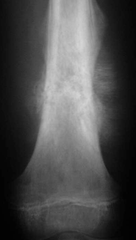
Osteomyelitis
Bone infection (commonly staph). Enters via open wound and is very bad.

Skull Anatomy
-Contains 22 bones in two categories
-8 cranial bones
-14 facial bones
-Immovable joints are called sutures
-Foramina and fissures form openings for blood vessels and nerves
What forms the bridge of the nose?
Nasal bones (2)
What forms the cheek prominence?
Zygomatic Bones (2)
What forms the lateral wall of the eye orbit?
Zygomatic Bones (2)

What is the forehead bone?
Frontal bone
Posterior part of the hard palate
Maxilla
The lowermost scroll-shaped bones on the sidewalls of the nasal cavity / creates turbulence for filtration
Inferior Nasal Conchae
The upper jawbones are called the:
Maximillary(2)
What is the smallest bone(s) in the face, used in crying?
Lacrimal Bone(2)
What forms the inferior lateral aspects of the cranium and part of the cranial floor; contain zygomatic process and mastoid process?
Temporal bone(2)
What forms part of the anterior portion of the cranial floor, medial wall of the orbits, superior portions of nasal septum, most of the side walls of the nasal cavity; is a major supporting structure of the nasal cavity?
Ethmoid Bone
What forms the prominence of the cheek and part of the lateral wall and floor of each orbit?
Zygomatic Bone(2)
What is the triangular shaped bone that is a portion of the nasal septum?
Vomer
What is the posterior bone that contains the foramen magnum?
Occipital bone
What are you going to get on this quiz/test?
A 100.
What is the largest, strongest facial bone; is the only moveable skull bone?
Mandible
Yellow Bone Marrow
Gradually replaces red bone marrow in adult bones; functions as storage for fat tissue and is inactive in the formation of blood cells

Red Bone Marrow
Found in medullary cavity of bone; site of hematopoiesis (creation of red blood cells)
Fontanelle
Soft spot (incomplete bone formation) between the skull bones of an infant
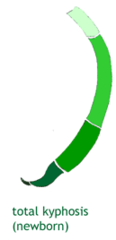
Primary Spinal Curve
- Kyphosis: C curve
- Convex posteriorly
- Thoracic and sacral regions
- Immediately after birth
First Secondary Curve
- Lordotic Curve
- Able to hold up head
- +3 months

What is the keystone of the cranial floor; contains the sella turcica?
Sphenoid bone
Second Secondary Curve
- +1 year
- Begin to walk
Function of Hyoid Bone
Supports the tongue and to articulate with a lot of tendons

Fun Fact about Hyoids
- It is the only bone in the human body that does not articulate with any other bones.
- If you found someone who has been killed, always check hyoid. If strangled, hyoid will be broken.
What Sits Inside Sella Turcica
Pituitary Gland

Intervertebral Discs
Fibrocartilage pads that separate and cushion the vertebrae
Intervertebral Foramen
Opening formed by the inferior and superior notches on the pedicles of adjacent vertebrae. Allows passage of spinal nerves and vessels on the sides.

Vertebral Foramen
Canal through which spinal cord passes
Transverse Foramen
The openings in the cervical vertebrae for the transmission of the vertebral artery and vein are called the:

Epiphyseal Plate
Growth plate, made of cartilage, gradually ossifies. Shows when growth has ended

Osteoblasts
Bone building immature cells
Osteoclasts
Bone-destroying cells
Osteocytes
Mature bone cells found in lacunae

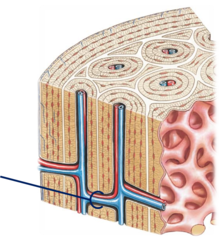
Osteons
Cylindrical structures that comprise compact bone and carry blood supply.

Lamellae
Concentric rings around central canal made up of groups of hollow tubes of bone matrix

Articular Cartilage
Hyaline cartilage attached to articular bone surfaces
How do nutrients get to the osteocytes in compact bone?
Canaliculi
Canaliculi
Small channels from the Haversian canals that allow blood to flow to all of the osteocytes. This is how nutrients get to the osteocytes in compact tissue
Volksmann's Canal
Carries blood vessels and nerves at right angles to the shaft
Vertebral Prominens (C7)
Has the longest spinous process of all cervical vertebrae.
hGH (human growth hormone)
Stimulates secretion of hormones that stimulate body growth and metabolism
If too much, will cause giangantism

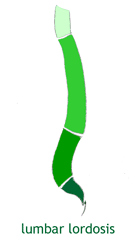
Lordosis
Abnormal increase in the forward curvature of the lumbar spine

Kyphosis
Excessive outward curvature of the spine, causing hunching of the back.

Scoliosis
Abnormal lateral curvature of the spine

What normally causes the growth plates to fuse?
A spike in estrogen.
How many vertebrae are there?
26; 7 cervical, 12 thoracic and 5 lumbar, sacrum and coccyx
How many cervical vertebrae are there?
7 (C1-C7)
How many thoracic vertebrae are there?
12 (T1-12)
How many lumbar vertebrae are there?
5 (L1-L5)
How many ribs are there?
12 pairs

How many true ribs are there?
7 pairs (1-7)
Definition of true ribs
Any rib that connects directly to sternum via direct path of cartilage
How many false ribs are there?
5 pairs (8-12)
Definition of false ribs
Any rib that has indirect attachment OR no attachment to sternum.
How many floating ribs are there?
2 pairs (11-12)
Definition of floating ribs
Ribs that have no attachment to sternum
Long Bone Definition
Longer than they are wide (ex. femur)
Short Bone Definition
Length is roughly equal to both width and height (ex: carpal)
Flat Bone Definition
Bones that expand into broad flat plates (ex: scapula)
Irregular Bone Definition
Can't fit into any other groups (ex: vertebra)
Sesamoid Bone Definition
Bone that formed within a tendon (ex: patella)
Axial Skeleton
Portion of the skeletal system that consists of the skull, rib cage, and vertebral column. 80 bones!

Appendicular Skeleton
Bones of the limbs and limb girdles that are attached to the axial skeleton.

How many bones total does the human body have?
206
How many total bones does a baby have?
206
How and where does skull articulate with the spine*
C1 -> Occipital Condyales
What causes a cleft palate?
genetically: various syndromes
environmentally: FAS, drugs, rubella
mechanically: intrauterine crowding, twinning, uterine tumor