physiology of olfaction/gustation
 Call Kai
 Learn
 Practice Test
 Spaced Repetition
 Match
 Flashcards
 Knowt Play
1/31

There's no tags or description
Looks like no tags are added yet.
32 Terms
olfaction and gustation
olfaction - smell
gustation - taste
functions of olfaction
detection of food
detection of enemies
navigate terrain/detect territories
detection of potential mates
what is the olfactory bulb
processes odour information in the brain

olfactory recess
a labyrinth of thin bones covered with epithelium containing olfactory receptors
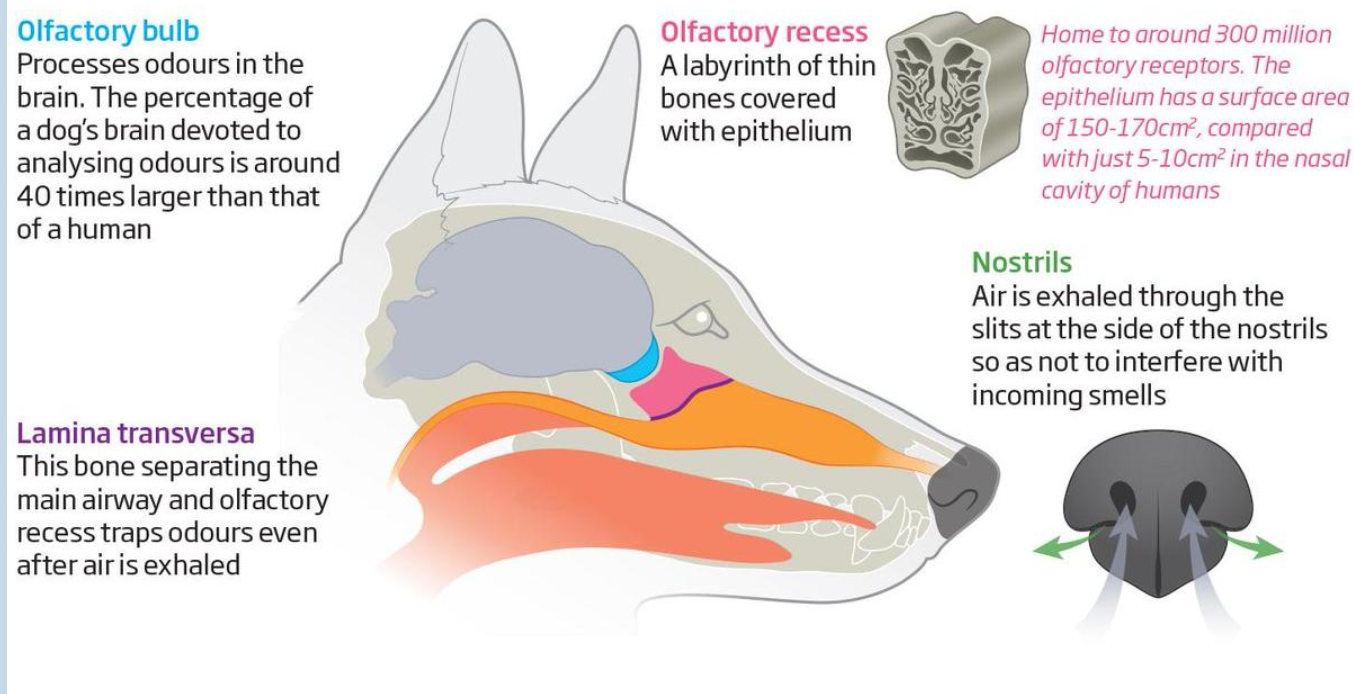
lamina transversa
bone that separates the main airway from the olfactory recess and traps scent molecules to enhance detection
what are turbinates
bones that direct airflow
in rostral nasal cavity - highly vascularised, used for heat exchange
caudal nasal activity - covered in olfactory epithelium
functional structure of olfaction
nasal cavity contains bones called turbinates
air flow can be directed through 3 main passages
describe the cribiform plate
seperates cranial cavity from nasal cavity
perforated plate to allow olfactory cell processes to pass through
describe the 3 main passages of meatuses of air
ventral meatus - shortcut beneath heat exchanger directly to nasopharynx
middle meatus - leads air through heat exchanger and to the caudal part of the olfactory epithelium before entering the nasopharynx
dorsal meatus - leads air above the heat exchanger and to the olfactory epithelium and then to the nasopharynx
describe air flow at rest
air flows mainly through two ventral meatus
describe air flow when sniffing
air passes dorsal to the heat exchange
airflow through nasal cavity becomes turbulent, which increases the air that reaches the olfactory epithelium
describe the air flow during exhalation
occurs mainly through the ventral meatus
describe olfactory receptors cells
specialised neurones - contain an unmyelinated axons and a dendrite
contain cilia that project into mucus to detect odour molecules (have membranes that have receptors that odour molecules bind to)
axons of olfactory cells conduct nerve impulses to synapse with neurones called mitral cells in the olfactory bulb
axons of olfactory nerve extend from nasal cavity to olfactory bulb through holes in cribiform plate of ethmoid bone, separating olfactory mucosa from brain
synapses between olfactory cells and mitral cells are complex globular synapses called olfactory glomeruli
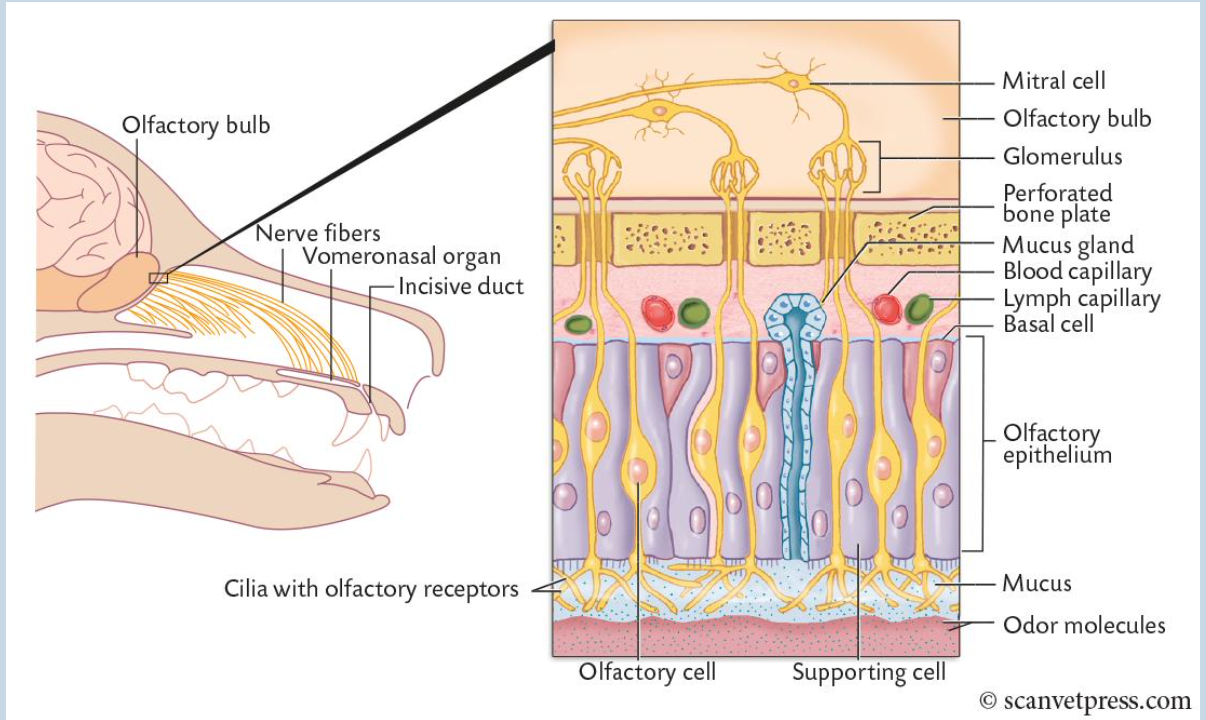
what do mucus glands do
secrete mucus to epithelial surface where odour molecules can be trapped
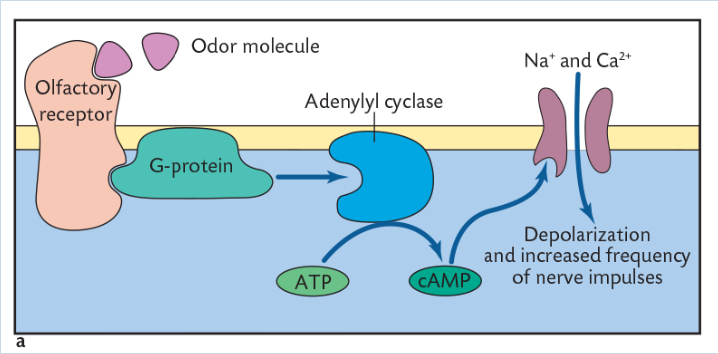
describe receptor activation
olfactory receptors are G-protein coupled receptors
binding of odour molecules to receptors alters receptor conformation which activates associated G-proteins
G-proteins activate adenylyl cyclase which converts ATP to cAMP as a second messenger, this opens calcium and sodium channels to depolarise the cell
cell depolarises - initiating action potentials that propagate along the olfactory nerve fibres to synapse in the olfactory bulb
olfactory perception
nerve fibres extend from mitral cells of olfactory bulb directly to the cerebral olfactory cortex
brain distinguishes several thousand odours by the range of impulse frequency in different mitral cells
olfactory cortex-part of limbic system and is therefore responsible for odours elicting strong emotions
describe how the odour smell gets to brain
receptors in cilia membranes on the olfactory cells bind to odour molecules
axons of olfactory cells conduct nerve impulses to synapse with neurones called mitral cells
goes to hypothalamus and then to the cortex (conscious and perception of smell) or the hippocampus (odour memory)

describe the olfactory threshold
olfactory receptors respond only to substances in contact with olfactory epithelium and need to be dissolved in mucus
over time, threshold increases so more substance required to elicit same response (olfactory fatigue)
how does the olfactory adaptation occur
smell of odoriferous substance first detected much more noticeable
gradually becomes less noticeable
mediated by calcium ions
degree of adaptations measured by rise in threshold concentration to activate olfactory receptors
describe nasal pain fibres
trigeminal nerve (number 5)
3 branches - mandibular branch, maxillary branch, ocular branch
trigeminal pain fibres from the maxillary branch are found in olfactory membrane
stimulated by irritating substances
responsible for initating sneezing, lacrimation and other reflex responses
describe the vomeronasal organ
sensory organ in the rostral palatine bone with similar functionality to olfactory epithelium
sensory neurones from VNO synapse with mitral cells in olfactory bulb
sensitive to odour molecules suspended in liquids
organ functions to induce different types of sexual behaviour when stimulated by urine and vaginal secretions that animal takes into organ through incisive duct by licking

what does stimulation of the vomeronasal organ lead to
increased secretion of GnRH (gonodotrophin- releasing hormone)
characterisitc behaviour that promotes during fluid into VNO - called Flehmen response and raises the upper lips and wrinkling the nose
functions of gustation
monitoring of ingested food and drink
determination of whether to swallow food or reject it
5 categories of taste
sweet - detection of carbs
salty - detection of ions (Na+ and Cl-)
sour - detection of H+ ions
bitter - detection of toxins
umami - detection of amino acids (glutamate)
species differences
herbivores - prefer sweet
pigs and dogs - sweet
cats - umami
chickens - no preference
describe functional structure of tongue
papillae distributed over a large proportion of the surface
papillae have laterally located taste tubs which contain elongated taste cells (3 types)
basal cells replace lost taste cells by mitosis
what are the 3 types of taste cells
type 1 - supporting cells mop up inactive neurotransmitters
type 2 - receptor cells detecting sweet, umami or bitter
type 3 - presynaptic cells detecting acidic sour tastes

describe taste receptor activation (sweet, umami and bitter - type 2)
G-protein coupled receptors
activates phospholipase C
converts PIP2 to IP3
activates calcium channels in endoplasmic reticulum
calcium ions open sodium channels which depolarise membrane
activates ATP channel which release ATP acting as a neurotransmitter
ATP activates purinergic receptors on presynaptic cells and autocrine action-positive feedback
type 1 cells hydrolyse ATP so effect is limited

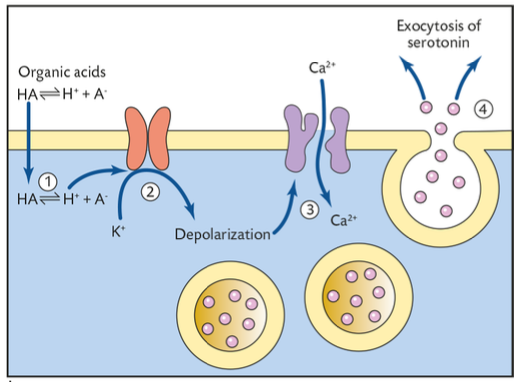
describe taste receptor activation - sour taste (type 3)
type 3 cells have vesicles containing neurotransmitter (calcium dependent exocytosis)
acids cross cell membrane
pH gated potassium channels close - depolarisation
voltage gated calcium channels open
calcium dependent exocytosis causes serotonin (neurotransmitter) vesicles to release contents
serotonin excites sensory nerve endings
describe how presynaptic cells process the sense of taste
ATP released when sweet, umami or bitter compounds are detected by type 2 cells
ATP binds to purinergic receptors to have excitatory effect on own receptor cell, nearby receptors, presynaptic cells and sensory nerve endings
serotonin released when low pH detected (sour/acidic) or indirectly from ATP stimulation
serotonin has excitatory effect on sensory nerve endings but inhibitory paracrine effect on receptor cells
stimulated nerve endings release glutamate that has excitatory effect on presynaptic cells

describe perception of taste
direct taste information detected from taste cells
olfactory information detected from olfactory epithelium
texture and temperature detected from pressure and thermoreceptors in lips and oral cavity
pain detected from mandibular branch of trigeminal nerve (spicy food)
where do tastes synpase
brain stem (medulla oblongata) - unconscious reflexes like release of digestive juices
thalamus (part of limbic system) - emotional associations
gustatory cortex - conscious perception