AH 3320 Q6: Virulence and Pathogenicity
 Call Kai
 Learn
Learn Practice Test
 Spaced Repetition
 Match
Match Flashcards
 Knowt Play
1/58

There's no tags or description
Looks like no tags are added yet.
Name | Mastery | Learn | Test | Matching | Spaced | Call with Kai | Chat |
|---|
No analytics yet
Send a link to your students to track their progress
59 Terms
What are the 6 steps of common sequence in pathogenesis of infectious diseases?
EAMIED
Entry of pathogen → body
Attachment of pathogen → body tissues
Multiplication of pathogen
Invasion/spread of pathogen
Evasion of host defenses
Damage → host tissue(s)
What are 6 portals of entry?
PIIIEE →
Penetration → skin/mucous membranes
Inoculation (arthropod) → tissues (wounds, insect bites)
Inhalation (respiratory tract)
Ingestion (GI tract)
Entry → genitourinary = urinary + reproductive
Entry → blood (transfusion, IV drug abuse)
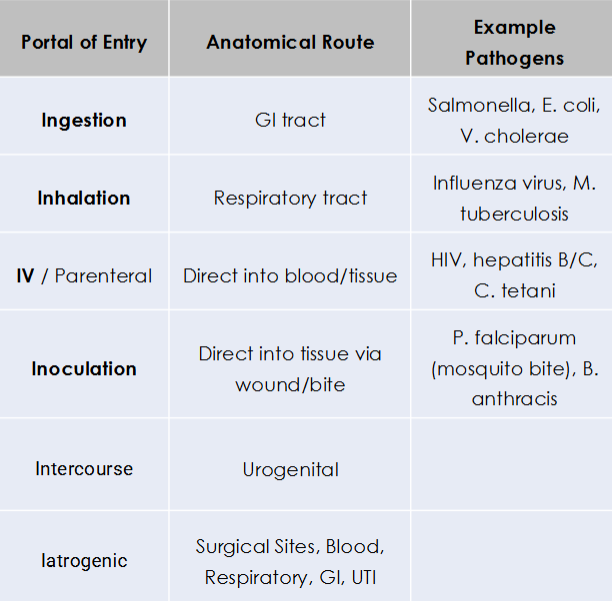
What are the 6 I’s of portals of entry?
Ingestion → GI tract
Inhalation → respiratory tract
IV → blood/tissue
Inoculation → wound/bite → tissue
lntercourse → urogenital
Iatrogenic → surgical sites, blood, respiratory, GI, UTI

What are the 6 areas that pathogen portals of entry can affect?
Respiratory tract
Blood & Vector-borne
Urogenital tract
Ocular Surface
Gastrointestinal Tract
Skin

What are 4 mechanisms of pathogen adhesion?
What does it must have?
Fimbriae
Capsules
Spikes
Hooks/flagella
Adhesin

What are 2 ways a pathogen can multiply?
Multiply in one location
Multiply throughout body
Through what process do bacteria replicate?
Through what process do viruses replicate?
Through what process do worms replicate?
Bacteria → fission
Viruses → Budding + Lysis
Worms → egg laying

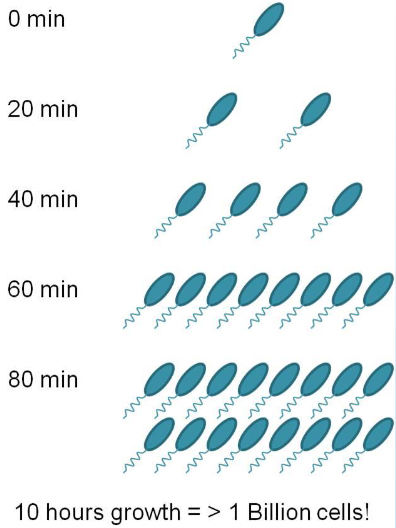
How many cells grow after 10 hours of bacterial growth?
>1 billion cells
_________ pathogens have evolved wide range of strategies to colonize + invade human organisms, despite presence of multiple host defense mechanisms.
Bacterial
What are 3 areas that pathogenic bacteria can invade or spread to?
SII
Surface of host cells
Inside host cells
Cross epithelial/endothelial host barriers → Internal tissues
Severe diseases
What are 3 examples of gastrointestinal pathogens?
Salmonella
Shigella
Listeria
GI tract → replicate → increase likelihood of causing disease

How does the host counteract pathogens?

What is antigenic variation?
How does this relate to the flu vaccine?
Antigenic variation = method used by pathogens → evade immune system by Δsurface antigens
Inhibit phagocytosis
New Flu vaccine each year → constantly changing way it looks

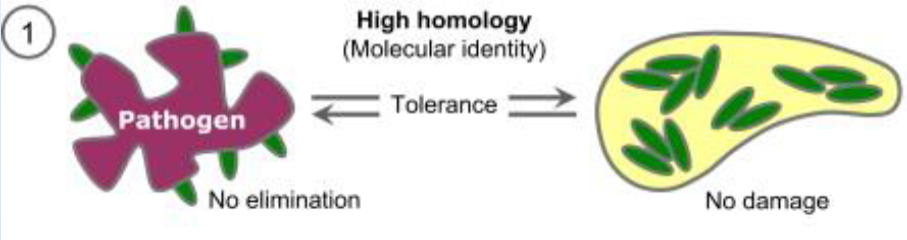
What is camouflage and molecular mimicry?
What is 1 example?
Molecular mimicry = organisms coat themselves w/ host proteins → conceal foreign identity
Adult schistosomes
What enzyme do some pathogens produce to destroy host’s antibodies?
IgA protease = enzyme destroys host’s antibodies

What is the major way that pathogens infect host cells to get infectious disease?
Damaging host
What is 5 characteristics direct damage to host tissue(s)?
Pathogen growth in host cells → lysis
Toxins
Enzymes
Disrupt host cell function
Waste product production
What are 3 characteristics of indirect damage to host tissue(s)
Immune system mistakenly destroys normal cells in process of fighting foreign cells
Innocent bystander = immune mediated destruction
Induce hypersensitivity reactions
Use host nutrients (Fe)
What are 7 tissues that can be damaged?
What is the difference between symptoms & signs?
Tissues:
Neurologic
Renal
Hepatic = liver
Gastrointestinal
Thromboembolism = blood clot
Cardiac
Endocrine
Dermatological
Symptoms = Unmeasurable = Dizziness, headaches
Signs = Measurable = Elevated enzymes, elevated bilirubin

All infections go through 6 steps: (True/False)
FALSE → some exotoxin-producing intestinal pathogens go right to damage to host tissue(s)
Do NOT always need attachment or invasion of tissues
Some exotoxin-producing intestinal pathogens → cause disease (W/O adhesion/attachment to/invasion of tissue)
What are enterotoxins?
Enterotoxins = attack GI cells → small intestine

What is the difference b/w virulent and avirulent strains?
Virulent strains = capable of causing disease
Avirulent strains = are NOT capable of causing disease
What are 2 ways capsules used to infect host cells?
Capsules = protect bacteria from host; sometimes used to adhere to host cells

What is 2 conditions does S. pharyngitis cause?
Which strain is more virulent and why?
Pharyngitis = swelling of pharynx
Flesh-eating bacteria
S. Pharyngitis → flesh eating bacteria
Produce certain enzymes = more virulent than other strains
What is virulence?
Virulence = degree of pathogenicity
How does shigella and salmonella demonstrate virulence?
Which is more virulent? Why?
Shigella → 10 Shigella cells → shigellosis
Salmonella → 100-1000 Salmonella cells → salmonellosis
Shigella = more virulent → more likely to cause disease
Strains that produce toxins are more/less virulent that strains that do not produce toxins
MORE

What are virulence factors?
Virulence factors = phenotypic characteristics dictated by organism’s genotype → microbes = virulent
Surface molecule of host cells
Recognized by pathogen → adhere to receptor (integrin)

What must many pathogens do to cells after entering body?
MUST ANCHOR themselves to cells → can multiple + invade
Why can some viruses cause respiratory infections?
Can recognize + adhere to host receptors (integrins) on respiratory cells

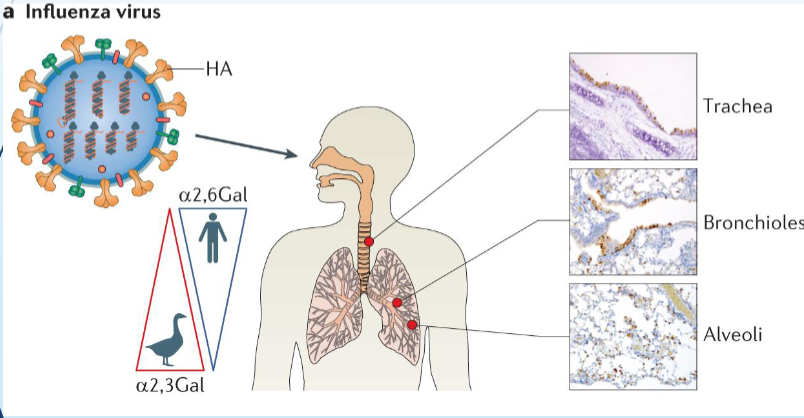
What protein allows influenza virus to attach to respiratory cells?
What is the name of the receptors?
Hemagglutinin protein
Receptors = integrins
What protein allows coronavirus to attach to respiratory cells?
What is the name of the receptors?
Spike (S) protein
ACE2 receptors = integrins

Are adhesins considered virulence factors?
YES → allow pathogens to attach to host cells
What are Pili or fibriae?
Pili (bacterial fimbriae) = virulence factors = enable bacteria to attach to surfaces (cells + tissues in body

What leads to urethritis?
What are non-piliated strains that cannot adhere called?
Pili attachment to urethra → urethritis
Avirulent strains

Why are capsules an example of virulence factors?
Capsules = anti-phagocytic function
Phagocytes unable to attach to molecules on bacteria (encapsulated → protected from being destroyed by host cells)

What virulence factor does S. pneumoniae, Klebsiella, and meningitis use?
Capsules

What are flagella?
How are they an example of virulence factors?
Flagella = allow bacteria to invade aqueous areas of body + escape phagocytosis

Where are phagocytes typically present?
Bloodstream → help destroy pathogen
Pili (fimbriae), capsules, and flagella (DO/DO NOT) explain how pathogens cause disease
DO NOT
What major virulence factor by which pathogens cause disease?
Toxins
Exoenzymes
What are 7 examples of exoenzymes released by bacteria?
Necrotizing enzymes = destruction of cells + tissues
Coagulase = blood clot
Kinases = hijack signaling
Hyaluronidase = damage hyaluronic acid
Collagenase = damage collagen
Hemolysins = damage RBCs + other cells
Lecinthase = damage cells
What do necrotizing enzymes cause?
Necrotizing enzymes = destruction of cells + tissues
What do coagulase cause?
Coagulase → clotting (protection from host/immune defense mechanisms)

What do kinases cause?
Kinases → dissolve clotsS

What is streptokinase (SK)?
Streptokinase = bacterial protein produced by B-hemolytic streptococci
Forms “activator complex” → converts inactive plasminogen → active plasmin
Degrade fibrin clots + fibrinogen
What are uses of streptokinase?
Treatment of thromboembolic disorders
Lysis of pulmonary emboli
Arterial thrombus
Deep vein thrombus
Acute artery thrombosis

What are 4 examples of exoenzymes released by bacteria?
Hyaluronidase = dissolves hyaluronic acid (=cement that holds tissue cells together)
Collagenase = dissolves collagen (supportive, structural protein)
Combined = allows pathogens to invade deeper → cells/tissues
Hemolysins = toxin → disrupt cell membrane → lysis
Lecinthinase = toxin → disrupt cell membrane → lysis

How are hyaluronidase and collagenase used to help invade internal tissues?
Hyaluronidase = targets hyaluronic acid = glue-like substance that cements cells to ECM
Allow bacteria to spread → deeper tissues
Collagenase = targets collagen = tough, fibrous protein → structural strength to muscles, tendons, organs, skin
Allow bacteria to move across barriers → deeper tissues

What is the difference between hemolysins and lecithinase?
Hemolysins = damage/lyse RBCs
Lecithinase = destroy host cell membrane/phospholipids (RBCs + other cells)
What host nutrient does pathogen use to cause indirect damage?
Iron (Fe)
What are toxins?
What are the 2 types?
Toxins = poisonous substances released by various pathogens → damage host tissues + cause disease
Endotoxins = lipopolysaccharides of cell wall of Gram-negative bacteria (pink)
Serious, adverse effects (fever, shock)
Toxin = pyrogenic (causes fever)
Exotoxins = produced within cell → released from cells
What is the 3 major differences between gram-positive and gram-negative bacteria?
Gram-positive = purple
Peptidoglycan layer = THICK
Outer membrane = absent
Produce = exotoxins (but not always)
Gram-negative = pink
Peptidoglycan layer = thin
Outer membrane = PRESENT (LPS)
Produce = endotoxins

What is the most potent exotoxin?
Neurotoxins = effects on neurological system
Spastic, rigid, muscle contraction
Tetanus
What tract do enterotoxins affect?
What is an example of an infection that does this?
What is the key characteristics of C. difficile?
GI tract
C. difficile
Pseudomembranous colitis (PMC) = yellow plaque in colon

What type of disease do erythrogenic toxins cause?
Scarlet fever
one of complications of untreated strep throat
What is the 5 major differences b/w exotoxins and endotoxins of bacteria?
Exotoxins
Produced by Gram-positive
Peptidoglycan @ specific sites
Characteristic diseases
Diphtheria
Tetanus
Endotoxins
Produced by Gram-negative
Lipopolysaccharides act throughout body
Fever, weakness, aching
Typhoid fever
Meningitis

What is the major difference between endotoxins and exotoxins?
What are 8 types of exotoxins?
Endotoxin = released from Gram-negative bacterial cell walls
Exotoxin = produced within cell → released from cell
Neurotoxins = damage to CNS
Enterotoxins = damage to GI
C. difficile = pseudomembranous colitis
S. aureus = toxic shock syndrome
Exfoliative toxin = scalded skin syndrome
Erythrogenic toxin = scarlet fever
Diphtheria toxin = diphtheria
Leukocidins = damages leukocytes

What are _ examples of virulence factors?
Fimbriae
Capsules
Flagella
Toxins
Endotoxins
Exotoxins
