Nutrition Exam 1
 Call Kai
 Learn
 Practice Test
 Spaced Repetition
 Match
 Flashcards
 Knowt Play
1/120

There's no tags or description
Looks like no tags are added yet.
121 Terms
Nutrition
the science of foods, nutrient, and their actions in the body
Major Functions of Nutrition
energy
growth and development
body processes
Macronutrients
provide calories and energy (carbs, proteins, fats)
Micronutrients
don’t provide calories, but are essential for growth and metabolism (vitamins, minerals)
Casimir Funk
discovered nutrition via Beriberi disease (neuralmuscular decline), brown rice bran prevented the disease because of vitamin B1
Observational Studies
data through observation, good for correlation
Case Studies
observational study on an individual
Epidemiological Studies
observational study on population
Experimental Studies
data by manipulating variables, causal relationship
Laboratory Studies
experimental study on animals and cells, good for understanding mechanism, preliminary for clinical study
Clinical(Human Intervention) Studies
experimental and control group of humans, shows causal relationship
Systematic Review
best study form, structured process to review and analyze multiple studies, used to create dietary recommendations
Meta Analysis
a form of systemic review that combines multiple studies
Dietary Reference Intakes (DRIs)
age, gender, and life stage reference for individual nutrients, helps plan diets for HEALTHY people
DRI Goals
set recommended intake levels
facilitate nutrition research
safety guidelines
prevent chronic disease
Recommended Dietary Allowance (RDA)
sufficient nutrient intake for 97% healthy people
How RDA is Set
estimate the average required nutrient
add 2 standard deviations to accommodate everyone
Adequate Intake (AI)
recommended daily intake for healthy adults when insufficient data for RDA, based on estimates
Tolerable Upper Intake Level (UL)
highest amount nutrient that will not pose adverse health effect
Chronic Disease Risk Reduction (CDRR)
reduce risk for chronic disease, requires evidence with strong causal effect
Estimated Energy Requirement (EER)
estimates energy intake needed to match energy use of person (calories)
accounts for age, sex, height, weight, and physical activity
Acceptable Macronutrient Distribution Range (AMDR)
range of intake to reduce risk of chronic disease while providing essential nutrients
AMDR for Carbohydrates
45-65% energy
AMDR for Protein
10-35% energy
AMDR for Fat
20-35% energy
Dietary Guidelines for Americans (DGAs)
food based guidance instead of individual nutrients, for HEALTHY people, updates every 5 yrs
DGA 2020-2025 Key Recommendations
Follow healthy diet
choose food based on culture, budget, preference
meet food group needs w/ nutrient dense foods
limited added sugar, saturated fat, sodium, and alcohol
MyPlate (2010-2020)
organizational strategy to get all nutrients
reduce sodium and sugary drinks, eat less in general, have a variety of each food group
DGA Key Recommendations (2025-2030)
Eat the right amount for you
prioritize protein
eat diary
eat fruits and veggies throughout the day
add healthy fats to diet
focus on whole grains
limited highly processed foods, added sugars, refined carbs
drink less alcohol
2020 vs 2025 DGA Similarities
balance calorie/energy needs
limited refined grains (stricter)
eat variety fruits and veggies
limited added sugars (stricter)
2300 mg sodium
2020 vs. 2025 DGA Differences
lean & plant-based meats → just animal meat
low fat dairy →full fat dairy
veg. oils → animal source oils (but high sat. fats)
limited processed meat → limit processed food
164 pages → 10 pages
Myplate → food pyramid
Why are the DGAs so different?
new presidential administration → diff scientific panel
new evidence on processed food
different opinions on evidence w/ bad RCT
Mediterranean Diet
emphasizes minimally processed foods and healthy oils, kinda like myplate
Cell
basic unit of life
Nucleus
genetic material that controls intracellular action
Genes → DNA → Chromosomes
Genes
segment of DNA that code for a specific protein
Protein
molecule that performs a function of life
Cell(Plasma) Membrane
wraps around the whole cell and regulates what enters/leaves, made of proteins, lipids, and cholesterol
Cytoplasm
fluid and organelles between nucleus and membrane
Mitochondria
power plant, energy yielding nutrients → ATP
Endoplasmic Reticulum (ER)
synthesize (ribosomes) and modify proteins and fats, ribosomes dot outside of ER
Golgi Apparatus
process new proteins for distribution to organelles or out cell
Lysosomes
recycling centers, digest foreign bacteria and worn materials
Body Organization
cells → tissues → organs → systems → organism
Tissues
group of cells perform specialized function
epithelial, connective, muscular, nervous
Organ
group of tissues that perform a specialized function
Organ System
group of organs that work together
Cardiovascular System
transport oxygen and nutrients throughout body
organs: heart, blood, blood vessels
Capillaries
smallest blood vessels, oxygenated blood and nutrients diffuse out, CO2 and waste diffuse in
Integumentary System
cover body and maintain body temperature, excrete salts and urea, maintain homeostasis
organs: skin, hair, nails, sweat glands
Respiratory System
excretes CO2 and intakes O2, exhale waste
organs: lung and respiratory passages
Urinary System
excrete waste as urine, regulates body water and salt balance
organs: kidney, bladder, ducts
Lymphatic System
returns extracellular fluid to blood, defense against pathogens, lipid absorption after meal
organs: lymph vessels, lymph nodes, spleen, tonsils
Skeletal System
support and protection, high mineral needs
organs: bones, joints, ligaments, cartilage
Muscular System
enables body to move, needs high protein and energy
Nervous System
sensation, interpretation, integration
CNS: control system
PNS: receive info and send to brain
Endocrine System
secrete hormones via glands, glucose regulation and metabolism
Reproductive System
production of offspring, nutrients required for proper development
Immune System
nonspecific and specific defense against foreign bodies, innate(born with) and adaptive(pathogen memory) immune systems
Digestion
process which food is broken down into absorbable nutrients, mechanical and chemical
Absorption
the uptake of nutrients into cells of the small intestine
Metabolism
chemical processes of converting and using nutrients
GI Tract
the digestive tract (long tube)
gastro=stomach
intestinal=small and large
Digestive System
all organs and glands associated with ingestion and digestion
Lumen
hollow opening inside of tube
Digestive System Accessory Organs
Liver, gallbladder, pancreas
Enzymes
biological molecule that increases the rate of reaction and breakdown macromolecules
Mouth
salivary glands that secrete saliva
salivary lipase → fats, salivary amylase → carbs
release mucus and salts to protect esophagus
Stomach
water, enzymes, hydrochloric acid → gastric juice
deactivates salivary amylase, but not lipase
secretes mucus to protect walls from acid
Pepsin
an enzyme in the stomach that initiates breakdown of protein
Small Intestine
where most nutrient absorption occurs
accepts pancreatic and liver secretions
walls have maximized surface area: folds → villi → microvilli
Pancreatic Secretions to SI
enzymes for all 3 macronutrients: pancreatic amylase, pancreatic lipase, and trypsin
bicarbonate: neutralizes stomach acid
Liver Secretions to SI
releases bile that emulsifies(mixes) chyme(fluid that passed from stomach), stored in gallbladder
Peristalsis
coordinated muscle contractions that move food down GI tract, triggers ring contractions in next section
Passive Diffusion
diffusion of nutrients across cell membrane from high → low concentration w/ no help
Facilitated Diffusion
use carrier proteins to move nutrients from high → low concentration
Active Absorption
use carrier protein and ATP to move nutrients against concentration gradient
Phagocytosis/Pinocytosis
absorptive cell membrane engulfs nutrient and brings into cell
phagocytosis=solid, pinocytosis=liquid
Large Intestine (Colon)
absorbs water, minerals, and vitamins
bacterial fermentation of fibers and other residues
absorb some fermentation products
Gut Microbiome (Microbiota)
abundance of bacteria in LI
balance of beneficial and disease-causing bacteria
breaks down soluble fibers
Probiotic
actual bacteria in gut, can be consumed but must be alive
yogurt, cheese
Prebiotic
food that nourishes bacteria in gut
fiber
Postbiotic
metabolites produced by probiotics
amino acids, enzymes, short-chain fatty acids
Dysbiosis
imbalance of food/bad microbes in gut
GALT
gut-associated lymphoid tissues, most in LI, protects from pathogens
Feces
consists of fiber and undigested content, dead intestinal cells, microbes, and residual bile
Carbohydrates
main source of fuel for the brain, nervous system, and rbcs
4kcal/gram
formed in plants via photosynthesis
Monosaccharides
simple sugar units: glucose, fructose, galactose
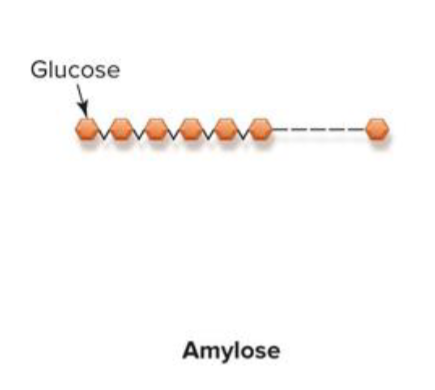
*glucose simplified as hexagon
Disaccharides
chemical bonding of 2 monosaccharides: sucrose, maltose, galactose
Sucrose
glucose + fructose, table sugar
Lactose
glucose + galactose, milk products
Maltose
glucose + glucose, fermentation and alcohol products
Polysaccharides
many monosaccharide units, not sweet
starch, fiber, glycogen
Amylose
Polysaccharide structure of glucose in plants, long straight chain, 20% of starch in beans, bread, pasta, rice, and veggies
Amylopectin
polysaccharide structure of glucose in plants, highly branched chain, 80% starch in food

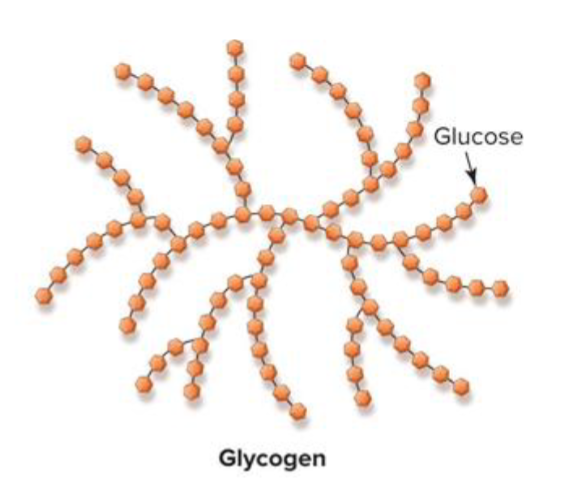
Glycogen
polysaccharide structure of glucose in animals and humans, stored in liver and muscles, sites for enzymes
Plant Polysaccharides
starches(digestable by humans) and fibers(indigestible by humans)
Fiber
Indigestible polysaccharide
insoluble or nonfermentable: cellulose
soluble and viscous(absorb water): pectin, some fermentable
Lactose Intolerance
lactase deficiency → slowly decreases after birth, genetic component
lactose cannot be broken down → fermented in LI
Lactose Intolerance Dietary Changes
small amounts of dairy
different forms of dairy
e.g. cheese and lactaid milk