Pediatrics: Handwriting
 Call Kai
 Learn
 Practice Test
 Spaced Repetition
 Match
 Flashcards
 Knowt Play
1/16

There's no tags or description
Looks like no tags are added yet.
17 Terms
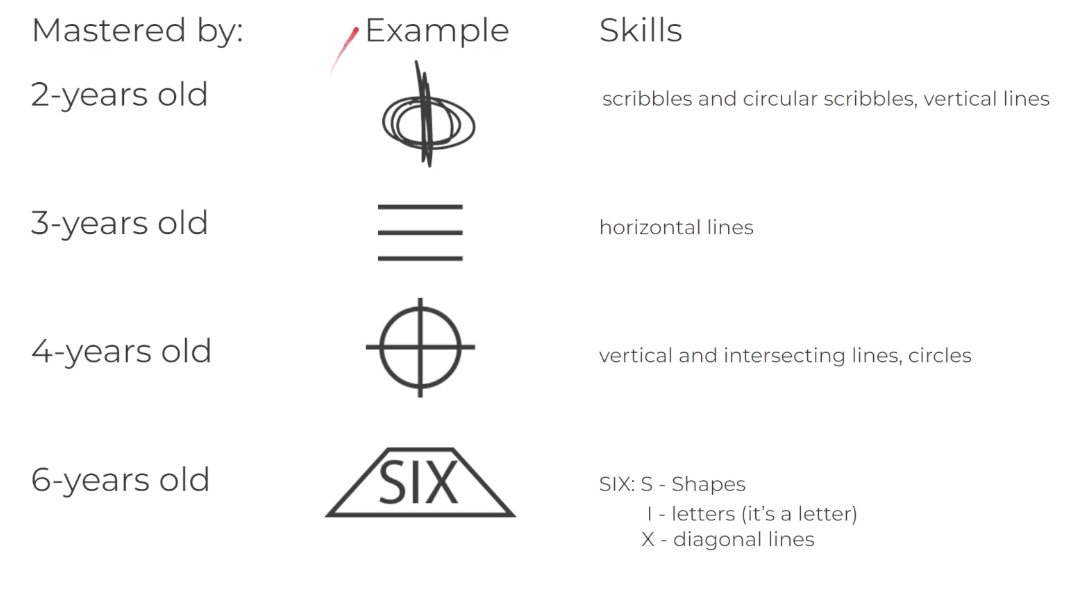
development of handwriting
2 yr olds
3 yr olds
4 yr olds
6 yr olds
2 yr olds
scribble
circular scribbles
vertical lines
3 yr olds
horizontal lines
4 yr olds
circles
intersecting lines
6 yr olds
S: shapes
I: letters
X: diagonal lines
ideal pencil grip
dynamic tripod and/or lateral tripod grasps (not much difference)
3 fingers on pencil
last 2 fingers in the palm of the hand
slightly extended wrist
forearm supinated + resting on the table
open webspace
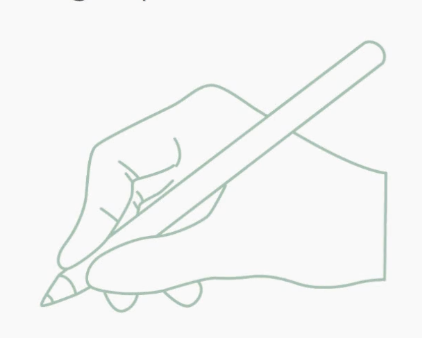
functional— but not ideal pencil grip
lateral quadrupod and four-finger grip
4 fingers on the pencil instead of 3

legibility components
letter formation— most critical to determine legibility
alignment
spacing
size
slant
proximal stability leads to
distal mobility
positioning is key for handwriting
if we have multiple motor problems, we always address the most proximal one first
proximal —> distal
pelvis —>
trunk —>
shoulder —>
arm —>
wrist —>
fingers
grading
grade task to be challenging but possible until the child achieves MASTERY
grading — mastery, grading — mastery
this is how we try to catch up to where they should be developmentally
more than motor
may be other issues going on with handwriting
if motor
fine motor, gross motor, positioning
if not motor
sensory
e.g., vestibular issues— poor balance, requiring 1 UE to always hold onto something
e.g., dislike of paper or pencil feel
cognitive
e.g., being easily distracted
psychosocial
e.g., low motivation/meaning
assessments
Children’s Handwriting Evaluation Scale (CHES-C & CHES-M)
Denver Handwriting Analysis
Evaluation Tool for Children’s Handwriting (ETCH)
Here’s How I Write (HHIW)
Minnesota Handwriting Assessment
Test of Handwriting Skills, Revised (THS-R)
The Print Tool
interventions— models of practice
acquisitional/motor learning
repetition and practice are important
once mastered, use letters immediately to write words (and then eventually sentences)
combine newly acquired letters with mastered letters
interventions— models of practice
sensorimotor
providing multi-sensory input reinforces learning
felt-tip, scented, glittered, glow-in-the-dark pens/crayons
paintbrushes
weighted pens
mechanical pencils
vibratory pens
chalk
writing surfaces and positions are also considered sensorimotor
colored lines (visual component)
raised lines (tactile component)
upright orientation (e.g., easel)
interventions— models of practice
biomechanical approaches
ergonomics influence handwriting quality and speed
sitting posture
optimal posture:
90-90-90 (at knees, hips, ankles)
feet planted firmly on the floor
table surface should be 2 inches above the flexed, neutral elbows
elbow resting on the table
can also adjus height of desks and chairs; add footrests, seat cushions and inserts; or reposition the desk
paper position
slanted positions facilitate wrist extension and eye tracking of the hand’s movement
right-handed: slant paper to the left
left-handed: slant paper to the right
use of a vertical or semi-vertical surface can also promote upright posture
easel
white board
taped on wall
pencil grasp
pencil grips
stetro grips
moldable grips
for those with tight-fisted grasp
wide-barreled pencil
triangular pencils
for promotion of tripod grasp
hold a small eraser against the palm with the ulnar digits
rubber band sling for promotion of tripod grasp
writing instruments
type of paper

interventions— models of practice
cognitive interventions
Cognitive Orientation to Occupational Performance (CO-OP)
C—>Goal-
O—>Plan-
O—>Do-
P—>Check
reduce distractions
uncover only current work
focus attention
black mat for contrast
cardboard cutout window
auditory
using verbal cues or self-talk when writing
visual
writing strip
word walls
modeling
visual cues on the paper

interventions— models of practice
psychosocial approach
make handwriting meaningful; e.g.,
writing a note to parents
Thanksgiving Day card
share work with small integrated group
handwriting clubs
strategies for
spacing
placing text on lines
sizing
speed
spacing (e.g., words/letters are too close)
—> finger, stick
placing text on lines
—> raised or colored lines
sizing
—> individualized boxes on graph/grid paper
speed
—> start projects early
alternatives to handwriting
compensatory strategies to augment handwriting
keyboarding
word prediction
reduce the amount of written assignments
dictate assignments
study buddies or peer
assistive technology
text-to-speech —>
electronic spell check —>
picture library —>
abbreviated expansion —>
word prediction —>
voice recognition software —>
text-to-speech —> speaks for the student
electronic spell check —> spell checks
picture library —> story using pictures
abbreviated expansion —> fewer keystrokes required to get a word out
word prediction —> slow typer
voice recognition software —> hands-free text entry system (i.e., you talk into the system, as it types out what was said)
evaluation considerations
determine the writing tasks that are most difficult for the child
track the behaviors that are evident when the child is required to write
determine what assistance or cueing (if any) the child needs to complete writing tasks
determine whether the child is distracted by any visual or auditory stimuli
consider where the child sits in the classroom
review the handwriting curriculum (if any) being used
location of the teacher when instruction is being given
determine how the writing difficulty affects the child’s learning
consider ergonomic factors, such as…
writing posture
upper extremity stability and mobility
pencil grip