Ap Bio Unit 2
 Call Kai
 Learn
Learn Practice Test
 Spaced Repetition
 Match
Match Flashcards
 Knowt Play
1/48

Earn XP
Description and Tags
Cell Structure and Function
Name | Mastery | Learn | Test | Matching | Spaced | Call with Kai | Chat |
|---|
No analytics yet
Send a link to your students to track their progress
49 Terms
Cell Theory
Every living organism is made of cells. The cell is the structural and functional unit of all organisms, it is the smallest unit of life, and is individually alive even as part of a multicellular organism. All living cells arise by division of pre-existing cells and contain hereditary material, which is passed to offspring during division
Plasma Membrane, Cytosol/Cytoplasm, Genetic Material (Chromosomes) and Ribosomes
What all cells are made of
Prokaryotic Cells
Cells only made of a plasma membrane, cytoplasm, genetic material and ribosomes

Archaea and Bacteria
The only types of prokaryotic cells
Outside of prokaryotic cells
Capsule, plasma membrane, pili, cell wall and flagella
Capsule
The sticky layer that helps prokaryotes stick to surfaces, some capsules and extra protection

Cell Wall
Supports cell shape, protects cell, and permeable to water (dissolved stuff can cross into cell)
Plasma Membrane
Phospholipid bilayer
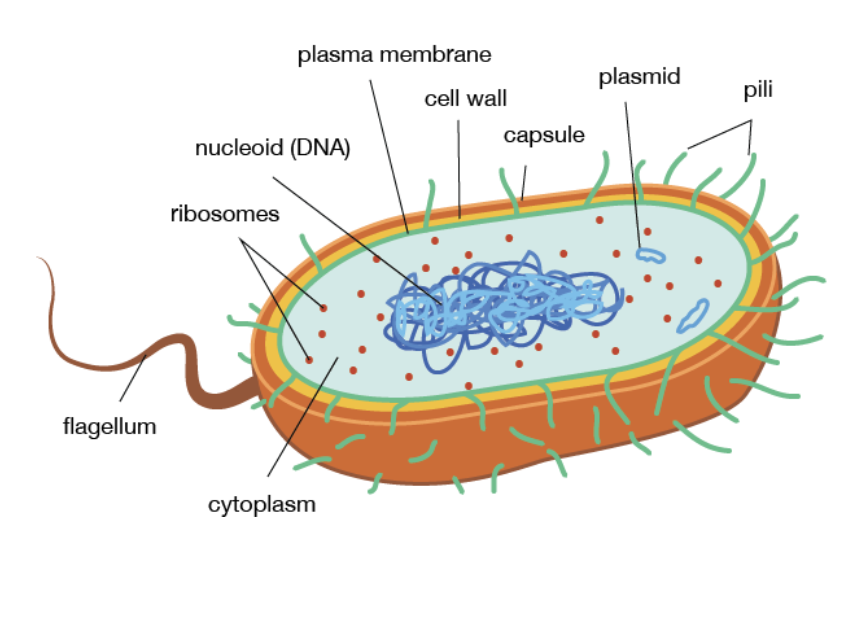
Pili
Some prokaryotes have these, they help the bacterium stick to surfaces. Other types can be used to spear and reel in other bacteria to exchange plasmid DNA

Flagella
Used for motion

Inside of prokaryotic cells
Ribosomes, plasmids, nucleoid
Plasmids
Small circular chunks of DNA, contains a couple of genes that are easily shared with other bacteria

Nucleoid
One large circular chunk of DNA. Contains the rest of the bacterias genes. Not enclosed by a nucleus

Eukaryotic Cells
Cells that have a nucleus, have internal membranes that compartmentalize their functions (organelles), isolate specialized environments (pH, molecules), and increase internal surface are for reactions. Either autotrophic (plant) or heterotrophic (animal)
The Endomembrane System
Efficiently coordinates the sending of proteins from ribosomes to their destination
Nucleus
Permanently stores DNA, hosts DNA synthesis (replication) and RNA synthesis (transcription)

Nucleolus
Compartment of nucleus that makes ribosomes
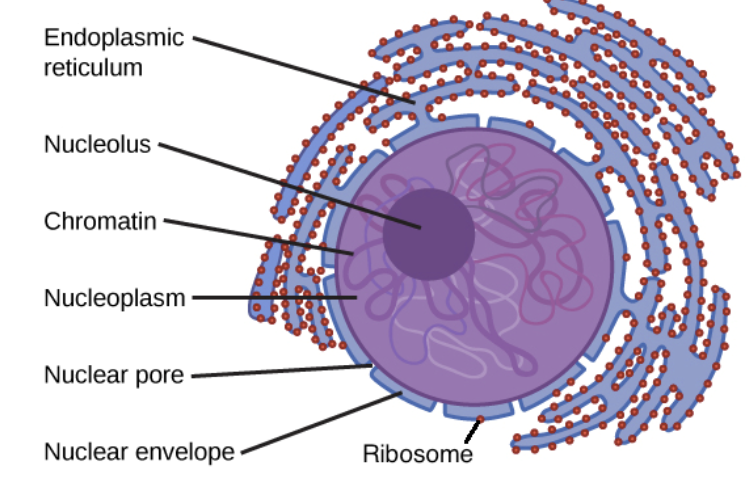
Ribosomes
The site of protein synthesis (where proteins are assembled from amino acid monomers). Free ribosomes make cytoplasmic proteins but bound ribosomes on the rough E.R. make membrane and excretory proteins. Bound are in eukaryotic cells only.

Free Ribosomes
These make cytoplasmic proteins
Bound Ribosomes
These are on the rough ER and make membrane and excretory proteins. These are in eukaryotic cells only
Rough ER
This compartmentalizes the cell for protein synthesis since it has bound ribosomes on its surface. Proteins made by this travel to the smooth ER to become enzymes that break down macromolecules or poisons.
Smooth ER
This makes phospholipids (fat)
Golgi Apparatus
This is like the finishing center of the cell. It takes vesicles delivered from the ER and makes final touches. Then it sends the finished products to the cell membrane to be excreted out of the cell. Vesicles can also be sent into the cell to be lysosomes or peroxisomes
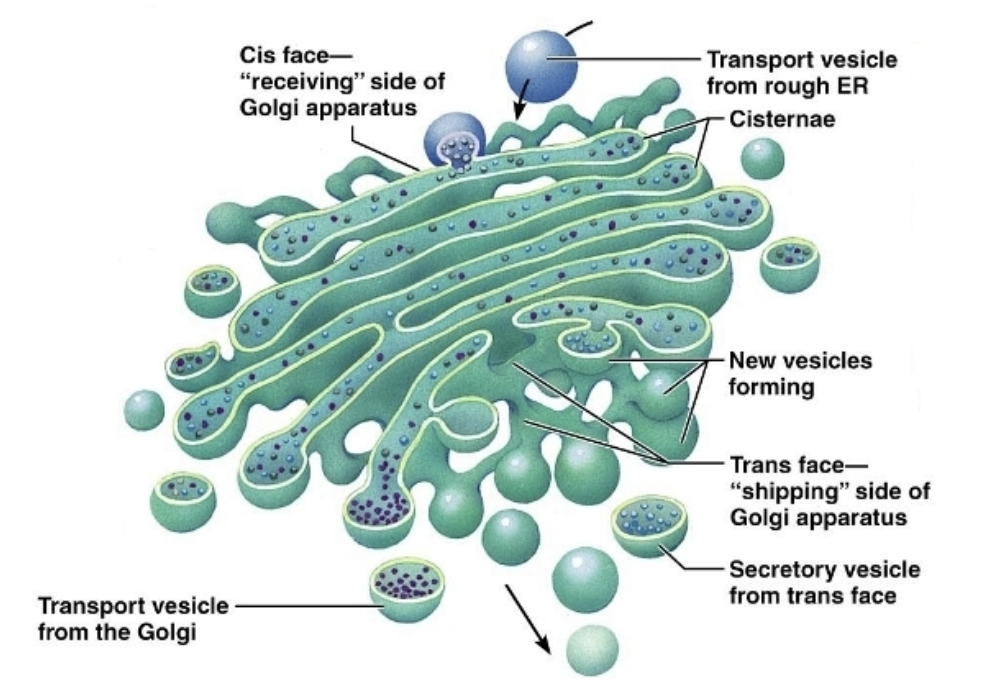
Vesicles
Small membranous sacs that store materials or transport/secrete materials around/out of cells

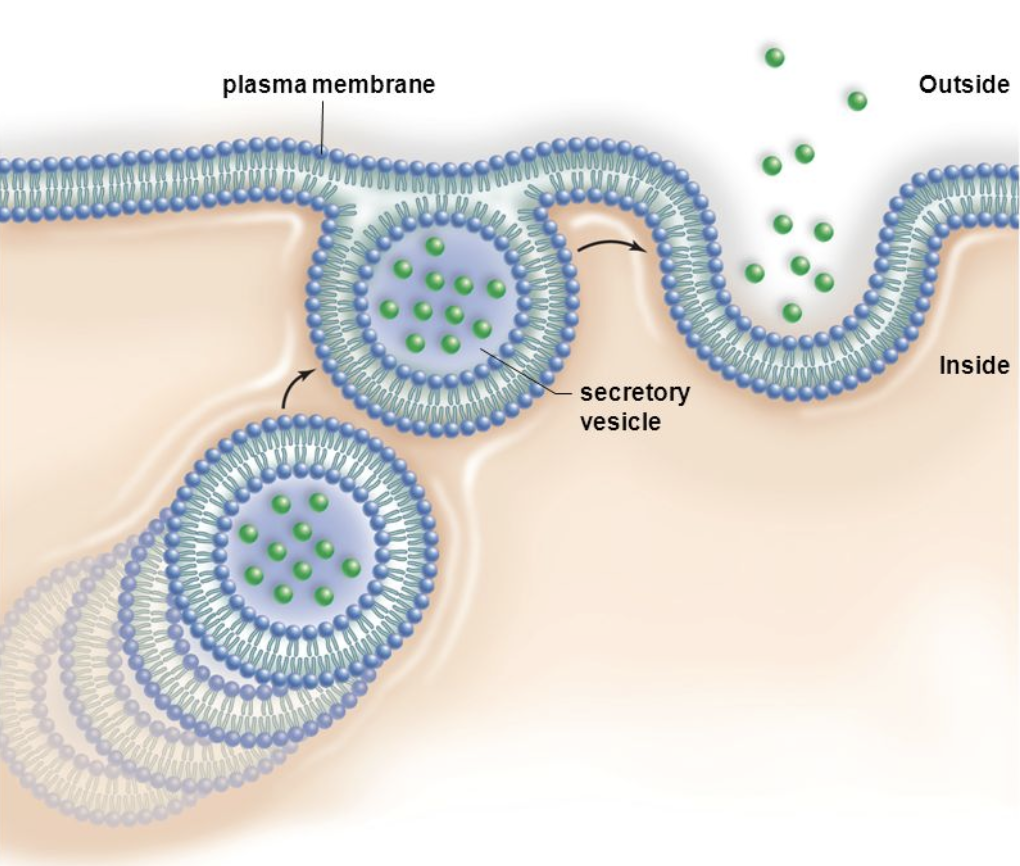
Secretory Vesicles
These fuse with the cell membrane to deliver membrane proteins or to release secretory proteins. This is done by a process called exocytosis
Vacuoles
Larger vesicles that function as storage for food, water, or waste
Large Central Vacuoles
These are found in plant cells and store water and exerts an outward force (turgor pressure) on the cell wall to provide rigidity and structure to plants. When plants wilt, they need water to replenish these

Contractile Vacuoles
These are found in unicellular eukaryotes and are used to dispel excess water. These prevent the single celled organism from absorbing too much water from its environment-which can cause the cell to die

Lysosomes
These are produced by the Golgi Apparatus. They contain over 50 kinds of hydrolytic enzymes (enzymes that break chemical bonds), they digest old cell parts and large food molecules, in white blood cells, these destroy engulfed pathogens, and they are only found in animal cells

Peroxisomes
These are formed by fusing vesicles from the mitochondria and the Rough ER together. In animals, they are mostly found in the liver. In plants, they are found in greater numbers in seeds and they help break down the fats stored in seeds as the first energy source for the seed to germinate

Mitochondria
This is a eukaryotic organelle that makes the energy molecule (ATP) through aerobic respiration (meaning oxygen is needed)
Inner Membrane of Mitochondria
This is folded because it needs more surface area to maximize the amount of chemical reactions occurring (more surface area=more ATP being made)
Cristae
The folds of the inner membrane of the Mitochondria

Matrix
The very innermost middle are of the Mitochondria. This stores enzymes, proteins, ribosomes, and mitochondrial DNA

Chloroplasts
These function in photosynthesis in plants and algae. They contain the pigment chlorophyll (gives green coloration)
Chlorophyll
This captures energy from the sun and carbon from CO2 in the air to turn into glucose
Thylakoids
The flat green pancakes which store chlorophyll and collect sun energy for the first part of photosynthesis

Grana
Stacks of thylakoids that are another way to to increase surface area
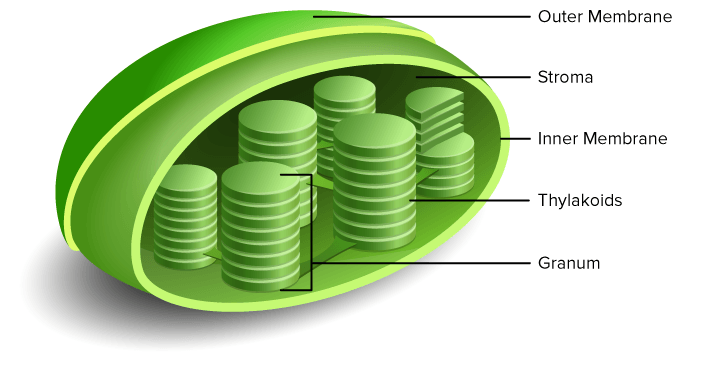
Stroma
The fluid that surrounds thylakoids. It’s the site where the second half of photosynthesis occurs and contains ribosomes and chloroplast DNA

Endosymbiotic Theory
Chloroplasts, other plastids, and mitochondria are theorized to be a part of eukaryotic cells. This suggests that a long time ago, a symbiotic relationship (mutualism, meaning both species benefit) formed between early eukaryotes and prokaryotes.

Cytoskeleton
A network of structural proteins extending throughout the cytoplasm and an interconnected system of many protein filaments – some permanent, some temporary. Part of this reinforces, organizes, and moves cell structures, or can even move the whole cell. Cilia and flagella are extensions of this that allow for cell motility, motor proteins can use this as highways and drag important stuff around with it and animal cells have centrosomes to organize microtubules

Cell Walls
These are cross linked networks of structural polysaccharides (plants, bacteria, fungus)
Plant Cell Walls
These are made of cellulose
Fungal Cell Walls
These are made of chitin
Bacterial Cell Walls
These are made of peptidoglycan
Extracellular Matrix
Animal cells have networks of connective proteins outside the cell membrane

Intracellular Junctions
Proteins connect through these, sometimes creating open channels

Plasmodesmata
This is a plant junction
Tight and Gap
These are animal junctions