3.3.12.2 biodegradability + disposal of polymers
 Call Kai
 Learn
Learn Practice Test
 Spaced Repetition
 Match
Match Flashcards
 Knowt Play
1/12

There's no tags or description
Looks like no tags are added yet.
Name | Mastery | Learn | Test | Matching | Spaced | Call with Kai | Chat |
|---|
No analytics yet
Send a link to your students to track their progress
13 Terms
polyalkenes are what?
chemically inert (ie unreactive)
what is one problem with plastics?
most plastics are not quickly broken down by microbes + many not at all
explain why plastics cant be broken down by microbes
addition polymers / polyalkenes are non-biodegradable
this is due to the non-polar covalent bonds present between atoms in the polymer molecules
as the C-C bonds aren’t polar, they are not susceptible to attack by nucleophiles + are therefore not easily hydrolysed
why do we need to reduced the amount of plastic we use or recycle it?
because buried plastic in landfill sites may take hundreds of years to decompose
how can addition polymers be recycled? give 2 ways
they can be separated, washed + then melted down + remoulded by heating the polymer
some polyalkenes eg poly(propene) are heated to a high temp that will break the polymer bonds + produce the monomers again → these can then be used to make new plastics
what forces must be overcome when melting an addition polymer?
Van der Waal’s forces between polymer molecules
explain why polyesters + polyamides are biodegradable
the C-O or C-N bonds in the polymer chain are polar
therefore δ⁺C can be attacked by nucleophiles/can be hydrolysed
because condensation polymers can be hydrolysed, what does this mean?
that they can be broken up + the constituent monomers are reformed
outline an advantage of condensation polymers than addition polymers eg polyalkenes
condensation polymers are biodegradable + so clearly constitute a smaller environmental hazard than addition polymers, whose chains are made up entirely of non-polar C-C bonds + which are therefore non-biodegradable
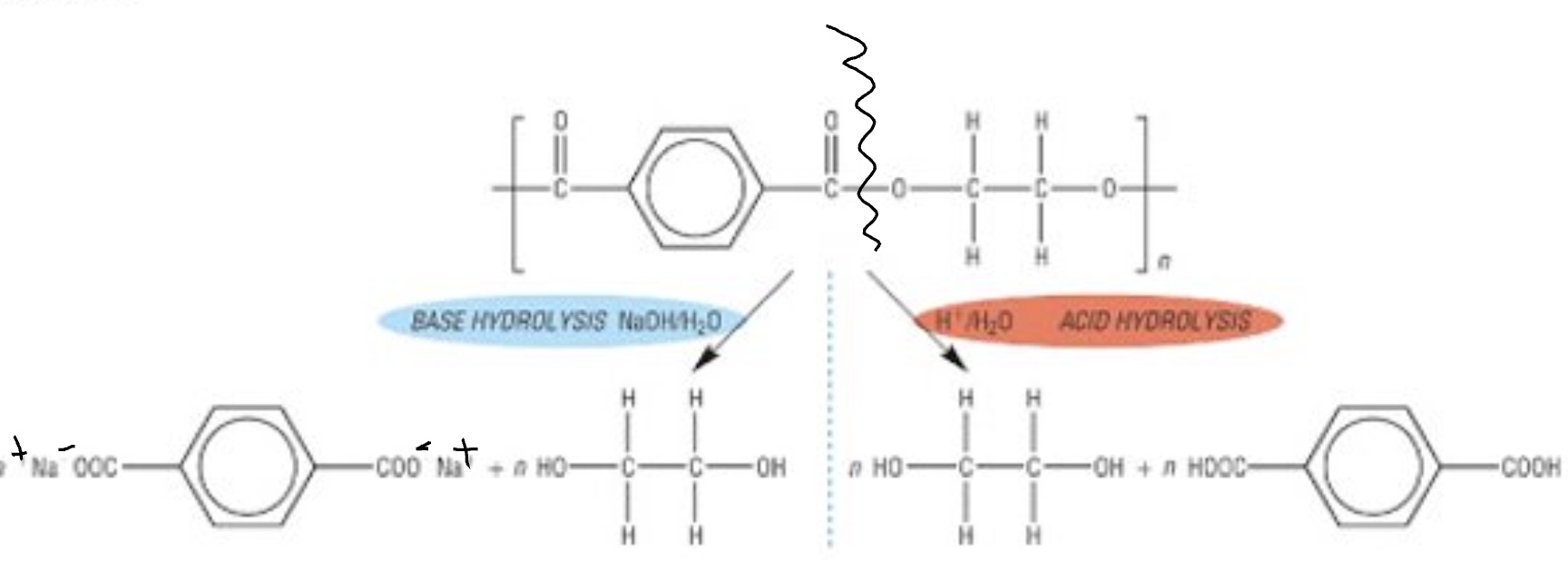
outline how condensation polymers are broken up
the break up of these polymers is carried out in aqueous solution with a strong acid or strong base
it can be classed as a hydrolysis reaction
outline the different ways addition are disposed
as addition polymers are non-biodegradable, they are usually disposed of in landfill sites, along with other rubbish
some may be melted down + remoulded
poly(alkenes) can be burnt to produce carbon dioxide + water to produce energy, although carbon monoxide gas (toxic) + carbon (black soot) could also be produced if combustion is incomplete
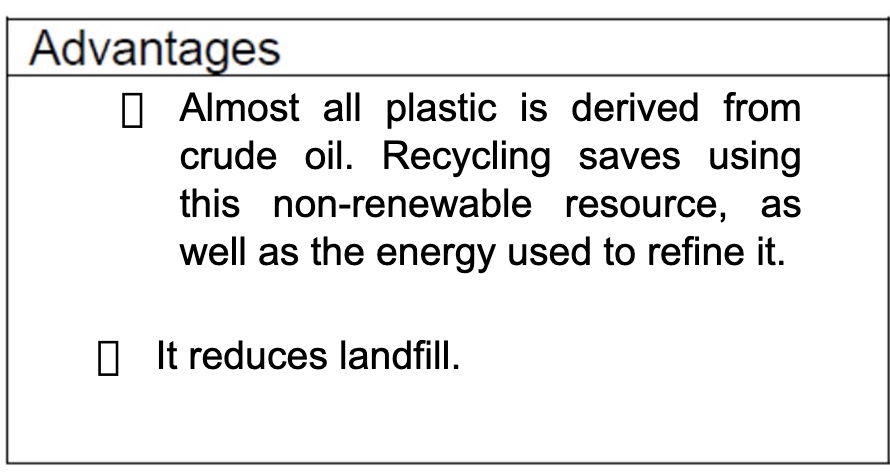
give 2 advantages of recycling polymers
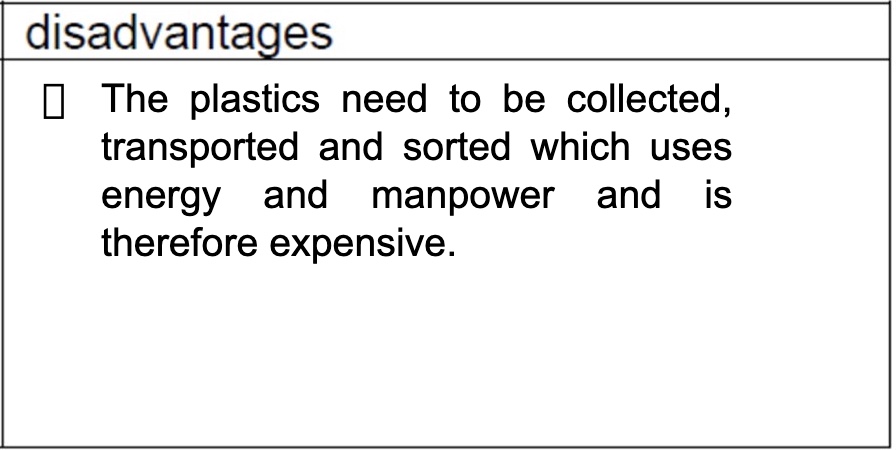
outline one disadvantage of recycling polymers