NEW introduction to ceramics
 Call Kai
 Learn
 Practice Test
 Spaced Repetition
 Match
 Flashcards
 Knowt Play
1/58

There's no tags or description
Looks like no tags are added yet.
59 Terms
why are ceramics important in dentistry? 5
Excellent aesthetics
Biocompatibility
Chemical stability
Increasing use in digital dentistry - CAD/CAM
Widely used for crowns, veneers, inlays, onlays and implants - indirect restorations

how is luster of teeth achieved?
some of the light is absorbed, some is scattered - teeth are translucent
what are ceramics?
Ceramics: Essentially, a non-metallic, inorganic material and can vary from a clay product, silicate or advanced ceramics such as silicon carbide, alumina or silicon nitrides.
what sort of bonding is involved in ceramics? and why is it beneficial?
Ceramics contain both ionic and covalent bond and the combination renders materials with good chemical stability, great rigidity and hardness
ceramics are…
Ceramics can be Crystalline : ordered arrangement of atoms or molecules
ceramics are very inert - they don’t react with the oral environment - icl temperature, pH

what are the advantages of a material being crystalline? 4
optical transparency
aesthetic appearance
hardness
resistance to chemical attack
what are the disadvantages of a material being crystalline? 2
brittle
shrinkage during processing
Basic Structure of Ceramics
Predominantly Ionic bonds
Some covalent bonds
The bonding of atoms together is much stronger in covalent and ionic bonding than in metallic.
The ionic bond occurs between a metal and a nonmetal as the two elements have very different electronegativity.
They can form structures similar to organic structures (silicates) but they are much less extensive.
They tend to form crystals that are three dimensional in structure
Under the appropriate circumstances, ceramics can form glasses
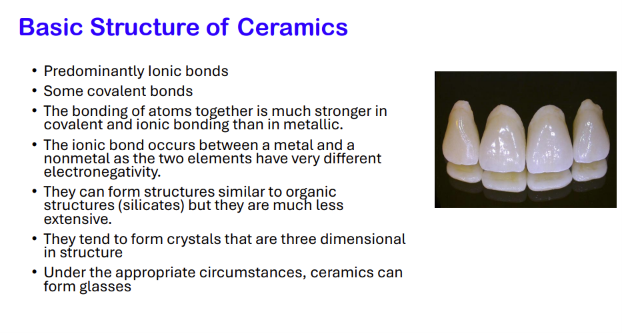
Structural Arrangement of Atoms - amorphous solid
No symmetric arrangement of the atoms
Structural Arrangement of Atoms - crystalline
Regular and symmetric packing of the atoms

Crystalline vs Polycrystalline vs Amorphous
Microscopically, a single crystal has atoms in a near perfect periodic arrangement;
polycrystal is composed of many microscopic crystals (called "crystallites" or "grains"); -
amorphous solid (such as glass) has no periodic arrangement even microscopically
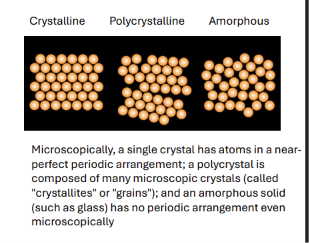
glass icl 3 properties
A glass is a non-crystalline solid exhibiting the phenomenon of glasstransition.
non-crystalline (amorphous)
solid
hard
brittle and vulnerable to stress concentrations.
glasses example 2
Examples: Silicates, nonsilicates
The glass transition temperature (Tg)
The glass transition temperature (Tg) is the point that marks the transition of the material from supercooled liquid to glass.
Glass ceramics - crystalline phase vs residual glassy phase
Crystalline Phase: Polycrystalline grains ranging from a few nanometers to several micrometers in size.
They can be formed into a specific desired shape by a carefully controlled heat treatment with the residual glass phase filling up the grain boundary volume, resulting in a pore free structure.
Residual Glassy Phase: An amorphous (non-crystalline) matrix that surrounds the individual crystals. It fills the spaces between grains and binds the solid structure together thus have superior mechanical properties due to the elimination of stress concentration pores
however, glass ceramics are more opaque than traditional ceramics
Mechanical behaviour - metals vs ceramics
Metals usually undergo plastic deformation
Ceramics exhibit brittle fracture

Fracture toughness
Brittle materials may fracture under stresses lower than the ideal fracture stress
The theory of fracture toughness takes into account that microcracks can concentrate stress at the tips
Griffith developed the theory: when K becomes large enough for crack propagation to occur it is termed as the critical stress intensity factor K1c
CERAMICS HAVE LOW FRACTURE TOUGHNESS
critical stress intensity factor K1c
consider:
Shape of the body
Crack shape & size
Kind of loading
Compare K with KIC

Why are Ceramics Brittle? 6
Crack Formation
Low fracture toughness
Ceramics contain microscopic flaws.
When stress is applied: Cracks are initiated
Cracks propagate rapidly
Catastrophic fracture may occur

in general, what are types of ceramics? 3
Glasses (silicate)
vitreous - (solid but they are glassy)
short range order (nm scale maximum)
Glass ceramics (silicate matrix)
glass matrix with growth of ceramic inclusions = crystals/grains
controlled phase separation nucleation species included
Polycrystalline Oxide Ceramics
densely packed, microscopic oxide crystals (grains) that are fused together without any significant glassy or amorphous phases between them (long range order μm scale)
Generally opaque
DENTAL CERAMICS AND CERAMIC-LIKE MATERIALS 3 types
GLASS MATRIX CERAMICS
POLYCRYSTALLINE CERAMICS
RESIN MATRIX CERAMICS
GLASS MATRIX CERAMICS examples 3
feldspathic ceramics
synthetic ceramics - leucite based, fluoroapatite based, lithium disilicate derivatives
glass-infiltrated ceramics - alumina, alumina and masnesia, zirconia
POLYCRYSTALLINE CERAMICS examples 3
alumina
Stabilized zirconia (Y-TZP)
Zirconia-toughened alumina /Alumina-toughened zirconia
RESIN MATRIX CERAMICS - examples 3
Resin nanoceramic
Glass ceramic in a resin interpenetrating network
Zirconia-silica in a resin interpenetrating network

we could also classify ceramics based on their microstructure levels
Classification based on the microstructural level - based on glass matrix ceramics
We can define ceramics by the nature of their composition of glass-to-crystalline ratio to four basic compositional categories, with a few subgroups:
Composition category 1 – glass-based systems (mainly silica)
Composition category 2 – glass-based systems mainly silica + crystalline fillers (typically Lucite, more recently, lithium disilicate)
Composition category 3 – crystalline- based systems with glass fillers (mainly alumina) - oxides - ressitant to chemical attacks - very dense - very opaque
Composition category 4 – polycrystalline solids (alumina and zirconia) (no glass content at all only crystalline)
Processing of Dental Ceramics
Conventional Processing
Powder mixing
Condensation
Firing
Glazing
Digital Processing
Intraoral scanning
CAD design
Milling
Sintering
Clinical Trend: Shift towards CAD/CAM fabrication.
Mechanical Properties of ceramics 3
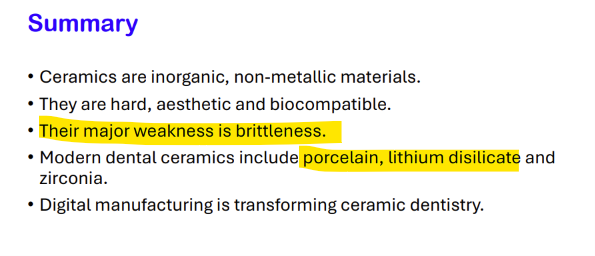
Hard
Wear resistant
Brittle (Low fracture toughness)
physical Properties of ceramics 4
Good thermal insulation
Colour stable: Translucent or opaque
Biological Properties: Biocompatible
Chemically inert: Minimal allergic reactions

optical Properties of ceramics 5
Translucency
Light scattering
Fluorescence
Colour matching
Clinical Importance
Aesthetics is often the main reason patients request ceramic restorations.
when light falls on ceramics - they absorb a bit of the light - but a lot of the light is scattered out - giving a translucent appearance

Feldspathic porcelains - what is it and what are the main components?
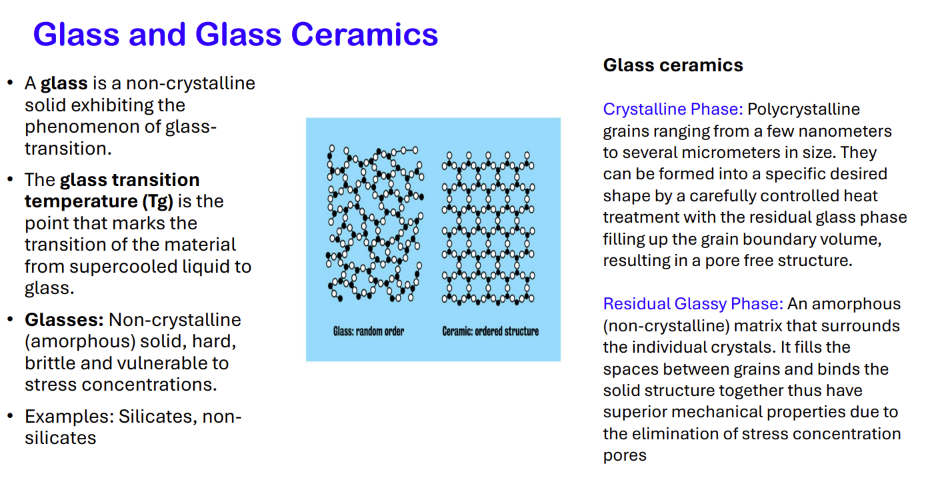
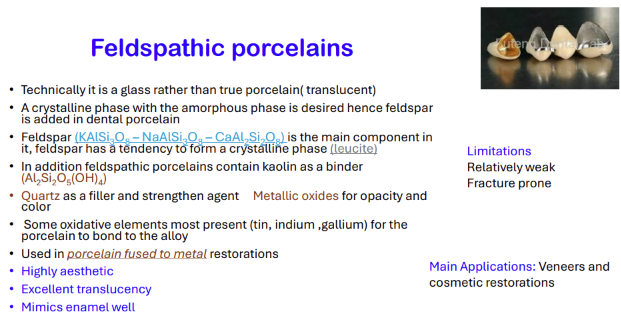
Technically it is a glass rather than true porcelain ( translucent)
A crystalline phase with the amorphous phase is desired hence feldspar is added in dental porcelain
Feldspar (KAlSi3O8 – NaAlSi3O8 – CaAl2Si2O8 - potassium, sodium, calcium alluminosillicates ) is the main component in it, feldspar has a tendency to form a crystalline phase (leucite)
In addition feldspathic porcelains contain kaolin as a binder (Al2Si2O5 (OH)4 )
Quartz as a filler and strengthen agent
Metallic oxides for opacity and color
Some oxidative elements most present (tin, indium ,gallium) for the porcelain to bond to the alloy
feldspathic porecelain advantages 4
Used in porcelain fused to metal restorations
Highly aesthetic
Excellent translucency
Mimics enamel well
feldspathic porecelain disadvantages
Relatively weak Fracture prone
feldspathic porecelain main clinical applications
Main Applications: Veneers and cosmetic restorations
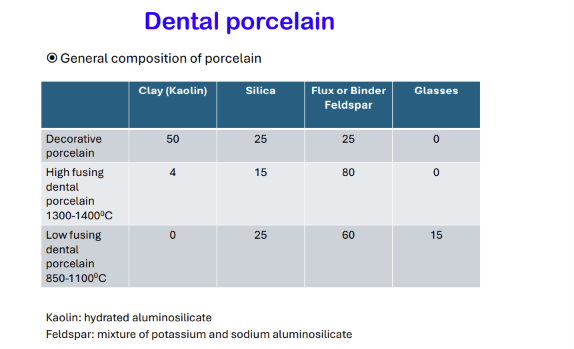
Dental porcelain - General composition of porcelain
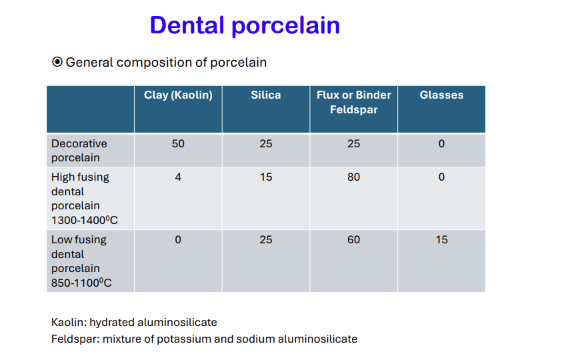
Dental porcelain
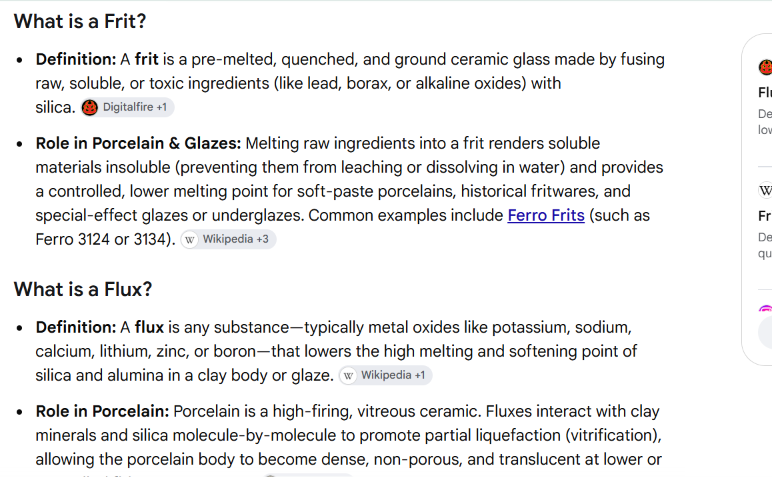
The mixtures are fused to form a FRIT* which is broken up in cold water and ground to form the powder ready for dental use.
Pigments(metal oxides) can be added for tooth shade matching
During the fusion process or formation of the FRIT, the flux reacts with the outer layers of silica, kaolin or glass and partly combine the components, the frit is quenched in water. As the frit is cooled rapidly, large internal stresses are built up and the material cracks easily.
This is then ground to a powder to yield the dental porcelain powder
The prepared porcelain powder is melted for the fabrication of the appliance: this is only a remelting process and does not cause further reaction between the flux and the other component

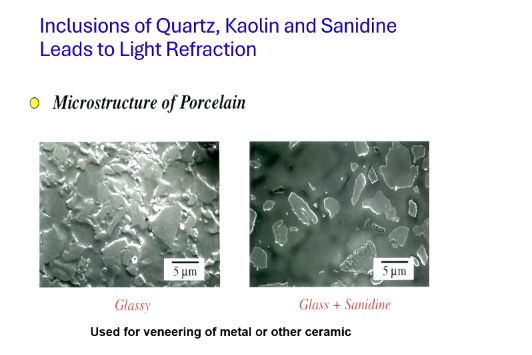
Properties of dental porcelain
Chemically very stable (resist oxidation, corrosion and degradation)
Excellent aesthetics: Porcelain jacket crown made up with a number of powders to recreate the aesthetic features of a tooth
Thermal conductivity & coefficient of thermal expansion, similar to enamel & dentine
Low tensile strength (20-60MPa)
High compressive strength (350-550MPa)
Low fracture toughness, extremely sensitive to surface microcracks
Major drawbacks: Lack of strength and toughness, undergoes static fatigue (time dependent decrease in strength even in the absence of any load) → so finds limited use
Inclusions of Quartz, Kaolin and Sanidine Leads to
light refraction
Used for veneering of metal or other ceramic

Leucite
Leucite is a rock-forming mineral composed of potassium and aluminum tecto-silicate K[AlSi2O6 ]
Leucite occur as a crystalline phase
It has a large coefficient of thermal expansion compared to glass - expands and grows to a greater degree
Feldspar tend to form leucite when melted
Feldspathic porcelain contain leucite crystalline phase
Note : There is another type of glass-based ceramic reinforced with luecite crowns used in all ceramic restorations

to clarify…?
dental ceramics can be feldspathic porcelains- with an amorphous glass with crystalline add ins - aka feldspar
feldspar forms a crystalline phase leucite
and they have kaolin as a binder
see previous card for info on leucite
Lithium Disilicate
(Li₂Si₂O₅) is an advanced glass-ceramic material widely used in restorative and cosmetic dentistry for crowns, veneers, bridges, and inlays
better than porcelain
Commercial Example: IPS e.max
Lithium Disilicate features
Good aesthetics
Higher strength than porcelain
CAD/CAM compatible
Uses: Veneers, Crowns, Inlays and onlays

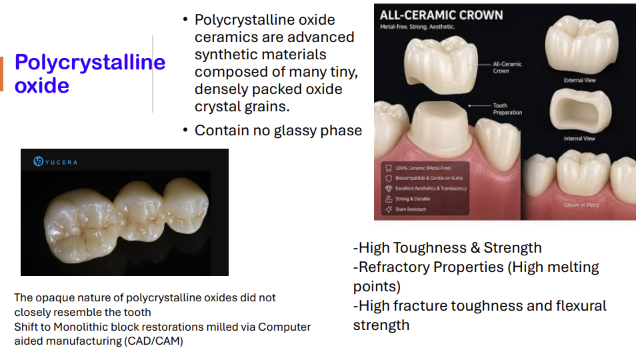
Polycrystalline oxide
Polycrystalline oxide ceramics are advanced synthetic materials composed of many tiny, densely packed oxide crystal grains.
Contain no glassy phase
polycrystalline oxide ceramics advantages
High Toughness & Strength
Refractory Properties (High melting points)
High fracture toughness and flexural strength
better useage for a core of a restoration
polycrystalline oxide drawbacks
The opaque nature of polycrystalline oxides did not closely resemble the tooth
Shift to Monolithic block restorations milled via Computer aided manufacturing (CAD/CAM)
Clinical Applications of ceramics 11
Veneers
Crowns
Bridges
Inlays
Prosthodontics
Fixed prostheses
Implant Dentistry
Zirconia abutments
Ceramic implants
Orthodontics
Ceramic brackets

Limitations and Challenges of ceramics 7
Brittleness
Chipping
Difficult repairs
Wear of opposing teeth - bruxism
Cost
Clinical Consideration
Material selection depends on: Location, Functional load and Aesthetic demands

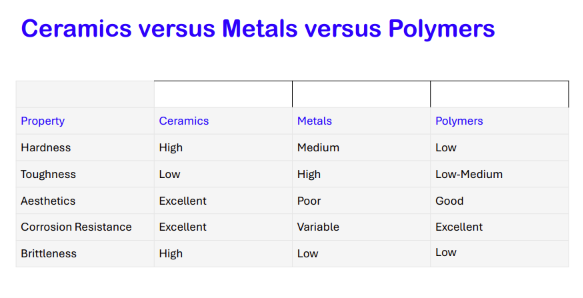
Ceramics versus Metals versus Polymers
Bioceramics in Dentistry
Bioceramics are ceramic materials specifically designed to interact with biological tissues for repair, regeneration, or replacement
characteristics of bioceramics in dentistry 4
Characteristics
Biocompatible
Bioactive or bioinert
Chemically stable
Can promote tissue healing
bioactive examples 5
Hydroxyapatite
Bioactive glass - in toothpaste
Calcium silicate cements - ie biodentine
Zirconia implants
Mineral Trioxide Aggregate (MTA)
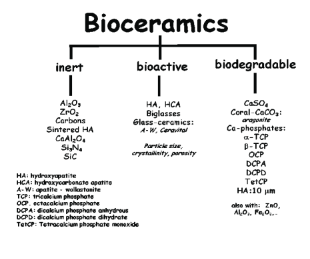
Bioceramics can be classified into three groups 3
bioinert ceramics
bioactive ceramics
bioresorbable ceramics.
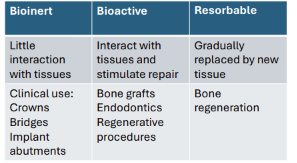
bioinert ceramics
Little interaction with tissues
Clinical use: Crowns, Bridges, Implant abutments
bioactive ceramics
Interact with tissues and stimulate repair
clinical use: Bone grafts, Endodontics, Regenerative procedures
Resorbable ceramics
Gradually replaced by new tissue
clinical use: Bone regeneration


bioceramics not the same as resin matrix ceramics
