Management Unit 4: economic activity and design of organizations
 Call Kai
 Learn
 Practice Test
 Spaced Repetition
 Match
 Flashcards
 Knowt Play
1/39

There's no tags or description
Looks like no tags are added yet.
40 Terms
What is (corporate) organizational culture?
A firm’s shared values, traditions, role, etc. Its model for behavior.
How is organizational culture enhance?
By atitudes and policies
How is organizational culture expressed?
Usually informally (like vacations or dress code) but it may be in the firm’s mission statement, etc.
What is organizational structure?
the arrangement and relationship of positions within the firm to facilitate achieving objectives.
When does the organizational structure change?
When the current structure is no longer efficient
How are tasks assigned?
Through specialization and departmentalization
What is specialization?
Breaking down activities into specific tasks and assign one to an employee.
Why is specialization good?
It is more efficient and makes training and the job easier.
What are independent contractors?
Temporary people that are hired for specialization
What does overspecialization lead to?
Boredom and dissatisfaction. Always doing the same things → job rotation
What is departmentalization?
The grouping of similar jobs into functional units (departments)
How can we enhance success in departmentalization?
By using more than one departmentalization
What are the four main types of departmentalization and briefly explain each one.
Functional: grouping jobs that perform similar functions (ex. finance, HR). Each function is managed by an expert and it is more common in smaller firms.
Product: organizes jobs around products. Has functional activities within. Each division does their own product plan, monitors, marketing, etc. Simplifies decision-making related to products.
Geographic: state, region, etc. Makes the company feel closer to the costumer culture
Costumer: arranges jobs around the need of different costumer types
What are the weaknesses of functional departmentalization?
It emphasizes units rather than the whole organization and decision-making involves +1 department is slow.
What are the weaknesses of product departmentalization?
Emphasizes products rather than overall objectives
What is a downside to both geographic and costumer departmentalization?
Require larger staff and control
What is delegation of authority?
empowering employees to make commitment, action, do tasks, whatever is necessary to reach a goal. Giving them responsibility.
Why is delegation of authority good?
Frees manager to concentrate on larger issues and incentives innovation an ideas.
What does accountability mean in responsibility terms?
Whoever accepts the responsibility and the authority is answerable to a superior for outcome. It can be satisfactory or not.
When is a firm centralized?
When decisions are risky or lower management ins’t skilled enough, then they deal with daily procedures.
What are the issues with overcentralization?
makes it harder for the whole company to implement decision or respond to changes. There’s also no front-line opinion.
What is a way to avoid overcentralization?
Test changes beforehand for feedback. See how the firm responds
What happens to decision-making in decentralized organization?
Decision-making is delegated as far down the chain as possible.
When are firm decentralized are why does it make sense for that firm?
When they belong to complex environment and have intense competition. Since lower-level management interacts more with external environments they can react quickly (but need to have good decision-making skills)
Why is decentralization good?
It improves responsiveness and creativity.
What is span management?
number of subordinates responding to a manager
What the optimal amount of subordinates for a high-level manager?
4 to 8
What is a flat organization and what are its characteristics?
A wide span of management.
proximity
competent subordinates
manager with few responsibilities (more administrative tasks and spend more time supervision/working wiht)
few problems
specific operating procedures
low interaction between superiors and subordinates
What is a tall organization and what are its characteristics?
A narrow span of management
not close
managers with many responsibilities
frequent interaction with subordinate
centralized
many levels of management
each managers only supervises a few
more managers = higher costs
slower communication
Give me a more deep definition of what is organizational structure?
the levels of management in an organimaztion (description and number of levels)
What are the 4 types of organization structure?
line
line-and-staff
multidivisional
matrix
What is a line structure and what are its characteristics?
Direct lines of authority from top to bottom. There’s a clear chain of command which allows for fast decisions. The simplest one usually used in small businesses.
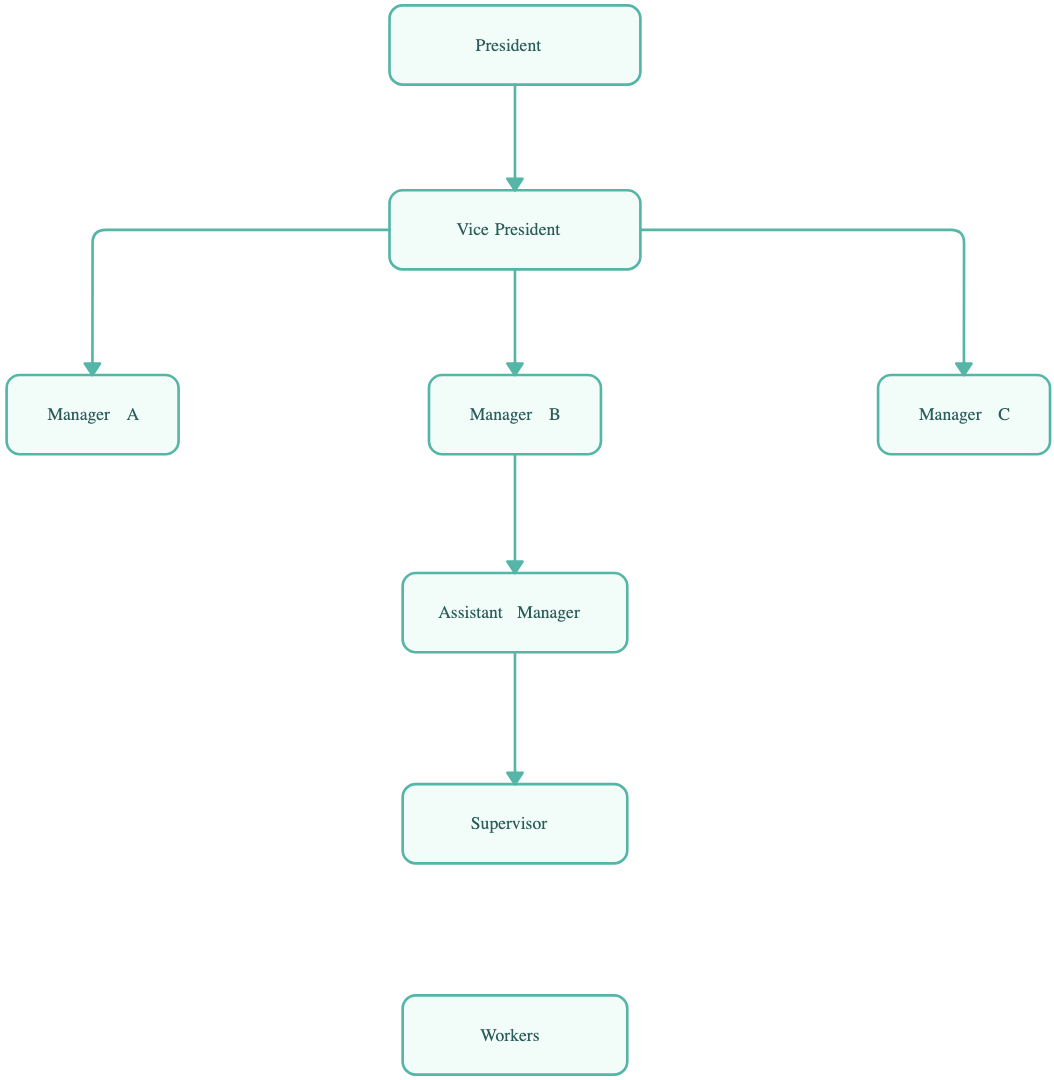
What is a line-and-staff structure and what are its characteristics?
A traditional line relationship between supervisors and subordinates but there are specialized managers (which can lead to overstaffing, ambiguous communication and frustation due to lack of authority), called staff managers that assist (specialized and only have authority in their own department) line managers.

What is a multidivisional structure and what are its strengths and weaknesses?
organizes departments into larger groups (divisions). It is mostly used when traditional structures stop working due to growth.
strengths:
delegation of decision-making authority (closest to the action makes the decision)
faster
innovative
need-focused
manager can specialize
weaknesses:
work duplication
makes economies of scale hard to grow

What is a matrix structure and what are its characteristics?
Project-based management, it sets up teams from different departments creating +2 intersecting lines of authority. It joins different specialities together for a project. It is usually temporary due to complexity, expenses and confusion of authority. But it addresses growth and diversification issues.

Describe Wildfire Entertainment as a company?
It started as two tech student who won a mobile game contest and launched their brand. From 2015-2018 they did multiple games but almost shut down due to low traction. They had a 2B download breakthrough and a record year in 2021 and kept growing since.
What did Wildfire Entertainment do to deal with their growing issues?
They hired a consultant to redesign the company and she did 3 times.
How did Wildfire Entertainment structure change over time?
They started as a flat, project-based team with rapid communication and problem solving. But as they grew there was an administrative overload, a lot of ambiguity and slowed (two-level structure).
So they went from start-up → growth → complexity → maturity
Flat
Functional structure: by expertise
Matrix: dual reporting functions x projects
Divisional: self-containing units around product lines, regions and costumers
pros and cons table in the flashcard
What is the main takeaway from the Wildfire Entertainment case?
There’s no better organizational structure, each involves trade-offs. The best way is to move between structures to handle scale and changes and find the one that best aligns with the current stategy.