chromosomal mutations chapter 8
 Call Kai
 Learn
 Practice Test
 Spaced Repetition
 Match
 Flashcards
 Knowt Play
1/85

There's no tags or description
Looks like no tags are added yet.
86 Terms
gene
physcial unit of inheritance
how are genes arranged
in a linear order
genetic disorders
have alterations in chromosome number or structure
may have dramatic effects and can prevent a fertilized egg from developing (spontaneous abortion) or lead to infertility.
chromosome morphology
shrot arm = p
long arm = 1

banding types
G bands: Giemsa stain
Q bands: quinacrine mustard
C bands: centromeric heterochromatin
R bands: rich in cytosine-guanine base pairs
karyotyping
chromosomes prepared from actively dividing cells
halted in metaphase
chromosomes arranged according to size, appearance, and morphology
chromosome mutations
modifications at the level of a chromosome and include rearrangements, aneuploids, and polyploids
phenotypic variations result from
changes of indiviual genes
types of chromosomal mutations
chromosomal rearangments
alter the structure of chromosomes
aneuploidy
alters the number of chromosomes
polyploidu
one or more complete sets of chromosomes are addeed
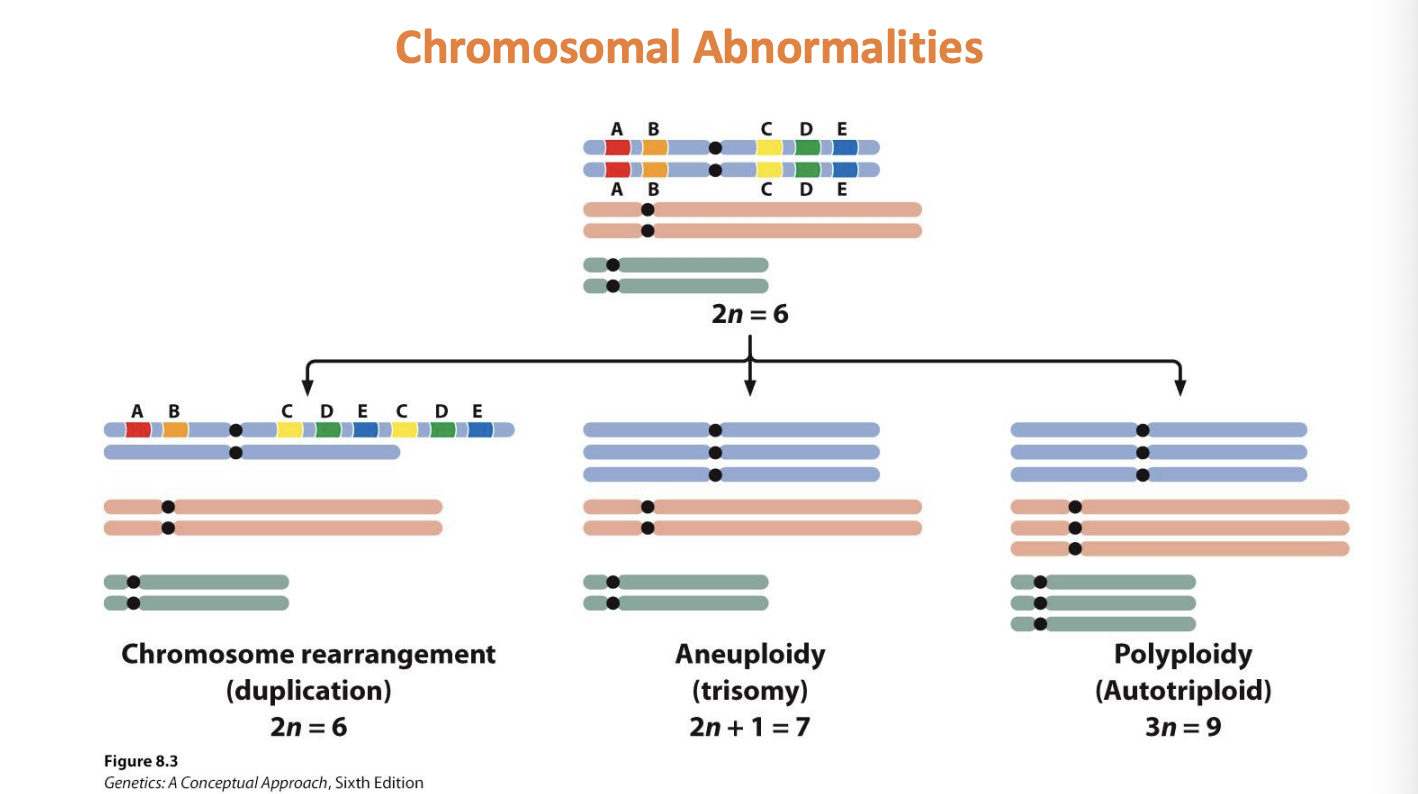
how do the total number of chromosomes vary
one or more extra or missing chromsoomes
one or more extra haploid sets of chromosomes
deletions
duplications
translocations
rearrangements
aneuploidy
variations in chromosome number, when an organism gains or loses one or more chromosomes and has other than an exact multiple of the haploid set
monosomy
Loss of single chromosome in diploid genome
trisomy
gain of single chromsome
euploidy
complete haploid sets of chromosomes are present
polyploidy
More than two sets of chromosomes are present
triploid
Three sets of chromosomes
autopolyploidy
multiuple of the same genome
allopolyploidy
multiple of closely related genomes
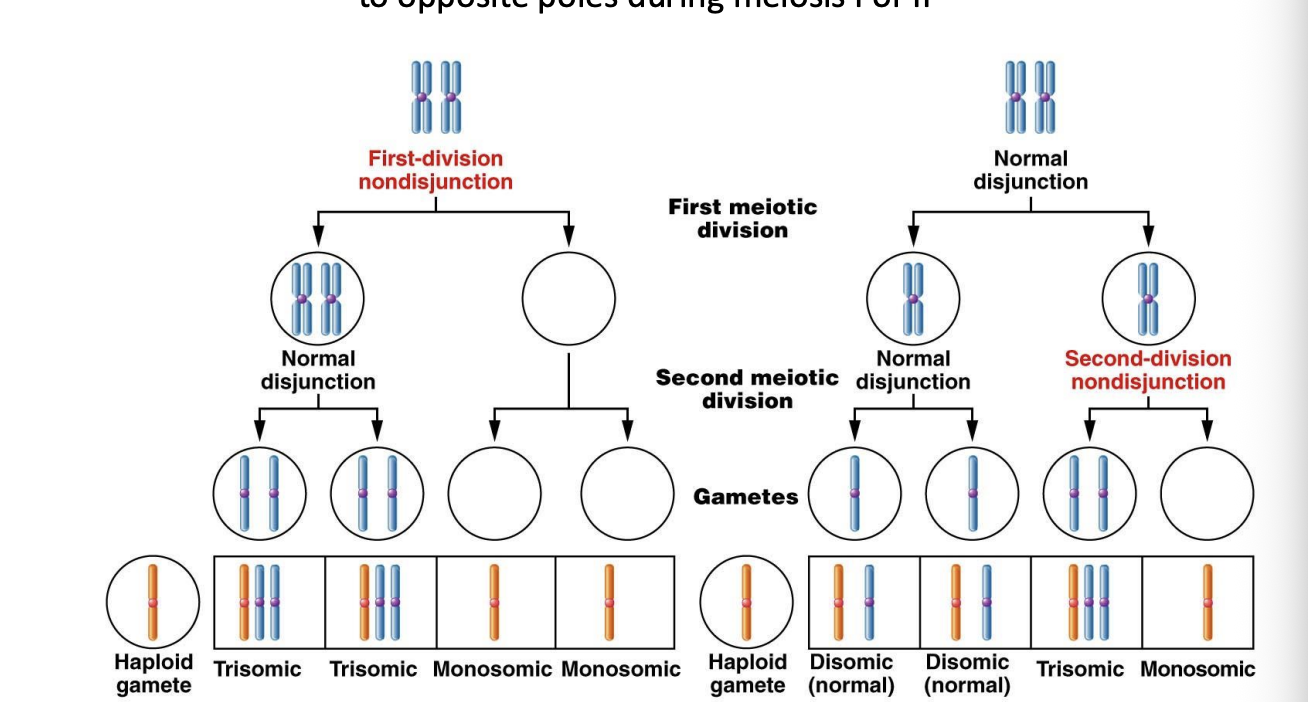
Chromosomal variation can arise from nondisjunction
chromosomes or chromatids fail to disjoin and move to opposite poles during meiosis 1 or 2
monosomy
The loss of one chromosome to produce a 2n – 1 complement is called
if one copy that remains is lethal the organism is not viable
turner syndrom exception
Although monosomy for the X chromosome occurs in humans, monosomy for any of the autosomes is usually not tolerated in humans and other animals. • Notable exception – Turner syndrome
pseudodominance
Monosomy unmasks recessive lethals that are otherwise tolerated in heterozygotes
when a recessive allele appears dominant because the dominant allele is missing due to a chromosome deletion.
haploinsufficiency
when one copy is not sufficient for organism to survive
trisomy
2n+1
three copies of one chromosome present, so pairing configurations are irregular
produce more viable organisms than monosomy
rare for non sex chromosome trisomy to result in live birth
pairing in trisomy
At any particular region along the chromosome length, only two of the three homologs may synapse, though different regions of the trio may be paired.
trisomy in sex
For the sex chromosomes has a less dramatic phenotype than trisomy that occurs in autosomes, which are often lethal
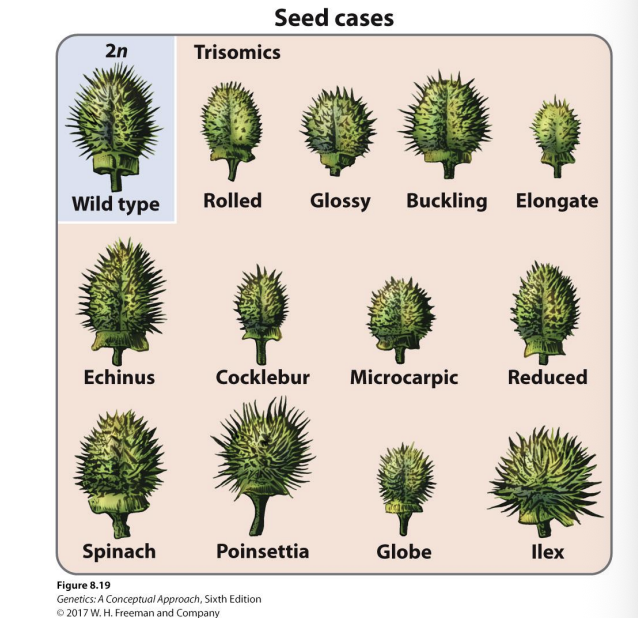
plant trisomies
viable
phenotype altered
datura stramonium (jimson weed)
trisomy 21 down syndrome
Down syndrome has 12 to 14 characteristics associated with it, and affected individuals express 6 to 8 on average.
the most common genetic chromosomal disorder and cause of learning disabilities in children. It also commonly causes other medical abnormalities, including heart and gastrointestinal disorders.
usually a result of nondisjunction
increased incidence with maternal age
ten fold increase between 30-40yrs
down syndrom errors
About 75% of errors leading to down syndrome are attributed to nondisjunction during meiosis I
Subsequent fertilization with a normal gamete creates the trisomic condition
Additional chromosome may be derived from mother or father, however, the ovum is the source in about 95% of 47, 21+ trisomy cases
familial down syndrome
These instances involve a translocation of chromosome 21 rather than a nondisjunction event
other examples of viable trisomies
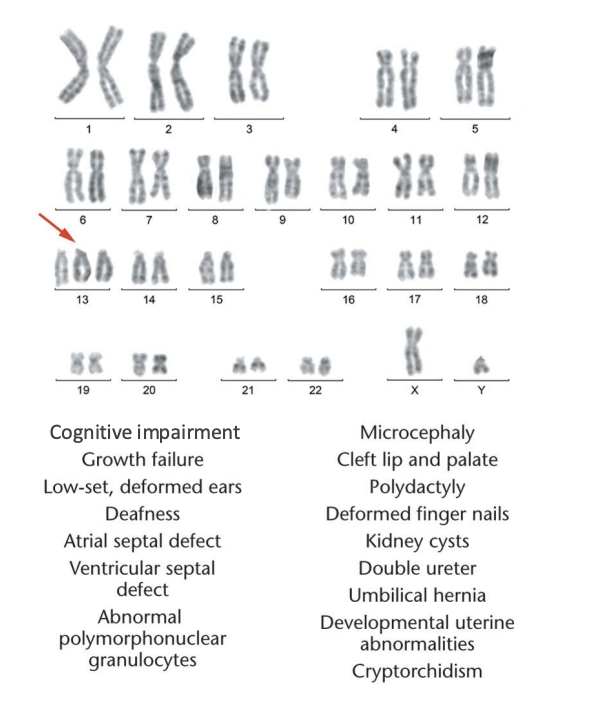
Patau syndrome (trisomy 13) and Edwards syndrome (trisomy 18).
Both are severely impaired and are usually lethal in infancy
spontaneously aborted fetuses
While they rarely lead to live births, trisomies are often found in spontaneously aborted fetuses, but autosomal monosomies are not.
sugegsts that nondisjunction is not as rare as thought
This suggests that autosomal monosomic gametes may be very functionally impaired, such that they are eliminated very early in development of the embryo
polyploidy
describes instances in which more than two multiples of the haploid chromosome set are found
common in plants and also seen in some animals and lizards and fish
naming of polyploids
based on number of sets of chromosomes
• a triploid has 3n chromosomes
a tetraploid has 4n chromosomes
a pentaploid, 5n chromosomes
and so forth
odd numbers of chromosome sets
not reliably maintained from generation to generation because polyploidy organism with an uneven number of homologs often does not produce genetically balanced gametes
For this reason, triploids, pentaploids, and so on, are not usually found in plant species that depend solely on sexual reproduction
polyploidy can orinigate by
auto or allopolyploidy
autopolyploidy
from single species
the addition of one or more sets of chromosomes identical to the haploid complement of the same species.

allopolyploidy
from closely relates species (hybrid)
or the combination of chromosome sets from different species as a consequence of interspecific matings.

autopolyploidy nondisjunction
can arise through nondisjunction in mitosis or meiosis

autopolyploidy mitosis
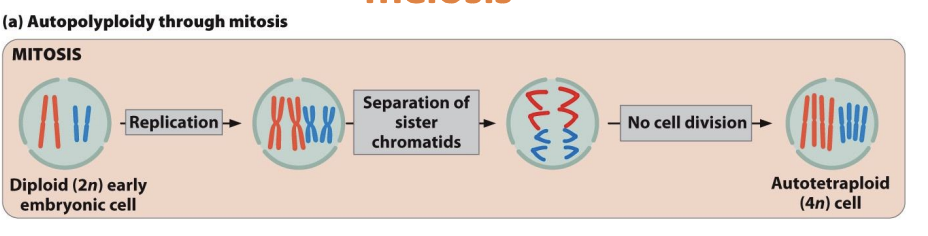

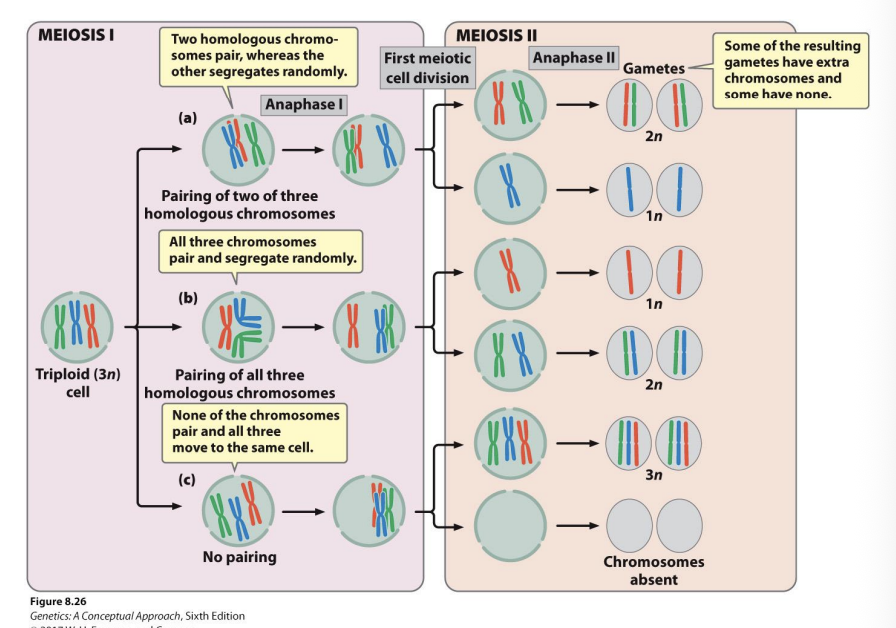
autopolyploidy meiosis (why are triploids often lethal)
No matter how the three homologous chromosomes align, their random segregation will create unbalanced gametes
Fertilization of unbalanced gametes results zygote has different numbers of chromosomes combinations
The difference in the number of chromosomes create unbalanced gene dosage in the zygote, which is often lethal
So, for this reason, triploids do not usually produce viable offspring
autopolyploidy
each identical set is identical to parent (same species)
arise in several ways:
Diploid gamete is produced (meiosis failure)
Nondisjunction of all chromosomes in an early 2n embryo (chromosomes dont seperate / cell division fails)
Two sperm fertilize one ovum (rare)
more prevalent in natural population; this form can produce balanced gametes
Even numbered autopolyploids (e.g. autotetraploid seen above) can theoretically form pairs and divide evenly, it is rare but are more likely to be found in nature
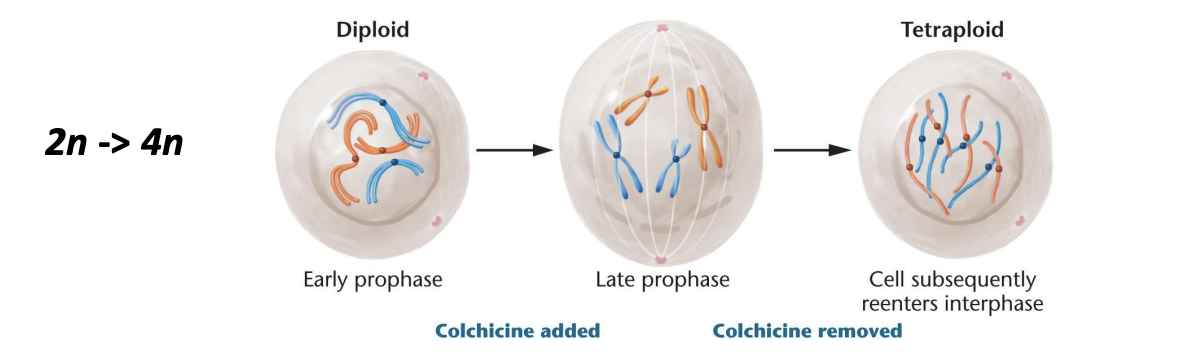
autotetraploid
chromosomes have replicated (2n) but the parent cell never divides (keeps all chromosomes) and instead reenters interphase, the chromosome number will be doubled (4n)
experimentally induced
colchine
induces tetraploids from diploids by interfering with anaphase, preventing migration to the poles
sterility acommpanying autopolyploidy
exploited in agriculture
Triploid bananas (3n = 33) are sterile and seedless
Seed triploid watermelons have been created and widely sold
Produced crossing normal diploid with a colchicine induced genetic tetraploid
allotetraploid
arises from hybridization of two closely related species.
The resulting polyploid carries chromosomes sets derived from two or more species
Homologous chromosomes that do not pair and segregate properly in meiosis, result in unbalanced, nonviable gametes
Organisms with nonviable gametes are sterile hybrids

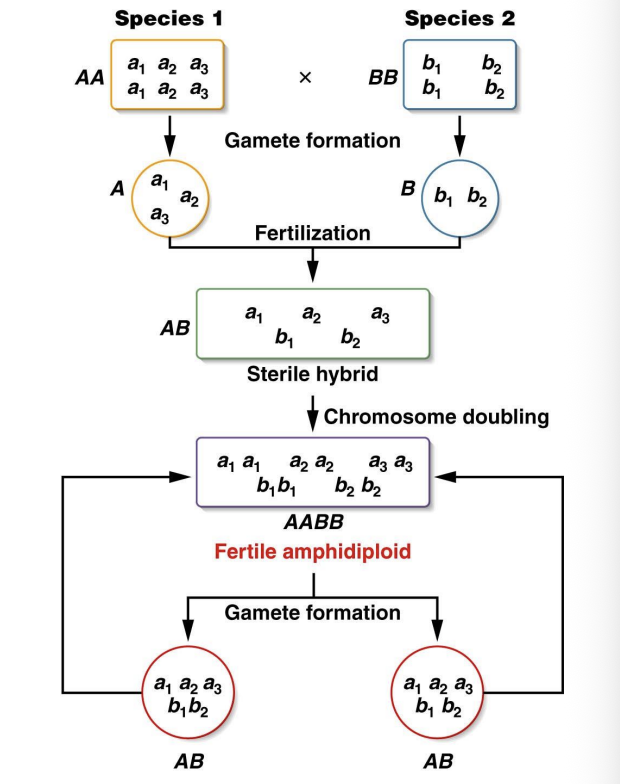
amphidiploid
If the sterile hybrid undergoes a natural chromosomal doubling, a fertile amphidiploid (allotetraploid) is produced
Fertility is achieved because the offspring depend on each chromosome having a homologous partner in meiosis – without that the gametes are unbalanced (unviable)
chromosome doubling
Allopolyploids may arise from hybridization between two species followed by chromosome doubling

amphidiploid plants
plants are the result of a hybridization between two closely related species of known origins
can be produced by somatic cell hybridization.
Also, can occur in nature – example Gossypium (American cotton)

rearrangements of chromosome segments include
deletions
duplications
inversions
nonreciprocal translocations
reciprocal translocations
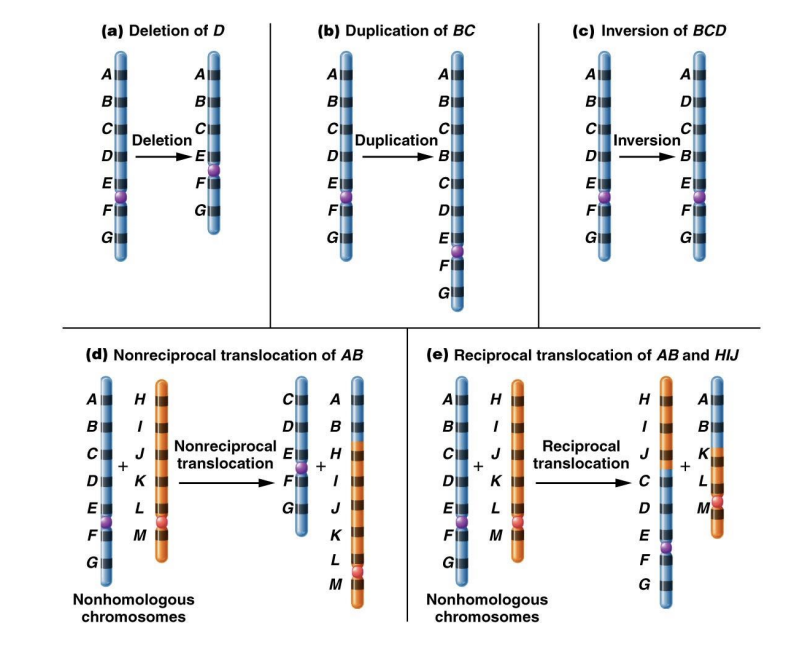
deletions and duplications
Total amount of genetic information in chromosome changes
inversions and translocations
Genetic material remains the same but rearranged
deletions
When a chromosome breaks in one or more places and a portion of it is lost, the missing piece is referred to as a deletion (or a deficiency).
terminal deletion
deltion occurs near one end

intercalary deletion
deletion ocurs from interior of chromosome

Deletions: Consequences for Meiosis
For synapsis to occur between a chromosome with a large intercalary deletion and a normal complete homolog, the unpaired region of the normal homolog must loop out of the linear structure into a deletion or compensation loop

partial monosome cri du chat
results from a segmental deletion of a small terminal portion of the short arm of chromosome 5

effects of deletions
imbalances of gene product
expression of a normally recessive gene (psuedodominance)
haploinsufficiency
duplication
Duplications can arise as the result of unequal crossing over during meiosis or through a replication error prior to meiosis

gene redunance
organisms have multiple copies of ribosomal RNA (rDNA)
one copy of RNA would be insufficient for many cells that have intense metabolic actviity
gene amplification
another mechanism to increase rRNA
The normal redundancy is still insufficient to provide adequate amounts of rRNA in some cells
Oocytes store nutrients including ribosomes for use by embryo in early development for rRNA synthesis
400 redundant gene copies are selectively replicated in nucleolar organizer regions (NOR) – multiple NORs exist, and can amplify enough copies for millions of ribosomes
duplications can cause phenotypic varation
might at first appear to be caused by simple gene mutation

bar-eye phenotype in drosophila
results from duplication, mutation of eye shape
The eye of the fly is normally an elongated oval shape whereas the bar eye phenotype is much thinner.
Bar-eyed phenotype is categorized by regions on the X chromosome
Normal wild-type females (B+/B+) have about 800 facets/ommatidium in each eye; heterozygotes (B/B+) average 350; homozygous females (B/B) average 70; occasionally recover even fewer designated as double Bar (BD/B+)

gene duplication in evolution
This hypothesis is supported by the discovery of genes that have a substantial amount of their DNA sequence in common, but whose gene products are distinct.
Other support includes the presence of gene families, regional groups (contiguous) of genes whose products perform the same, or very similar, general functions.
unbalances gene dosage leads to developmental abnormalities

inversions
involves a rearrangement of the linear gene sequence rather than the loss of genetic information.
a segment of a chromosome is turned around 180° within a chromosome
requires two breaks in the chromosome and subsequent reinsertion of the inverted segment.
may arise from chromosomal looping
sticky ends
An inversion may arise from forming a chromosomal loop prior, creating ‘sticky ends

length inversion
may be short or quite long and may or may not include the centromere
paracentric inversion
does not change the relative lengths of the two arms of a chromosome, no centromere

pericentric inversion
includes the centromere, does change the relative lengths of the two arms of a chromosome
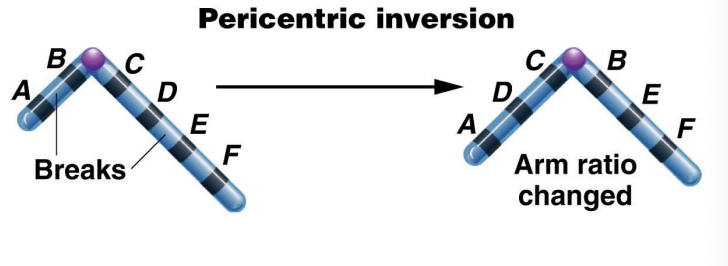
Inversions: Consequences in Meiosis
synapsis of inverted chromosomes requires inversion loop
if crossing over doesnt happen normal gametes can be made
if there is a crossing over event there will be problems

effects of a single crossover within an paracentric inversion heterozygotes
one recombinant chromatid is dicentric (two centromeres) • one is acentric (lacking a centromere)

pericentric involveing hetero
Two of four chromatids are duplicated and deleted

translocation
movement of a chromosomal segment to a new location in the genome.
reciprocal translocation
involves the exchange of segments between two nonhomologous chromosomes
has an unusual synapsis configuration during meiosis
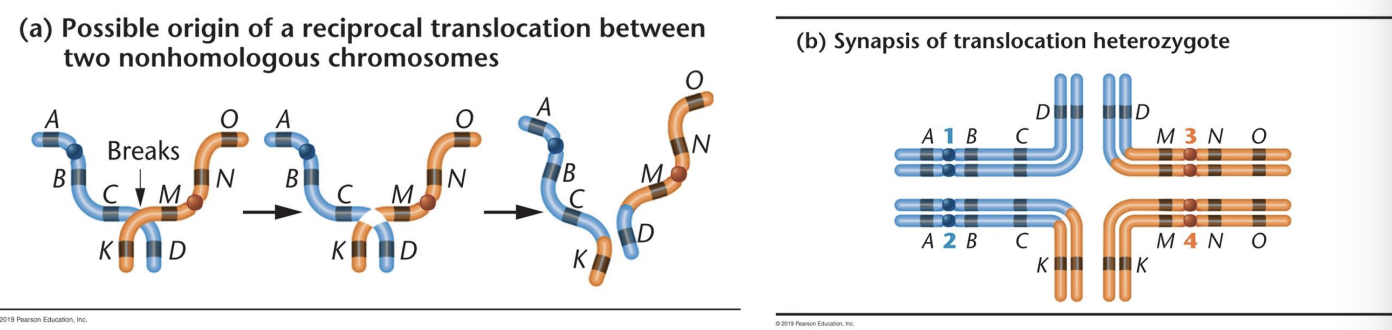
transllcation two possible segregation patterns
one that leads to a normal and a balanced gamete (called alternate segregation)
one that leads to gametes containing duplications and deficiencies (called adjacent segregation)

robertsonion translocation: Familial Down Syndrome
A Robertsonian translocation or centric fusion involves breaks at the extreme ends of the short arms of two nonhomologous acrocentric chromosomes.
The small segments are lost, and the larger segments fuse at their centromeric region (nonreciprocal translocation)
This produces a new, large submetacentric or metacentric chromosome called the Robertsonian translocation

familial downsyndrome
In familial Down syndrome, one of the parents contains a 14/21 translocation
One parent has the majority of chromosome 21 translocated to one end of 14
This person is phenotypically normal even though they only have 45 chromosomes
This is because the carrier exhibits a balanced translocation because there is no extra material from chromosome 21
Although they do not have signs of Down syndrome, people who carry this type of balanced translocation are at an increased risk of having children with the condition
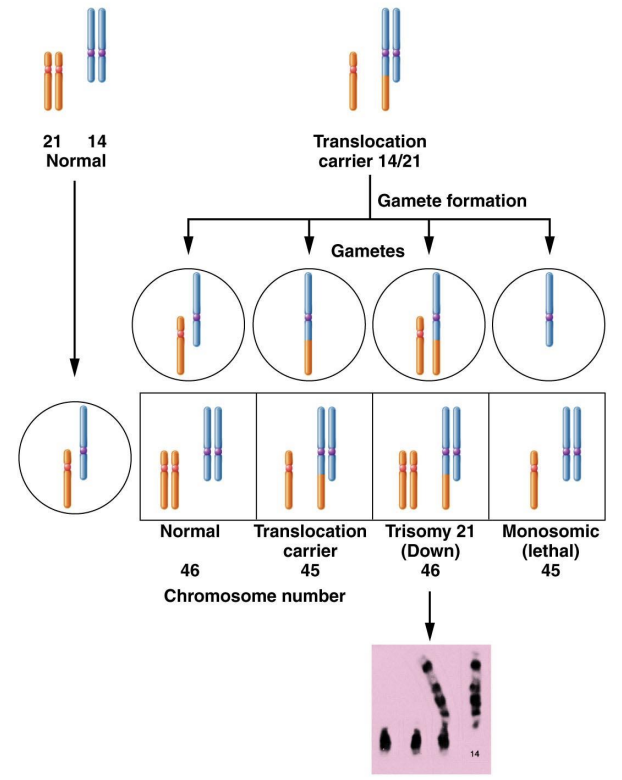
fragile sites
are more susceptible to chromosome breakage when cells are cultured in the absence of certain chemicals such as folic acid (indicating susceptibility due to regions that may not tightly coiled)
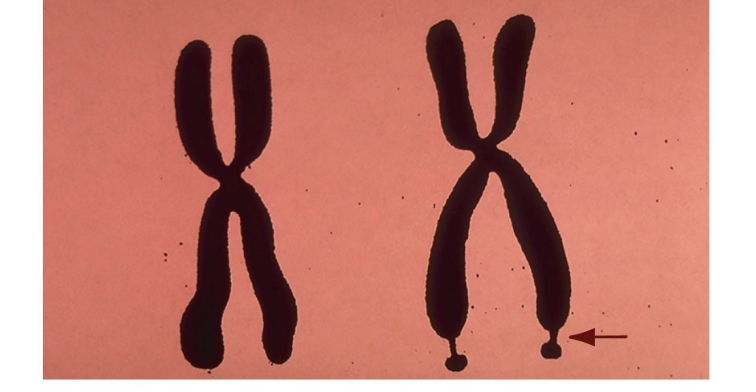
fragile x syndrome
Most fragile sites do not appear to be associated with any clinical syndrome, some individuals bearing a folate-sensitive site on the X-chromosome exhibit fragile-X syndrome (FXS)
Fragile X syndrome (Martin–Bell syndrome) is the most common form of inherited intellectual disability, affecting about 1 in 4000 males and 1 in 8000 females, and is a dominant trait.
FMR1
A gene that spans the fragile site, FMR1, is now known to be responsible for this syndrome and is caused by trinucleotide repeats in the gene
trinucleotide repeats
A sequence of three nucleotides is repeated many times
Expands the size of the gene
Primary impact is loss of expression of FMR1
genetic anticipation
The number of trinucleotide repeats increases with every generation
carrier status
55-230 repeats
syndrome status
over 230 repeats
Once the threshold of 230 repeats is exceeded, intellectual disability becomes more severe in each successive generation
fragile sights and lung cancer
Since then, a Link between autosomal fragile site and lung cancer has been reported
FHIT (fragile histidine triad) gene located in the fragile site FRA3B is often altered or missing in cells taken from the tumors of individuals with lung cancer
Normal protein product of this gene absent in other types cancer cells
Indicates that genes such as FHIT that are located within fragile regions undoubtedly have an increased susceptibility to mutations and deletions