APAH Biq Quiz #3
 Call Kai
 Learn
 Practice Test
 Spaced Repetition
 Match
 Flashcards
 Knowt Play
1/25

There's no tags or description
Looks like no tags are added yet.
26 Terms
Ethnographic analogy
Explaining the unknown about a piece of art through what we know of their culture or similar cultures, what we know of similar objects of that culture currently, etc. Compares artifacts to predict context and meaning.
Shamanism
Using rituals and material objects or figures to communicate with the spiritual world. A “shaman” mediates, coming into contact with the spiritual world.

Apollo 11 Cave stones provenance
Namibia, Southern Africa

Great Hall of the Bulls provenance
Lascaux, France

Camelid sacrum provenance
Tequixquiac, Mexico
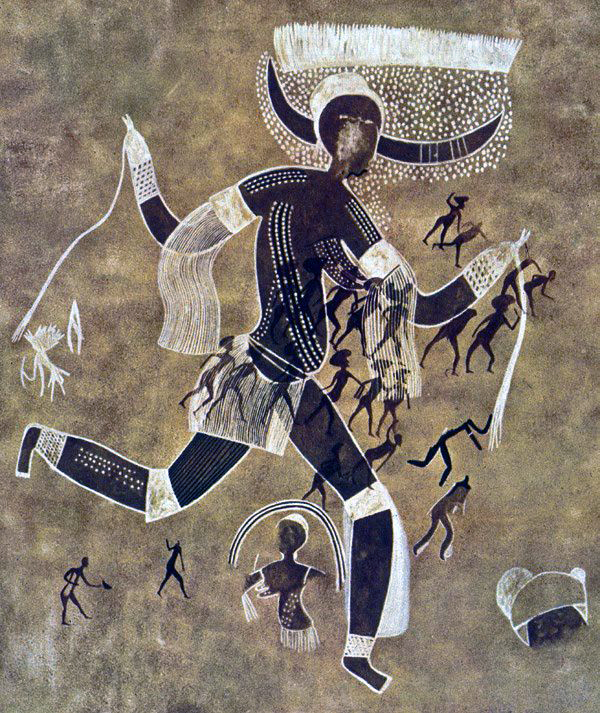
Running Horned Woman provenance
Tassili n’Ajjer, Algeria (North Africa)

Bushel with ibex motifs provenance
Ancient Susa (modern day Iran)

Anthropomorphic stele provenance
pre-Islamic Saudi Arabia

Jade cong provenance
Liangzhu China

Stonehenge provenance
Salisbury, England

Ambum stone provenance
Papua New Guinea

Tlatilco figurines provenance
Tlatilco, Mesoamerica (modern day Mexico)

Terracotta fragments provenance
Santa Cruz Islands (Solomon Islands)
Old Kingdom Egypt
2686-2181 BC
Middle Kingdom Egypt
2055-1650 BC
New Kingdom Egypt
1550-1077 BC
Old Kingdom artworks
Great Pyramids of Giza and Sphynx, Palette of King Narmer, Seated Scribe, King Menkaure and Queen,
Middle Kingdom artworks
Karnak started
New Kingdom artworks
Last Judgment of Hu-Nefer, Tutankhamen’s tomb, Akhenaten and Nefertiti and daughters (Armana), Mortuary Temple of Hatshepsut, Temple of Amun-Re and Hypostyle Hall, Karnak finished
Lakshmana Temple
built by Chandella kings in Khajuraho, India; Classical Hindu temple dedicated to gods Bramah, Vishnu, and Shiva; Nagara style with dark, enclosed, intimate center—like a womb—decorations depict fertility, love/sex, and women, whole temple looks like a mountain range—symbolic of the axis mundi, and allows for circumambulation
Angkor Wat, Angkor Tom
Cambodian Temple built by King Suryavarman II in the Khmer dynasty—his mausoleum AND a temple (more a home for the gods than a place of worship); central tower representing Mt. Meru, relief depicting sea of milk, mandalas in harmony with universe
Borobudur Temple
Java, Indonesia; Sailendra Dynasty; reliefs depicting the “path” of Buddhism to Enlightenment; pyramidal structure with a central stupa
Todai-Ji
Shōgun era (emperor Shomu); rebuilt in the Kamakura era; intermingling of Buddha and politics; massive bronze Buddha in center meant to depict Buddha himself
Longmen Caves
Northern Wei dynasty (most enduring and powerful); central Binyang Cave depicting Shakyamuni, the historical Buddha accompanied by boddhisatvas, symbols of authority and power; used for prayer and worship
Silla Crown
Korea, 3 kingdoms period (5th-6th centuries BC); gold; ancient form of shamanism where kings had priestly role? —found in tombs, so burial purposes; became more elaborate with time; symbolizes world tree (axis mundi); gogok jade “cashews” symbolizing abundance
Funeral Banner of Lady Dai (Xin Zhui)
2nd century BC, 3 registers depicting heavenly realm, life, mourning, underworld, luck dragons; found with her multiple nesting coffins and well-preserved body; a marquis’ wife?