understanding spain through history & art midterm
 Call Kai
 Learn
 Practice Test
 Spaced Repetition
 Match
 Flashcards
 Knowt Play
1/98

There's no tags or description
Looks like no tags are added yet.
Name | Mastery | Learn | Test | Matching | Spaced | Call with Kai | Chat |
|---|
No analytics yet
Send a link to your students to track their progress
99 Terms

Los Millares eye-decorated pottery [3200-2300 BC]

El Argar burials [2200-1550 BC]
→ Social stratification

The Lady of Elche [5th-4th century BC]
→ Greek and eastern influences on Iberian sculpture

Bicha of Balazote [6th century BC]
→ Greek and Phoenician influences on Iberian sculpture; Greek river god Achelous (protection)

Visigothic votive crowns (Guarrazar) [7th century AD]
→ Symbolized political & religious alliance between Visigothic monarchy and Catholic Church, given as gifts to church

Reccared among the bishops in the Codex Vigilanus [early Middle Ages]
→ Symbolized King Reccared I’s conversion to Catholicisim in Third Council of Toledo

Great Mosque of Cordoba [785-786 AD]
→ Started by Abd al-Rahman I, finished by successors; symbolized establishment of a new, independent Umayyad power in al-Andalus
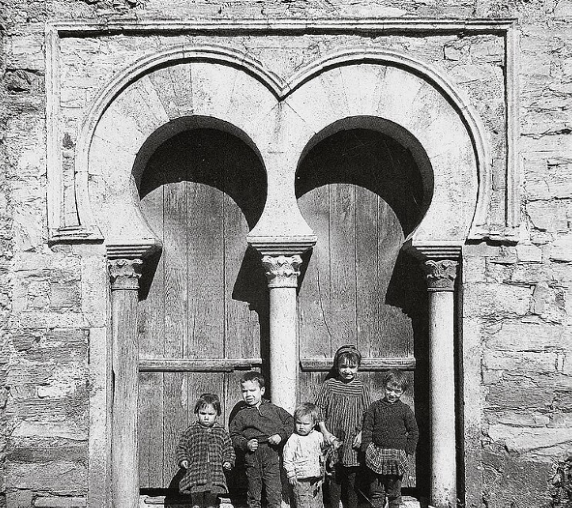
Mozarabic art; Horseshoe arches at Santiago de Penalba [late 10th century]
→ Symbolize cultural/artistic synthesis between N Christian traditions & Islamic al-Andalus/Visigothic heritage
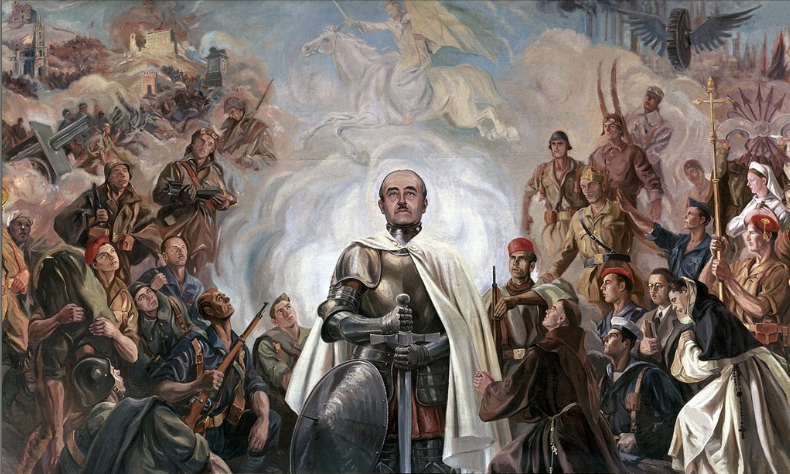
Franco as Crusader (Reque) [1946]
→ Legitimization of his dictatorship through National Catholicism

Rodrigo at Guadalete (Blanco) [1871]
→ Battle [711] symbolized end of Christian, unified Spain under Visigoths

Roman Hispania [218 BC-5th century]
Baetica: S
Lusitania: W
Tarraconensis: E & N

Visigothic kingdom [418-721]
Suevic kingdom: NW
Byzantine province: S
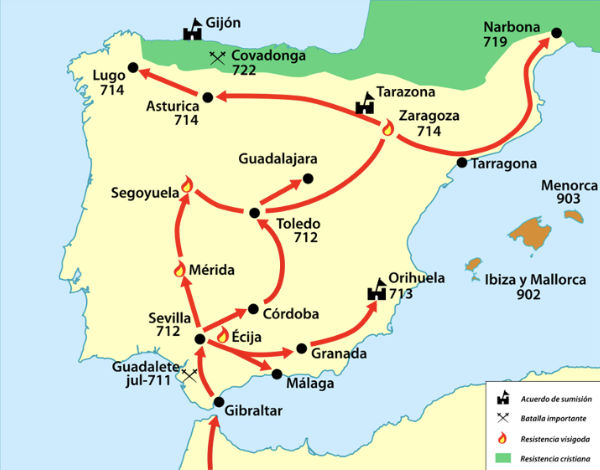
Expansion of Islam from Arabia → Iberia [711-1492]

Al-Andalus and the Christian North [~1000]
*3 frontier marches

Taifa kingdoms [after 1031]
→ 30-50 independent Muslim principalities

The Christian advance [1085, 1212, 1492]
→ fall of Toledo [1085] = Christian restoration of Visigothic capital
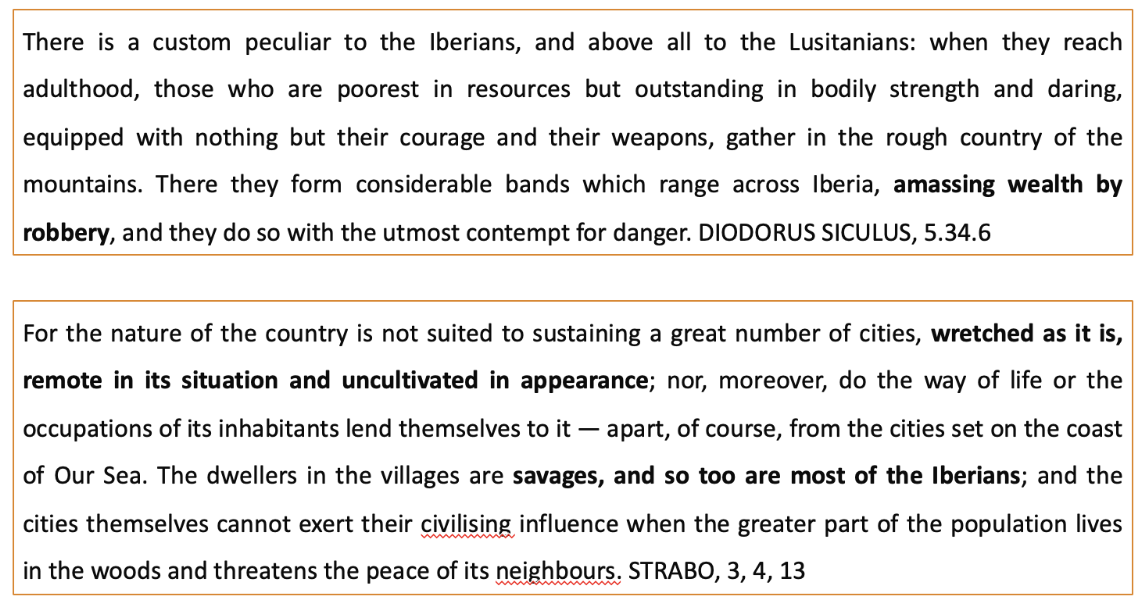
(Strabo and Diodorus) Greek conquerors on the Iberians: fierce, frugal, divided, born bandits.

(Pericot) Homo hispanicus, and the 1941 schoolbook on “lean, short, chivalrous” Iberians and “tall, blond” Celts.

Praise of Spain
(Isidore of Seville)
→ Spain as a bride, handed from Rome to the Goths; presents Goths as legitimate rulers, not simply foreign invaders
→ Associated with 4th council of Toledo [633]

Chronicle of 754 (anonymous Christian writer under Muslim rule)
→ Highlights Gothic disunity, describes treaties and Christian defeat

King Recceswinth, 8th Council of Toledo [654]
→ Presents religious uniformity as necessary for the unity of the kingdom and treats Judaism as a threat

Treaty of Tudmir [713]
→ Lives, churches and property kept in exchange for tribute (between Umayyad Muslim forces + local Visigoth population)

Alvarus of Cordoba [854]
→ Complains about young Christians who write better Arabic than Latin
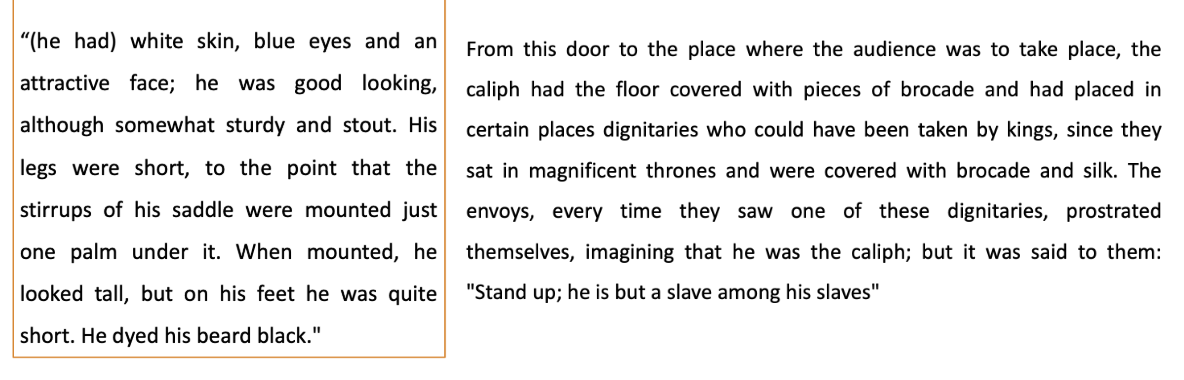
Description of Abd al-Rahman III & the account of the embassy to his court
→ Shows wealth & authority of court

The Astur Chronicles
Santa-Olalla
Wrote 1941 schoolbook generalizing Celts & Iberians.