MARK3321
 Call Kai
 Learn
 Practice Test
 Spaced Repetition
 Match
 Flashcards
 Knowt Play
1/116

There's no tags or description
Looks like no tags are added yet.
117 Terms
Promotion
communication by marketers that informs, persuades, and reminds potential buyers of a product to influence an opinion or elicit a response
Promotional Strategy
a plan for the optimal use of the elements of promotion: advertising, public relations, personal selling, sales promotion, and social media
Competitive advantage
one or more unique aspects of an organization that cause target consumers to patronize that firm rather than competitors
Communication
the process by which we exchange or share meaning through a common set of symbols
Interpersonal Communication
Direct, face-to-face communication between two or more people.
Marketing example (business-to-consumer): A consumer speaking face-to-face with a salesperson at a car dealership.
Marketing example (business-to-business): A team of salespeople from a furniture company giving a sales presentation to the furniture buyer at Costco.
Mass Communication
Communicating a concept or message to large audiences, usually through mass media, such as television, newspapers, and online.
Marketing example (television): Pepsi airing a commercial during the Super Bowl, which will be watched by over 100 million people.
Marketing example (online): TikTok video app running ads on Facebook and Snapchat
Sender
The originator of the message in the communication process
Encoding
The conversion of a sender’s ideas and thoughts into a message, usually in the form of words or signs
Channel
A medium of communication—such as a voice, radio, or newspaper—for transmitting a message
Noise
Anything that interferes with, distorts, or slows down the transmission of information
Receiver
The person who decodes the message
Decoding
Interpretation of the language and symbols sent by the source through a channel
Feedback
The receiver’s response to a message
Goals of Promotion: Informing
• Promotions intended to convert an existing need into a want or to stimulate interest in a new product
• Often used during the introductory phase of a product’s life cycle
Goals of Promotion: Persuading
• Promotions focused on stimulating a purchase or some other action
• Focused on product benefits and a call to action to the consumer
• Main promotional goal when a product enters the growth stage of the product life cycle
Goals of Promotion: Reminding
• Promotions to keep products and brand names in the public’s mind
• Often used during the maturity stage of a product’s life cycle to maintain market share
Goals of Promotion: Connecting
Promotions meant to form a relationship with consumers, usually through social media and other online platforms
Paid media
a category of promotional tactics based on the traditional advertising model, whereby a brand pays for media space
Paid media would include ads on television and radio, in magazines, and paid ads on social media.
Earned media
a category of promotional tactics based on a public relations or publicity model that gets customers talking about products or services
Earned media would include media coverage of news and events and free mentions by social media influencers and other word of mouth.
Owned media
a new category of promotional tactics based on brands becoming publishers of their own content to maximize the brands' value to customers
AIDA concept
Attention
Interest
Desire
Action
a model that outlines the process for achieving promotional goals in terms of stages of consumer involvement with the message; the acronym stands for attention, interest, desire, and action
Integrated Marketing Communications (IMC)
the careful coordination of all promotional messages for a product or a service to ensure the consistency of messages at every point at which a company has contact with the customer
Institutional Advertising
a form of advertising designed to enhance a company's image rather than promote a particular product
Advocacy Advertising
a form of advertising in which an organization expresses its views on controversial issues or responds to media attacks
Product Advertising
a form of advertising that touts the benefits of a specific good or service
Pioneering advertising
a form of advertising designed to stimulate primary demand for a new product or product category
• Intended to stimulate demand for a new product or category.
• Heavily used during the introductory stage of the product life cycle.
Competitive Advertising
a form of advertising designed to influence demand for a specific brand
• Designed to influence demand for a specific brand.
• Used during the growth phase of the product life cycle.
Comparative Advertising
a form of advertising that compares two or more specifically named or shown competing brands on one or more specific attributes
• Directly compares two or more brands on specific attributes.
• Used during the growth and maturity phase of the product life cycle.
Advertising Campaign
a series of related advertisements focusing on a common theme, slogan, and set of advertising appeals
Advertising Objective
a specific communication task that a campaign should accomplish for a specified target audience during a specified period
The first step before creating an advertising campaign is to identify an advertising objective
Example would be identifying target audience and the revenue or market share goals of the campaign.
Advertising Appeal
a reason for a person to buy a product
goes beyond simple benefits and often taps into the emotional needs and wants of the consumer
Unique Selling Proposition
a desirable, exclusive, and believable advertising appeal selected as the theme for a campaign
The unique selling proposition often becomes all or part of the campaign’s slogan.
Executional Style: Slice-of-life and lifestyle
Depicts people in normal settings and shows the product fitting into their lives
Spokesperson
Utilizes a celebrity, real customer, or some other trusted voice to credibly deliver the message
Humor
Making the presentation of the appeal fun and lighthearted
Mood or Image
Uses visuals and sounds to create a particular emotion, such as beauty or adventure
Demonstration
Showing consumers the benefit of the product or how the product performs in comparison to competitors
Medium
the channel used to convey a message to a target market
Media Planning
the series of decisions advertisers make regarding the selection and use of media, allowing the marketer to communicate the message optimally and cost-effectively to the target audience
Cooperative Advertising
an arrangement in which the manufacturer and retailer split the costs of advertising the manufacturer's brand
Media Mix
the combination of media to be used for a promotional campaign
Cost per Contact
the cost of reaching one member of the target market
Cost per Click
the cost associated with a consumer clicking on a display or banner ad
Reach
the number of target consumers exposed to a commercial at least once during a specific period, usually four weeks
Frequency
the number of times an individual is exposed to a given message during a specific period
Audience Selectivity
the ability of an advertising medium to reach a precisely defined market
Life Span
How long a consumer is exposed to a given ad.
Media Schedule
designation of the media, the specific publications or programs, and the insertion dates of advertising
Continuous Media Schedule
a media scheduling strategy in which advertising is run steadily throughout the advertising period; used for products in the later stages of the product life cycle
Flighted Media Schedule
a media scheduling strategy in which ads are run heavily every other month or every two weeks to achieve a greater impact with an increased frequency and reach at those times
Pulsing Media SChedule
a media scheduling strategy that uses continuous scheduling throughout the year coupled with a flighted schedule during the best sales periods
Seasonal Media Schedule
a media scheduling strategy that runs advertising only during times of the year when the product is most likely to be used
Public Relations
the element in the promotional mix that evaluates public attitudes, identifies issues that may elicit public concern, and executes programs to gain public understanding and acceptance
Publicity
an effort to capture media attention, often initiated through press releases that further a corporation's public relations plans
New-product Publicity
publicity focused specifically on new products.
Product Placement
a public relations strategy that involves getting a product, service, or company name to appear in a movie, television show, radio program, magazine, newspaper, video game, video or audio clip, book, or commercial for another product, on the internet, or at special events
Consumer Education
Free workshops or classes that educate consumers but typically don’t directly sell them on a product.
Sponsorship
a public relations strategy in which a company spends money to support an issue, cause, or event that is consistent with corporate objectives, such as improving brand awareness or enhancing corporate image
Experiential Marketing
Events and experiences created by the company that are available either in person or online.
Company websites and Social Media
These sites allow the company to showcase new products, promote events, and interact with their customers.
Crisis Management
a coordinated effort to handle all the effects of unfavorable publicity or another unexpected unfavorable event
Sales Promotion
is a short-term incentive that motivates consumers or members of the distribution channel to purchase a product immediately. The general objectives of sales promotion are to speed up the sales process and increase sales volume
Trade Sales Promotion
promotion activities directed to members of the marketing channel, such as wholesalers and retailers
Consumer Sales Promotion
promotion activities targeted to the ultimate consumer market
Trade Allowances
Price reductions offered to wholesalers and retailers that purchase or promote specific products
Push Money
Money offered to channel intermediaries to encourage them to "push" products—that is, to encourage other members of the channel to sell the products
Training
Manufacturers may offer training to intermediary personnel—especially if the product is complex
Free Merchandise
Manufacturers may offer free merchandise instead of quantity discounts
Store Demonstration
Manufacturers paying for an in-store demonstration
Business Meetings, Conventions, and Trade Shows
Product exhibition organized by industry trade associations to showcase goods and services
Coupons
Written price reductions used to encourage consumers to buy a specific product
Cents-off Offers
Promotions that allow buyers to pay less than the regular price to encourage purchase
Money Refunds
Sales promotion that offers consumers a specified amount of money when they mail in a proof of purchase
Rebates
Sales promotion techniques in which a consumer receives a specified amount of money for making a single product purchase
Shopper loyalty, and Frequent-user Incentives
Rewarding loyal customers for making repeat purchases
Point-of-purchase Materials
Signs, window displays, display racks, and similar devices used to attract customers
Demonstrations
Show how a product works to encourage use of a product
Free Samples
Samples of a product given out to encourage trial and purchase
Premiums
Items offered for free or at a minimal cost as a bonus for purchasing a product
Consumer Contests
Individuals compete for prizes based on their analytical or creative skills
Consumer Games
Individuals compete for prizes based primarily on chance
Consumer Sweepstakes
Sales promotion in which entrants submit their names for inclusion in a drawing for prizes
Price
that which is given up in an exchange to acquire a good or service
Revenue
the price charged to customers multiplied by the number of units sold
Profit
revenue minus expenses
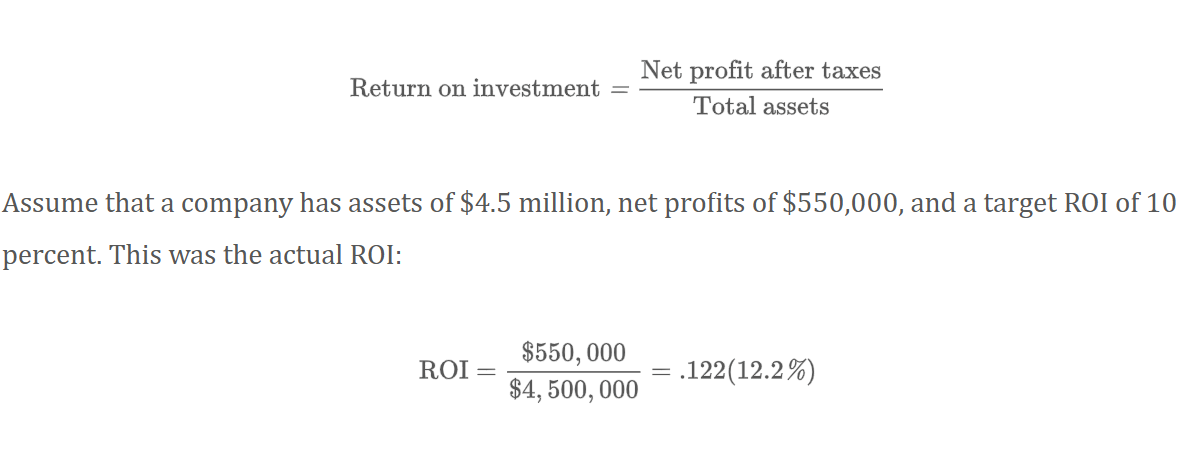
Return on Investment
net profit after taxes divided by total assets
Demans
the quantity of a product that will be sold in the market at various prices for a specified period
Supply
the quantity of a product that will be offered to the market by a supplier at various prices for a specified period
Elasticity of Demand
consumers' responsiveness or sensitivity to changes in price
Elastic Demand
a situation in which consumer demand is sensitive to changes in price
Inelastic Demand
a situation in which an increase or a decrease in price will not significantly affect demand for the product
Dynamic Pricing
the ability to change prices very quickly, often in real time using software programs
Surge Pricing
occurs in a fluid market, where demand changes rapidly, often hourly. When demand increases, so do prices, and vice versa
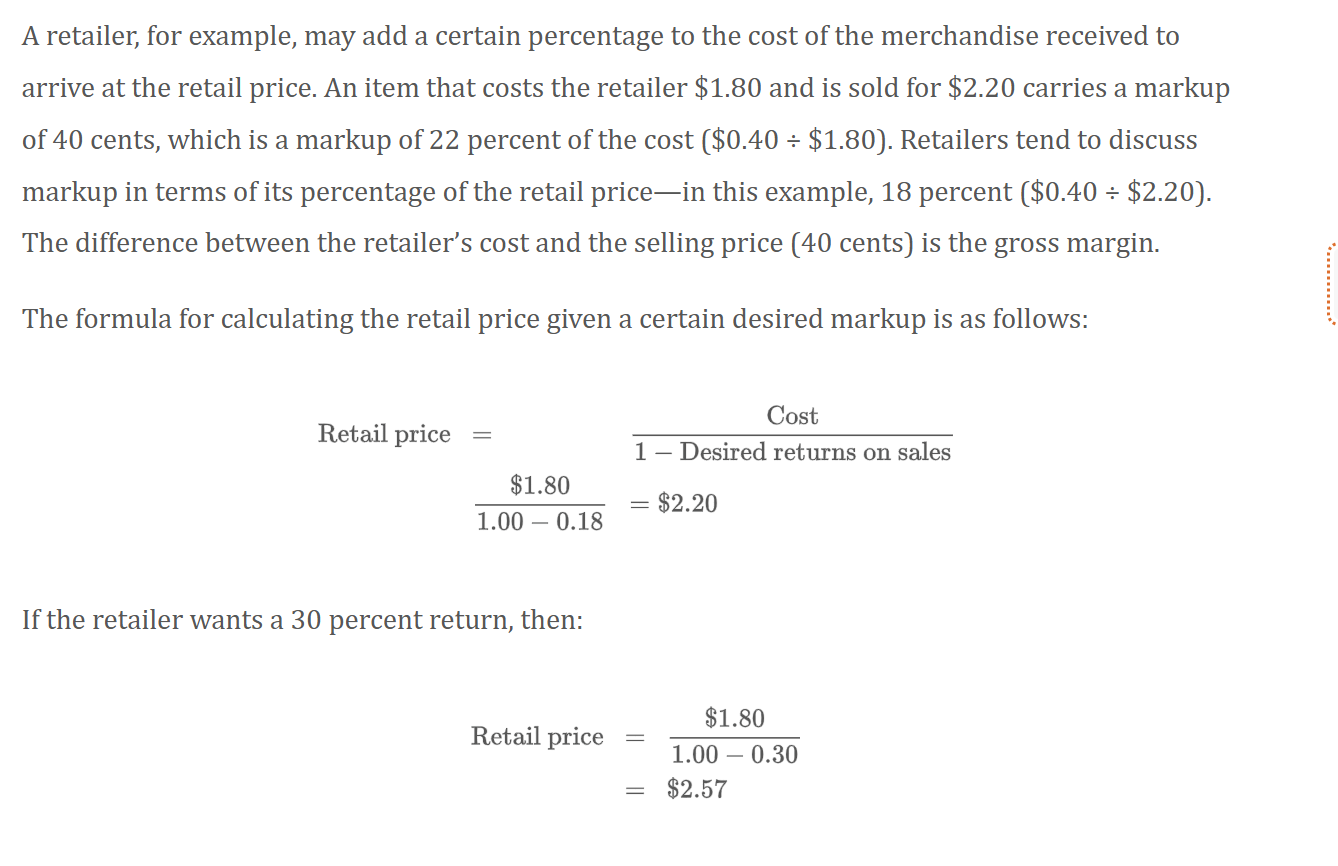
Retail Price = Cost / ( 1 - Desired return on sales )
Keystoning
the practice of marking up prices by 100 percent, or doubling the cost
Break-Even Analysis
a method of determining what sales volume must be reached before total revenue equals total costs
Break-Even Point = Total fixed costs / Gross margin per unit
Extranets
a private electronic network that links a company with its suppliers and customers
Price Strategy
a basic, long-term pricing framework that establishes the initial price for a product and the intended direction for price movements over the product's life cycle
Price Skimming
a pricing policy whereby a firm charges a high introductory price, often coupled with heavy promotion