HOSA Surgical Tech
 Call Kai
 Learn
 Practice Test
 Spaced Repetition
 Match
 Flashcards
 Knowt Play
1/71

There's no tags or description
Looks like no tags are added yet.
72 Terms
aeger primo
"The patient first" motto of the AST
-> basically means that every decision a surgical technologist makes must *prioritize patient safety* even if it slows things down
surgical conscience
the *inner drive* to:
- follow sterile technique perfectly
- admit mistakes immediately
ex) if you contaminate an instrument, you must say something, even if no one saw it
NBSTSA
National Board of Surgical Technology and Surgical Assisting
-> they are the *certifying body*
respondeat superior
legal principle stating the surgeon/ employer is responsible for everything that happens
"Let the master answer."
res ipsa loquitur
legal principle saying, "the thing speaks for itself."
ex) leaving a sponge inside a patient
primum non nocere
means "first, do no harm"
roles in the OR
CST = sterile
Circulator (RN) = non-sterile
Anesthesia provider = non-sterile
surgical scrub
purpose is to *remove microorganisms from hands and arms*
-> 3-5 minutes, usually timed method
stroke count
specific number of strokes when washing:
- fingertips (20)
- fingers
- hands
- arms
*hands and arms are surgically clean, NOT sterile*
closed-glove technique
used for initial gowning
*big sterile setup = closed glove*

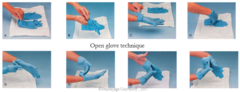
open-glove technique
used for minor procedures or catheterization
*small task = open glove*
skin prep
the surgical tech must clean the skin * from the incision outward using a circular motion*
-> common prep solutions: *chlorhexidine (CHG), providine-iodine (betadine)*
supine
flat on back
*used for most surgeries*
trendelenburg
head lower than feet
*used for pelvic/lower abdominal operations*
lithotomy
legs in stirrups
*used for vaginal/ rectal operations*
prone
on stomach
*used for spinal surgeries*
surigcal counts
ensure nothing is left inside the patient
order of surgical counts
1. baseline (initial)
2. cavity closure
3. final (skin closure)
items counted for surgical counts
sponges, sharps, instruments
mechanical hemostats
- clamps
- ligatures
- bone wax
thermal hemostats
- ESU (Bovie)
- lasers
chemical hemostats
- gelfoam
- thrombin
- avitene
wound classification I
clean: no inflammation, no GI/ respiratory entry
wound classification II
*clean-contaminated*: controlled entry
wound classification III
*contaminated*: fresh wound, gross spillage
wound classification IV
*dirty/ infected*: old wound, infection present
monofilament
type of suture with a *single strand*
ex) *prolene, nylon*
*less infection risk*
multifilament
type of suture that is *braided*
ex) *silk, vicryl*
it *holds the knots better, but there IS a higher risk of infection*
postoperative procedures
*AFTER the patient leaves*
1. sharps disposal: *use a puncture-resistant container*
2. dressings
3. terminal cleaning: THOROUGH cleaning of OR, done at *end of day*
pressure dressing
a bulky dressing held in position with a tightly wrapped bandage, which applies pressure to help control bleeding
*prevents hematoma/edema*
stent/ bolster
holds skin graft in place
preference cards
surgeon-specific lists of:
- instruments
- supplies
*help prepare the OR correctly*
autoclave
equipment used to sterilize articles by way of steam under pressure and/or dry heat
-> gravity displacement: *250 F for 30 min*
-> pre-vacuum: *270 F for 4 min*
ethylene oxide (EtO)
gas used for heat-sensitive items
-> *requires longer steirlization time
biological indicator
uses *geobacillus stearothermophilus*
*confirms sterilization worked*
right upper quadrant (RUQ)
liver, gallbladder
left upper quadrant (LUQ)
stomach, spleen, pancreas
right lower quadrant
appendix
left lower quadrant
sigmoid colon
cranial nerve I
Olfactory (smell)
cranial nerve II
Optic - vision
cranial nerve X
vagus (longest; affects heart/ digestion)
layers of the abdominal wall
1. skin
2. subcutaneous fat
3. fascia
4. muscle
5. pertoneum

"Time Out"
AST
A professional organization that sets guidelines and standards
CAAHEP / ABHES
Accredited programs
ARC/STSA
Reviews education standards
AORN
OR nursing standards
sterile-field rules
Anything below the waist = contaminated
Anything out of sight = contaminated
Edges of packages = contaminated
Back of gown = non-sterile
OR environment
Temp: 68-75°F
Humidity: 30-60%
Positive air pressure
If count is wrong:
STOP
Recount
Notify surgeon
X-ray if unresolved
Sharps safety
Sharps never passed hand-to-hand
Use neutral zone
Dispose immediately
medication handling
CST must label meds with:
Name
Concentration
Expiration
laparoscopy
Abdomen inflated with CO₂
Opening instrument = Trocar

penrose drain
passive

JP/ hemovac drain
active

If equipment malfunctions
Remove from service
Label "broken"
Notify appropriate personnel
incident report
Filed when:
Error
Injury
Unusual event
Sterilization
kills ALL microorganisms
Disinfection
reduces pathogens
Decontamination
makes items safe to handle
dry-heat
sterilization for glass/metal
myocardium
heart muscle
"master gland"
pituitary gland
Islets of Langerhans
Pancreas
alveoli
Gas exchange
femur
Longest & strongest bone
supination
Palm up
surgical asepsis
Sterile technique prevents contamination of an open wound, serves to isolate the operative area from the unsterile environment, and maintains a sterile field for surgery
medical asepsis
clean technique; involves procedures and practices that reduce the number and transfer of pathogens
silk
absorbable
bandage
cover/protect