Module 5 - Periodic Table & Periodic Law
0.0(0)
Studied by 0 people Note
Note Call Kai
 Learn
Learn Practice Test
 Spaced Repetition
 Match
Match Flashcards
 Knowt Play
Card Sorting
1/33

Earn XP
Description and Tags
Last updated 3:20 AM on 1/27/23
Name | Mastery | Learn | Test | Matching | Spaced | Call with Kai | Chat |
|---|
No analytics yet
Send a link to your students to track their progress
34 Terms
1
New cards
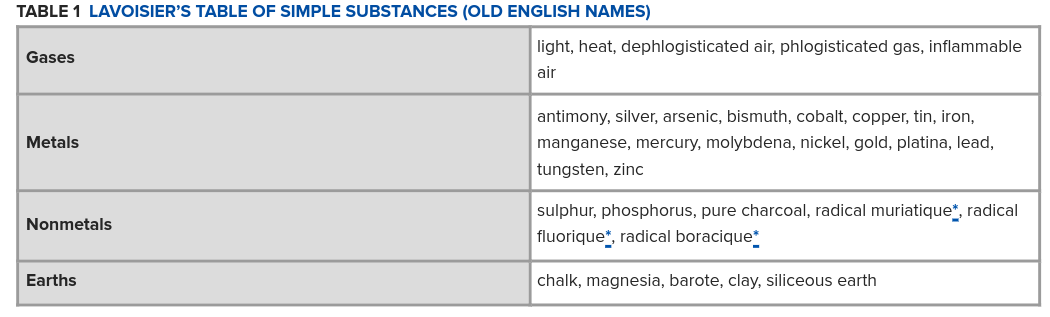
%%**Antoine Lavoisier**%% (1743- 1794)
Compiled a list of all the elements that were known at the time.
2
New cards
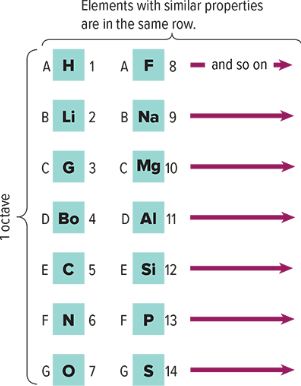
%%**John Newlands**%% (1837- 1898)
Proposed an organizational scheme for the elements.
**Law of Octaves** - When elements are arranged by increasing **atomic mass**, their properties repeat every eighth element (this did not work for every element)
**Law of Octaves** - When elements are arranged by increasing **atomic mass**, their properties repeat every eighth element (this did not work for every element)
3
New cards
%%**Lothar Meyer**%% (1830-1895)
Demonstrated a connection between atomic mass and the properties of an element and arranged elements in order of increasing **atomic mass**
4
New cards
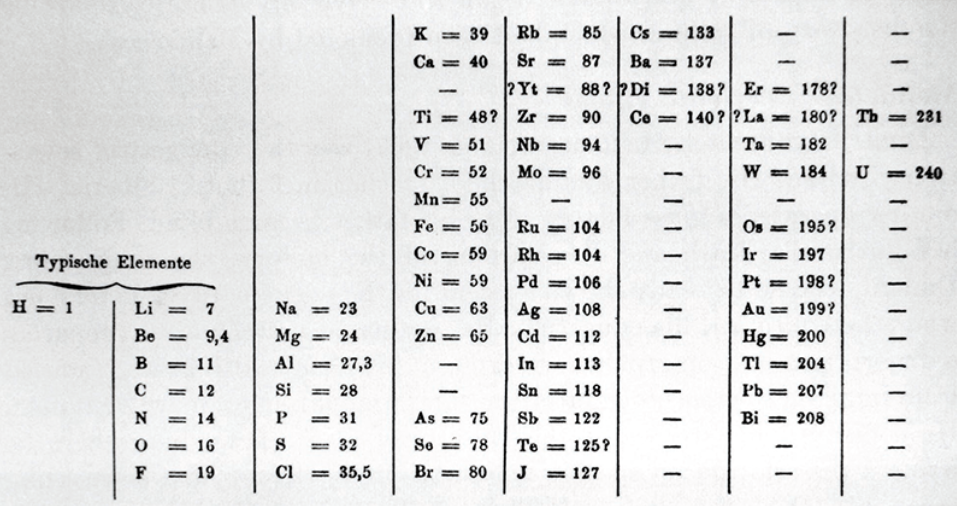
%%**Dmitri Mendeleev**%% (1834- 1907) -
Demonstrated a connection between **atomic mass** and the properties of an element, arranged elements in order of increasing atomic mass, and predicted the existence and properties of undiscovered elements (not completely correct when new elements were discovered)
5
New cards
%%**Henry Moseley**%% (1887-1915)
Discovered that atoms contain a unique number of protons called the **atomic number** and arranged elements in order of increasing atomic number, which resulted in a periodic pattern of properties
6
New cards
∗∗PeriodicLaw∗∗
periodic repetition of chemical and physical properties of the elements when they are arranged by increasing atomic number
7
New cards
∗∗Periods∗∗
Rows (horizontal)
8
New cards
∗∗Groups/Families∗∗
Columns (vertical)
9
New cards
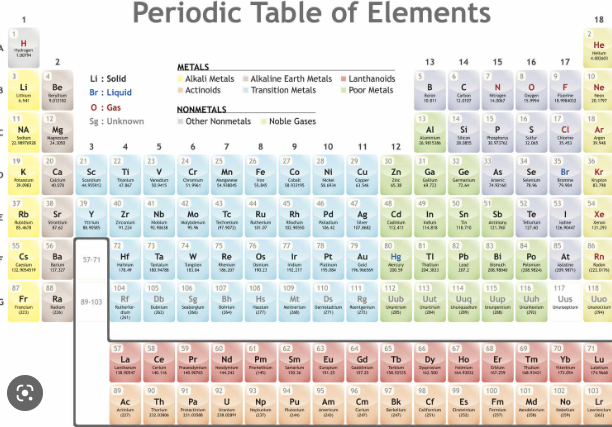
∗∗RepresentativeElements/MainGroup∗∗
Groups 1, 2, and 13-18
Wide range of physical and chemical properties
Wide range of physical and chemical properties
10
New cards
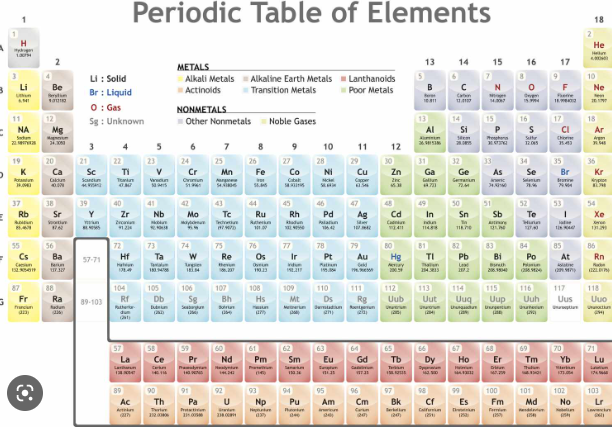
∗∗TransitionElements/Metals∗∗
Groups 3-12
Metals
Metals
11
New cards
∗∗Metals∗∗
Luster, reflects light, good conductors of heat and electricity, malleable, ductile
Groups include- alkali metals, alkaline earth metals, transition metals, inner transition metals, and some elements in the lower left corner of the p Block on the periodic table.
Groups include- alkali metals, alkaline earth metals, transition metals, inner transition metals, and some elements in the lower left corner of the p Block on the periodic table.
12
New cards
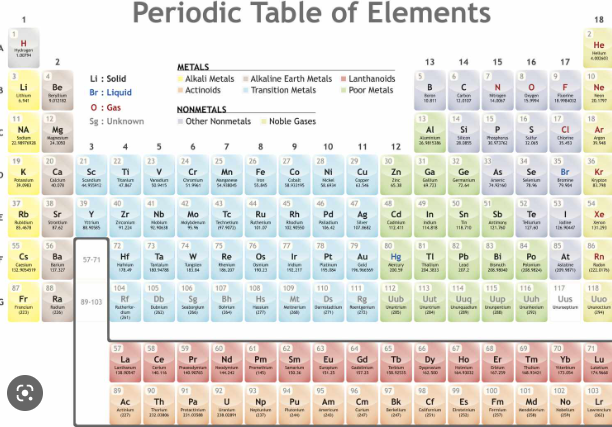
∗∗AlkaliMetals∗∗
Group 1 (except for hydrogen)
Extremely reactive metals
Extremely reactive metals
13
New cards
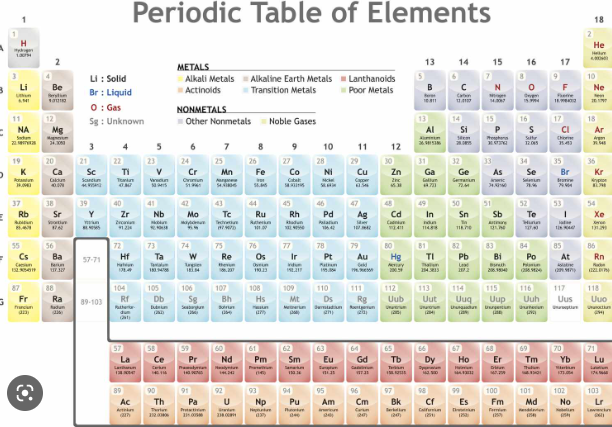
∗∗AlkalineEarthMetals∗∗
Group 2
Highly reactive
Highly reactive
14
New cards
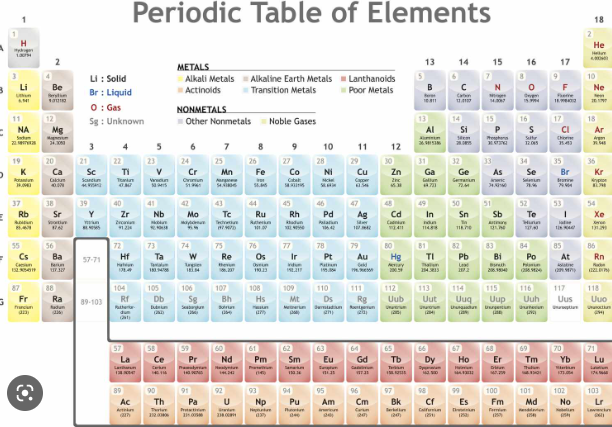
∗∗InnerTransitionMetals∗∗
Lanthanide and actinide series
15
New cards
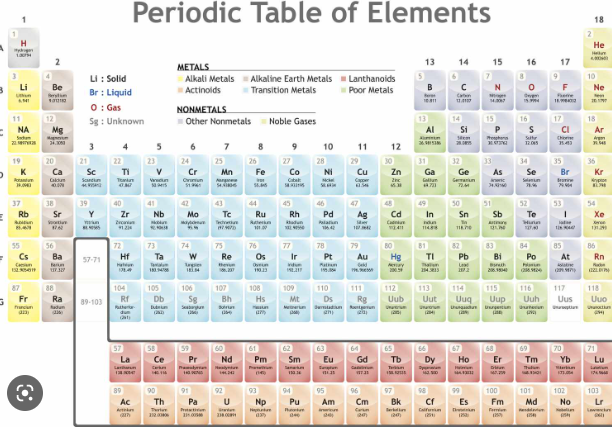
∗∗Nonmetals∗∗
Upper-right side
Gases or brittle, dull solids, poor conductors
Gases or brittle, dull solids, poor conductors
16
New cards
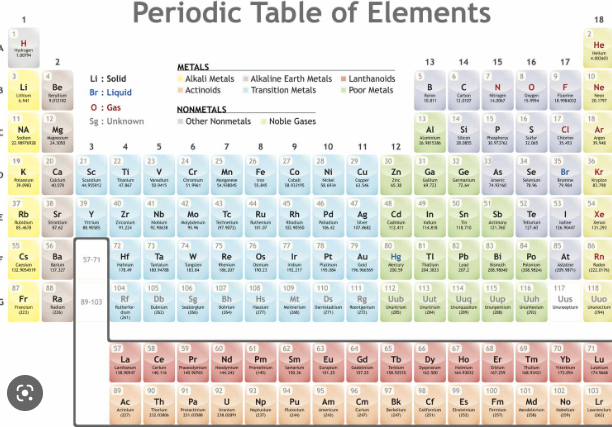
∗∗Halogens∗∗
Group 17
Extremely reactive nonmetals
Extremely reactive nonmetals
17
New cards
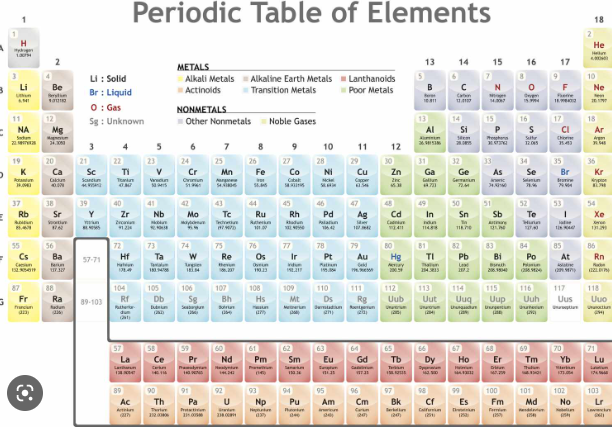
∗∗NobleGases∗∗
Group 18
Extremely unreactive gases
Extremely unreactive gases
18
New cards
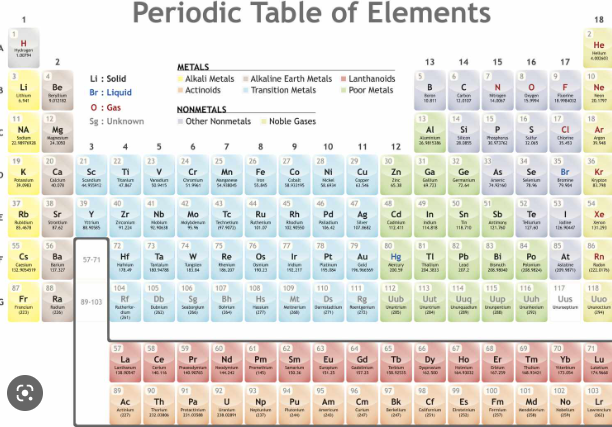
∗∗Metalloids∗∗
On the zigzag
Possess properties of both metals and nonmetals
Possess properties of both metals and nonmetals
19
New cards
∗∗ValenceElectrons∗∗
Electrons located in the outermost energy level of an atom
Each of the group 1 electrons has similar chemical properties because they have the same number of valence electrons.
Each of the group 1 electrons has similar chemical properties because they have the same number of valence electrons.
20
New cards
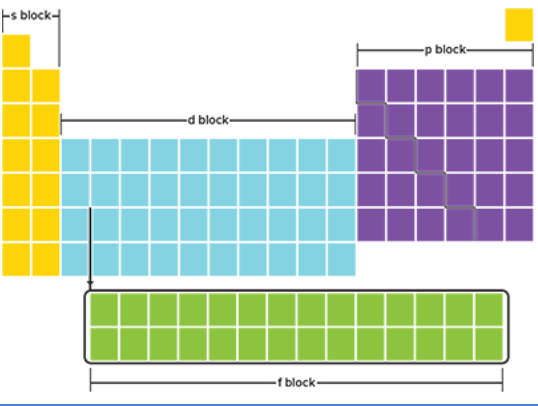
∗∗S−BlockElements∗∗
Groups 1 and 2
Partially filled orbitals
Partially filled orbitals
21
New cards
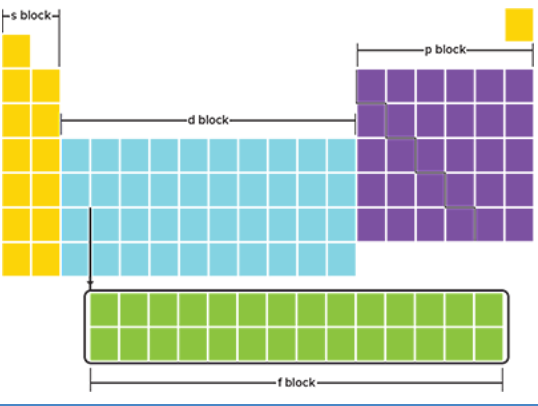
∗∗P−BlockElements∗∗
Groups 13-18
Filled or partially filled orbitals
Group 18, the noble gases, are unique because they are so stable
Filled or partially filled orbitals
Group 18, the noble gases, are unique because they are so stable
22
New cards
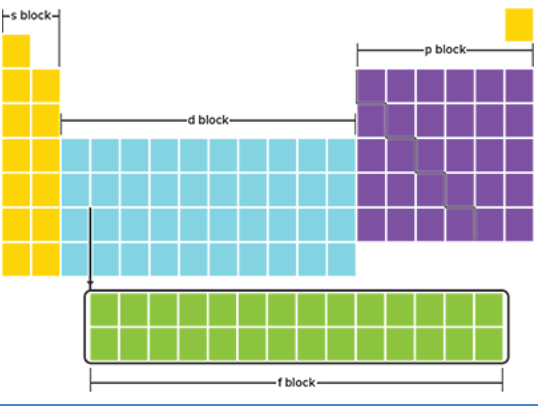
∗∗D−BlockElements∗∗
Transition metals (largest of the blocks)
Usually, a filled outermost orbital of energy level n or partially filled orbitals of energy level n-1
Usually, a filled outermost orbital of energy level n or partially filled orbitals of energy level n-1
23
New cards
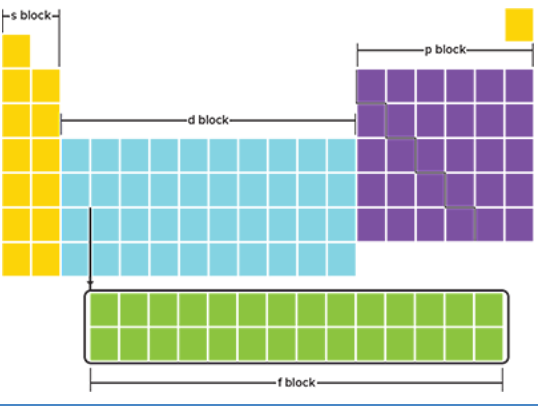
∗∗F−BlockElements∗∗
Inner transition elements
Filled or partially filled outermost s orbital, and a filled or partially filled 4f and 5f orbitals
Filled or partially filled outermost s orbital, and a filled or partially filled 4f and 5f orbitals
24
New cards
∗∗AtomicSize∗∗
How closely an atom lies to a neighboring atom
Varies from substance to substance
Varies from substance to substance
25
New cards
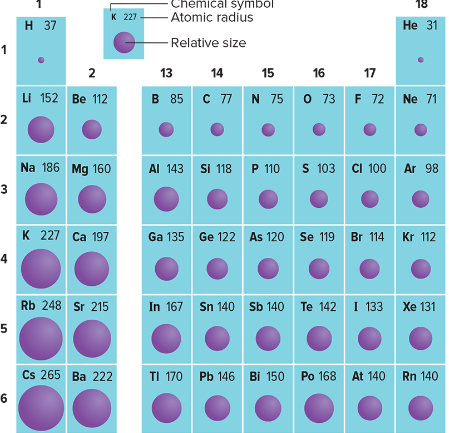
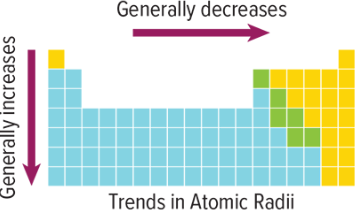
^^**Trends: Atomic Radius**^^
Decrease left to right across a period and increase as you move down a group
26
New cards
^^**Trends: Ionic Radius Positive & Negative Ions**^^
Decreases across a period and increases down a group
27
New cards
∗∗Ion∗∗
An atom or a bonded group of atoms that has a positive or negative charge
28
New cards
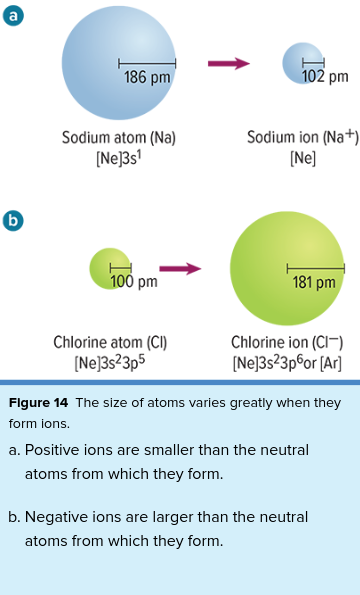
∗∗PositiveIon∗∗
An atom that has lost one or more electrons
Are smaller than their atoms
Are smaller than their atoms
29
New cards
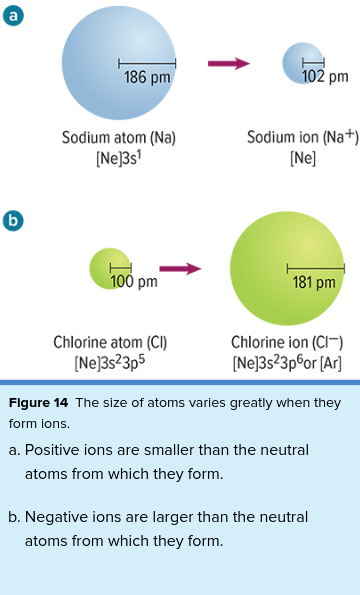
∗∗NegativeIon∗∗
An atom that has gained one or more electrons
Are larger than their atoms
Are larger than their atoms
30
New cards
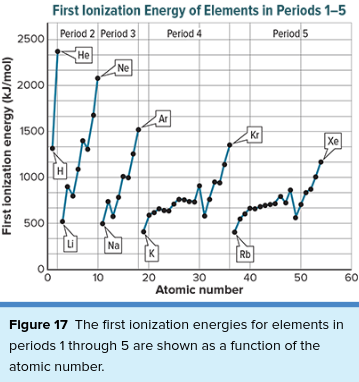
∗∗IonizationEnergy∗∗
The energy required to remove an electron from a gaseous atom
An indication of how strongly an atom’s nucleus holds onto its valence electrons (high ionization energy = a strong hold) (low ionization energy = less likely to form positive ions)
An indication of how strongly an atom’s nucleus holds onto its valence electrons (high ionization energy = a strong hold) (low ionization energy = less likely to form positive ions)
31
New cards
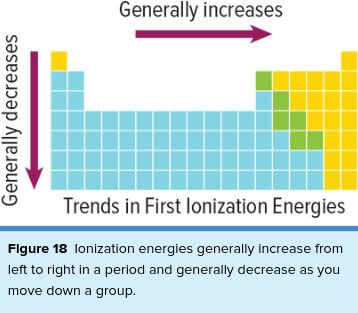
^^**Trends: Ionization Energy**^^
Increases left to right across a period and decreases down a group
32
New cards
∗∗OctetRule∗∗
States that atoms tend to gain, lose, or share electrons in order to acquire a full set of eight valence electrons
33
New cards
∗∗Electronegativity∗∗
Indicates the relative ability of its atoms to attract electrons in a chemical bond
34
New cards
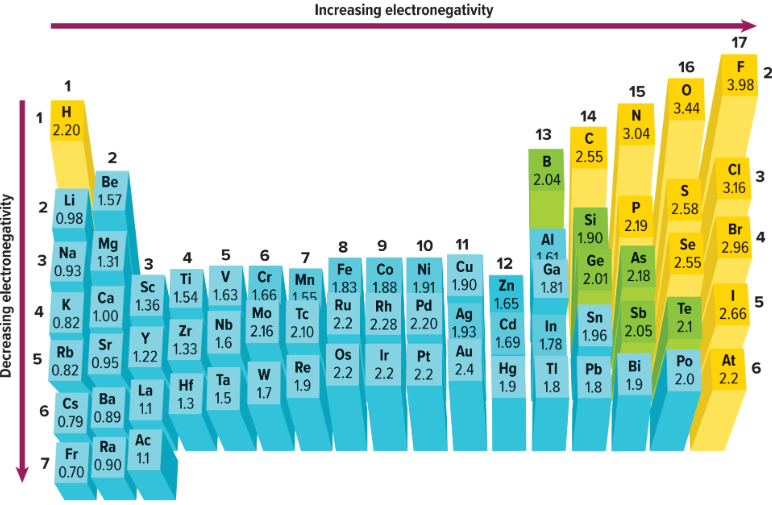
^^**Trends: Electronegativity**^^
Generally increases left to right across a period and decreases down a group