Vietnam Era
 Call Kai
 Learn
Learn Practice Test
 Spaced Repetition
 Match
Match Flashcards
1/29

There's no tags or description
Looks like no tags are added yet.
Name | Mastery | Learn | Test | Matching | Spaced | Call with Kai | Chat |
|---|
No analytics yet
Send a link to your students to track their progress
30 Terms
France
Colonial master of Vietnam (1887-1954)

Ho Chi Minh
Communist leader that overthrew France and later became the leader of North Vietnam

17th Parallel
Dividing point of Vietnam from 1954-1975

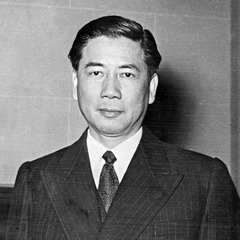
Ngo Dinh Diem
Democratic leader of South Vietnam. Led a corrupt government that did not care for the poor and poorly treated the Buddhist majority. Killed by a US approved coup in 1963.
Vietminh
Communists in the North

Vietcong
Communists in the South

Gulf of Tonkin Incident
Aug. 2, 1964. USS Maddox was supposedly attacked by North Vietnamese torpedo boats of the coast of Vietnam. Led to direct involvement of the US military in Vietnam.

Gulf of Tonkin Resolution
Gave the Executive (LBJ) the power to defend Vietnam at "any cost". Led to a massive escalation of the Vietnam war starting in 1965.

Operation Rolling Thunder
the bombing campaign over North Vietnam. 650k tons of bombs were dropped.

Richard Nixon
Elected in 1968 and promised an end to the War through "Peace with Honor". Elected by the support of the "silent majority" in reaction to the rise of the "New Left"

Vietnamization
the US policy of withdrawing its troops and transferring the responsibility and direction of the war effort to the government of South Vietnam.

Napalm
A jellied gasoline used to burn out the enemy and their villages

Agent Orange
Pesticide used to clear out jungle to reveal the enemy and provide space for helicopter landings

Search and Destroy
Missions common in Vietnam where US forces would search for high concentrations of the enemy, kill them, and leave.

Living Room War
War is made very public by reporters and telivision. It is known as this.

Tet Offensive
Turning point of the Vietnam War in 1968. Even though it was a US victory it caught the US by complete surprise.

Kent State Massacre
4 students are killed here protesting the War in 1970.

War Powers Act
Limited the president's power to wage war beginning in 1973. A reaction to Vietnam.

26th Amendment
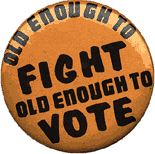
Lowered the voting age from 21 to 18
New Left
The rise of the "baby boom" generation created a generation gap between them and the WWII generation. This generation was more educated than previous generations, did not suffer through the Great Depression, and wanted to fulfill personal expectations rather than their parent's expectations. The major political impact of this generation was the rise of the:

Hippies
Those that took the counter-culture to the extremes of "free love", drug use, and communal living were known as:

Woodstock
Counterculture music was best represented by this music festival in 1969

Silent Majority
The majority of Americans rejected counter-culture society and held traditional values. These people were dubbed by Nixon as:

Black Power
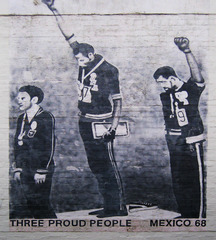
Embraced African culture
Led by activists like Stokely Carmichael and the SNCC
Yellow Power
Pan-Asianism was attempted to unify this diverse movement
Wanted reparations for Japanese American internment in WWII
Brown Power
Wanted to improve the lives of "Chicanos"
The United Farm Workers was a union instrumental in this movement

Rainbow Power
The Stonewall Riots led to this movement
Emphasized "coming out"
Red Power
Had the highest unemployment rate, lowest income, and lowest life expectancy
Demanded lands lost to previous treaties and led an armed incident at Wounded Knee in 1973

Pink Power
Pushed for an Equal Rights Amendment
Instrumental in the passing of Title VII, Title IX, and the controversial Roe v. Wade case

Green Power
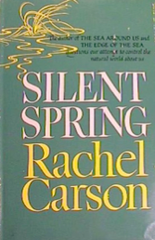
Rachel Carson's Silent Spring was a major force in this movement
Instrumental in the passing of the EPA