Div I Practical II 🪴
 Call Kai
 Learn
 Practice Test
 Spaced Repetition
 Match
 Flashcards
 Knowt Play
1/140

There's no tags or description
Looks like no tags are added yet.
141 Terms
bryophytes
land plants without true vascular tissue; small flowerless green plants that reproduce through spores or asexually via gemmae or tubers
tracheophytes
vascular plants
are not
bryophytes are/are not a monophyletic group
vascular tissue
plant tissues or regions consisting of or giving rise to
conducting tissue
xylem, phloem, vascular cambium
types of vascular tissues
mosses, hornworts, liverworts
the three evolutionary lineages of the bryophytes
bryophyta
phylum of mosses
sphagnopsida
class of bryophyta that contains the order sphagnales (peat mosses); 350 species distributed primarily in wetlands; leaves composed of a network of living and dead cells
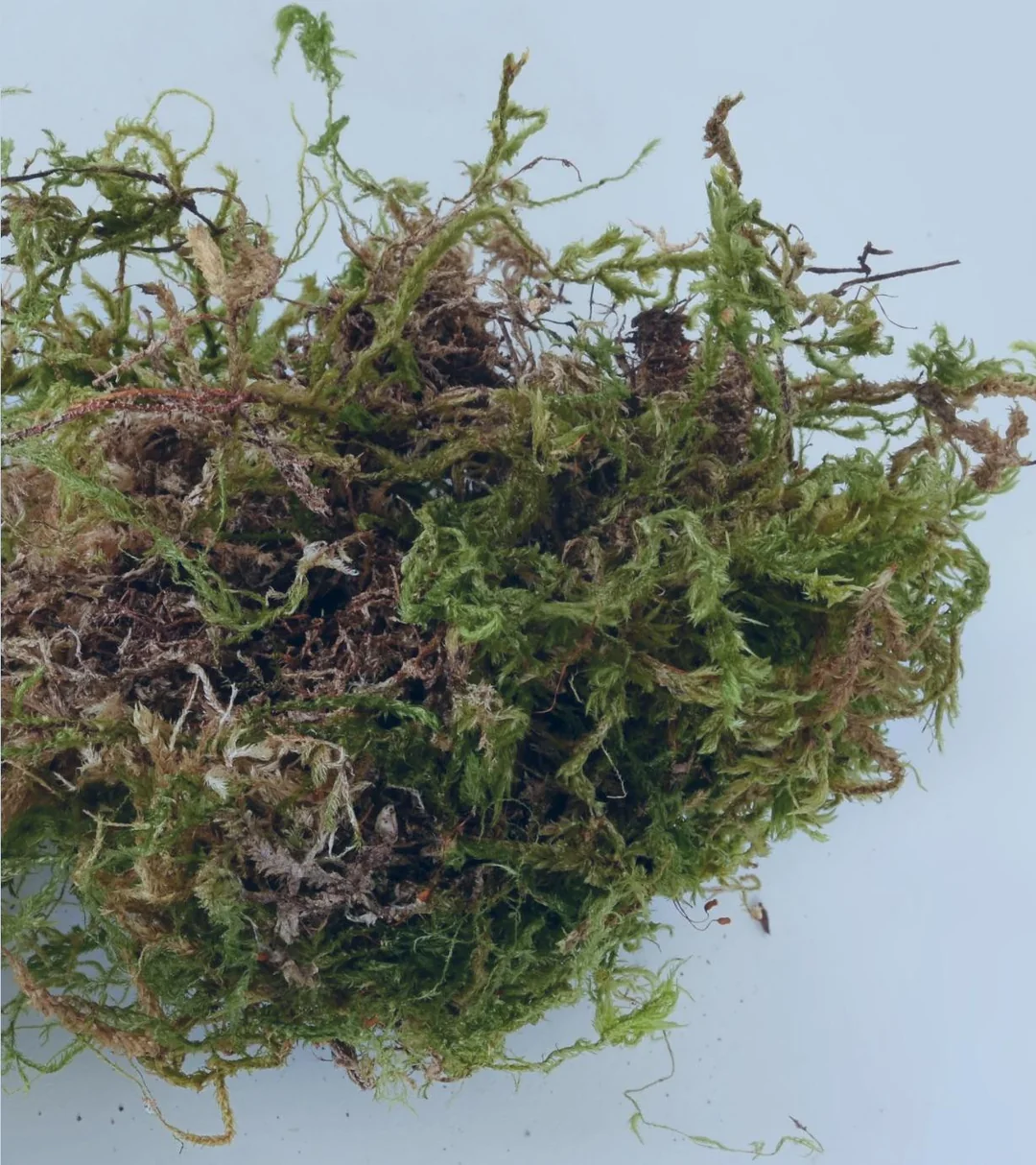
explosively, drying
spores of sphagnopsida are dispersed ____ upon ____
andreaeopsida
class of bryophyta whose habitat is restricted to rocks; primitive, small, and short; reduced protonema, sporophyte capsule resembling a liverwort

polytrichopsida
class of bryophyta that contains the order polytrichales; large, dioecious mosses with a thickened central stem; leaves have a midrib bearing lamellae on upper surface

bryopsida
class of bryophyta that represents 95% of moss diversity; “true mosses”; defined by peristome teeth as the synapomorphic trait

marchantiophyta, hepatophyta
phyla of liverworts
anthocerotophyta
phylum of hornworts
haploid gametophyte
ecologically persistent photosynthetic phase of the life cycle of bryophytes
diploid sporophyte
ecologically persistent photosynthetic phase of the life cycle of tracheophytes
leafy
____ liverworts have stems with two or three rows of overlapping, leaflike scales and often resemble mosses

thallose
____ liverworts have a flat, ribbon-like or sheet-like body without distinct stems or leaves

thallus
plant body without differentiation into roots, stems, or
leaves
gemmae
a tiny, disc-shaped outgrowth of the thallus that serves as a vegetative
(asexual) propagule in some liverworts, mosses and club mosses; can develop
into a new plant

gemmae cups
cup-shaped receptacles on the parent plant's surface (some mosses and liverworts) that hold and launch gemmae

liverwort, with no
fill in the blanks at 1 and 2

moss, with
fill in the blanks at 3 and 4

liverwort
fill in the blank at 1

moss
fill in the blank at 2

hornwort
fill in the blank at 3

leafy liverwort
fill in the blank at 1

hornwort
fill in the blank at 2

moss
fill in the blank at 3

gamete
a single haploid (n) sex cell that fuses with another during fertilization to form a zygote
gametophyte
the multicellular haploid plant (or phase) in the life cycle of plants and algae that produces gametes
spore
a single haploid reproductive cell that grows into a gametophyte without fusing with another cell
sporophyte
the multicellular diploid plant (or phase) that produces spores
gametophyte
fill in the blank at 1

sporophyte
fill in the blank at 2

gametes
fill in the blank at 3

spores
fill in the blank at 4

sporophyte, gametophyte
fill in the blanks at 1, 2

operculum, capsule, seta
fill in the blanks at 5, 6, 7
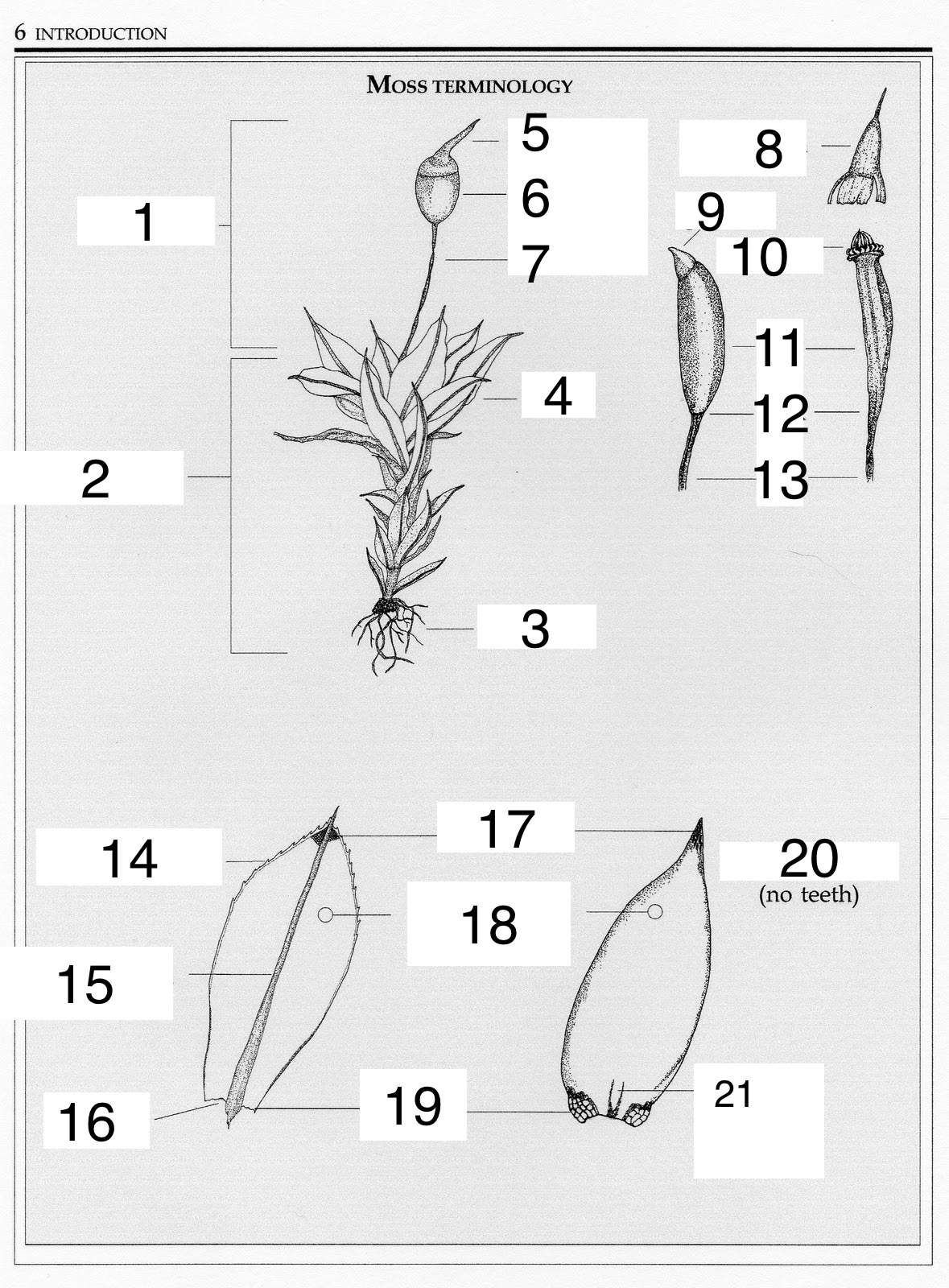
rhizoids, leaves
fill in the blanks at 3, 4

calyptra, operculum, peristome
fill in the blanks at 8, 9, 10

urn, neck, seta
fill in the blanks at 11, 12, 13

toothed margin, margin entire
fill in the blanks at 14, 20

apical cells, upper median cells, alar cells
fill in the blanks at 17, 18, 19
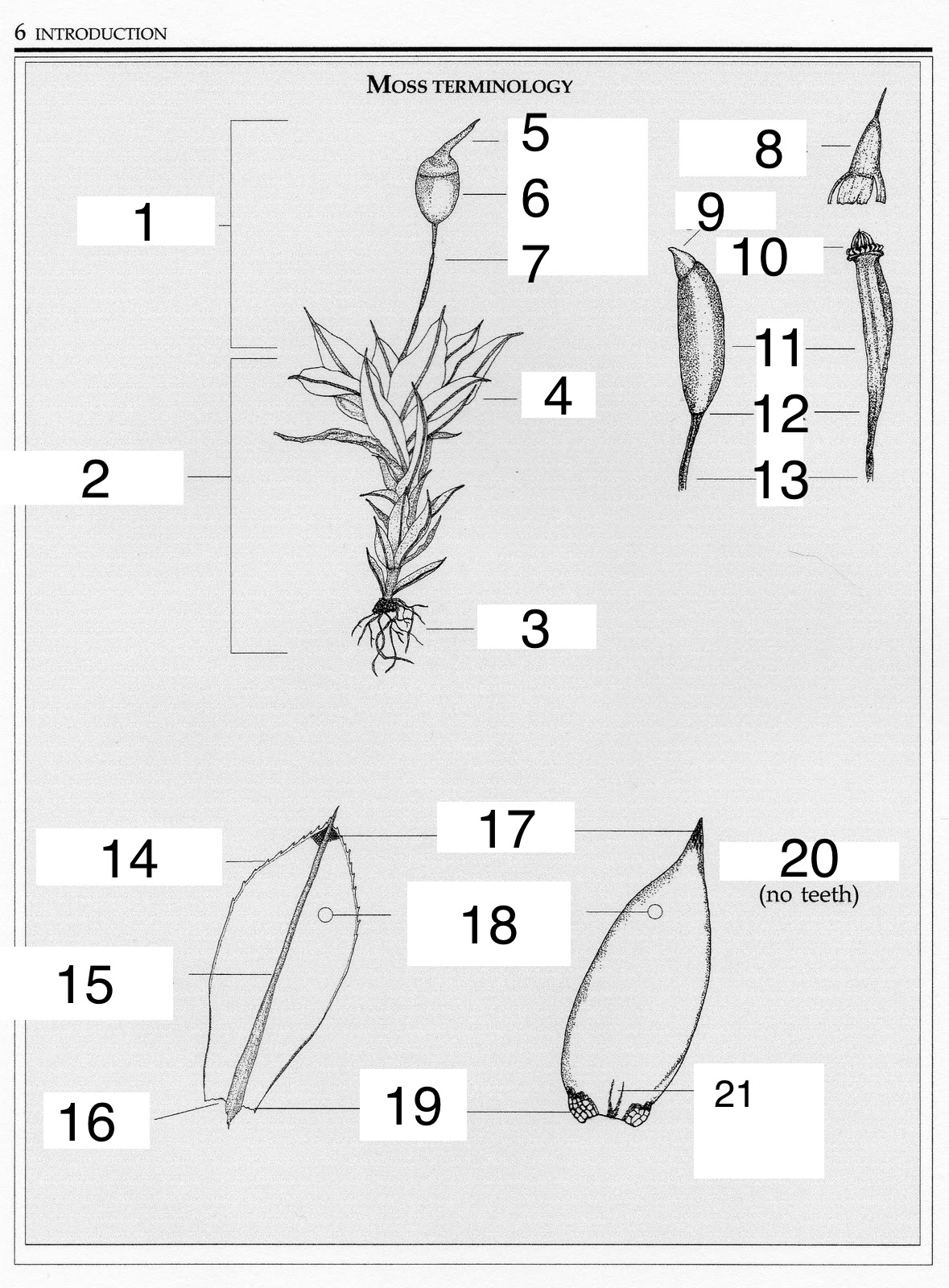
single costa, costa double or none
fill in the blanks at 15, 21

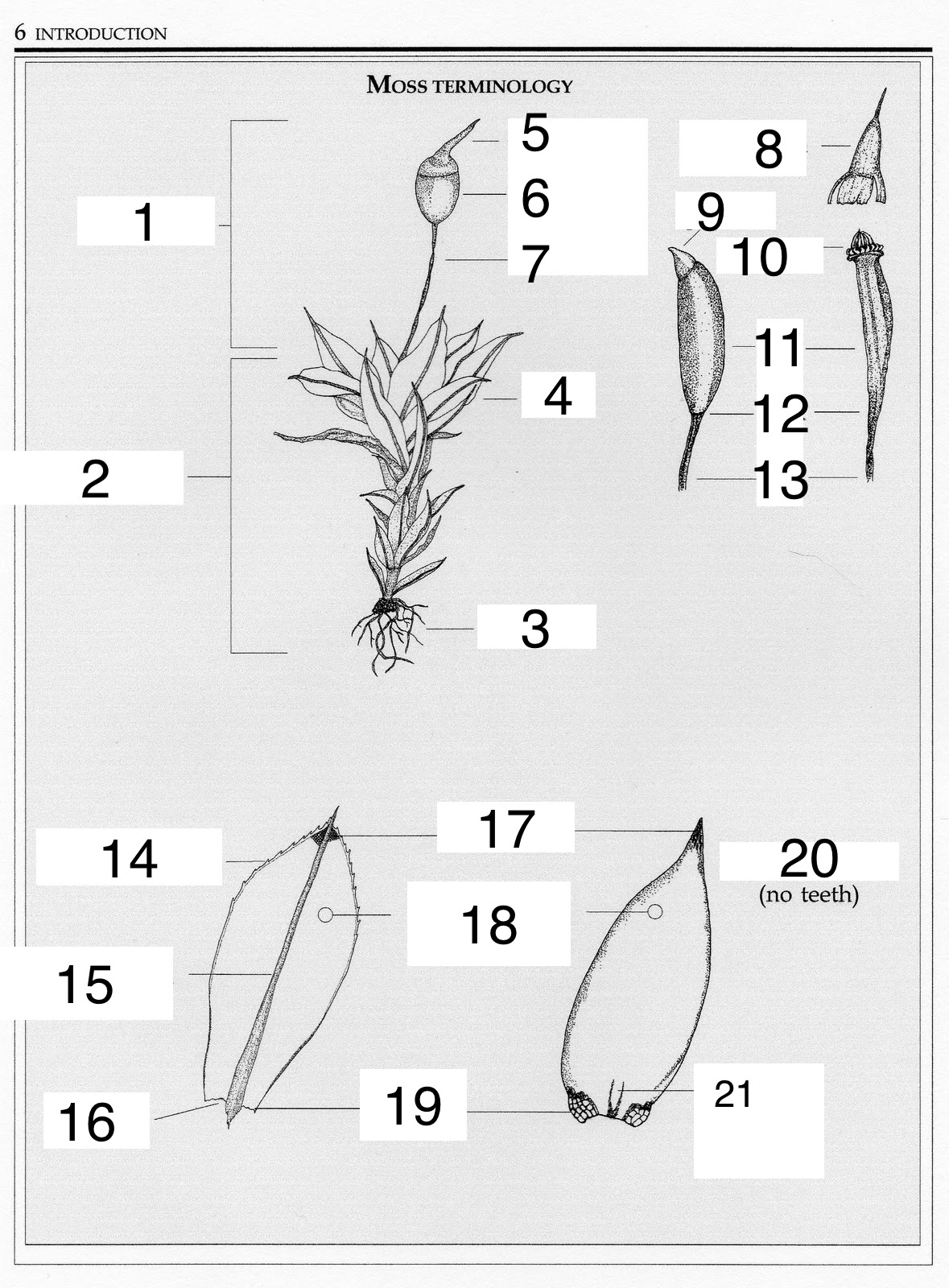
insertion
fill in the blank at 16
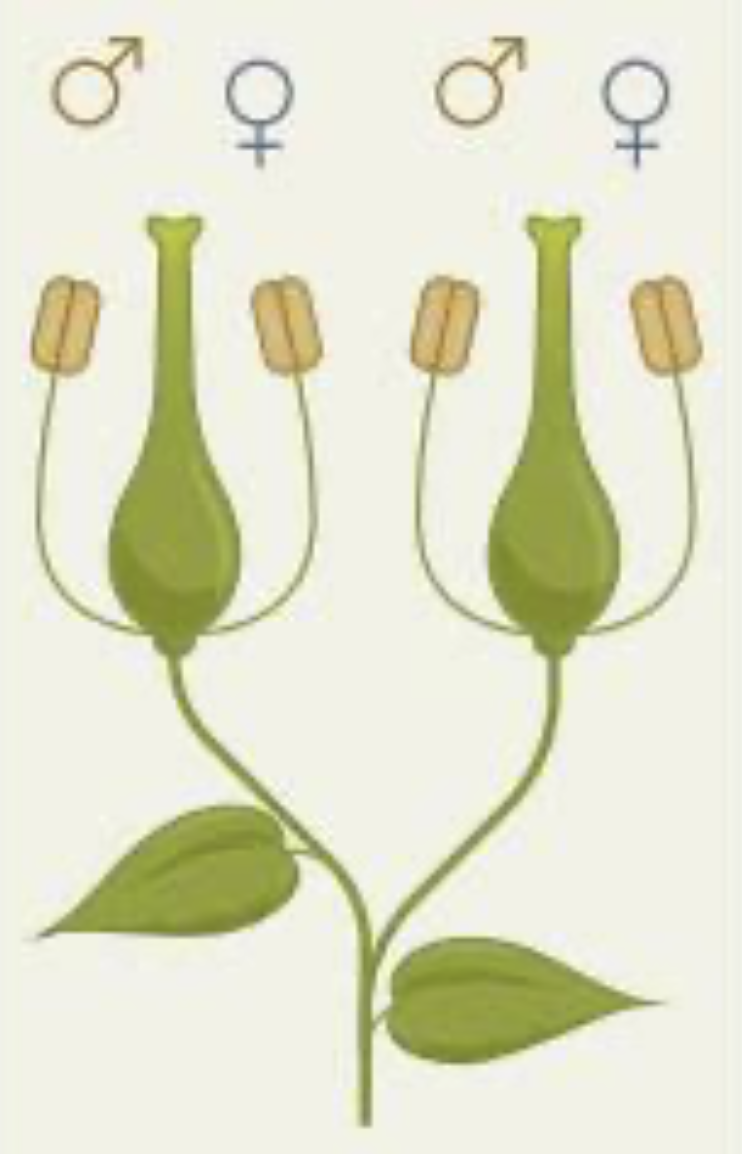
monoecious
have both male and female reproductive structures on the same individual plant
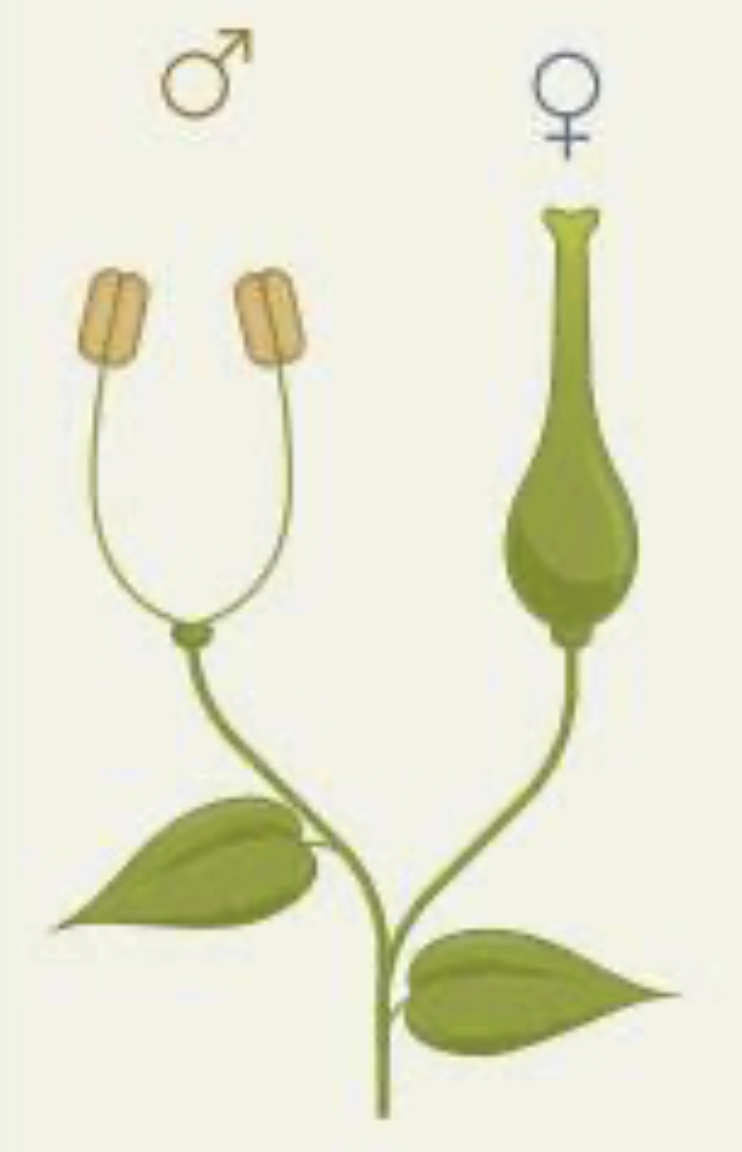
dioecious
have male and female structures on separate plants
protonema
a small, green filament that develops into the gametophyte in mosses; the earliest stage of a
bryophyte life cycle formed after spore germination

poikilohydric
external, ambient environment controls the state of hydration
xeric
a very dry habitat
mesic
a very moist habitat
acrocarpous
growth form of moss that grows in upright, mostly unbranched shoots
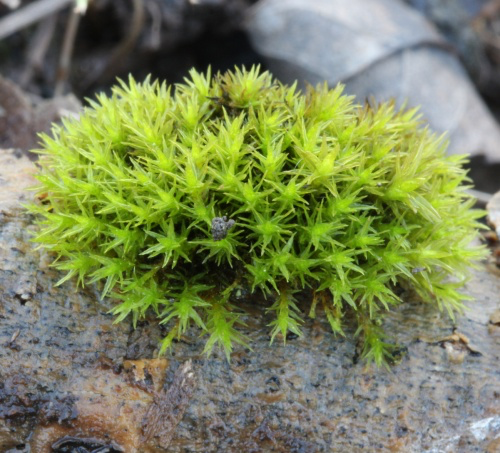
apex, main
in acrocarps, sporophytes arise at the ____ of the stem or the____ branch of the gametophyte
pleurocarpous
growth form of moss that is prostrate, forming freely branched mats; more evolutionarily derived growth form

lateral, buds
in pleurocarps, sporophytes arise on short, specialized ____ branches or ____ of the gametophyte
A
__ represents an acrocarpous growth form
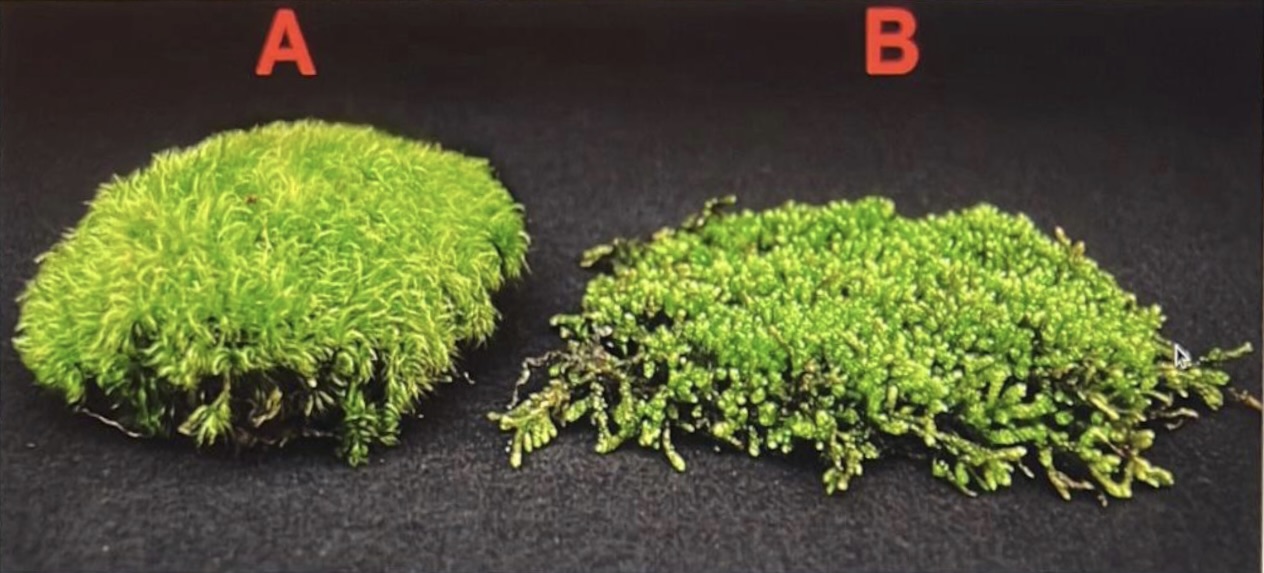
B
__ represents a pleurocarpous growth form

bryopsida
pleurocarpous growth forms exist only within the class ____
turf
an acrocarpous life form in which stems are erect, parallel, and close together, often covering extensive areas; persist by regenerative shoots
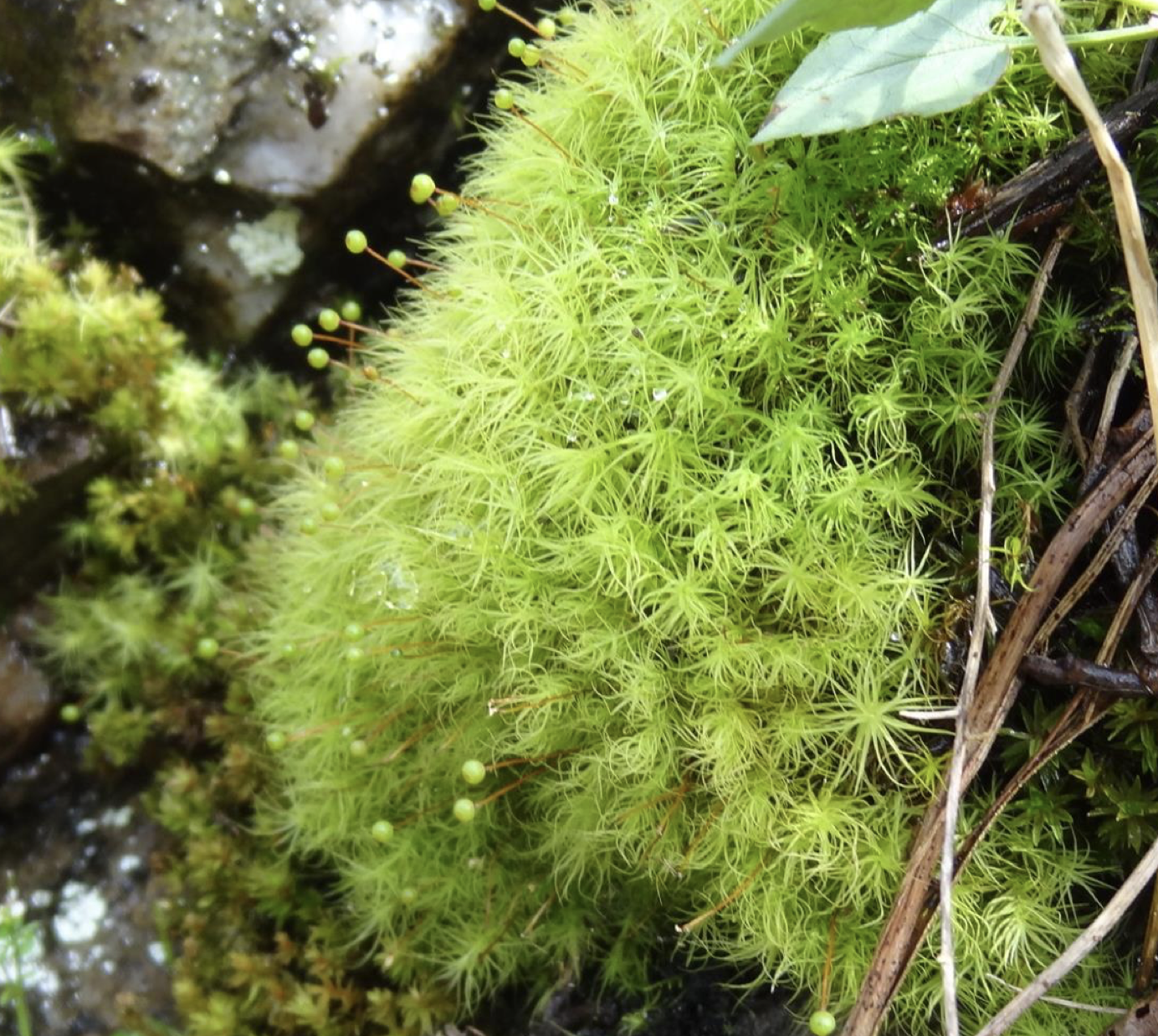
short turf
a type of turf that is found on open mineral soils and rocks; water is stored in capillary spaces between leaves & between shoots

tall turf
a type of turf that is found on the forest floor in temperate zones, can conduct water internally
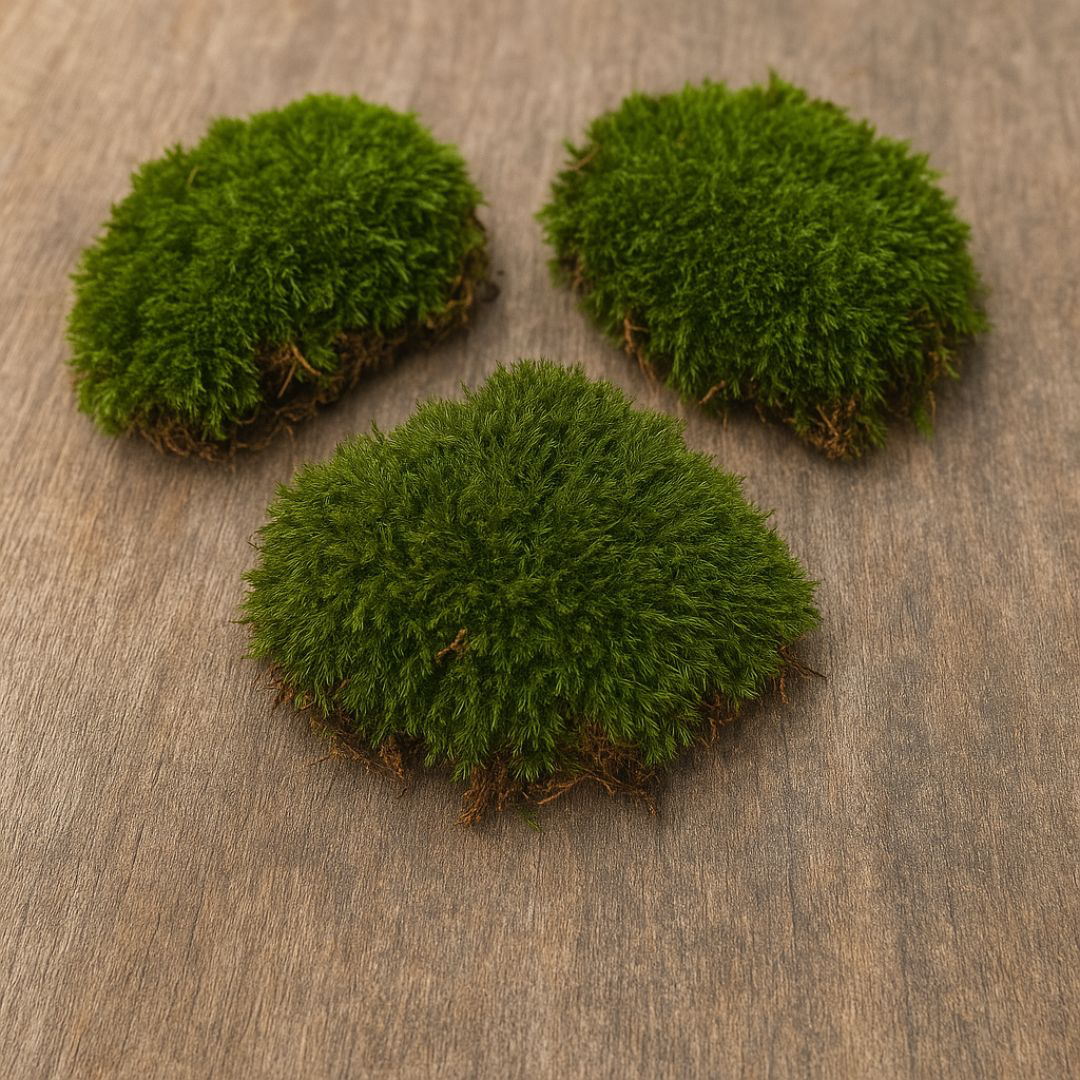
cushion
an acrocarpous life form in which stems are more or less erect, tightly clustered, and somewhat radiating at the edges; persistently grows on rocks and bark, usually in high light

mat
a pleurocarpous life form that is densely woven, horizontal, persistent, and grows on rocks/bark; concave leaves that hold water, twisted leaf tips, worm-like shoot appearance; back of leaves are exposed for gas exchange

rough mat
a type of mat that is typically longer and looser than its counterpart; often grows on moist stream banks & trail banks

smooth mat
a type of mat that is typically shorter and denser than its counterpart; often grows on hard surfaces in less moist conditions than other mats
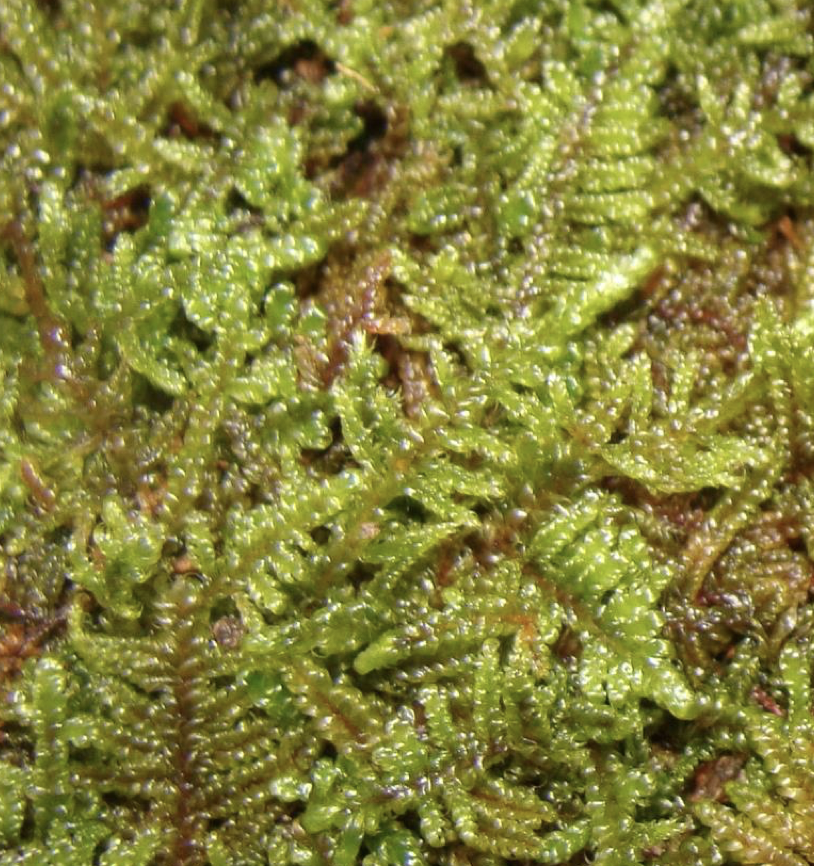
weft
a pleurocarpous life form that is loosely interwoven, often ascending, found on forest floor in temperate zones, loose habit makes it easy to remove from substrate

dendroid
a pleurocarpous life form that is tree-like; main stem has a tuft of branches at the top, distinct trunk-like stalk, often found on moist ground

colonies, clones, unit
mosses are ____ of ____ which function as a ____
genet
the complete genetic organism made up of all its cloned parts
ramet
a single physical unit or "shoot" within a clonal colony
life, growth
the same moss can exhibit more than one ____ form, but not more than one ____ form
rhizoid
root-like structure that provides anchorage and uptake via capillary action
mosses, liverworts
leaves of ___ and ___ are typically one cell thick
leaves
multi-layered ____ in mosses combine thin, living photosynthetic cells with large, dead, hollow cells (hyaline cells) that act like microscopic sponges to store water

desiccation
when dry, the cells of mosses and liverworts shut down metabolism and enter dormancy without dying, resuming photosynthesis within minutes of being re-wetted, a process called ____
cushion, short turf, smooth mat, rough mat, tall turf, weft, dendroid
moss life forms in order of most to least xeric conditions
suffocation, gas exchange
in tall turfs, wefts, and dendroids, shoots are tall, loose, or elevated to prevent ____ from excess water and maximize ____ in humid or saturated air
air flow, evaporation
in cushions, short turfs, and smooth mats, shoots are tightly packed or flattened against the surface to minimize ____ and slow ____
fragmentation, gemmae, asexual
the primary methods of reproduction for liverworts are ____ and the production of ____; both methods are ____
mosses
leaves of ___ are arranged in spirals around the stem
liverworts
leaves of ___ are arranged in 2–3 flattened rows
mosses
the rhizoids of ____ are multicellular and branched
liverworts
the rhizoids of ____ are unicellular and unbranched
moss
the spore capsule of a ____ opens via a lid (operculum) and teeth (peristome); spores are dispersed over several days
liverwort
the spore capsule of a ____ opens by splitting into four segments (valves); spores are dispersed to the wings by the twisting motions of sterile cells (elaters) within a few minutes
mosses
in ____, stomata are present on the sporophyte capsule
liverworts, thallose
in ____, true stomata are absent (____ forms use simple, always-open air pores)
mosses
____ have a distinct, branched, thread-like protonema stage (early spore growth)
liverworts
in ____, the protonema stage is absent or very minimal
seedless vascular
____ plants possess well-developed leaves, roots, and true vascular tissues, and reproduce via windblown spores
sporophylls
spore-bearing leaves of seedless vascular plants

short, long
when the spores of seedless vascular plants germinate, the gametophytes are ___-lived; the gametes they produce fuse to form a zygote that grows into the ___-lived sporophyte
lycopodiophyta
the oldest extant vascular plant division, which includes club mosses and spike mosses
microphylls, transverse dehiscence
two distinguishing characteristics of lycopodiophyta are the possession of ____ and ____ of sporangia
sporophylls
specialized microphylls that bear sporangia on the upper surface within the axil
strobili
sporophylls are often tightly compacted and clustered into terminal cones called ____
sporophyte, gametophyte
fill in the blanks at 1, 2

sporophyll, sporangium, strobilus
fill in the blanks at 3, 4, 5
