Bio Med Unit 5 - Muscular System
 Call Kai
 Learn
 Practice Test
 Spaced Repetition
 Match
 Flashcards
 Knowt Play
1/85

There's no tags or description
Looks like no tags are added yet.
86 Terms
What are the functions of the muscular system?
produces movement
maintains posture
stabilizes joints
generates heat
how does the muscular system produce movement
locomotion of the whole body, facial expressions, circulation of blood, passage of food, etc
how does the muscular system maintain posture
works against gravity to keep us upright
how does the muscular system stabilize joints
reinforces the connections of bones
how does the muscular system generate heat
cellular respiration causes heat energy, allowing constant body temperature
what are the 4 characteristics of muscle tissue
excitability
contractability
extensibility
elasticity
what is excitability
the ability to respond to a stimulus (from a motor neuron or hormone)
what is contractability
the ability to shorten when stimulated
what is extensibility
the ability to lengthen or stretch, even past original shape
what is elasticity
the ability to recoil or bounce back to the original shape and length after being stretched
what are the features of skeletal muscles
cylindrical
striated
multinucleated
voluntarily controlled
contracts slow or quick
where are skeletal muscles found
connected to bones
why do skeletal muscles benefit from having multiple nuclei
nuclei produce proteins, and since skeletal muscles need a lot of muscle proteins to replenish after contractions, having multiple nuclei maximized protein synthesis
what are the features of cardiac muscles
branched
striated
uninucleated
involuntarily controlled
mostly slow/steady contractions except during periods of activity
where are cardiac muscles found
in the heart
what are the features of
what are the features of smooth muscles
arranged in uniform layers
nonstriated
uninucleated
involuntarily controlled
slow contractions sustained over a long period of time
where are smooth muscles found
found in the walls of internal organs

2
muscle

3
fascicle

4
muscle fiber

5
myofibril
6

myofilament - myosin filament
7
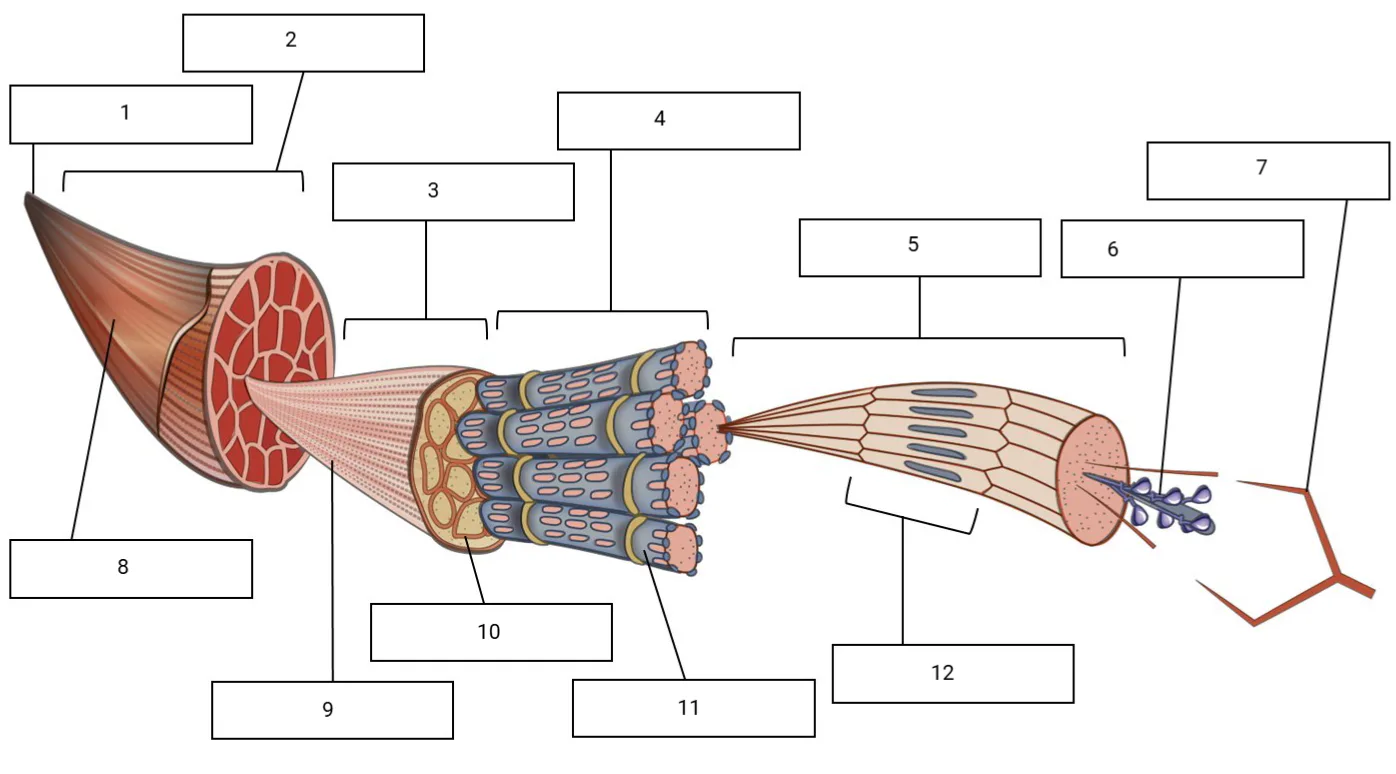
myofilament - actin filament
8

epimysium
9

perimysium
10

endomysium
11

sarcoplasmic reticulum
12

sarcomere
muscle
attached to bone by tendons and made of many bundles of fibers
fascicle
bundles within muscles
muscle fiber
long this muscles cells covered by sarcoplasmic reticulum
what is a sarcoplasmic reticulum
it stores, releases, and reabsorbs calcium to transmit an impulse to the muscle fiber
myofibril
thread-like organelles in the muscle fibers and is structured by sarcomeres
sarcomere
a long striated unit
myofilament
made up of two types of filaments (myosin and actin) which are responsible for the contracting activity of muscle fibers
actin
thin filament
myosin
thick filament
epimysium
membrane that covers the whole muscle
perimysium
membrane that covers a fasicle
endomysium
membrane that covers an individual muscle fiber
what do membranes allow muscle fibers to do?
they allow muscle fibers to slide and keep them contained to prevent bursting during contractions
1

actin
2

z-line
3

sarcomere
4

myosin
5

m-line
what happens when a muscle contracts
the actin a myosin interact which pulls the muscle fiber towards the m-line, shortening the muscle fiber
explain the sliding filament theory
myosin heads attach to the actin filaments and pull on them. this causes the z-lines to get closer and the sarcomere to get shorter
what gives muscles the energy to contract
ATP
how much ATP is used each time a myosin filament engages with an actin filament
1 ATP molecule
why is a BUNCH of ATP needed for a muscle contraction
because a bunch of myosin and actin filaments are engaging to contract a muscle multiple times and since 1 ATP is needed for 1 myosin and actin interaction, a bunch of ATP is needed
how is the gentleness or strength of a muscle determined
it is determine by the number of muscle fibers engaged
how is ATP formed
cellular respiration
aerobic respiration
uses oxygen to break down glucose (aka kreb’s cycle)
anerobic respiration
makes ATP by turning pyruvate into lactic acid. this is inefficient (makes much less ATP) and can only work for a short time before injuring the cells
why do muscles get fatigued
intense exercise
ATP inefficiently being used for cross-bridges
anerobic respiration
oxygen debt
how does intense exercise fatigue muscles
glucose supply is exhausted (glucose is needed for cellular respiration)
how does anerobic respiration fatigue muscles
muscles begin to burn because ATP is not flowing in as quickly as the muscles need
how does oxygen debt fatigue muscles
there is not enough oxygen present for what is required
why are some people “more fit“ than others?
they are more efficient at transferring oxygen to the muscle fibers
tendon
attaches muscle to bone
origin
the stationary bone that the tendon is attached to
insertion
the movable bone the tendon is attached to
belly
the middle of the muscle
prime mover
muscle doing the action (contracting)
synergists
muscles that help in the same direction as the prime mover
antagonist
muscles that relax when the prime mover contracts
what is the largest tendon
achilles tendon
what is the role of calcium in a muscle contraction
calcium ions bond with troponin which triggers a contraction
tropomyosin
blocks myosin from bonding with actin
troponin
when calcium binds with it, it moves tropomyosin which exposes actin for myosin to bind with
what 2 things are needed for cellular respiration
oxygen and glucose
what does lactate do in anerobic respiration
lactate is what allows ATP to be produced when oxygen is not available
what is lactate threshold
when the lactate produced is not preventing you from failing
what is duchenne muscular dystrophy
a genetic mutation caused by the body’s inability to produce dystrophin which acts a shock absorber in the muscles. without it, muscles begin to deteriorate
cellular respiration
the process where we eat food and breath oxygen to make ATP energy
what is the difference between ligaments and tendons
ligaments attach bone to bone
tendons attach muscle to bone
what is a fast twitch muscle fiber
muscles that are engaged for quick bursts of energy, causing sudden movements
what is an example of a fast twitch muscle fiber
lateral rectus (muscle of the eye that causes blinking)
what is a slow twitch muscle fiber
muscles used for lower-intensity activities that require a longer sustained movement
what is an example of a slow twitch muscle fiber
soleus muscle in the calf
which type of muscle fiber has more mitochondria and blood vessels and why?
slow twitch, because they rely on a constant flow of ATP while fast twitch muscle fibers only require a small amount of ATP that comes in a quick, short bust
where does cellular respiration take place
in the mitochondria
latent phase
the period of time where myosin cross bridges are forming, but the fiber has not yet begun to pull
lactate
the molecule that is produced by muscle cells during anerobic respiration