Lecture 2: Regulation of Genome Expression
 Call Kai
 Learn
Learn Practice Test
 Spaced Repetition
 Match
Match Flashcards
 Knowt Play
1/28

There's no tags or description
Looks like no tags are added yet.
Name | Mastery | Learn | Test | Matching | Spaced | Call with Kai | Chat |
|---|
No analytics yet
Send a link to your students to track their progress
29 Terms
What are the two transcriptional regulation and genetic switches for prokaryotics
Trp Operon
Lac Opero
Genomes
what does it encode
what are they mainly made out of
What is the exception (what are they made out of)
How are the genome information released out of it? (What is this called?)
encode info to construct and maintain an organism
most genomes made out of DNA
exception: viruses (not normally considered living things; not made up of cells and need to infect to replicate) - have RNA genomes instead
genome expression - the release of the biological information stroed in the genome
aside: genome itself doesn’t do anything

What is the first product of genome expression? (what is it called?)
what does it consist of (main def)
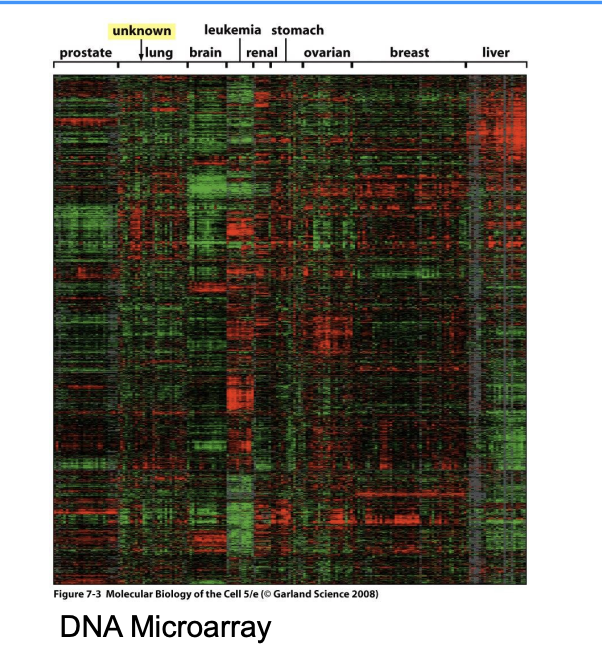
What is a DNA microarray - what exactly are you looking it
how do you read it
What are the rows
what are the columns
what does the red indicate
What does the green indicate
What goes the black regions indicate
How often are they used, what else are they using?
the transcriptome
The repertoire of RNA molecules present in a cell at a particular time
Image: a DNA microarray (and snapshot of the transcriptome - looking at RNA)
Rows = the gene types
Column= the different samples
Red = lots of DNA from that particular gene
Green = very little RNA
black: medium amount of DNA from that particular gene
These days, fewer researchers are using DNA microarrays for transcriptome analysis
More are using RNAseq, also done in labs.
How is the transcriptome maintained?
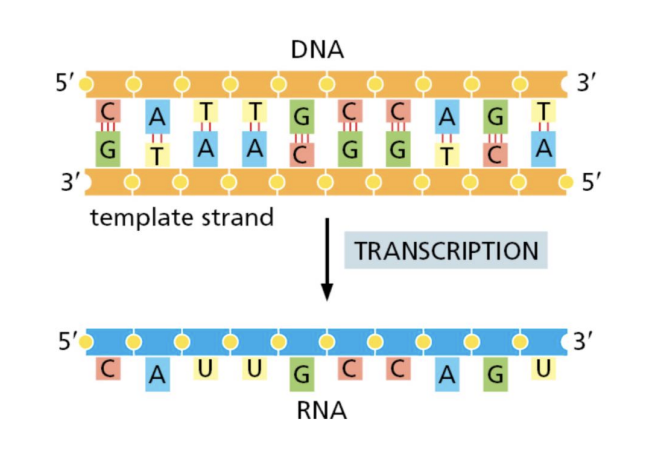
by the process of transcription
What is the second product of genome expression
what is it
what does it define
How is it maintained
What snapshot can we use to read this
How is it being read
the proteome
the collection of proteins in a cell
defines the biochemical functions of the cell
Maintained by the process of translation
2D gle electrophoresis - gives a snapshot of the proteome
Row: the weight of the molecule
the column: the isoelectric point (e.g. like polarity)
blobs not normally coloured in for you - blobs are the proteins
no blocks, mean the protein of that type does not exist
blue unique proteins
larger proteins = more

What is the central dogma of molecular biology
DNA - genome → RNA - transcriptome → Protein - proteome
Genome expression
what does all cell types have the same genome
number of gene in a human
how much expressed at a time
different cell types contain the same genome
25,000 genes
30-60% expressed at a time
expression varies

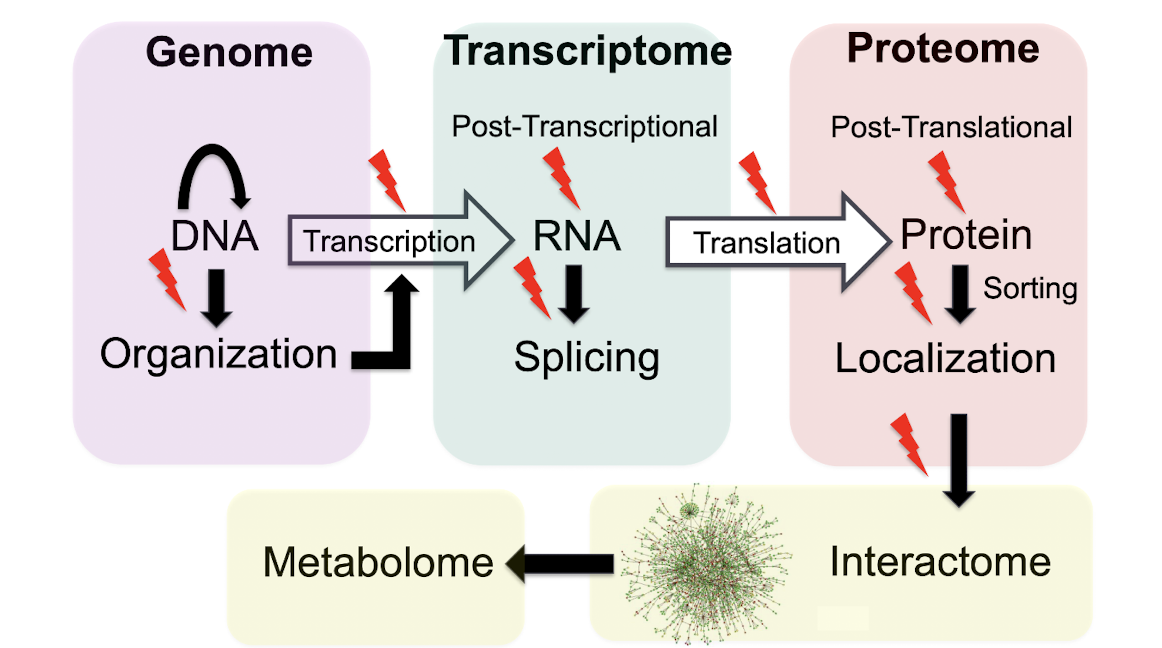
Regulation of genome expression
state the main sections and their main definitions
Genome: DNA
Transcriptome: the RNA
Proteome: the proteins
the bolt = places where we can do something to the DNA
Interactome: All the protein=protein interactions for the arrows
Metabolome: All the small molecule metabolites (all the other stuff)
Transcriptional regulation
crucial for (2 things)
defining cell types
responses to extracellular stimuli
Recall
What enzyme transcribes the RNA
enzyme: RNA polymerase
read 3’ to 5’ - the template strand
make 5 to 3’ - the RNA strand (the sugar phosphate brand)

Recall
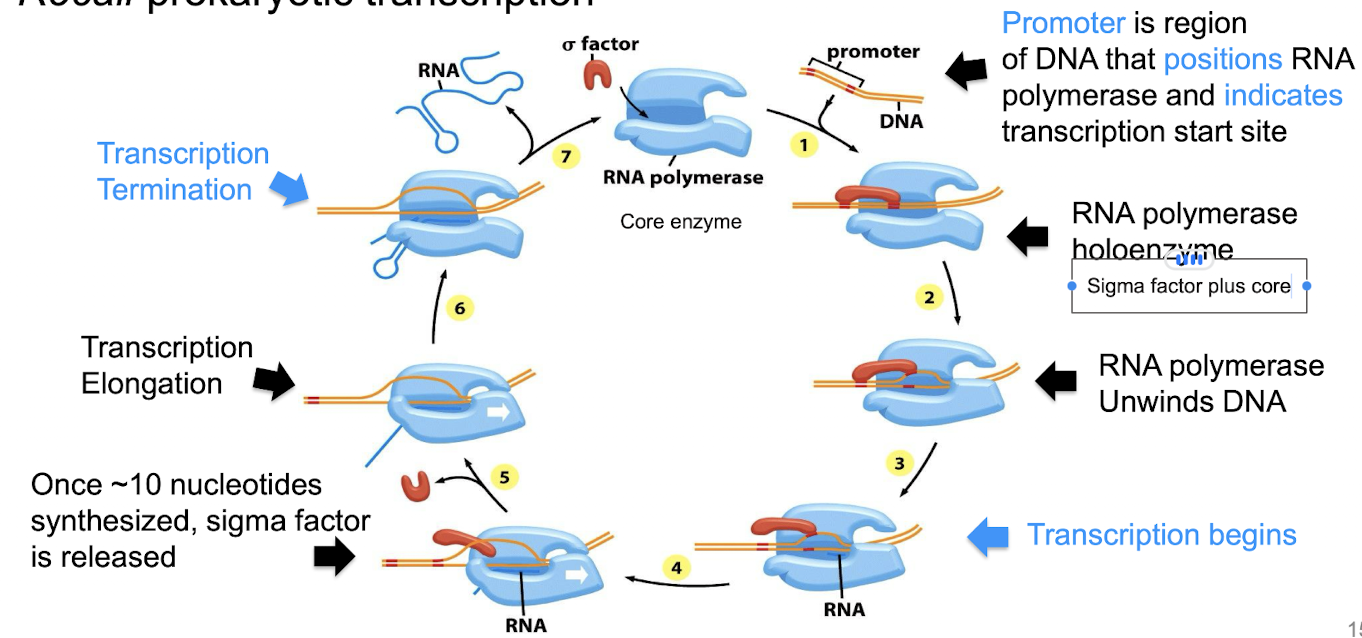
prokaryotic transcription
what is the promoter
RNa polymerase zore enzyme
promoter is region of DNA positions the polymerase and indicates the transcription start site
Indicate, is not included in the start site
Forms the RNA polymerase holoenzyme
Review of transcription
difference efficiencies
Reason: regulated by gene regulatory proteins (transcription factors)
Indicates if you make more of the gens or less
TF worksby binding to regulartory regions of DNA (cis elements)
Cis elements = DNA sequences on the same DNA double helix as the gene (where it is located on the genome )
Types of TF
ON = positive regulators = activator - e.g. make more RNA
OFF = negative regulators = repressors
E.coli model
features
unicellular prokaryote
one choroomsome of circular DNA
encode 4300 proteins
geners are transcriptionally regulated by food availability
Prokaryotic feature
Multiple genes transcribed into a single RNA molecule
operon: the DNA region (it’s under the control of one promotor)
The trp (trytophan) operon
features
five genes
encodes enzymes for tryptophan biosynthesis
transcription regulated by a single promoter
the operator, provides the start of the RNA synthesis, which then makes the series of enzymes (different enzymes, different) required for tryptophan biosynthesis

Trip operon promoter protein-bound states
binding by RNA polymerase
Trap gene expression is on
Bound by the tryptophan repressor protein (blocks the promoter access for DNA polymerase for transcription)
Gene expression is off
If the trip repressor binds to a specific DNA sequence of the promoter called the operator
A cis regulatory sequence
Numbering for sequencing
+ is the RNA nucleotides being made
- before where the transcription begins
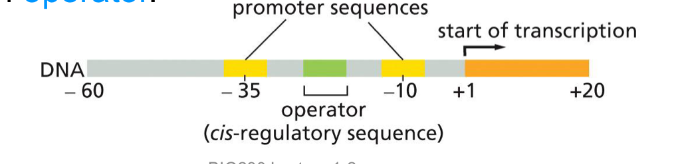
How blocking with repressor works?
rnA polymerase cannot bind
Negatively regulates the trap expression
the repressor DNA-binding activity is still regulated, the repressor must still binds two molecules of tryptophan to bind to DNA
Tryptophan is high
The tryptophan binds to the repressor, the repressor is activated, binding to the DNA-binding site, preventing the transcription with RNA polymerase
Operon is off
Tryptophan is low
The repressor in inactive
The RNA polymerase binds to make e.coli

What is a helix-turn-helix?
Helix-turn-helix: structural pattern in many proteins that bind to DNA
What does tryptophan repressor have, and why is it important
tryptophan repressor contains a helix-turn-helix which can bind and recognize DNA sequences
BindS in the major grooves of the DNA double helix
The binding of tryptophan induces the conformational change and protein can then fit into the major groove
The Lac Operon
three characteristics of the lac operon
three genes requires the transport of lactose into the cell and for its catabolism (break down and use for energy)
Enables use of lactose into the absence of glucose
Dual regulation: both positive and negative control
Dual regulation: two proteins involved
Activator: Catabolite activator protein (CAP)
Promotes Lac expression: low glucose/high lactose
repressor: lac repressor protein
Inhibited lac expression: low lactose
Three major rules about lac operon (when to use the lac operon)
E.coli’s first choice is to use glucose
When there is low glucose and high lactose, it will then use lactose. Both those conditions must be true to use lactose
The lac operon is what is turned on, when it wants to use lactose
Where does the two proteins binds?
the cis-regulatory sequence
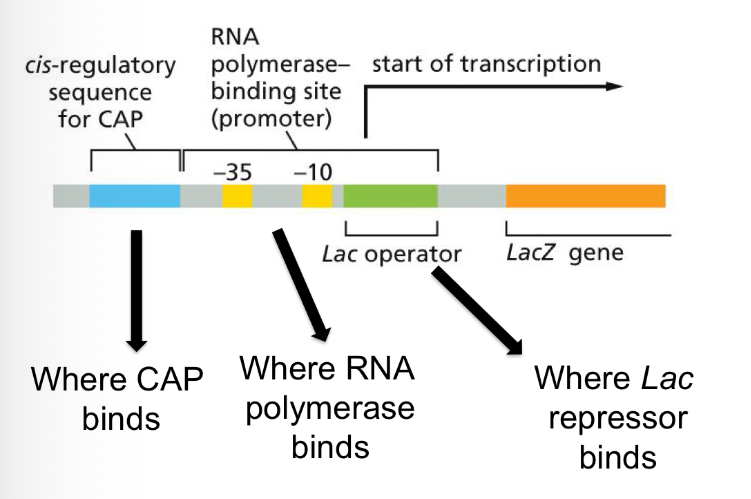
What happens when lactose is low and glucose is high
lactose is low, lac expression is bound to the operator
Lac operon gene expression is off
Increased lactose will remove the repressor from the operator
Low glucose, high lactose - process with the lac operon
Is the operon on yet?
Direct relationship: an increase in lactose increase the levels of allolactose, which requires B - galactosesidase
The allolactose will bind to the lac operon
The lac operon will undergo conformational change And decrease its’s DNA-binding activity, which release the lac operon
However, the lack operon gene expression is still OFF

What does the lac operon need to activate it’s gene expression
requires the activator, because the RNA is not good enough to begin get transcription
Requires the CAP to be bound, that contains the helix]-turn-helix DNA binding domain
How is CAP DNA-binding activated?
activated by low glucose
A decrease in glucose levels increase cyclic AMP (cAMP), known as the signalling molecule
Decrease of glucose = more cAMP
Increase glucose = less cAMP
cAMP binds to the CAP protein
Conformational change
Increases the DNA-binding activity
The CAP proteins binds to the CAP-binding site
CAP will recruit the RNA polymerase to the Lac promoter
Quick review
Increase lactose, increase allolactose = allolactose binds to the repressor, the repressor does not bind to DNA, the RNA pol can bind
Decrease glucose, increase in cAMP, cAMP binds to CAP, CAP binds to DNA, RNA pol. Can bind
