Deep Sea Geology
 Call Kai
 Learn
 Practice Test
 Spaced Repetition
 Match
 Flashcards
 Knowt Play
1/19

There's no tags or description
Looks like no tags are added yet.
20 Terms
Deep sea sediments
Accumulate very slowly
1-15 millimeters per year
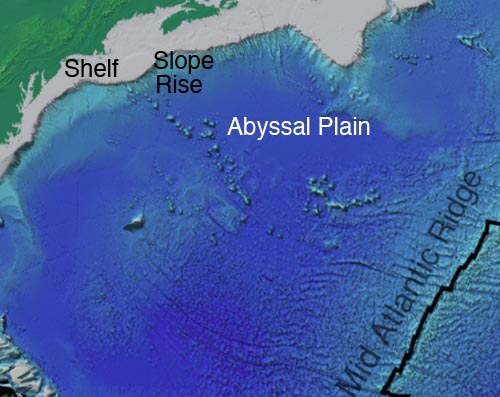
Abyssal Plains
flat floors of ocean basins
thin veneer of deep-sea sediment about 500 meters thick
basaltic oceanic crust underlies sediment about 1-km thick
lower crustal layer is gabbro plutons about 3-6 km thick
Lithogenous
abyssal clay or red clay
volcanic ash
wind-blown silt
rare large boulders
Biogenous Sediment
calcaerous oozes(calcium carbonate shell material)
Siliceous oozes (silica shell material)
distribution limited by
organism distribution
dissolution of material in seawater
Carbonate Compensation Depths
depth at which carbonate particles sink from above and dissolve
ranges from 3500-6000 meters
depends on water temp and depth
Less than half of carbonate debris makes it to the seafloor.

hydrogenous sediment
hot spring deposits
cobalt-rich crusts
manganese nodules
Cosmogenous sediment
meteorites
iron-nickel is most common
only noticeable when not covered by other sediments

abyssal plains volcanoes
Large, but gently sloping sides
Erupts mostly basaltic lava
Sheet lava- flood basalts
lava tubes-land/water

sea mount
active or inactive volcano that has never been built above sea level
thousands scattered or in chains on the abyssal floor
oceanic island
sea mount that has grown above sea level
Current ones are either active or only recently inactive
Eventually subside back to sea level as they become volcanically inactive due to:
crust cooling
subaerial erosion
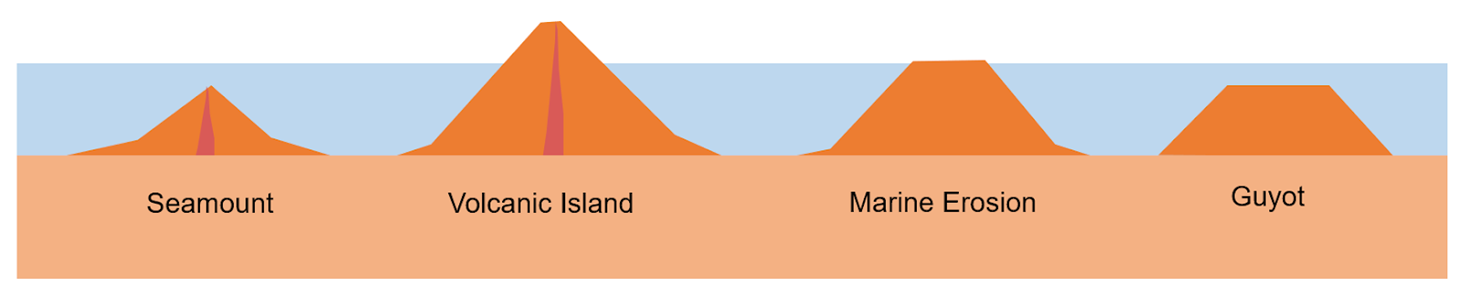
Guyots
flat-top submerged inactive volcanoes
oceanic islands whose tops have been eroded by sea wave action.

Coral Atoll
Oceanic island or guyot kept at or above sea level by coral growth
coral must build reef up to offset the effect of island sinking back into sea
whats required to build a reef
light for symbiotic algae
warm water

Hot spot
One end of the volcanic chain is active
The age of features increases away from …..
mid-ocean ridge system
Width: 1000 km (600 miles)
Height: 1- 2 km above the abyssal plain
Length: 65,000 km, winding through all ocean basins
Longest known continuous Earth feature
The majority of all volcanic activity on Earth occurs here
Charateristics’s of Mid-Ocean Ridge
earthquake activity- tensional forces
fissure eruptions and shield volcanoes
erupt mostly basaltic lava
birthplace of ocean lithosphere
center of sea floor speeding
ridges
Have sharp crested tops
rift valley
form by slow spreading rates
rises
Have smooth tops
little or no rift valley
Formed by fast spreading rates

submarine hot springs
Observed on all mid-ocean ridges
Powered by earth’s internal heat
temp of vented water is about 350-500° C
often rich in dissolved chemicals
energy from chemosynthesis
Form black smokers: minerals precipitate due to temp change
chemosynthesis
energy released by the breakdown of chemical substances such as sulfur compounds