Marine Vert. Exam 2
 Call Kai
 Learn
Learn Practice Test
 Spaced Repetition
 Match
Match Flashcards
 Knowt Play
1/37

There's no tags or description
Looks like no tags are added yet.
Name | Mastery | Learn | Test | Matching | Spaced | Call with Kai | Chat |
|---|
No analytics yet
Send a link to your students to track their progress
38 Terms
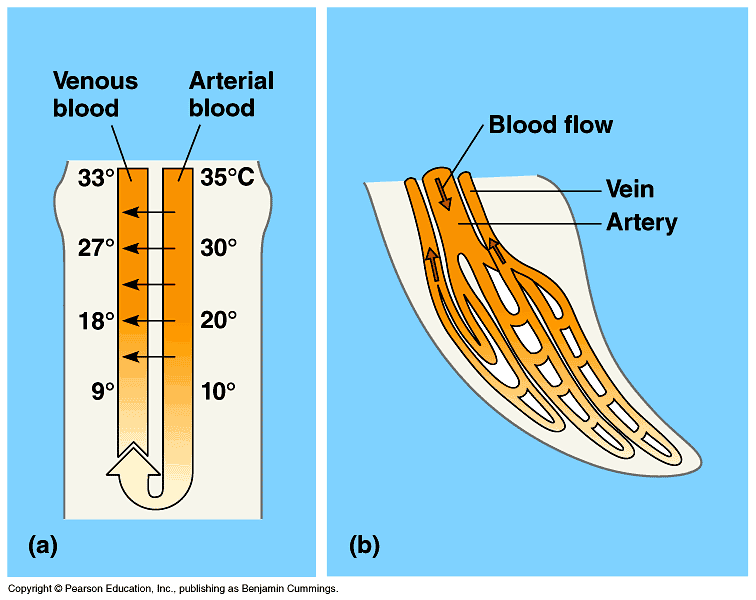
Regional heterothermy
Organisms that are able to maintain different temperature zones in different regions of the body
Some fishes maintain some parts of body 15°C higher than ambient, but gills are isothermic with water
To maintain temps, fish must limit heat loss through gills
Countercurrent system of blood flow through retia mirabilia
Sharks (Lamnidae)
Scombroid fishes (mackerels, tunas, and billfishes)
Adaptations allow these fish to inhabit waters cooler and deeper than otherwise possible

Rete mirabile (plural: retia mirabilia)
A complex of arteries and veins lying in close proximity; utilizes countercurrent blood flow to act as a countercurrent exchanger; exchanges heat, ions, or gases between vessel walls so that the two bloodstreams maintain a gradient with respect to temperature, or concentration of gases or solutes
In fish: helps fill swim bladder with oxygen (increases buoyancy); allows for an increase in muscle temperature in regions where the network of veins and arteries is found (thermoregulation); increase in temperature leads to increase in basal metabolic temperature

How do tuna utilize regional heterothermy?
Myoglobin-rich swimming muscles close to vertebral column
Additional heat exchangers in brains and eyes (though cooler than swimming muscles); also found in sharks
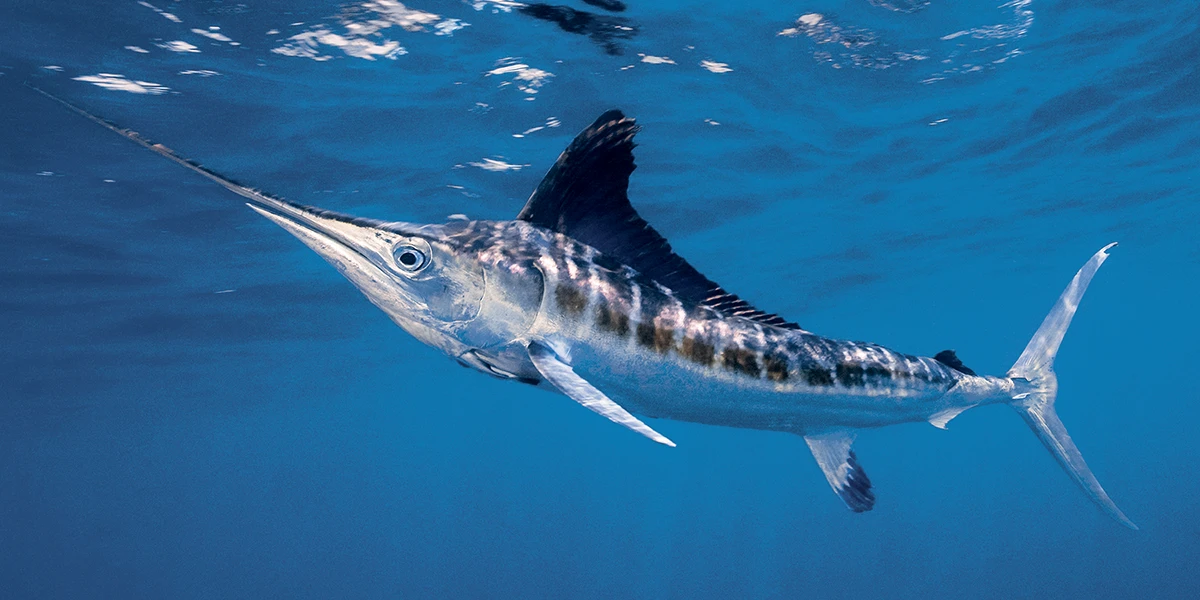
How do billfish utilize regional heterothermy?
Warm brain and eyes via superior rectus eye muscle
Increased mitochondria, calcium cycling

How do marine mammals reduce heat loss?
Decrease thermal conductance

Thermoregulation in marine mammals: FUR
Dense, long (dry) fur traps a layer of air next to skin
Examples:
Fur seals: 60,000 hairs/cm2
Sea otters: 130,000 hairs/cm2

Thermoregulation in marine mammals: BLUBBER
Continuous thick sheet of adipose tissue reinforced by collagen and elastic fibers
Less effective than fur
Lipid content varies between 9-82%

Thermoregulation in marine mammals: SUBCUTANEOUS FAT
Not true blubber
Polar bear may use this to insulate
Fur acts as wetsuit in water

Thermoregulation in marine mammals: REMAINING COOL
Dumping excess heat
Bypass insulation of fur:
Thermal windows: areas of naked or thinly covered skin
Flippers and feet
Heat is transported to surfaces by blood moving through vessels that are close to skin
Bypass insulation of blubber:
Thermal windows: dorsal fins and flukes
Open and close capillary beds to skin; open when need to dump heat; close when insulating

Counter-current exchange in marine mammals
Rete mirabile: complex of veins and arteries lying close to each other that utilize countercurrent blood flow
Artery of warm blood surrounded by veins of cold blood
Flow past each other creating a heat gradient

Thermal windows
Specific, thinly insulated areas of the body surface where blood flow increases to release excess core body heat
Typically found in extremities with high surface-area-to-volume ratios or minimal blubber (flippers, flukes, dorsal fins, areas of face or abdomen)
Regulated by cardiovascular system via vasodilation (widening blood vessels to let warm blood reach the surface) and vasoconstriction (narrowing vessels to trap heat)
Adjacent blood vessels work together to either dissipate heat or recapture warmth
Prevents overheating during high physical activity, exercise, or when resting in warm ambient air/water

Surface Area:Volume
Larger objects progressively have less surface area:volume ratio
Gigantothermy
Large animals lose heat more slowly (and heat up more slowly)
Tendency for marine mammals to be large
Nelson’s (2006) definition of FISH
Aquatic vertebrate with gills and limbs in the shape of fins

Berra’s (2001) definition of FISH
A poikilothermic, aquatic chordate with appendages (when present: developed as fins) whose chief respiratory organs are gills and whose body is usually covered with scales

Fish
General term
Includes hagfishes, lampreys, sharks, rays, lungfish, sturgeons, gars, and advanced ray-finned fishes
Fish is singular and plural for a single species
Fishes when you are taking about more than one species

Diversity of fishes
Fishes were the first vertebrates
~32,000 extant fish species
Greater than all other vertebrate species combined
62 orders
525 families
108 jawless fishes (hagfish and lampreys)
970 are cartilaginous sharks, skates, rays, and ratfish
Remaining are bony fish
More than half of fishes are marine
Highest diversity in the tropics

Poikilotherms
Organisms with variable body temperature that changes in response to the temperature of their surroundings under normal physiological and environmental conditions
Body heat shifts with ambient weather or water conditions
Do not use food energy to heat their bodies
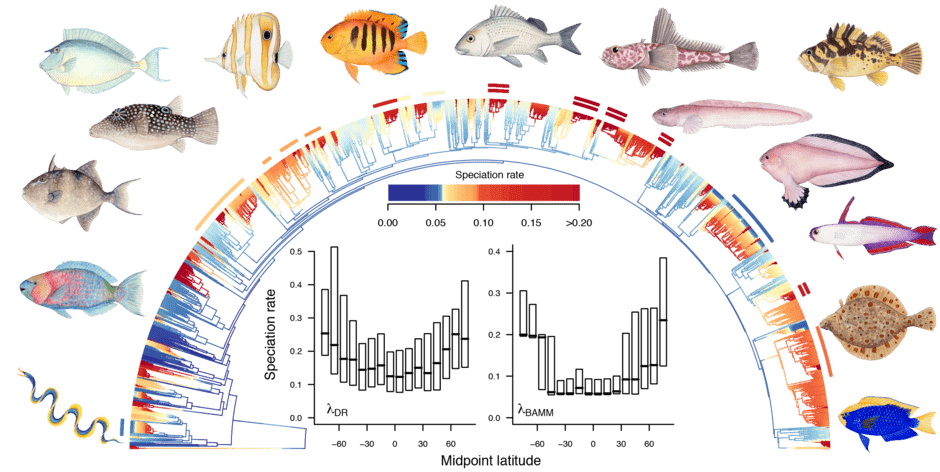
Toolbox for fish systematics
Molecular sequence analysis - compare DNA, RNA, or protein sequences to understand structure, function, and evolutionary history
Developmental biology - the process by which animals grow, differentiate, and form complex multicellular structures from a single fertilized egg (zygote)
3D imaging to visualize complex internal morphology of both fossils and extant species
Encyclopedia of Life, Fishbase, WORMS

Importance of fishes to people
Diet staple
Atlantic Cod fished to the brink of extinction
Important element of the economy
Recreation and psychological value to naturalists, sports enthusiasts, and home aquarists
Subject of international and domestic agreements and disagreements
General indicators of pollution
Studied in behavior, ecology, evolution, genetics, and physiology

Phylogeny of living chordates
A phylogenetic hypothesis showing the major clades of chordates in relation to the other main deuterostome clade, Echinodermata
Starting from most basal to most derived groups:
Cephalochordata (lancelets) and Urochordata (tunicates) have a notochord and are the first chordates
Myxini (hagfishes) and Petromyzontida (lampreys) have vertebrae and are the first vertebrates
Chondrichthyes (sharks, rays, chimaeras) have jaws/mineralized skeleton and are the first gnathostomes
Actinopterygii (ray-finned fishes) have lungs or lung derivatives and are the first Osteichthyans
Actinistia (coelacanths) and Dipnoi (lungfishes) have lobed fins and are the first lobe-finned fishes
Amphibia (frogs, salamanders) have limbs with digits and are the first tetrapods
Reptilia (turtles, snakes, crocodiles, birds) have amniotic eggs and are the first amniotes
Mammalia (mammals) have milk

A brief history of fishes
During 500 million years of evolution, fishes colonized and dominated the seas and fresh waters and eventually emerged, at least for short periods, onto land
Extant (“living”) fishes represent the most recent manifestations of adaptations and lineages that have their roots in the early Paleozoic
By the time fishlike fossils appear in Early Cambrian deposits (~530 mya), complex tissue types had evolved: filamentous gills, V-shaped myomeres, and a distinct dorsal fin

First fish
Ostracoderms appear in Cambrian fossils
Agnatha or Ostracodermi
Jawless, bony armor, bony endoskeleton
Most inhabited freshwater
Ostracoderms disappear and placoderms appear in Devonian fossils
Jaws, paired fins, bony armor and endoskeleton
First Chondrichthyes appeared in late Devonian
Terminal mouth, pectoral fins broadly joined to body, no pelvic claspers

Ostracoderms
Lacked movable jaws and teeth, possessing only a small, slit-like anterior-ventral mouth
Heads and bodies heavily covered in bony plates, shields, or dermal scales
Typically lacked paired (pectoral and pelvic) fins, relying instead on median fins and a flattened body shape
Unlike earlier chordates, gills used exclusively for breathing rather than feeding, via permanently open pharyngeal pouches
Small, generally under 30 centimeters, though some reached up to 1 meter
Slow, benthic creatures; used a muscular pharynx to suction up small, slow-moving prey or organic particles as filter/deposit feeders
Emerged during early Paleozoic (Ordovician-Silurian periods); reached peak diversity in early Devonian; completely extinct by the end of the Devonian period (~359 mya)
Represent some of the oldest known vertebrate fossils with hard head shields and are considered close evolutionary relatives or ancestors to jawed vertebrates (gnathostomes) and modern jawless fish like lampreys
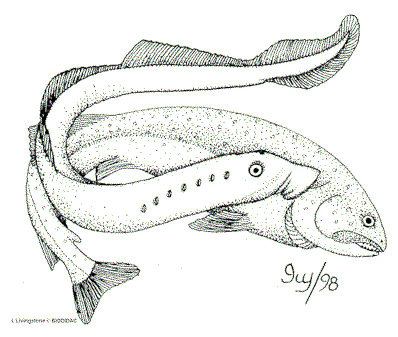
Agnatha
Paraphyletic infraphylum of primitive, jawless vertebrates; includes ancient armored giants and modern living species like lampreys and hagfish; represent the earliest divergent lineage of the vertebrate subphylum
Lack true jaws and derived teeth, using circular or slit-like suction mouths
Generally lack paired pectoral and pelvic fins
Skeleton is primarily cartilaginous, and the embryonic notochord persists throughout their adult life
Lack a true stomach and possess light, primitive gills contained within pouch-like structures
Cyclostomata: the only surviving agnathans, featuring specialized, scaleless, elongated bodies
Lampreys: parasitic or non-parasitic filter feeders with a circular, tooth-lined sucking mouth used to latch onto host fish
Hagfish: deep-sea scavengers known for producing massive amounts of defensive slime; lack vertebrae as adults
Ostracodermi (Ostracoderms): extinct; heavily armored subgroup of superclass Agnatha (jawless vertebrates); recognized as earliest known vertebrates with a complex bony exoskeleton
Modern cladistics treat “Ostracodermi” as a paraphyletic evolutionary grade because several subgroups are more closely related to gnathostomes than they are to modern jawless cyclostomes

Placoderms
Thrived during the Paleozoic Era from the Silurian to the end of the Devonian period (~430 to 359 mya)
Head and thorax covered in thick, articulated bony plates, while the rest of the body was scaled or naked
Among the earliest gnathostomes (jawed fish), with jaws likely evolving from modified gill arches
Instead of true enamel-coated teeth, most possessed self-sharpening bony jaw plates used for shearing or crushing
The first fish group to develop pelvic fins, serving as evolutionary precursors to tetrapod hindlimbs
Most species small to moderate (10-40 cm long), but could grow up to 6 to 10 meters and weigh several tons
Vanished during the severe mass extinction events at the end of the Devonian period (~359 mya)

Cyclostomes
Extant jawless fishes (hagfishes and lampreys)
Most data suggest that hagfishes and lampreys are sister taxa
Lack jaws and paired fins
Single nostril
Pouched gills with branchial supports on the outside of gill tissue
Large muscular tongue that bears keratin “teeth”
Rudimentary vertebral precursors called arcualia

Arcualia
Small, paired cartilaginous elements that form dorsally (and sometimes ventrally) along the notochord in primitive vertebrates, acting as precursors to true vertebrae

Myxiniformes (order)
Extant hagfishes
75 spp. in two genera: Eptatretus and Myxine
Entirely marine
World-wide distribution, except for polar regions
Primarily deep-sea, cold-water
Scavengers of the deep-sea floor
Slime glands: open to body wall via 90-200 pores and secrete enormous amounts of mucus and tightly coiled proteinaceous threads
Coiled threads straighten when in contact with seawater and entrap mucus close to hagfish’s body
Deters predators

Petromyzontiformes (order)
40 spp. of lampreys in 2 major genera: Petromyzon and Lampetra
Anadromous: hatches in freshwater, migrates to ocean to live and grow into adult, returns to freshwater to spawn
10cm to 1m
7 pairs of gill pouches
Round mouth
Large eyes, with well-developed vision
Pineal body: light sensitive structure that is homologous with the pineal gland of mammals
Adults use tidal ventilation: water is drawn in and expelled through the gill openings
Inefficient, but necessary due to mode of feeding
Parasitic

Pineal body
A well-developed, photosensory and photoneuroendocrine organ located under the skin on the dorsal surface of the head, just posterior to the single median nostril
Lamprey pineal acts as a “third eye” that can detect both ultraviolet and visible light independently of the paired lateral eyes
Transduces light and dark signals into neural and endocrine messages (such as melatonin regulation) that influence daily color changes, skin paling, and life-cycle events like metamorphosis

Tidal ventilation
A specialized breathing mechanism where water is drawn in and pushed out through the external gill openings rather than passing through the mouth
Unlike larval lampreys (ammocoetes) that use a one-way flow-through system where water enters the mouth and exits the gills, adult lampreys have a blind-ended respiratory pharynx separated from the food-carrying tube
Water is both inspired and expired rhythmically through the seven pairs of external gill pouches; exhalation happens via active muscular contraction of the branchial basket, while inhalation occurs through passive elastic recoil
Adaptation allows adult and parasitic lampreys to breathe continuously even when their suctorial (sucking) mouth is firmly attached to a rock or a host fish for feeding

Gnathostomes
Jaws
Allowed for a variety of new feeding behaviors and food source exploitation
Two sets of paired limbs (pectoral and pelvic)
Allowed for sophisticated aquatic locomotion providing lift, thrust, braking, and control of body orientation in 3D space
Radiation to Chondrichthyes and Osteichthyes
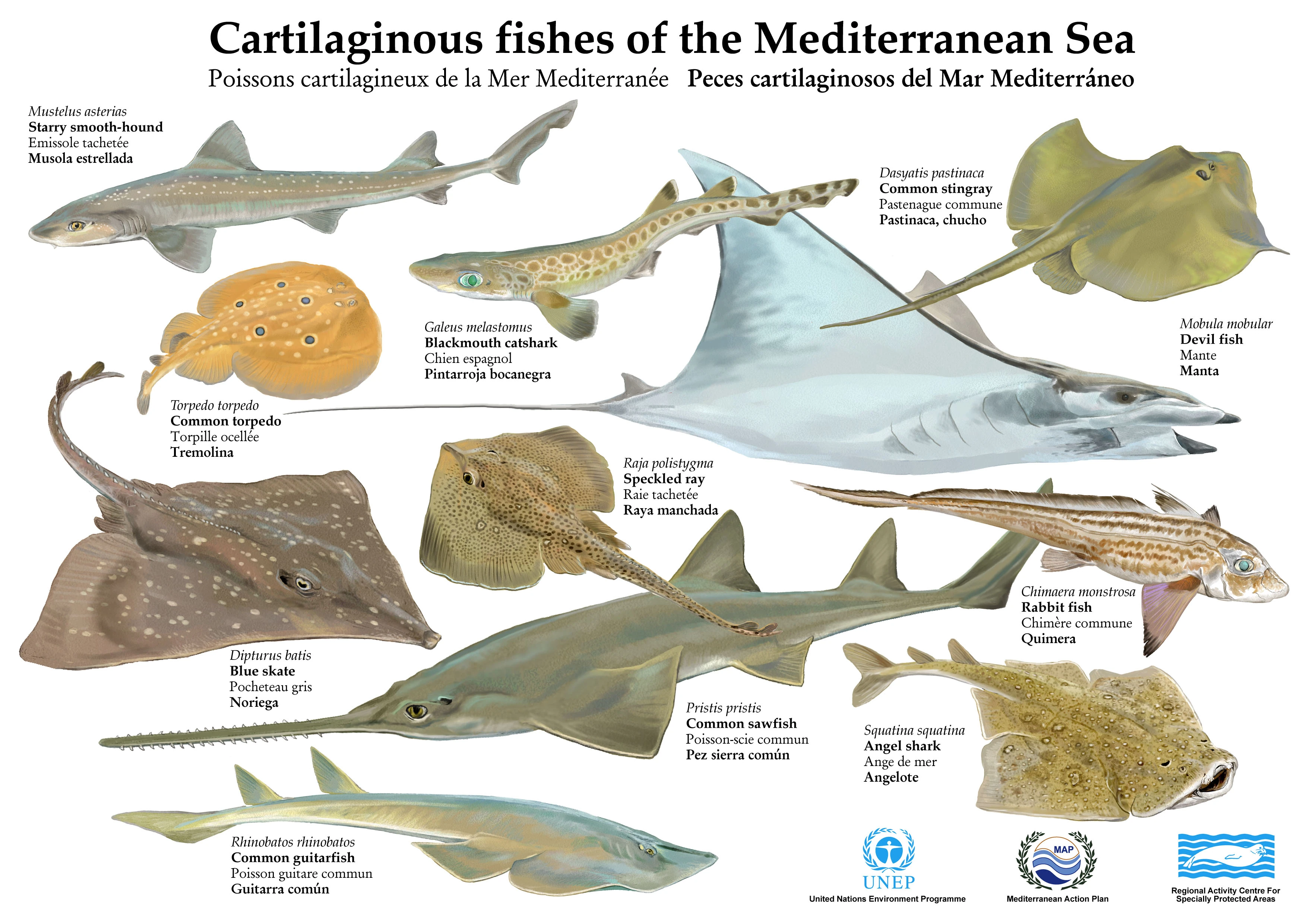
Chondrichthyes
Cartilaginous fishes
First appear in the fossil record in the Early Devonian ~400mya
Two groups:
Elasmobranchii (plate gills)
Multiple gill openings on each side of head
Sharks, rays, skates
Holocephali (whole head)
Named for undivided appearance of the head that results from a single gill opening
Gill slits are covered by opercular cartilage
Chimeras, rabbitfishes, ratfishes, ghost sharks
Fish-like body with long flexible tail

Distinctive Chondrichthyes characters
Pelvic claspers in males which are used for internal fertilization
Placoid scales: dermal denticles
Tooth whorl: teeth are continually replaced as they wear down or fall off
Cartilaginous skeleton: falls apart after death
Chondrichthyans are largely known from fossil teeth

Pelvic claspers
Paired, grooved intromittent (copulatory) organs found on male cartilaginous fish used to transfer sperm directly into the female’s reproductive tract during internal fertilization
Modified extensions of the posterior portion of the male’s pelvic fins, made of stiffened and grooved cartilage
In juveniles, claspers are soft and uncalcified; they become rigid and fully calcified as the male reaches sexual maturity
Biologists use this to track growth and reproductive development

Placoid scales
a.k.a. dermal denticles
Tooth-like structural units that cover the skin of cartilaginous fishes
Tiny longitudinal ridges (riblets) on the denticles channel water flow and reduce hydrodynamic drag by up to 6-45%, providing fish with quicker and quieter movement
Unlike the scales of bony fish, individual placoid scales do not grow larger as the animal matures; instead, new scales are added to gaps as the fish grows
Share structural homology with vertebrate teeth, representing a remnant of the ancient bony armor found in primitive jawless fish

Tooth whorl
Extant elasmobranchs replace teeth individually in conveyor-belt fashion (shedding old teeth and rotating new ones forward)
a.k.a. revolver dentition or polyphyodonty
Note: no online sources refer to this movement of teeth as “tooth whorl;” tooth whorl refers to the specialized, circular spirals of continuous teeth found in the lower jaws of Helicoprion, an extinct group of cartilaginous fish

Characteristics of cartilaginous skeleton
Flexible and lightweight: cartilage weighs less and bends more easily than bone; helps chondrichthyans swim smoothly and save energy
Partial calcification: parts of the skeleton (jaws, teeth, and some vertebrae) are often strengthened with deposits of calcium carbonate, though this is not true bone
No ribs or bone marrow: chondrichthyans lack true ribs and a swim bladder; because they have no bone marrow, their red blood cells are produced in the spleen, gonads, or specialized organs like Leydig’s and epigonal organs