Powers and Borders 2: Kurdistan
 Call Kai
 Learn
 Practice Test
 Spaced Repetition
 Match
 Flashcards
 Knowt Play
1/18

There's no tags or description
Looks like no tags are added yet.
19 Terms
What is a nation-state, and why do the Kurds fail to meet the criteria?
A nation-state is a sovereign territory with clearly defined, internationally recognized borders inhabited by a population sharing a common culture and history. The Kurds (30–40 million people) are the world's largest stateless nation; they share a distinct culture, language, and homeland (Kurdistan), but lack an internationally recognized sovereign state.
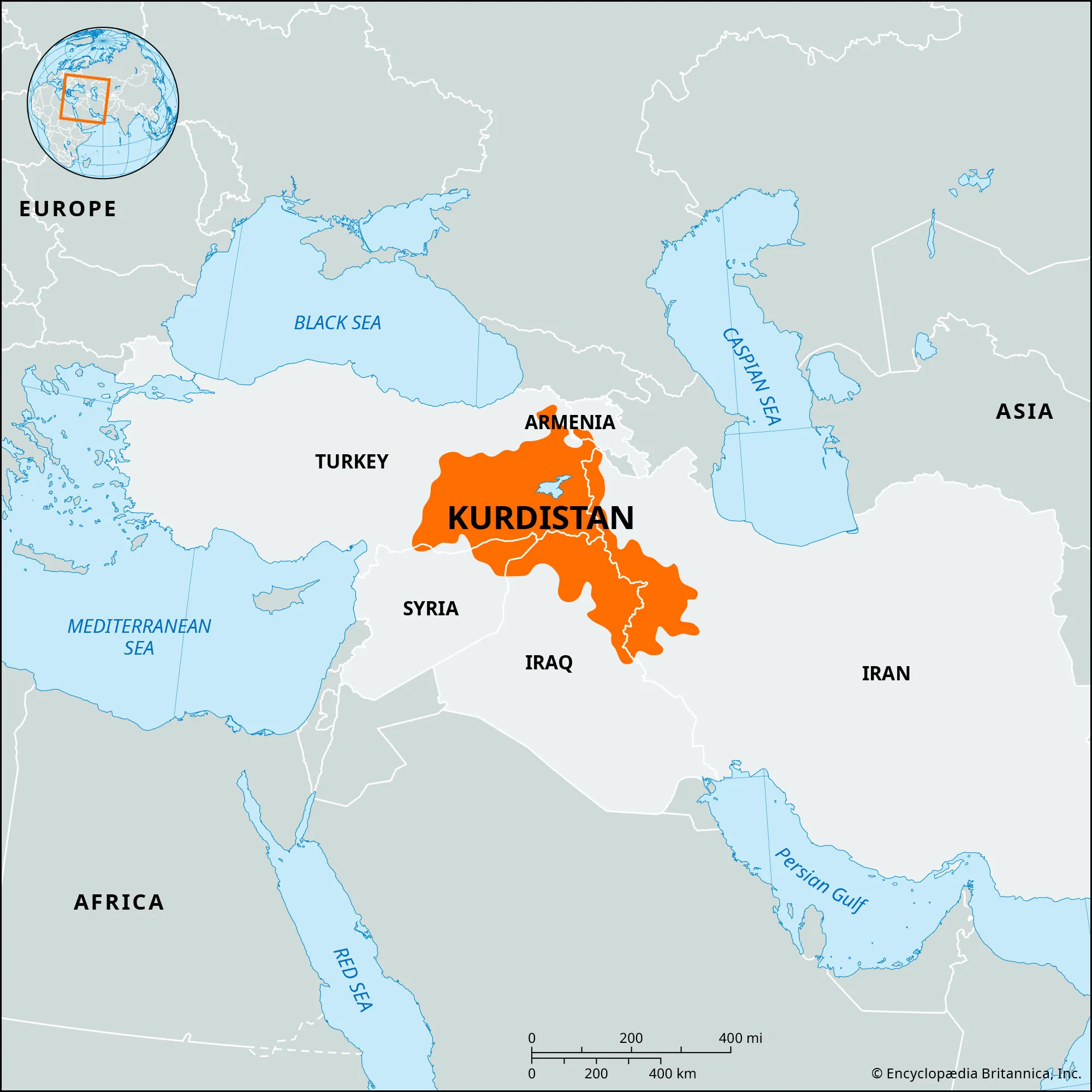
Which five countries does Kurdistan span across?
Kurdistan spans across Turkey, Syria, Iraq, Iran, and Armenia.
What is the "cascade effect" (domino effect) in geopolitics, and how does it apply to Kurdistan?
It is the fear that if one ethnic group successfully breaks away to form an independent state, it will encourage other stateless nations or separatist groups (such as the Catalans or Basques; located in Spain, with smaller parts extending into France) to demand independence too, threatening the territorial integrity of existing states worldwide.
Who are the Catalans, and why do they support the Kurds?
The Catalans are a distinct ethnic and linguistic nation living primarily in Catalonia (north-eastern Spain) who have long campaigned for independence from Madrid (including an independence referendum in 2017 that Spain declared illegal). They support the Kurds out of political solidarity because both are stateless nations whose referendums and cultural/political autonomy have been suppressed by central governments.
What happened to Kurdish plans for a homeland between 1918 and 1923 (Treaty of Sèvres vs. Treaty of Lausanne)?
After the Ottoman Empire collapsed at the end of WWI, the Allied Powers promised the Kurds an independent homeland in the 1920 Treaty of Sèvres.
Turkish nationalists led by Mustafa Kemal Atatürk rejected losing land, fought the Turkish War of Independence, and forced the 1923 Treaty of Lausanne; which created the modern secular Republic of Turkey and erased all plans for an independent Kurdistan.
Ottoman Empire was a state spanning Southeastern Europe, West Asia, and North Africa from around 1299 to 1922, centered in modern-day Turkey

How did Atatürk (1st President of Turkey) and the Turkish state treat Kurds from the 1920s to the 1980s?
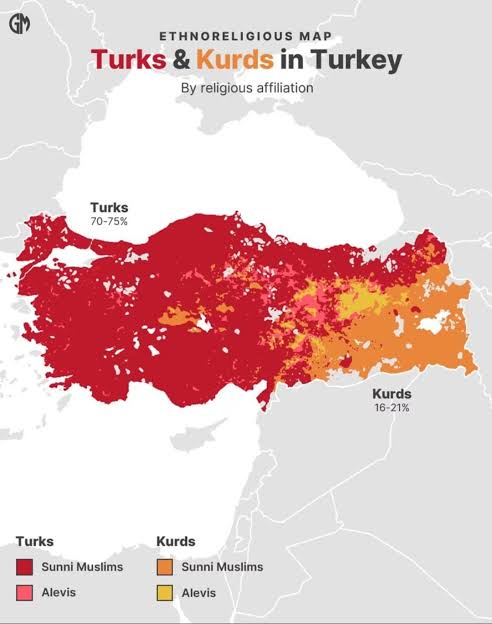
To enforce strict secular national unity, Turkey suppressed Kurdish identity: speaking the Kurdish language was made illegal, Kurdish names/culture were banned, and Kurds were officially labelled "Mountain Turks" to deny their existence as a separate ethnic group.
Who are the PKK, when did they form, and what is their current status?
The PKK (Kurdistan Workers' Party) is a Kurdish militant organization formed in 1978 in response to Turkish oppression. Designated as a terrorist group by Turkey, the US, and the EU, the conflict has killed over 40,000 people. While still active, their goals have largely shifted from full independence to political autonomy and cultural rights (and they have engaged in disarmament/peace processes).
What happened to Iraqi Kurds during the 1980–1988 Iran–Iraq
Because Iraqi Kurds sided with Iran during the war, Iraqi dictator Saddam Hussein launched the Anfal campaign, bombing Kurdish territory and using chemical weapons (most notoriously the 1988 Halabja massacre) against Kurdish civilians. Saddam Hussein was later executed in 2006 for crimes against humanity.

How was Rojava created during the 2011 Syrian Civil War, and how is it governed?
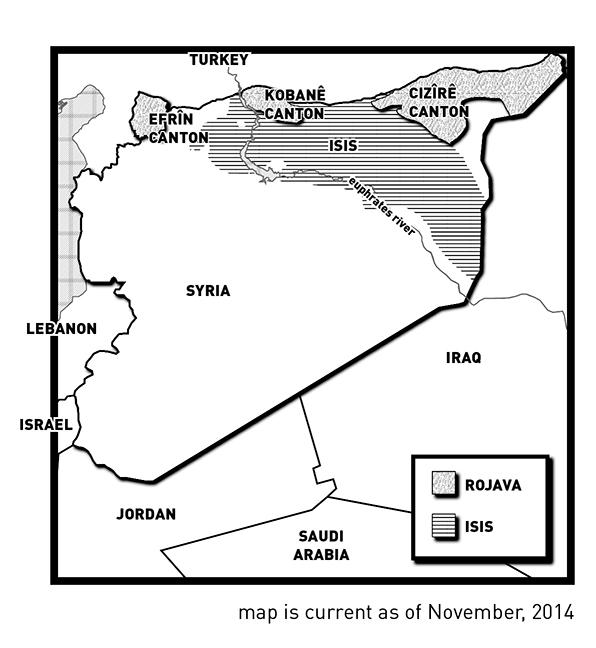
When the 2011 Arab Spring sparked the Syrian Civil War against Bashar al-Assad, Assad pulled troops out of northern Syria to defend central cities. Syrian Kurds established Rojava (Western Kurdistan)—a de facto autonomous region with self-governance, its own administration, its own army (YPG/YPJ), and a progressive constitution emphasizing strict gender equality (including all-female combat units).
The 2011 Arab Spring was a wave of protests across the Middle East where everyday citizens demanded basic freedoms (pro-democracy)—like free elections, free speech, and an end to corruption—from long-ruling dictators.
When Syrians peacefully protested for these rights against their dictator, President Bashar al-Assad, he ordered his own military to shoot and bomb his citizens, which forced protesters to arm themselves and sparked the Syrian Civil War. Because his army was stretched too thin fighting rebels across the country, Assad pulled his troops out of northern Syria to defend central cities, leaving behind an empty power vacuum that allowed local Syrian Kurds to step in, take over abandoned government buildings, and establish their own self-governing region called Rojava.
Would


What is ISIL/ISIS, and what is the difference between the Peshmerga and the YPG/SDF? Also what is the DEM party?
ISIL: Terrorist organization.
Peshmerga are the official military forces of Iraqi Kurdistan Government (the KRG).
Rojava: Just the location of Syrian-Kurds
YPGand SDF(Syrian Democratic Forces) are the armed forces of Syrian Kurds in Rojava.
The DEM Party (Peoples' Equality and Democracy Party) is Turkey's main pro-Kurdish, left-wing political party advocating for Kurdish rights, gender equality, and local self-governance
ALL 3 KURDISH LED!!
Iraqi-Kurdistan Government: (KRG (Kurdistan Regional Government) / Peshmerga): Allies w/ Turkey; trade oil & helps Turkey.
Syrian-Kurdistan Forces: (YPG & SDF): Opposition of Turkey; Turkey views them as an existential terrorist threat.
DEM Party: Turkey’s main pro-Kurdish political party; Near Kurdistan Region.

How did the US and Turkey act toward Syrian Kurds between 2014 and 2019?
2014: To defeat ISIL without deploying massive US ground troops, the US armed and backed the SDF/YPG in Syria (Syrian-Kurds)
2019: Once ISIL was wiped out, US troops withdrew from northern Syria.
Turkey (a key NATO military ally of the US) immediately invaded northern Syria to push Kurdish fighters away from its border, fearing a powerful autonomous Syrian Kurdistan would inspire Turkish Kurds to demand secession.
What caused the 2014–2017 Iraqi Kurdistan oil dispute, and what role did the ICC play?
The KRG (Kurdistan Regional Government) in northern Iraq, centred around Erbil and oil-rich Kirkuk, began piping oil directly to Turkey, bypassing the Iraqi government in Baghdad and making roughly $20 million a day by selling it cheaply.
Iraq sued Turkey at the ICC (International Chamber of Commerce; an international body that resolves cross-border business and trade disputes, and won, legally blocking independent Kurdish oil exports to Turkey.

What happened during and after the September 2017 Iraqi Kurdistan Independence Referendum?
Frustrated after losing oil revenue, the KRG (in Iraq) held an independence referendum where 93% of Iraqi Kurds voted "Yes" to separate from Iraq. Baghdad (Capital of Iraq) declared the vote illegal, used military force to retake oil-rich Kirkuk, imposed internal sanctions (blocking international flights and cutting budget/healthcare/food support transfers), severely weakening the KRG's position.
What is the DEM Party in Turkey, what does it stand for, and why is it a "kingmaker"?
The DEM Party (Peoples' Equality and Democracy Party) is Turkey's main pro-Kurdish, left-wing political party advocating for Kurdish equal rights and local self-rule inside Turkey (autonomy).
Because roughly 20 million Kurds (about ¼ of Turkey's population) live in Turkey, DEM holds enough parliamentary seats to act as a "kingmaker"
This means neither President of Turkeys (Erdoğan's) ruling party nor the opposition can easily win a parliamentary majority without their support. Erdoğan has frequently jailed DEM/HDP politicians on terrorism-linked charges (of ties to PKK; Iraq); therefore less votes places by Kurds which would have gone against President of Turkeys preferences.
What is NATO, and why does Turkey's membership hurt the Kurds?
NATO (North Atlantic Treaty Organization) is a powerful Western military alliance (including the US and UK) where an attack on one member is treated as an attack on all. Because Turkey is a strategically vital NATO member (controlling access to the Black Sea and bordering the Middle East), the US and Europe prioritize keeping Turkey as an ally over supporting Kurdish independence.

How does water act as an environmental/physical challenge to sovereignty in Kurdistan?
Turkey controls the headwaters of the Tigris and Euphrates rivers, which originate in Kurdish-majority south-eastern Turkey and flow into Syria and Iraq. Through massive dam projects (the GAP project), Turkey controls water supply downstream, creating severe geopolitical conflict over water resources.

Summarize the 4 factors (Social, Political, Economic, Environmental) explaining why Kurdistan challenges state sovereignty.
Social: Strong Kurdish cultural/linguistic identity clashes with state-enforced nationalism (e.g., Turkey banning the Kurdish language).
Political: Rise of pro-Kurdish parties (DEM), autonomous self-rule in Rojava, the 2017 Iraqi referendum, and armed groups (PKK).
Economic: Kurdish regions hold massive oil wealth (Kirkuk/Erbil in Iraq), which central governments refuse to lose; meanwhile, being landlocked limits Kurdistan's ability to sustain capital independently.
Environmental: Control over vital water resources (Tigris and Euphrates rivers) in Turkey.
Give two geopolitical issues that would arise if Kurdistan became an independent state.
Regional War / Domino Effect: Independence in Iraq or Syria would spark armed uprisings among Kurds in Turkey and Iran, destabilizing the entire Middle East.
Economic & Alliance Collapse: Iraq would lose critical oil revenue from Kirkuk, while Western powers (NATO) would face a diplomatic crisis between supporting a new Kurdish state and keeping Turkey as an ally.
What is the most realistic future outcome and resolution for the Kurdish question?
Full sovereign independence is unlikely due to fierce opposition from all five host states. The most realistic resolution is decentralized regional autonomy within existing borders (similar to the KRG in Iraq), backed by legal protection for the Kurdish language/culture and internationally mediated agreements for fair oil and water revenue sharing.
Decentralized regional autonomy is a governance model where central governments transfer decision-making authority, policy control, and financial or administrative responsibilities to subnational or regional bodies