Muscles Quiz Material - neck
 Call Kai
 Learn
 Practice Test
 Spaced Repetition
 Match
 Flashcards
 Knowt Play
1/34

Earn XP
Description and Tags
Muscles of Neck, lateral and posterior
35 Terms
INSERTION
the insertion of a muscle is its attachment site on the bone that actually moves. It is the the movable worker point. It is usually located FURTHER DOWN the limb (DISTAL) and gets pulled toward the origin when the muscle shortens.
ORIGIN
The origin of a muscle is its attachment site on the bone that stays fixed and does not move during contraction
The stationary anchor point. It is usually located CLOSER TO THE CENTER of the body (PROXIMAL) and has more stability and mass.
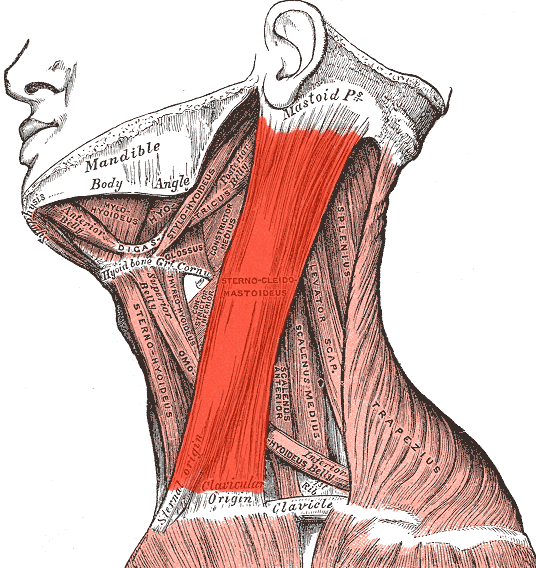
broad superficial muscle running upward each side of neck
Sternocleidomastoid
Origin of sternocleidomastoid
sternum & clavicle

Insertion of sternocleidomastoid
mastoid process

function of sternocleidomastoid
flexes head side to side, and for rotation of head

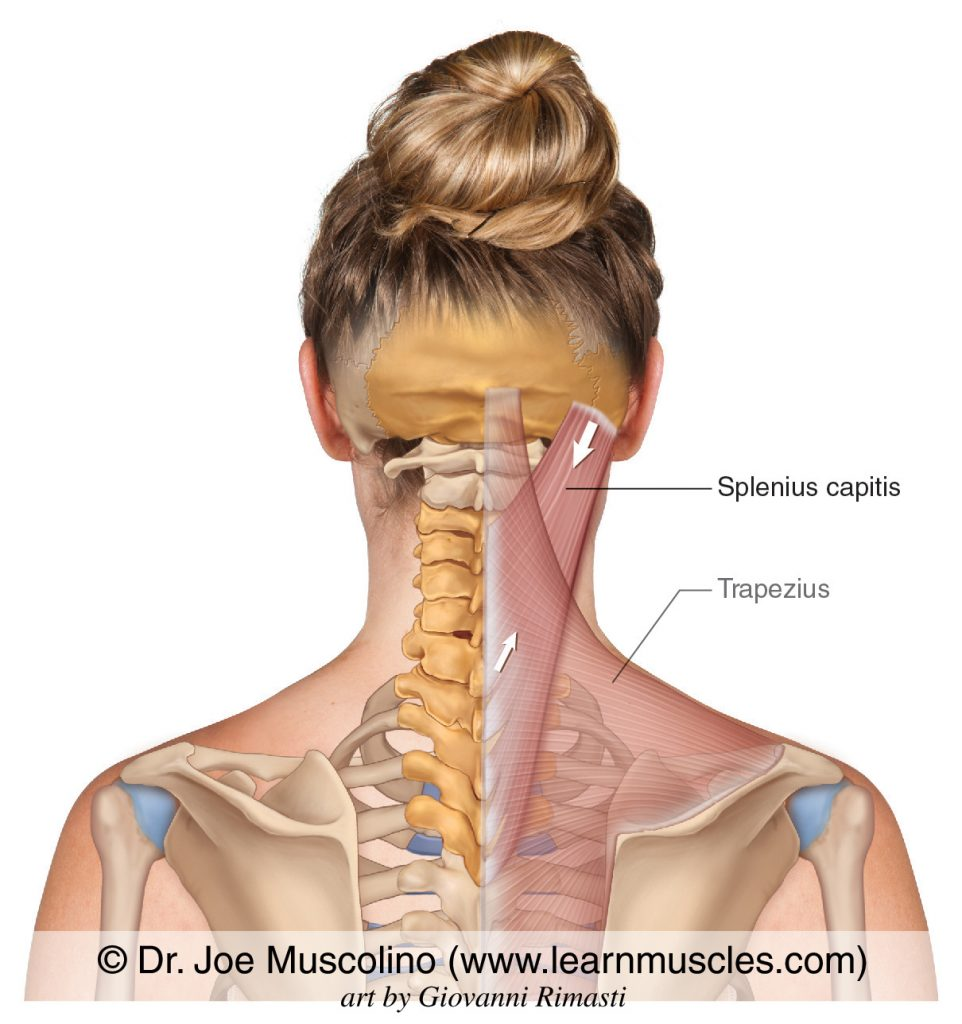
along posterior side of neck and joins the skull with spine
splenius
splenius origin
last 4 cervical vertebrae and upper thoracic vertebrae

splenius insertion
temporal and occipital bone and upper cervical vertebrae

splenius function
rotates head and neck

a deep muscle on the side of the neck that helps you breathe and move your head
scalenus anterior
scalenus anterior origin
3rd to 6th cervical vertebrae (C3 - C6)

scalenus anterior insertion
surface of first rib
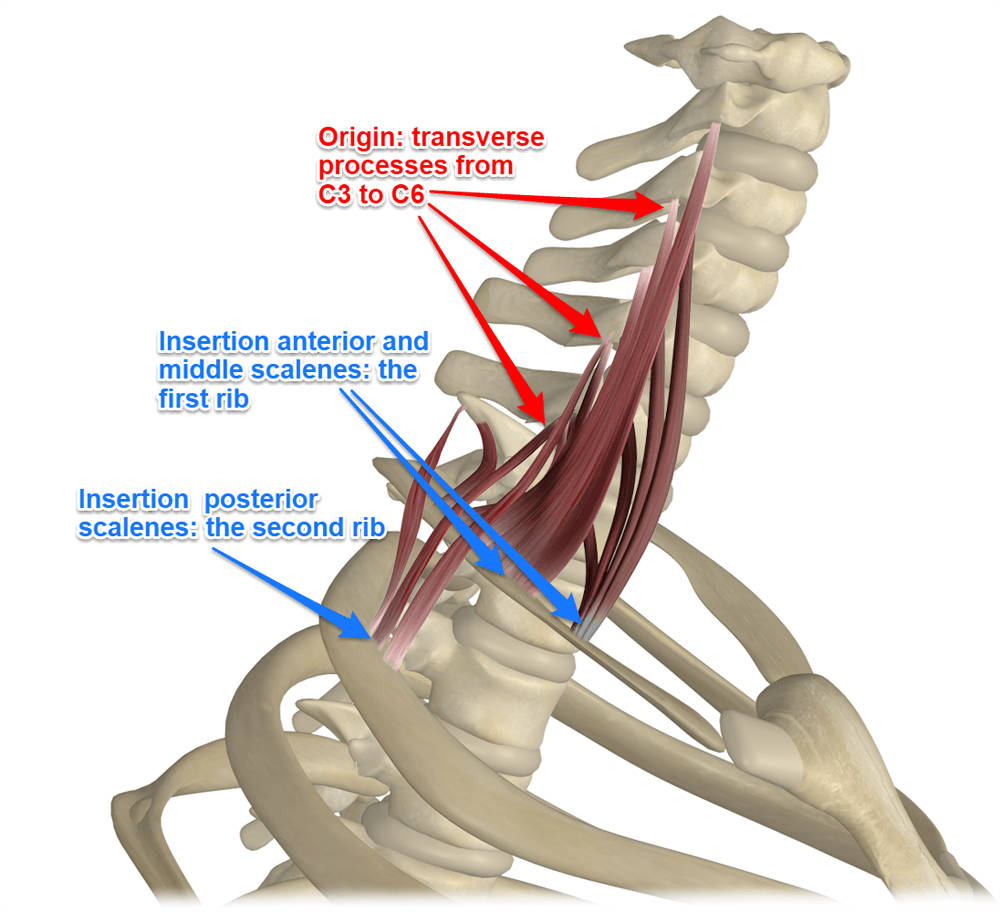
scalenus anterior function
elevate first rib and rotate neck

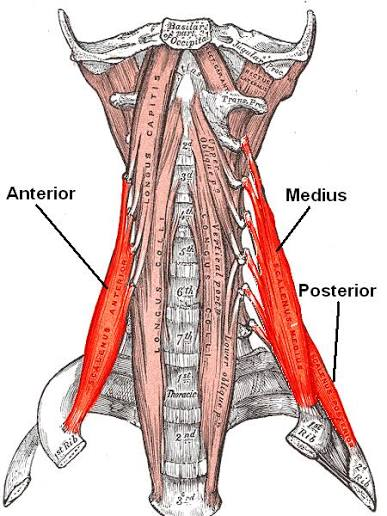
is the largest and longest muscle in the lateral neck group that laterally flexes the neck, elevates the first rib during breathing, and stabilizes the cervical spine
scalenus medius
scalenus medius origin
2nd to 7th cervical vertebrae (C2 - C7)

scalenus medius insertion
surface of first rib

scalenus medius function
elevate first rib and rotate neck


a large, thick, paired muscle in the deep layer of the back and upper neck that helps extend, rotate, and stabilize the head
semispinalis capitis
semispinalis capitis origin
T1 - T6 (first 6 thoracic vertebrae)
(C4 & C7) 4th and 7th cervical vertebrae
semispinalis capitis insertion
occipital bone (nuchal line)

semispinalis capitis function
extends the neck


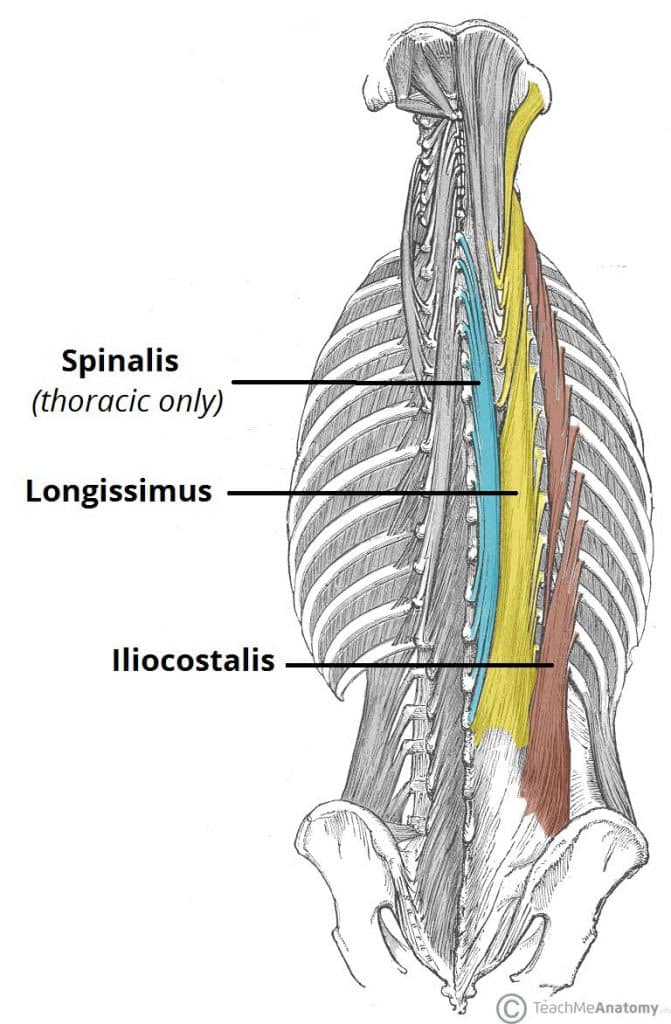
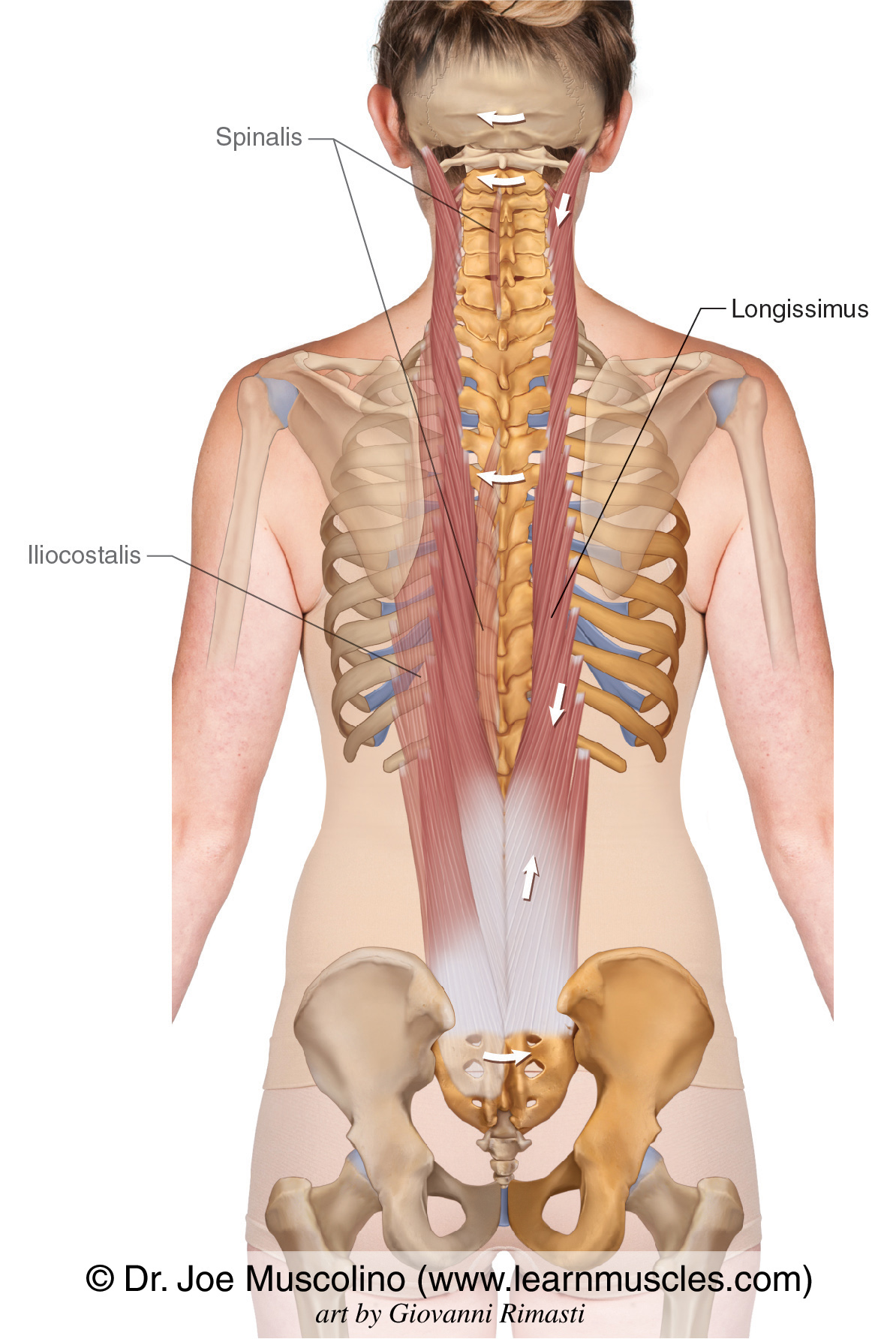
most medial of erector spinae
spinalis
spinalis origin
cervical and thoracic vertebrae

spinalis insertion
cervical and thoracic vertebrae above
spinalis function
extend and laterally flex the spine
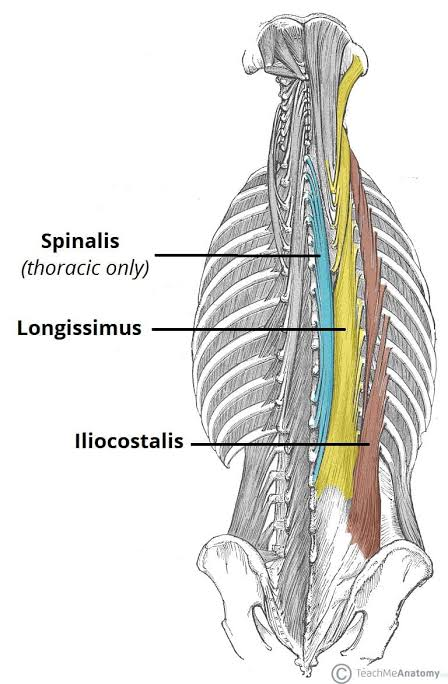
lateral to spinalis
longissimus
longissimus origin
cervical, thoracic, and lumbar vertebrae

longissimus insertion
mastoid process and cervical and thoracic vertebrae
longissimus function
extend and laterally flex the spine and head

most lateral of erector spinae group
Iliocostalis
iliocostalis origin
sacrum, lumbar vertebrae and ribs
iliocostalis insertion
on ribs and cervical vertebrae

iliocostalis function
extends and laterally flex the spine
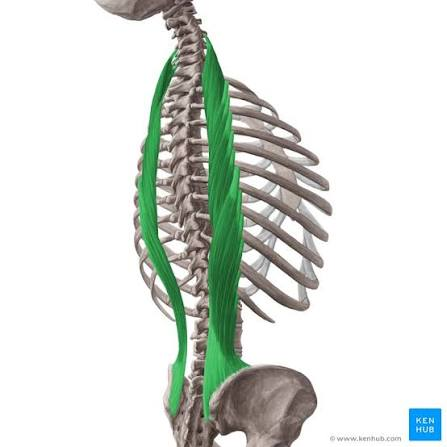
erector spinae group
spinalis, longissimus, and iliocostalis
