muscular system
 Call Kai
 Learn
 Practice Test
 Spaced Repetition
 Match
 Flashcards
 Knowt Play
1/100

There's no tags or description
Looks like no tags are added yet.
101 Terms
a/an-
without
dys-
bad, ill
endo-
within
epi-
above, upon
glycol-
sugar
-lysis
splitting apart
my-/myos-
muscle
peri-
surrounding
sarco-
flesh
-troph/-trophy
growth

1
muscle

2
epimysium

3
fascicle
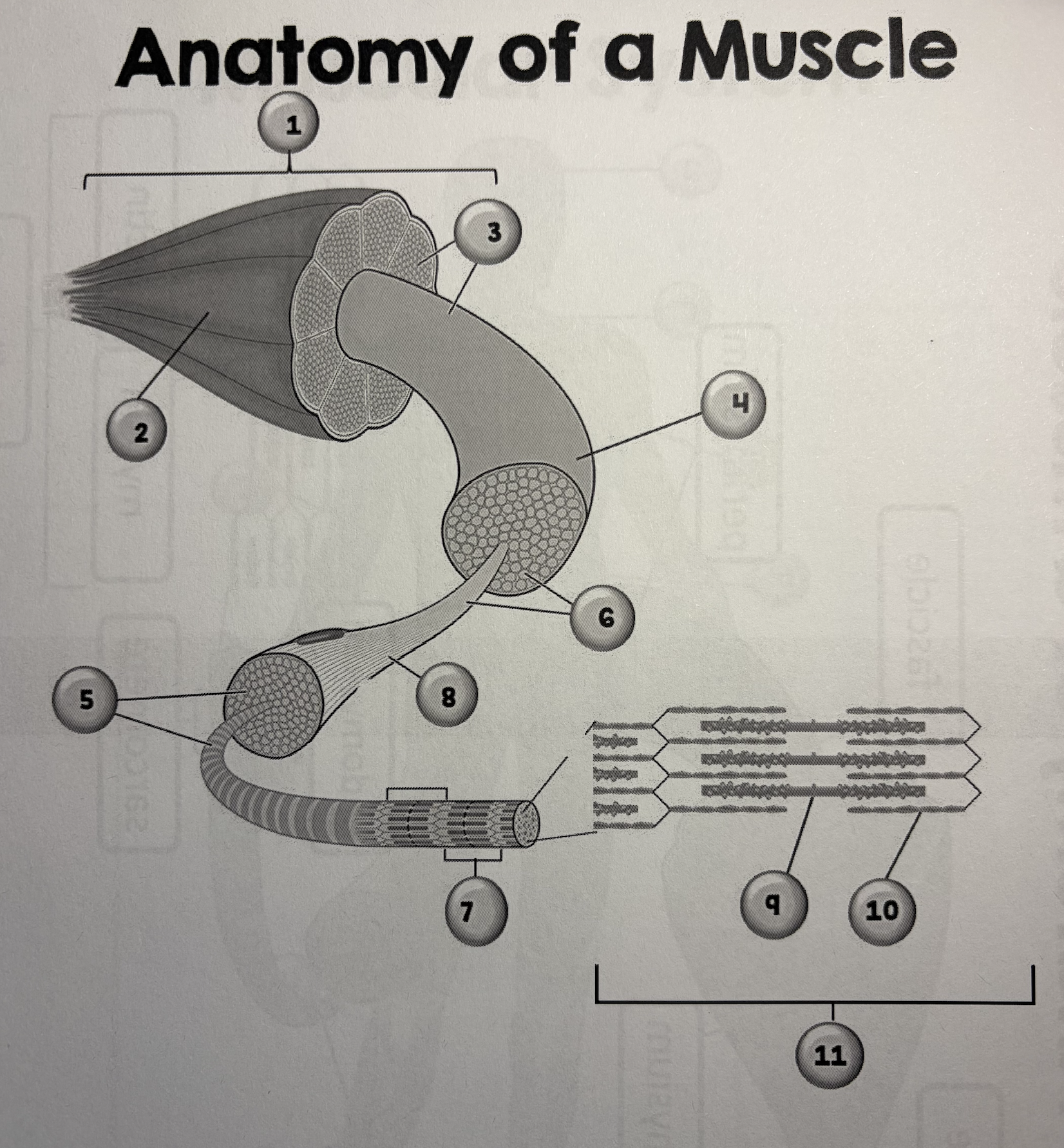
4
perimysium
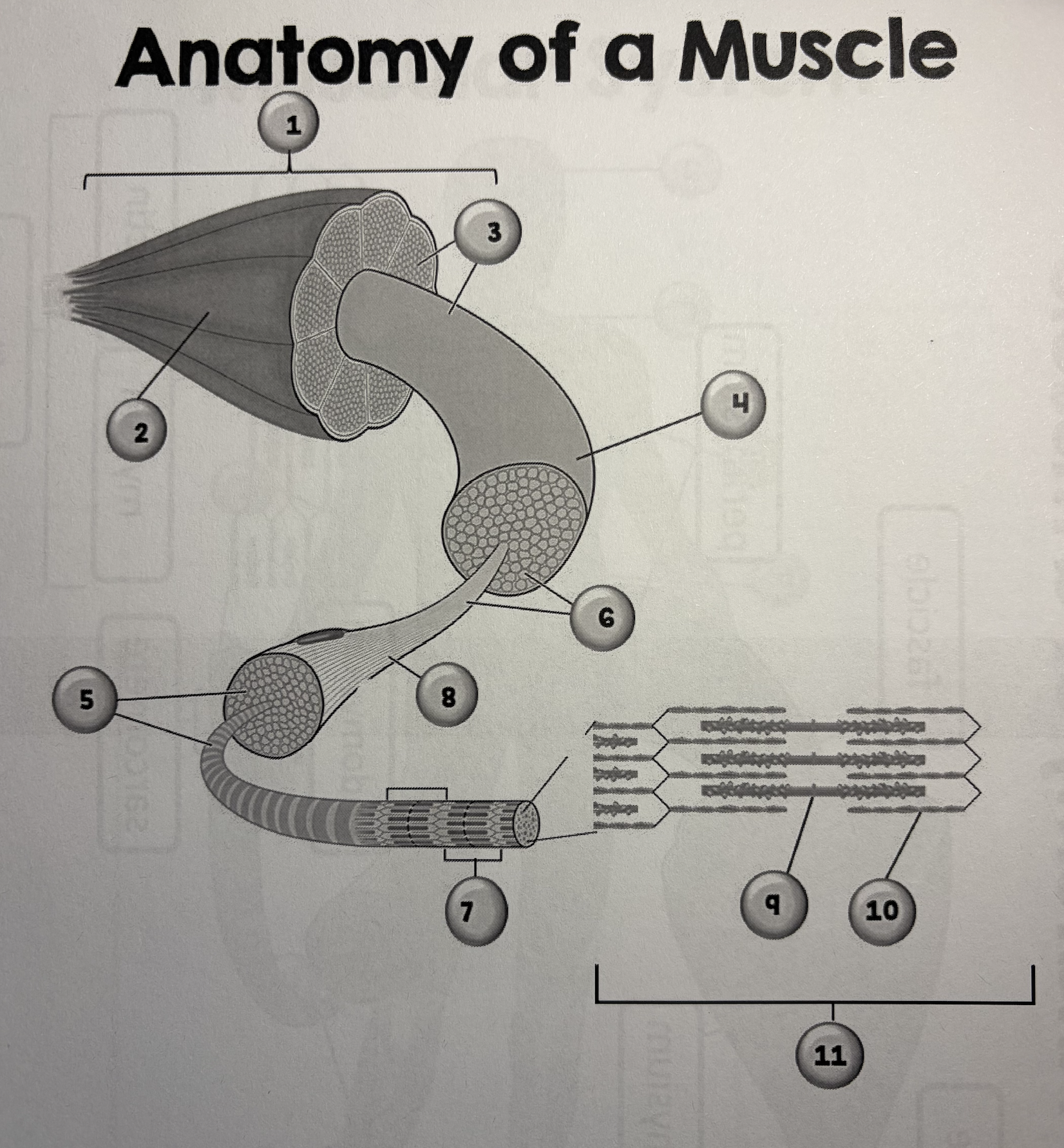
5
myofibril
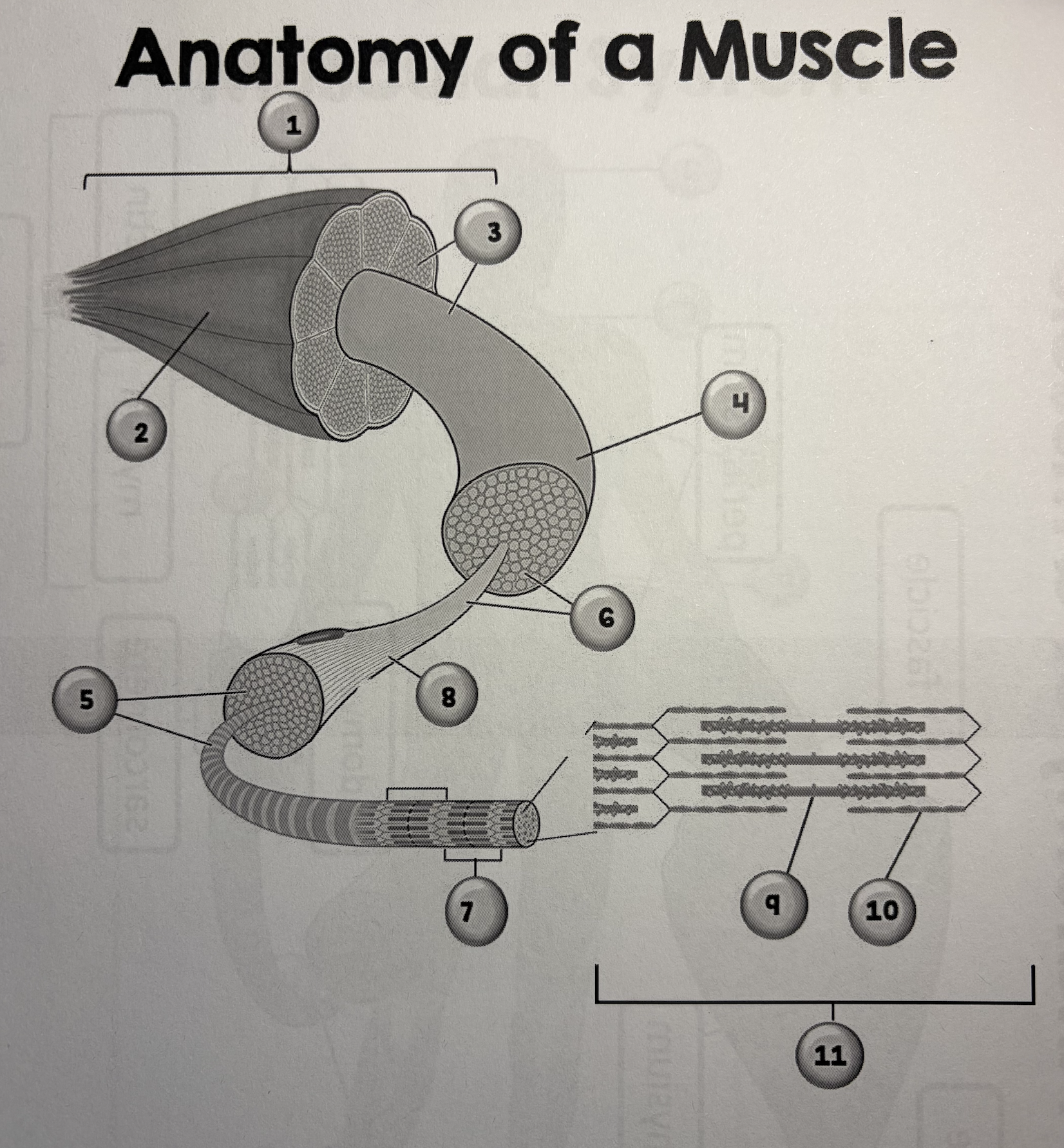
6
muscle fibers

7
sarcomere

8
endomysium

9
myosin
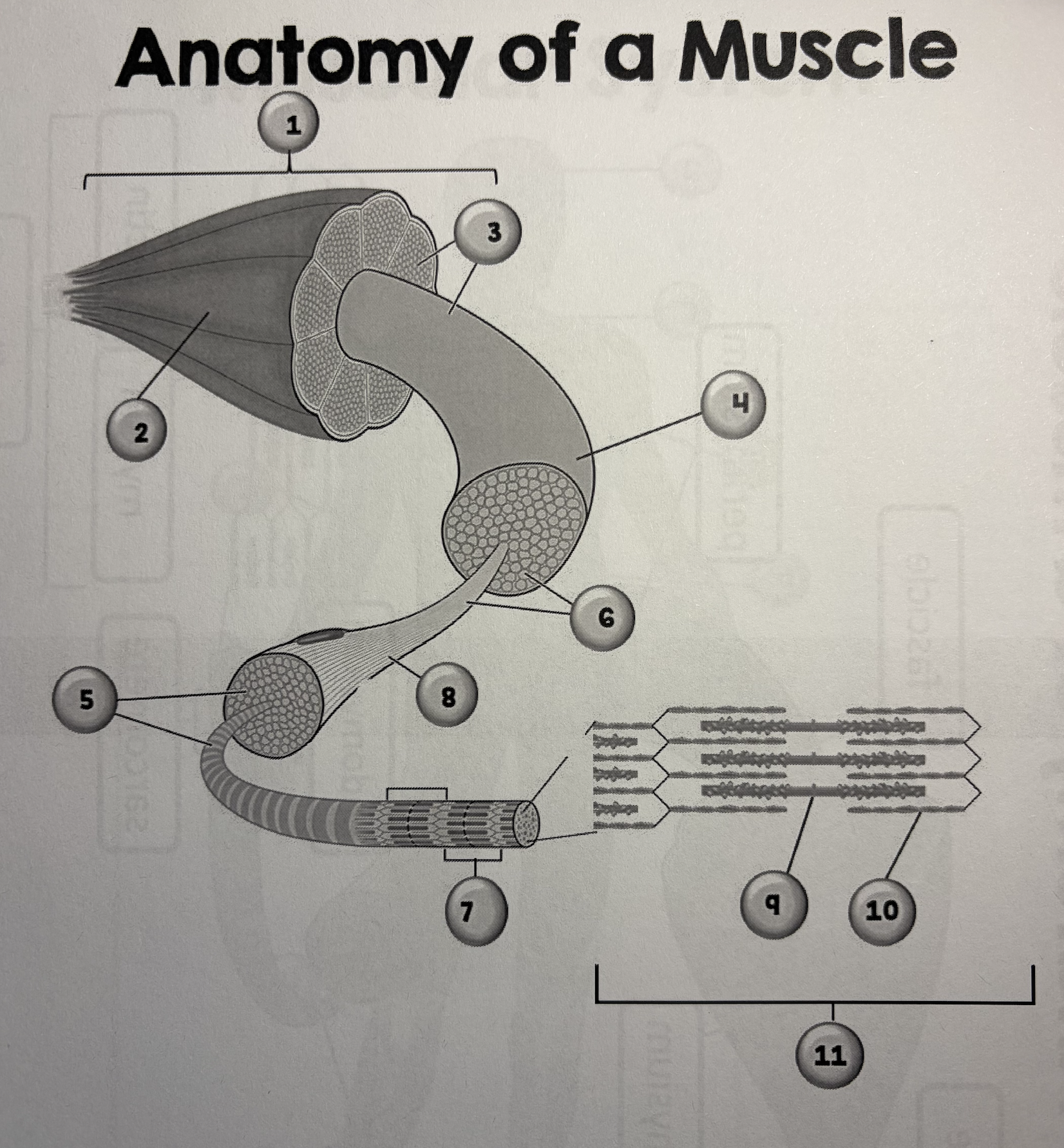
10
actin

11
myofilaments

1
frontalis

2
trapezius
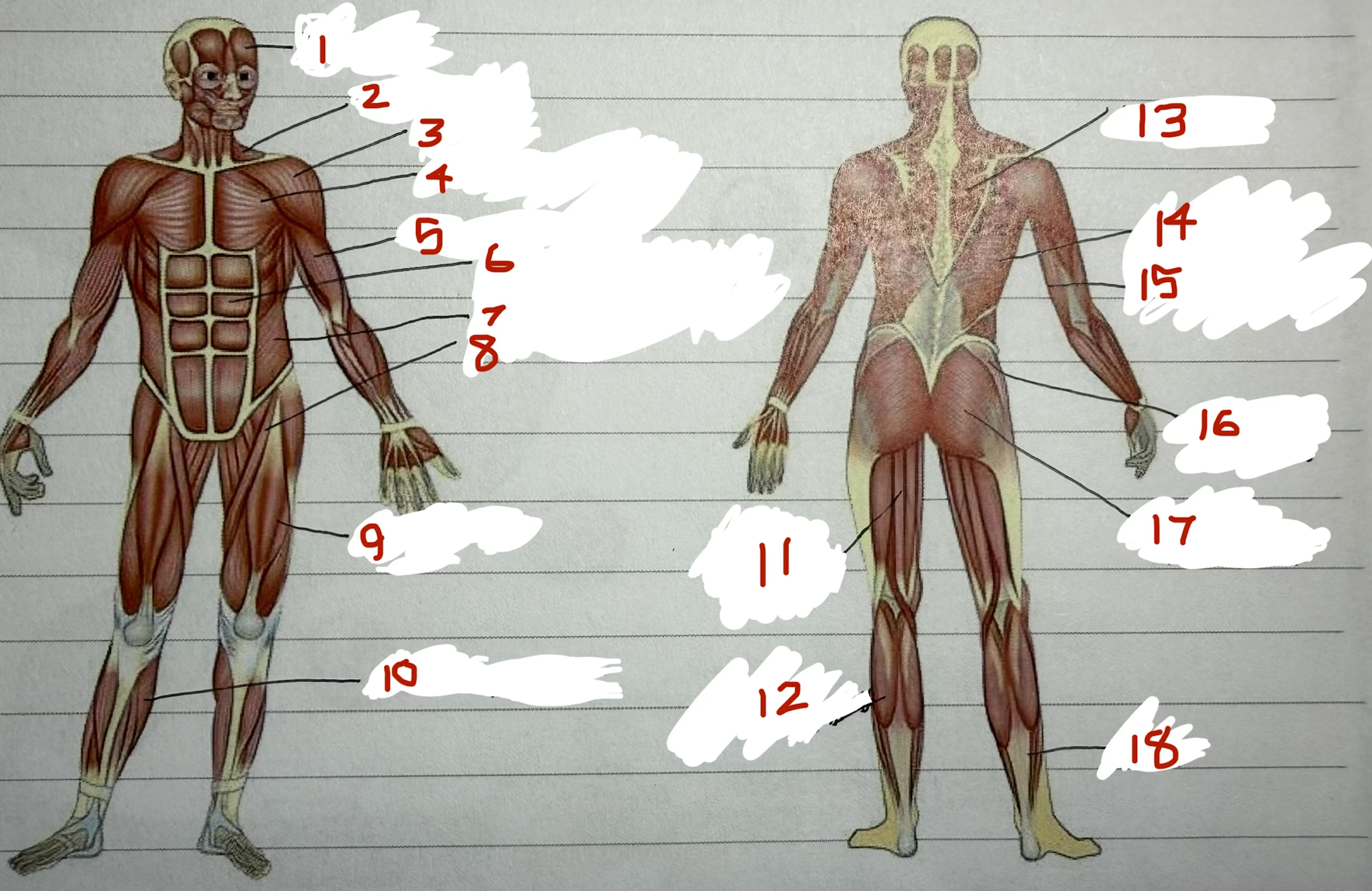
3
deltoid

4
pectoralis major
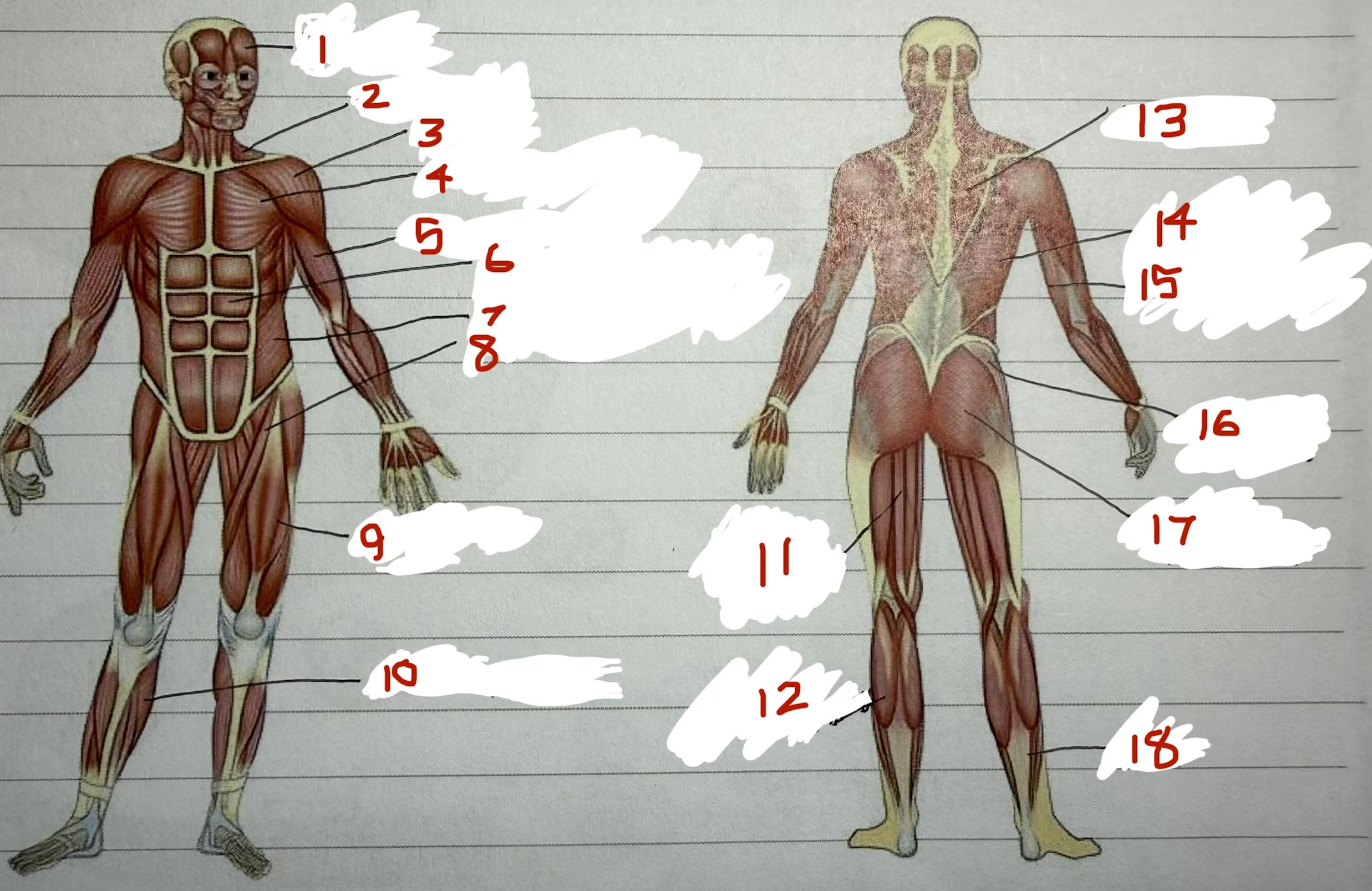
5
biceps brachii

6
rectus abdominis

7
external obliques

8
adductor

9
quadriceps

10
gastrocnemius

11
hamstring group

12
gastrocnemius

13
trapezius (posterior view)

14
latissimus dorsi

15
triceps brachii
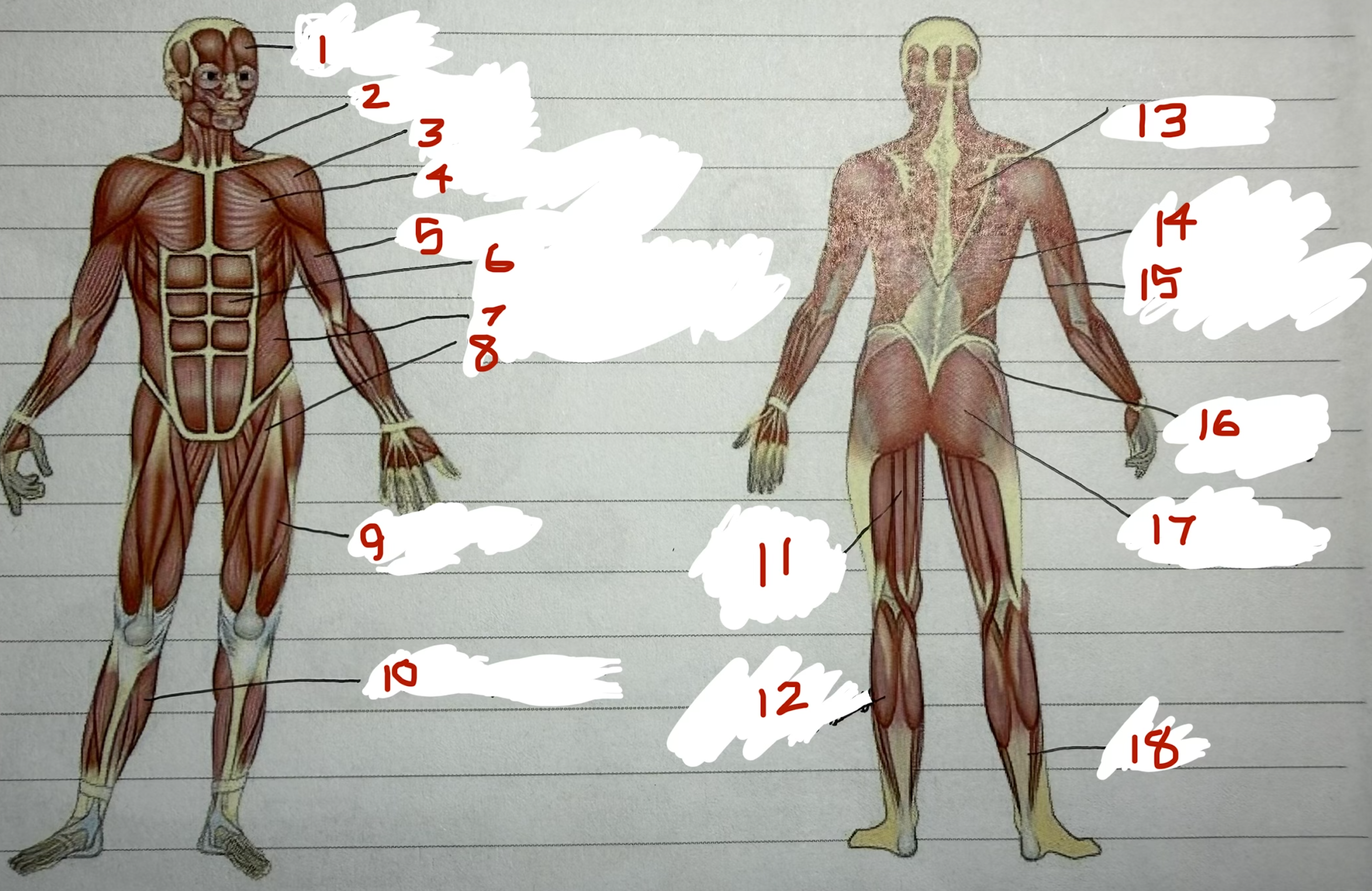
16
gluteus medius

17
gluteus maximus

18
soleus
4 characteristics of muscle tissue
elasticity, extensibility, excitability, contractibility
contractibility
muscle characteristic enabling them to shorten
extensibility
muscle characteristic enabling them to relax/extend
excitability
muscle characteristic enabling them to respond to stimuli
elasticity
muscle characteristic enabling muscles to return to initial state after contraction/hyperextension
3 types of muscle
smooth, cardiac, skeletal
smooth muscle
found in organs, most common location is the stomach, unstriated, uninucleated
cardiac muscle
found in heart, rigid and structured for easy contractions, mostly uninucleated, striated
skeletal muscle
striated, found in skeletal muscles all over body, voluntary, multinucleated
microscopic muscle structure (superficial to deep)
muscle → fascicle→ muscle fibers→ myofibril→ myofilaments
muscle
skeletal muscle attached to bone by tendons; many bundles of fibers
fascicle
bundles of fibers within muscles
muscle fiber
long, thin muscle cells; each covered by sarcoplasmic reticulum which transmit an impulse to muscle
myofibril
thread-like organelles of the muscle fibers structured in long, striated units called sarcomeres
myofilaments
2 types: actin (thin) myosin (thick), make up sliding filament model, responsible for contracting activity of muscle fibers
what protects muscle fibers
membranes (epimysium, perimysium, endomysium)
epimysium
covers whole muscle
perimysium
covers a fascicle
endomysium
covers a muscle fiber
how is ATP formed
glycolysis (krebs cycle → 34 atp, fermentation → 2 atp)
what uses 1 atp
1 actin and myosin engagement
muscles become ______________ when they dont get enough atp
fatigued (because of the lack of energy)
4 ways muscles become fatigued
intense exercise, muscle fatigue, anaerobic respiration, oxygen debt
intense exercise
muscles are worked strenuously and glucose supply exhausted
muscle fatigue
atp no longer efficiently being used for cross-bridges
anaerobic respiration
muscles burn causing you to stop exercising before cells injured (anaerobic = absence of oxygen)
oxygen debt
difference occurs between amount of O2 available and amount required to breathe (better physical health → more efficient at transferring O2 to muscle fibers → less shortness of breath)
how are muscles named
size, shape, location, orientation, origin/insertion, number of origins, function
know movement performed by each muscle (kinda intuitive, flexion, extension, etc.)
know movement performed by each muscle (kinda intuitive, flexion, extension, etc.)
how are muscles attached to skeleton
tendons
origin
attachment to more stationary bone (ex. tendon connecting bicep to shoulder)
insertion
attachment to more movable bone (ex. tendon connecting bicep to forearm)
belly
middle of muscle
muscles work in ____________
pairs
prime mover
muscle doing the action (contracting)
antagonist
opposing muscle relaxing during motion
synergist
muscle that helps another in the same direction (ex. soleus to gastrocnemius)
abduction
moving away from midline
adduction
moving towards midline
flexion
bending a body part
extension
straightening a body part
hyperextension
excessive straightening of a body part
rotation
moving a body part around its own axis (ex. turning head side to side)
circumduction
moving in a circle at a joint or moving one end of a body part in a circle while other end remains stationary (swinging arm in circle)
pronation
turning body part downward
supination
turning a body part upward
opposition
touching each of the fingers with the tip of the thumb
inversion
turning a body part inward
eversion
turning a body part outward
dorsiflexion
bending backward (bending foot toward knee)
plantar flexion
bending forward (straightening foot away from knee)
radial deviation
moving toward the thumb side of the hand
ulnar deviation
moving toward the little finger side of the hand
supine position
lay on back
prone (pronation) position
lay on stomach
fowler’s position
head elevated 45-60 degrees
semi-fowler’s position
head elevated 30-40 degrees
gait aides
wheelchair, cane, crutches, gait belt
wheelchair
make sure brakes locked in place, move foot plates aside so patient can sit down comfortably, assist as needed, clear loose objects, unlock brakes to move once properly situated; used for patients with severely restricted lower body mobility that affects both legs
cane
place cane on opposite side of injured leg, make sure handle situated at crease of wrist, make sure elbow angled at 30 degrees for comfortable positioning, walk with cane 4-6 in away from foot and make motion of cane in sync with injured foot (stairs: down→ bad foot first, up→ good foot first) used for patients with moderately restricted lower body mobility affecting only one leg
crutches
position where underarm cushion is 2 finger widths from underarm, elbow makes 20 degree angle when walking, handlebar is at the hip, place crutches 1 ft in front and then hop into place (stairs: down→ bad first, up→ good first) used for patients with restricted lower body mobility affecting only one leg