prokaryotes
 Call Kai
 Learn
Learn Practice Test
 Spaced Repetition
 Match
Match Flashcards
 Knowt Play
1/6

Earn XP
Name | Mastery | Learn | Test | Matching | Spaced | Call with Kai | Chat |
|---|
No analytics yet
Send a link to your students to track their progress
7 Terms
what are prokaryotes
Prokaryotes are single-celled organisms that lack a membrane-bound nucleus and other organelles. They include bacteria and archaea, characterized by their simple cell structure. Prokaryotes are single-celled organisms that have a simple cell structure without compartmentalisation (they do not possess any membrane-bound organelles) and are typically smaller than eukaryotic cells.

what is the cell structure of a prokaryotic cell
The cell structure of a prokaryotic cell is simple and consists of a plasma membrane, cytoplasm, and genetic material that is not enclosed in a nucleus. Prokaryotic cells also have ribosomes for protein synthesis and may possess a cell wall for protection.
genetic material in prokaryotic cells
It consists of a single circular DNA molecule, located in the nucleoid region, as well as plasmids which may carry additional genes that can be exchanged via bacterial conjugation (horizontal gene transfer)
The genetic material is found within a region of the cytosol called the nucleoid (the single DNA strand is called the genophore) and is not surrounded by a membrane.


ribosomes and cell walls
are essential structures found in prokaryotic cells, with ribosomes involved in protein synthesis and cell walls providing structural support and protection. The ribosomes within the cell that are responsible for protein synthesis are characteristically small in size (70S) Prokaryotic cells all possess a cell wall and may possess an additional outer covering (a slime capsule called a glycocalyx)

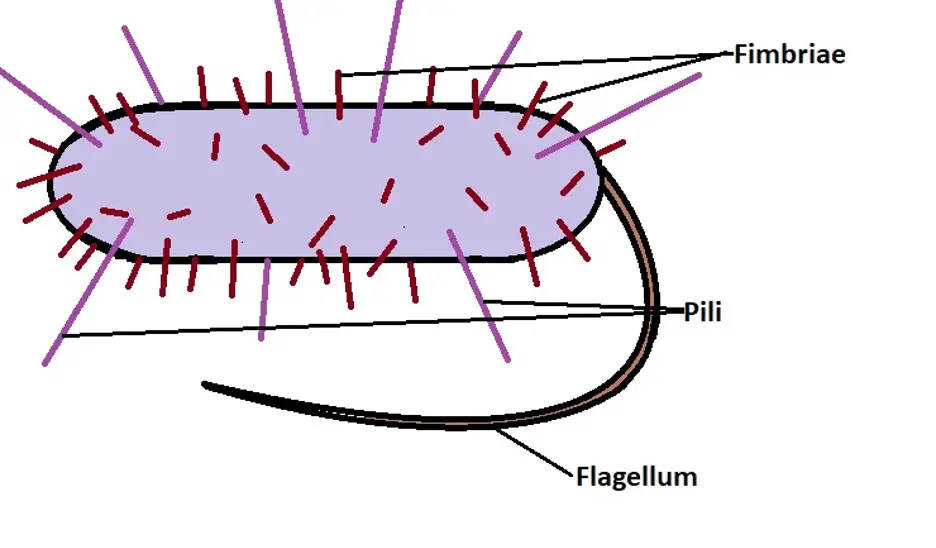
pili and flagella in prokaryotes
Prokaryotic cells all possess a cell wall and may possess an additional outer covering (a slime capsule called a glycocalyx)
Additionally, many prokaryotes may possess several whip-like projections called flagella, which facilitate movement

aechae and bacteria
Bacteria: A large and diverse range of organisms including many pathogenic (disease-causing) forms
Archaea: Include a variety of extremophiles (organisms living in extreme environments), but also exist in normal habitats

examples of prokaryotic cells
Cyanobacteria (Blue-Green Algae)
Streptococcus pneumoniae: A bacterium that can cause pneumonia and other infections.
