05 Role of Action & Action Theory Process Model
 Call Kai
 Learn
 Practice Test
 Spaced Repetition
 Match
 Flashcards
 Knowt Play
1/14

There's no tags or description
Looks like no tags are added yet.
15 Terms
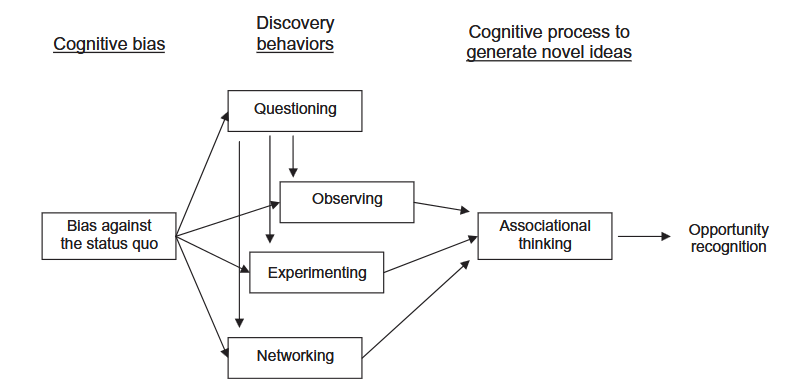
behavioral patterns of innovative entrepreneurs
Questioning frequently, challenging the status quo
Observing the world around, everyday experiences to find new ideas
Experimenting with hypothesis-testing and an open mindset
Idea Networking, testing ideas with a network of individuals, diverse in background and perspective
role of action in entrepreneurship
catalyst for associational thinking
change the status quo
less susceptible to status quo bias
innovative breakthroughs often happen at the intersection of disciplines and fields
model of entrepreneurial opportunity recognition
characteristics personal initiative (PI)
self-starting (starting from scratch)
proactive (future-oriented)
overcoming barriers (persistent)
firm performance is dependent on…
pre- and post-entry learning
action theory process model antecedents
antecedents and outcomes of actions:
cognition (e.g., human capital, knowledge, cognitive biases)
motivation (e.g., self-efficiany, passion)
emotion (e.g., positive/negative affect, fear of failure)
action theory process model action sequence/mediators
goal setting → information seeking → action planning → execution/monitoring/feedback → goal setting
function as mediators, as they transmit the antecedents
action theory process model performance outcomes in the prelaunch phase
business ideas
business opportunity identification
innovations
action theory process model performance outcomes in the launch phase
business oppportunity development
innovation
resources
organization structure
action theory process model performance outcomes in the postlaunch phase
business opportunity development
innovations
growth
sales
survival
action theory process model (overall)

personal initiative throughout the action theory process model: goal setting
self-starting: active, self-set goal which implies an innovative approach, introduce something new
proactive: anticipate future opportunities/problems, convert to a goal, set long-term goals
overcoming barriers: protect goals, continue wokring on goals when frustrated or taxed
personal initiative throughout the action theory process model: information seeking
self-starting: active search e.g., exploration, active scanning of environment, look actively fo information use creativity techniques, exercise “core techniques” to create/identify opportunities
pro-active: consider potential future problems before they occur, develop knowledge on alternative routes of action
overcoming barriers: maintain search in spite of complexity and negative emotions, look for information difficult to obtain
personal initiative throughout the action theory process model: planning
self-starting: avtive plan, execute the plan immediately yourself without having to wait for anything
proactive: back-up plans, have action plans for opportunities/problems, long-range plans
overcoming barriers: return to plan quickly when disturbed or distracted, avoid distraction
personal initiative throughout the action theory process model: monitoring/feedback
self-starting: self-developed feedback, active search for feedback
proactive: develop presignals for potential problems/opportunities, actively gather (negative) feedback
overcoming barriers: protect feedback search, do products meet future needs?