L109: management of pruritic disease pt. 1
 Call Kai
 Learn
 Practice Test
 Spaced Repetition
 Match
 Flashcards
 Knowt Play
1/116

There's no tags or description
Looks like no tags are added yet.
117 Terms
what is malassezia dermatitis almost always secondary to?
allergic dermatoses
cornification disorders
endocrinopathies
seborrheic dermatoses
what can overgrowth of malassezia pachydermatisis lead to?
pruritis
which animals naturally carry large numbers of Malassezia organisms and where?
some hounds and hairless cats inside their ear canals and around claw folds
what are clinical signs of Malassezia dermatitis in dogs?
pruritis
greasy material
claw fold swelling with waxy or crusty brown exudate
concurrent otitis externa
hyperpigmentation and lichenification
malodor skin and ears
what are you thinking if you see a skin condition with hyperpigmentation and lichenfication?
chronic infection
what are common underlying causes for Malassezia dermatitis in dogs?
allergic skin disease
cornification disorders
what is the favored intertriginous zones for distribution of Malassezia dermatitis in dogs?
skin folds
axilla
inguinal region
where is the distribution for Malassezia dermatitis in dogs?
muzzle
lips
neck
ventral abdomen
medial hindlimbs
pinnae
perineum
claw folds
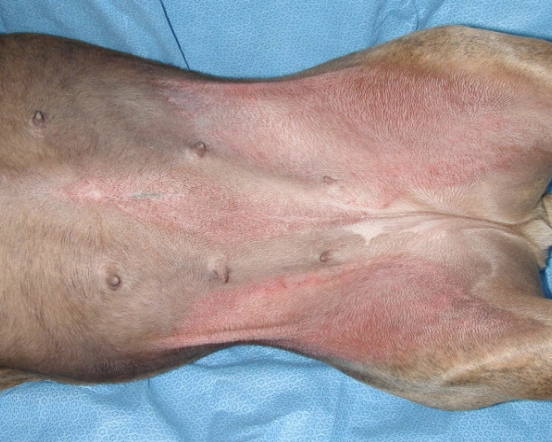
A dog comes into the clinic for a Malassezia dermatitis infection. Based on the image would you classify this as a chronic or acute condition and why?
acute due to slight erythema
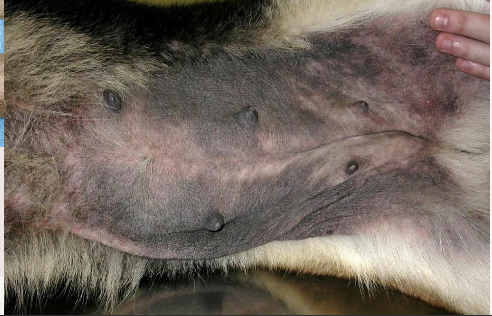
A dog comes into the clinic for a Malassezia dermatitis infection. Based on the image would you classify this as a chronic or acute condition and why?
chronic due to marked pigmentation and lichenfication
what are clinical signs of Malassexia dermatitis in cats?
pruritis
erythema and greasy scales
red-brown claw staining
concurrent otitis externa → devon rex and sphynx cats
what is the distribution for Malassezia dermatitis in cats?
claws and claw folds
chin
neck
ventral abdomen
what are the common underlying diseases that lead to Malassezia dermatitis in cats?
allergic skin disease
idiopathic facial dermatitis (persian and himalayan)
feline acne
paraneoplastic alopecia
what diagnostic tool is most commonly used to diagnose Malassezia overgrowth?
tape cytology
how can we sample the affected area for Malassezia dermatitis?
tape
toothpick
swab
impression smear

what is shown on cytology?
Malassezia and epithelial cells

what is shown on cytology?
Malassezia and cocci bacteria
what is the topical therapy for Malassezia dermatitis?
chlorhexidine 3-4%
how often do you have to apply topical therapy for Malssezia dermatitis if you are using topical as the sole therapy?
every day
how often do you have to apply topical therapy for Malssezia dermatitis if you are using topical as an adjunct therapy?
several times weekly
how often do you have to apply topical therapy for Malssezia dermatitis if you are using topical as maintenance therapy?
every 1-2 weeks
what is a topical therapy for the treatment of Malassezia dermatitis that can only be used in dogs?
selenium sulfide 1% shampoo
what are the systemic therapy options for Malassezia dermatitis?
fluconazole
itraconazole
terbinafine
how long do you prescribe systemic therapy against Malassezia dermatitis?
3-4 weeks
what systemic therapy against Malassezia dermatitis can only be prescribed in dogs?
ketoconazole (toxic in cats)
what are non-commensal mites that can be present in dogs?
sarcoptes
cheyletiella
what are non-commensal mites that can be present in cats?
notoedres
demodex gatoi
cheyletiella
where do female sarcoptic mites burrow in dogs?
superfical layers of the dermis, laying their eggs
what is important to know about sarcoptic mange (scabies) in dogs?
zoonotic potential
what are the common clinical signs of sarcoptic mange in dogs?
severe pruritis (9-10 on itch score)
papules
alopecia
what are other possible clinical signs of sarcoptic mange in dogs?
scale
excoriations
crust
lichenfication
hyperpigmentation
what is the most important clue for sarcoptic mange?
distribution of lesions
pruritus
where is the distribution of lesions for sarcoptic mange in dogs?
pinnal margins
elbows
hocks


A 3 year old MN Beagle comes to the clinic for extreme pruritis. There are lesions present on the pinnal margins and elbows. You take a look at the owner and notice their arm has the following lesions. What is you diagnosis?
sarcoptic mange
what is norwegian scabies?
severe scabies mite infestation
what is the clinical presentation for norwegian scabies?
very thick crusting
NOT PRURITIC
what allows the infestation for norwegian scabies in dogs?
severely compromised immune system
what can be used to diagnose sarcoptic mange in dogs?
clinical signs and distribution of lesions
pinnal-pedal reflex
broad SUPERFICIAL skin scrapings from multiple sites WITH CRUSH
therapeutic trial
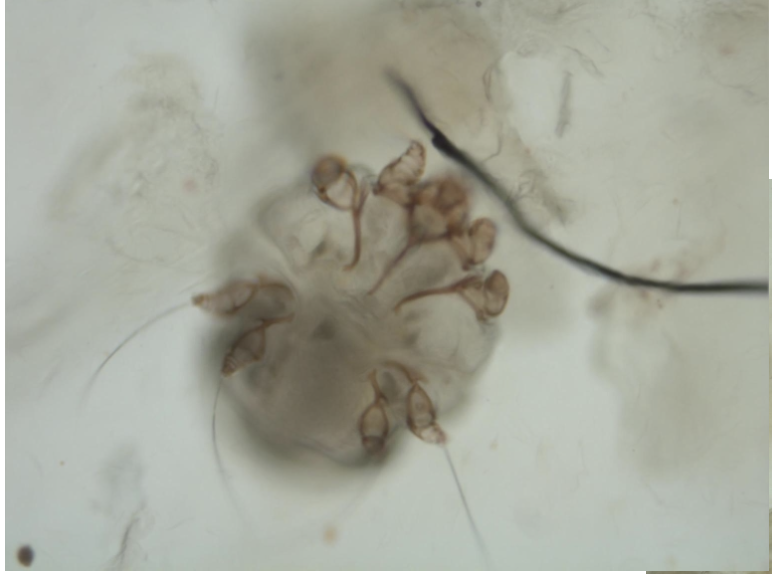
what is shown?
sarcoptes mite

what is shown?
sarcoptes mite
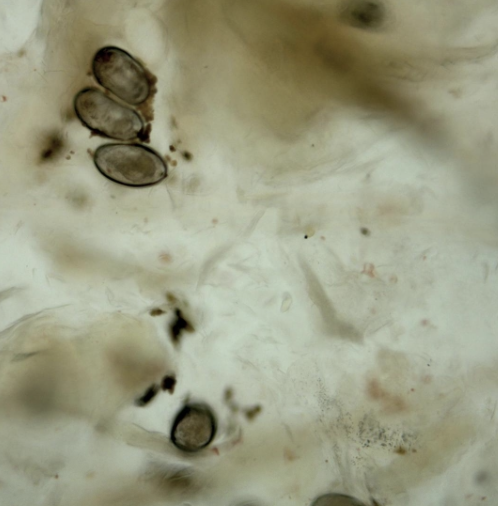
what is shown?
sarcoptes eggs
where does Notoedric mange affect the cat first then move to?
affects the ears and head first then feet and perineum
what mite causes Notoedric mange in cats?
Notoedres cati
what non-commensal mites have zoonotic potential?
sarcoptes scabi canis
notoedres cati
cheyletiella
what is notoedres cati easy to find on?
superficial scapings

what is shown in the image?
notoedres cati
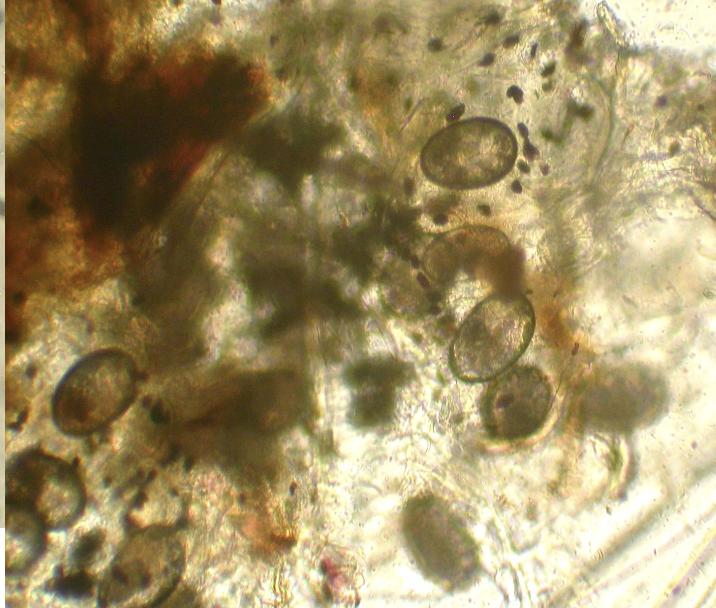
what is shown on the image?
notoedres cati eggs
what is another name for cheyletiellosis?
walking dandruff
where is cheyletiellosis particularly common in?
regions where flea preventatives not regularly used (ex: colorado)
what animal does c. blakei have a preference for?
cats
what animal does C. yasguri have a preference for?
dogs
what are the clincial signs of cheyletiellosis?
mutifocal areas of heavy scale/crust on dorsal and lateral trunk
miliary dermatitis in cats
walking dandruff
pruritis variable (dogs more likely to have severe)
what is used for the diagnosis of cheyletiellosis?
clinical signs and dorsal distribution of scale
broad superficial skin scrapings or acetate tape cytology
fecal float of overgroomers
minor magnification and examination of mites under a microscope.
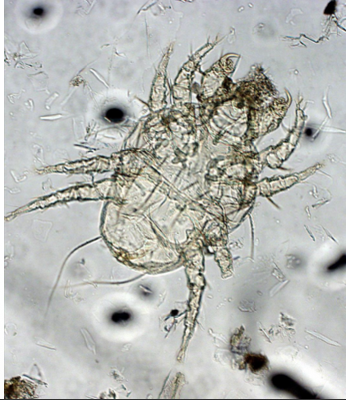
what is shown in the image?
cheyletiellosis
what is a non-commensal demodex species in cats?
demodex gatoi
where does demodex gatoi live on cats?
superficial layers of skin
what is a common clinical sign of demodex gatoi in cats?
alopecia from overgrooming

what is shown in the image?
demodex gatoi

what is shown in the image?
demodex cati
what do we use for the diagnosis of demodex gatoi?
superficial skin scrapings → use non-affected cats in household
fecal float
therapeutic trial and response to treatment

what is shown in the image?
demodex gatoi
what treatment is used to kill mites?
isoxazoline → treat ALL in-contact animals
how long can sarcoptes and notoedres survive in the environment?
2-6 days at room temp
21 days at low temp and high humidity
how long can cheyletiella survive in the environment?
10 days
what diseases cause mild pruritis in dogs and cats?
autoimmune skin disease
endocrinopathy
commensal demodicosis
what diseases cause mild to moderate pruritis in dogs and cats?
dermatophytosis
what diseases cause moderate pruritis in dogs and cats?
bacterial infection
what diseases cause moderate to marked pruritis in dogs and cats?
demodicosis (non-commensal)
allergic dermatitis
what diseases cause marked (severe) pruritis in dogs and cats?
Malassezia
sarcoptes
notoedres
cheyletiella
what are the most common sources of cutaneous allergic reactions in dogs and cats?
flea allergy dermatitis (FAD)
cutaneous adverse food reaction (CAFR)
environmental allergies
what is important to understand about allergic reactions?
they are not dose dependent
what causes flea allergy dermatitis (FAD)
allergic reaction to flea bites
what type of reaction occurs with flea allergy dermatitis?
type 1 ± type 4 hypersensitivity to glycoproteins found in flea saliva
flea allergies DO NOT EQUAL
flea infestation
what is the preference for fleas amongst household animals?
cats>dogs>humans
what stage of the flea life cycle is most vulnerable to environmental control efforts?
larval stage
what stage of the flea cycle do ectoparasiticides target?
adult
what is the clinical distribution for flea allergy dermatitis?
moderate to severe pruritis affecting caudal half of body (pants zone)
what clinical lesions can be seen with flea allergy dermatitis?
papules
erythema
excoriations
alopecia
scale and crust
pyotraumatic dermatitis
lichenfication ± hyperpigmentation
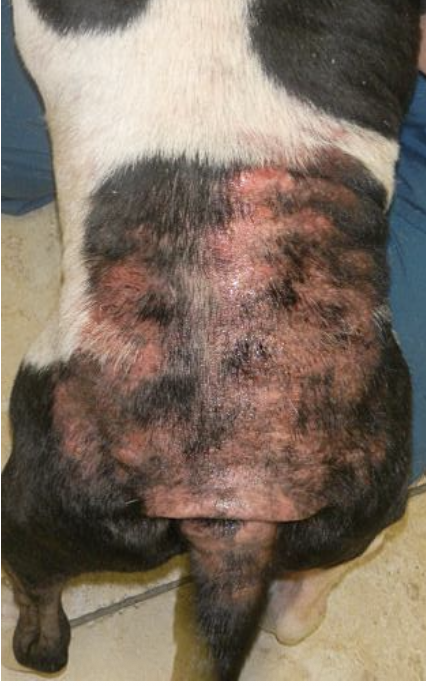
A dog comes into the clinic after the owner mentions the pet has been very itchy. You perform a physical exam and see the following. What is your differential diagnosis?
acute flea allergy dermatitis
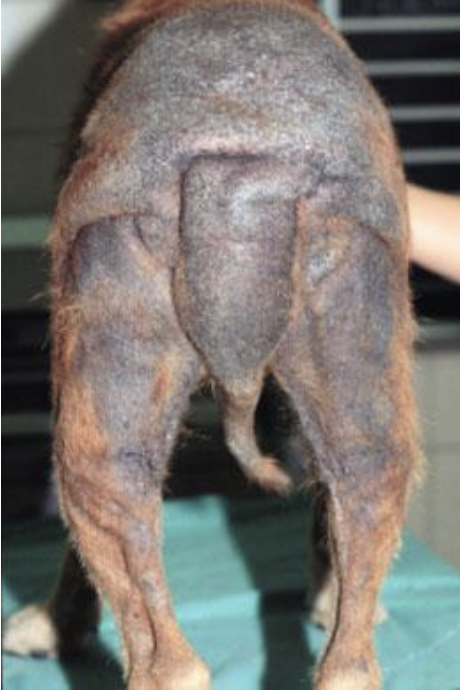
A dog comes into the clinic after the owner mentions the pet has been very itchy. You perform a physical exam and see the following. What is your differential diagnosis?
chronic flea allergy dermatitis
under ideal conditions, how long is the flea life cycle?
3-4 weeks
what is used for the diagnosis of flea allergy dermatitis?
pants distribution of pruritis or other skin lesions
presence of live fleas or flea dirt (supportive but not needed)

what is shown in the image?
flea
what is used for conformation of flea allergy dermatitis?
excellent response after initiation or adjustment of flea control program
serological or intradermal allergy testing
what topical therapy can be provided symptomatic relief for flea allergy dermatitis?
antipruritic
antiseptic if secondary infection present
what systemic therapy can provide symptomatic relief for flea allergy dermatitis?
prednisone or prednisolone
oclactinib (apoquel) → dogs only
antibiotics
what is the goal for flea control in flea allergy dermatitis?
kill fleas and minimize risk of flea bites
what os used for flea control against flea allergy dermatitis?
flea adulticide
product that offers rapid speed of kill in below 24 hours
what flea preventatives can be prescribed?
nitenpyram (capstar) → fastest kill time of all oral medications
isoxalines → 1-2 hours
topicals → 12 hours
what is the pathogenesis of cutaneous adverse food reaction (CAFR)?
complex likely involving type 1, 3. and 4 hypersensitivity reactions
what things are associated with food intolerance?
no involvement of immune system
reaction = dose dependent
gradual onset of clinical signs
triggered by histamine-rich foods
what things are associated with food allergy?
hypersensitivity reaction
any amount provokes reaction
can be life threatening
what are the most common food allergen sources?
proteins of large size (>10kD)
protein sources
what is the #1 food allergen in both dogs and cats?
beef
what are common food allergens in dogs?
beef
chicken
dairy
wheat
what are common food allergens in cats?
beef
dairy
chicken
fish
what is the mean onset for age in dogs that show cutaneous adverse food reaction?
2.9 years
what is the mean onset for age in cats that show cutaneous adverse food reaction?
3.9 years
what breeds in dogs do we commonly see cutaneous adverse food reactions in?
german sheperds
west highland white terriers
labs
golden retrievers