Chapter 6: Energy & Metabolism
 Call Kai
 Learn
 Practice Test
 Spaced Repetition
 Match
 Flashcards
 Knowt Play
1/57

There's no tags or description
Looks like no tags are added yet.
58 Terms
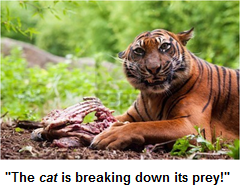
What is energy?
the capacity to do work
What is kinetic energy?
energy of motion

What is potential energy?
stored energy

What is chemical energy?
potential energy available for release in a chemical reaction

What is mechanical energy?
the total energy of motion and position of an object
What is radiant energy?
energy from the sun

What is electrical energy?
energy of moving electrons
What is thermal energy?
kinetic energy associated with the random movement of atoms or molecules

What is thermodynamics?
the study of energy transformations
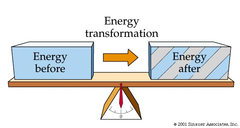
What is the first law of thermodynamics concerned with?
Energy can be transferred and transformed, but it cannot be created or destroyed.
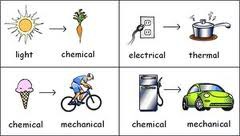
What is the second law of thermodynamics concerned with?
when energy is transformed, the quantity of energy remains the same, but its ability to do work diminishes. Not 100% efficient, some escapes as thermal energy from and area of high heat to low heat.
increases in the entropy of a system, unless work is inputed.

What is entropy?
A measure of disorder or randomness.

Describe Gibb's free energy
a thermodynamic quantity equal to the enthalpy (of a system or process) minus the product of the entropy and the absolute temperature.

What does negative delta G represent?
1. products have less free energy than reactants; the product are favored (forward reaction)
2. the reaction occurs spontaneously; energetically favorable
3. Exergonic reaction

What does positive delta G represent?
1. reactants have less free energy than products; the reactant are favored (reverse reaction)
2. the reaction DOES NOT occur spontaneously; energetically UNfavorable; requires a large input of energy
3. Endergonic reaction

Describe spontaneous reactions
a reaction that can occur without the input of energy (on it's own). This term does not imply that the reaction occurs quickly or instantaneously. e.g. Rusting of metal is a spontaneous process but occurs over a long period of time.
What reactions have a positive delta G and energy is gained?
Endergonic reactions

With a delta G of -7 kJ/mol, what reaction is this?
Exergonic reaction

With a delta G of +7 kJ/mol, what reaction is this?
Endergonic

What are the reactants?
elements or compounds that enter into a chemical reaction

What are the products?
The elements or compounds produced by a chemical reaction.

What is activation energy?
the minimum amount of energy needed to start a chemical reaction

What is a catalyst?
substance that speeds up the rate of a chemical reaction

What macromolecule makes up most enzymes?
proteins

What is a type of biological catalyst?
enzymes

What is an enzyme?
a substance produced by a living organism that acts as a catalyst to bring about a specific biochemical reaction.
What structures are on an enzyme?
active site and allosteric site

What is the active site?
Specific part of an enzyme where a substrate fits

What is a substrate?
the substance on which an enzyme acts

How does an enzyme work as a catalyst?
By lowering activation energy

What is the induced fit model?
the active site molds around the substrate to form the enzyme-substrate complex.
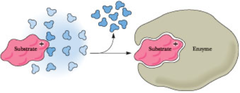
How does the enzyme lower activation energy?
by straining bonds in the substrate and lining up substrates correctly
What factors affect enzyme activity?
Temperature, pH, substrate concentration, enzyme concentration, regulatory bind agents
How does pH affect enzyme activity?
*At a specific pH the shape of the active site best facilitates the formation of an enzyme-substrate complex*
Any deviation will disrupt ionic and hydrogen bonds, a further change will cause the enzyme to become denatured

How does temperature affect enzyme activity?
1. increases chance of enzyme substrate collisions so enzyme activity increases as temperature increases; therefore rate of enzyme activity increases
2. BUT too much increased molecular motion leads to disruption of intermolecular interactions; leading to decreased activity;
until enzyme is completely denatured;

What does denaturation mean?
loss of normal shape by an enzyme so that it no longer functions

How does substrate concentration affect enzyme activity?
Increasing substrate concentration increases enzyme activity until all enzyme active sites are saturated, then the rate levels off.

How does enzyme concentration affect enzyme activity?
Increasing enzyme concentration increases enzyme activity as long as enough substrate is available.

What is a cofactor?
a non protein part of the enzyme that some enzymes require to be active

What is a competitive inhibitor?
a molecule that competes with the substrate to bind in the active site of an enzyme.

What is a noncompetitive inhibitor?
A molecule that binds to an allosteric site and prevents the proper functioning of an enzyme

What is a coenzyme?
an organic nonprotein helper for catalytic reactions.

What is feedback inhibition?
When the product of a reaction near the end of a chain of reactions inhibits the function of an enzyme in an earlier reaction of the chain.

multienzyme complex
complexes is when subunits work together to form molecular machine, product can be easily delivered, unwanted side reactions do not occur, and all reactions are controlled as a unit

What is redox reaction?
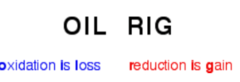
the movement of electrons from one molecule to another
an oxidation reaction paired with a reduction reaction

What is oxidation?
loss of electrons

What is reduction?
gain of electrons
What is a reducing agent?
substance that loses electrons; electron donor; becomes oxidized

What is an oxidizing agent?
substance that gains electrons; electron acceptor; becomes reduced

Describe the structure of ATP.
Type of nucleotide.
Pentose sugar is ribose.
Nitrogenous base always adenine.
3 phosphate groups.
Universal energy currency.

How does ATP release energy?
When the bond between the 2nd and 3rd phosphate bond is broken

Describe how ATP is broken down
ATP (+ water) → ADP (adenosine diphosphate) + Pi (inorganic phosphate)

What is energy coupling?
the use of energy released from an exergonic reaction (such as ATP hydrolysis) to drive an endergonic reaction

What is metabolism?
the chemical processes that occur within a living organism in order to maintain life.

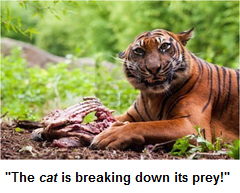
What is catabolism?
breaking down molecules
What is anabolism?
building up molecules

Are condensation reactions anabolic or catabolic?
anabolic

Are hydrolysis reactions anabolic or catabolic?
catabolic