evil geoscience
 Call Kai
 Learn
 Practice Test
 Spaced Repetition
 Match
 Flashcards
 Knowt Play
1/15

There's no tags or description
Looks like no tags are added yet.
16 Terms
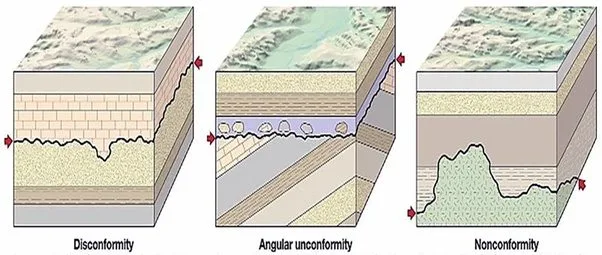
Angular Unconformity
Older rock layers are tilted or folded, then eroded. Younger, flatter layers form on top.

Angular Unconformity
Older sediment is deposited in horizontal layers and becomes rock.
Tectonic forces tilt or fold the older rock layers.
Erosion wears away the exposed rock.
New sediment is deposited horizontally on top and eventually becomes rock.
Key idea: Older tilted layers are covered by younger horizontal layers.

Disconformity
Older and younger sedimentary rock layers are parallel, but erosion or a pause in deposition creates a gap in time.

Disconformity
Look for sedimentary layers both above and below the boundary:
Top: sedimentary rock.
Bottom: sedimentary rock.
Between them: sometimes a wavy, uneven erosion surface or evidence of missing layers.
Clue: The layers are parallel, but there's a gap in geologic time.

Nonconformity
Sedimentary rocks lie on top of older igneous or metamorphic rocks that were exposed and eroded.

Nonconformity
Top: sedimentary rock, often layered.
Bottom: igneous or metamorphic rock, often crystalline, with visible interlocking minerals and no sedimentary layering.
Clue: Layered rock sitting on granite or another crystalline rock.

Law of Superposition
In undisturbed rock layers, the oldest layer is at the bottom and the youngest is at the top.

Law of Superposition
Sediment is deposited in layers over time. In undisturbed rock layers, newer layers build up on top of older layers, so the bottom layer is the oldest.
Original Horizontality
Sediment settles in nearly horizontal layers because of gravity. If the layers become tilted or folded, that happens after they were deposited.

Lateral Continuity
Sediment spreads out sideways to form continuous layers. If a river or erosion separates the layers later, the rock on both sides may have originally been connected.
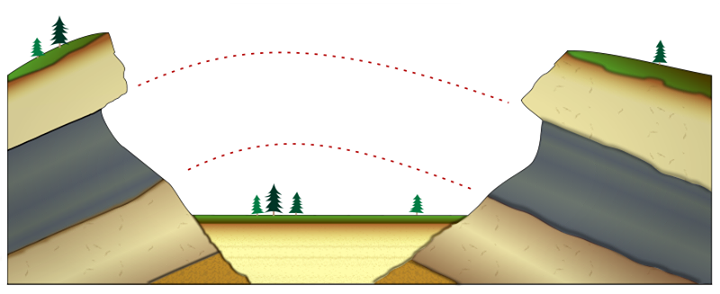
Lateral Continuity
Rock layers originally extend sideways until they thin out or reach a boundary. Layers separated by a valley may once have been connected.

Cross-Cutting Relationships
A fault or igneous intrusion cuts through existing rock layers. Because the rock layers had to exist first, the fault or intrusion is younger than the rocks it cuts.
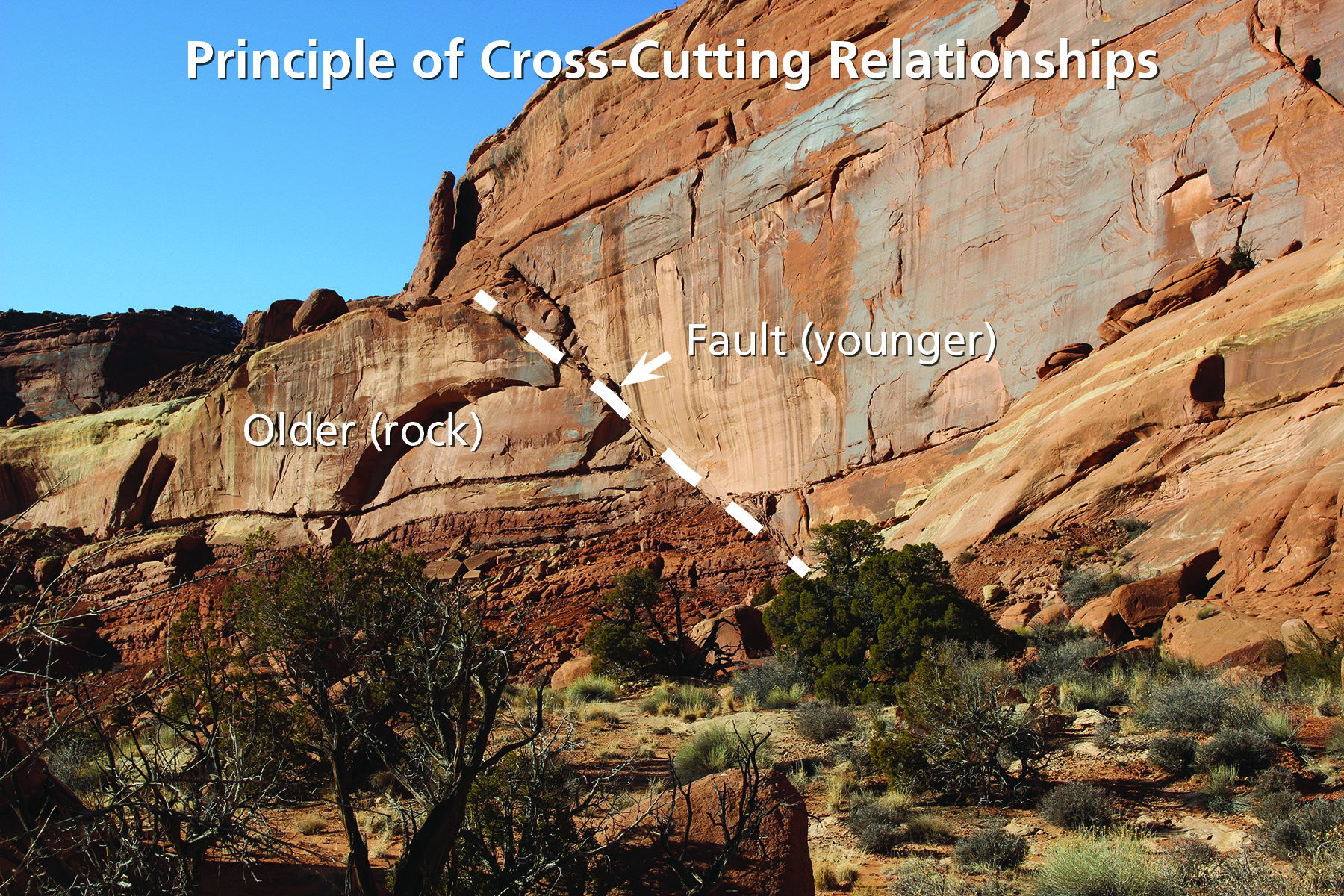
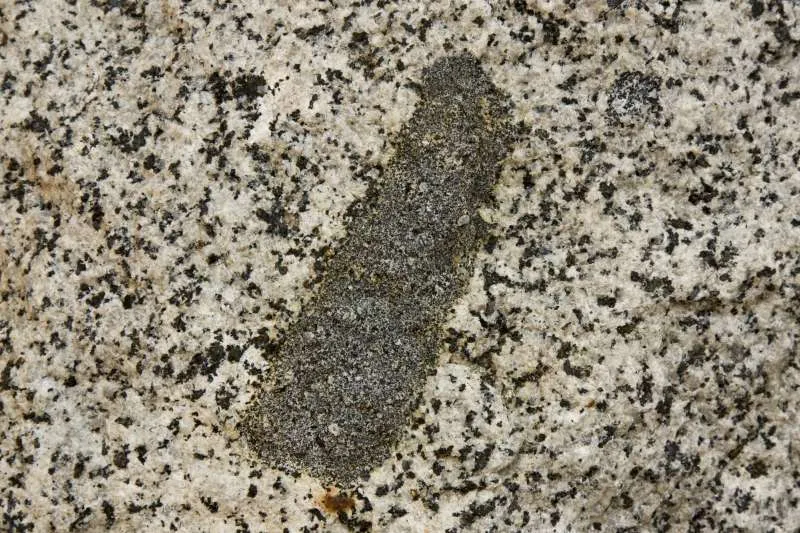
Principle of Inclusions
Fragments of older rock become trapped inside newer rock as it forms. The fragments must be older than the rock surrounding them.
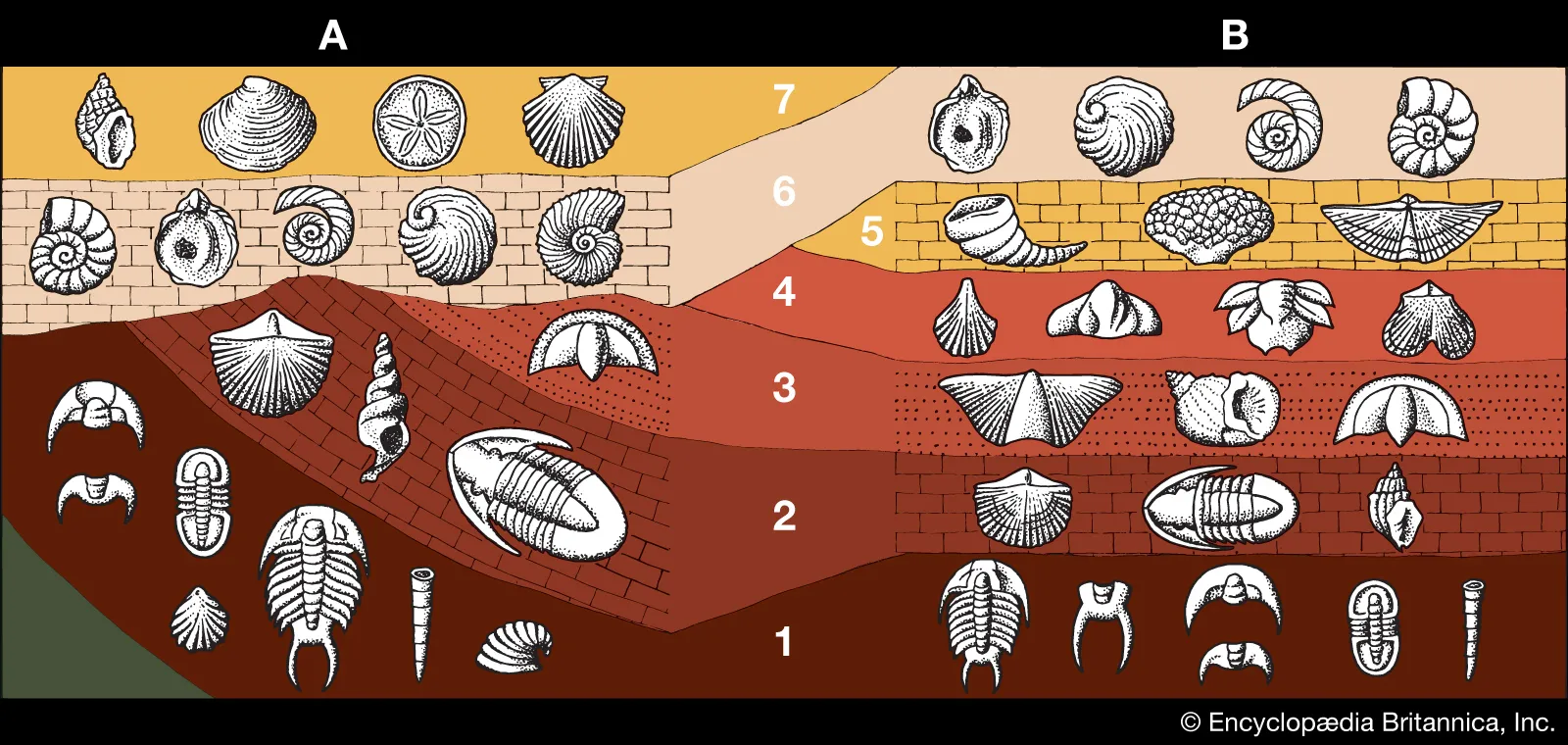
Fossil Succession
Organisms live and die during different periods of Earth's history. Their fossils appear in a recognizable order in rock layers, allowing scientists to compare the relative ages of rocks.
Unconformities
An unconformity is a gap in the geologic record caused by erosion or a period when no new sediment was deposited.
Geologic Unit
body of rock that geologists identify and map because it has recognizable characteristics.
Look for these clues:
Rock type: sandstone, granite, limestone, etc.
Color and texture: coarse, fine-grained, layered, or crystalline.
Fossils: can help identify and estimate the age of sedimentary rocks.
Position: whether the unit is above, below, or cutting through other units.
Map legend: the unit's name, symbol, and sometimes its geologic age.