3.5 hardware
 Call Kai
 Learn
 Practice Test
 Spaced Repetition
 Match
 Flashcards
 Knowt Play
1/103

There's no tags or description
Looks like no tags are added yet.
104 Terms
ATX (Advanced Technology Extended)
A standard motherboard form factor that provides multiple expansion slots, RAM slots, and connectors. Commonly used in desktop computers.
MicroATX
A smaller version of ATX with fewer expansion slots. Fits in smaller computer cases.
ITX (Information Technology eXtended)
A small motherboard form factor designed for compact computers. Mini-ITX is a common version.
ATX Compatibility
ATX motherboards require a compatible ATX case and power supply mounting configuration.
MicroATX Compatibility
MicroATX motherboards can generally fit in ATX-compatible cases.
Mini-ITX Size
6.7 x 6.7 inches (170 x 170 mm).
ATX Size
12 x 9.6 inches (305 x 244 mm).
MicroATX Size
9.6 x 9.6 inches (244 x 244 mm).
Motherboard Form Factor
Determines the motherboard's physical size, mounting points, and layout.
PCI (Peripheral Component Interconnect)
An older expansion slot technology used for sound cards, network cards, and other expansion cards.
PCIe (PCI Express)
A high-speed expansion interface used for graphics cards, network cards, and storage controllers.
PCIe x1
A small PCIe slot commonly used for network cards and sound cards.
PCIe x4
A PCIe slot commonly used for storage controllers and high-speed expansion cards.
PCIe x8
A PCIe slot providing eight PCIe lanes for high-bandwidth expansion devices.
PCIe x16
A large PCIe slot commonly used for graphics cards.
PCIe Lanes
Communication pathways that transfer data between a device and the motherboard.
Power Connectors
Connect the power supply to the motherboard and other components.
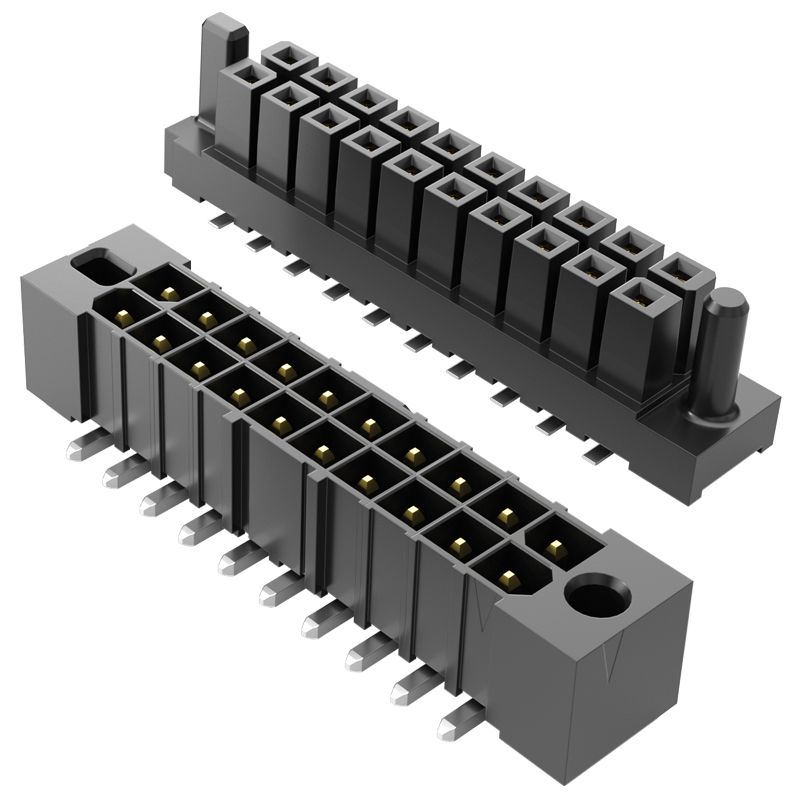
24-pin ATX Power Connector
Main power connector that supplies electricity to the motherboard.
4-pin/8-pin CPU Power Connector
Supplies dedicated power to the CPU, usually near the CPU socket.
SATA (Serial ATA)
A connector and interface used to connect storage devices such as HDDs and SATA SSDs.
eSATA (External SATA)
An external SATA connection used to connect external storage devices.
Headers
Connection points on a motherboard used for front-panel buttons, USB ports, audio ports, and fans.

Front Panel Header
Connects the computer case's power button, reset button, and indicator lights.

USB Header
Connects front-facing USB ports on the computer case to the motherboard.

Audio Header
Connects the computer case's front audio and microphone ports.

Fan Header
Provides power and control signals to motherboard-connected cooling fans.

M.2
A compact motherboard connector used for SSDs and other expansion devices.

M.2 NVMe SSD
Uses PCIe lanes and the NVMe protocol for high-speed storage.
M.2 SATA SSD
Uses the SATA interface through an M.2 connector.
CPU Socket
A physical connector on the motherboard that holds and connects the CPU.

AMD CPU Socket
A processor socket designed for compatible AMD processors.
Intel CPU Socket
A processor socket designed for compatible Intel processors.
CPU Compatibility
A CPU must match the motherboard's socket, chipset support, and BIOS compatibility requirements.
AMD
Advanced Micro Devices, Inc., a company that manufactures CPUs and other computer hardware.
Intel
A company that manufactures CPUs and other computer hardware.
Multisocket Motherboard
A motherboard designed to support two or more CPUs.
CPU Socket Compatibility
Not every CPU fits every motherboard, even if the processors are made by the same manufacturer.
Chipset
Controls communication between the CPU, memory, storage, and other motherboard components.

BIOS (Basic Input/Output System)
Firmware that initializes hardware and starts the computer's boot process.

UEFI (Unified Extensible Firmware Interface)
A modern replacement for traditional BIOS that supports features such as Secure Boot and large boot drives.

BIOS vs. UEFI
UEFI is newer and supports more advanced security and boot features than legacy BIOS.
Boot Options
Settings that determine which device the computer attempts to start from first.
Boot Order
The sequence in which the computer checks devices for an operating system.
USB Permissions
BIOS/UEFI settings that enable or disable USB device access.
TPM (Trusted Platform Module)
A security chip that securely stores encryption keys and supports hardware-based security.
TPM Security Features
Provides secure key storage, measured boot support, and platform integrity features.
Secure Boot
A UEFI security feature that prevents unauthorized or untrusted boot software from loading.
Boot Password
A password required before the computer can begin the boot process.
BIOS Password
A password that restricts access to BIOS/UEFI configuration settings.
Fan Settings
BIOS/UEFI settings used to control fan speed and cooling profiles.
Temperature Monitoring
Allows users to check CPU and system temperatures through BIOS/UEFI.
Virtualization Support
A BIOS/UEFI setting that enables CPU hardware virtualization features.
Intel VT-x
Intel's hardware virtualization technology.
AMD-V
AMD's hardware virtualization technology.
BIOS Update
Updates motherboard firmware to improve compatibility, security, or functionality.
Virtualization
The process of running multiple virtual computers or operating systems on one physical computer.
Virtual Machine (VM)
A software-based computer that runs its own operating system inside a host computer.
Hypervisor
Software or firmware that creates and manages virtual machines.
Type 1 Hypervisor
Runs directly on physical hardware without requiring a traditional host operating system.
Type 2 Hypervisor
Runs as an application inside an existing operating system.
Hardware Virtualization
Uses CPU features such as Intel VT-x or AMD-V to improve virtual machine performance.
Encryption
The process of converting readable data into unreadable data to protect it from unauthorized access.
TPM (Trusted Platform Module)
A dedicated security chip used to store cryptographic keys and support encryption.
HSM (Hardware Security Module)
A dedicated hardware device that securely generates, stores, and manages cryptographic keys.
TPM vs. HSM
TPM is typically integrated into or associated with an individual computer; an HSM is a specialized device designed for secure cryptographic key management.
BitLocker
A Windows full-disk encryption feature that can use TPM to help protect encryption keys.
CPU (Central Processing Unit)
The main processor responsible for executing instructions and performing calculations.
x86
A 32-bit processor architecture commonly associated with older PCs.
x64
A 64-bit version of the x86 architecture that supports larger amounts of memory.
ARM
Advanced RISC Machine, a processor architecture commonly used in smartphones, tablets, and other power-efficient devices.
RISC (Reduced Instruction Set Computer)
A processor design philosophy that uses a simplified instruction set.
x86 vs. ARM
x86 is commonly used in traditional PCs, while ARM is widely used in mobile devices and increasingly in laptops and desktops.
CPU Core
An individual processing unit inside a CPU that can execute instructions.
Single-Core CPU
A processor with one processing core.
Dual-Core CPU
A processor with two processing cores.
Quad-Core CPU
A processor with four processing cores.
Multi-Core CPU
A processor containing multiple cores to handle tasks more efficiently.
Hyper-Threading
Intel technology that allows one physical CPU core to handle multiple threads.
Multithreading
The ability of a CPU to execute multiple instruction threads concurrently.
CPU Clock Speed
The speed at which a processor operates, commonly measured in GHz.
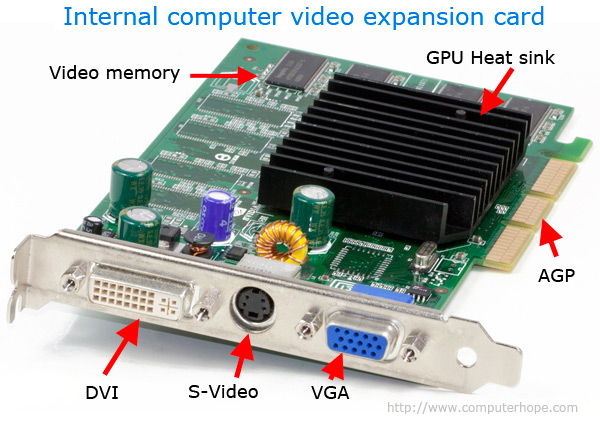
Expansion Card
A circuit board installed into a motherboard expansion slot to add functionality.
Sound Card
An expansion card that processes audio input and output.
Video Card (Graphics Card)
An expansion card that processes graphics and sends video signals to a display.
GPU (Graphics Processing Unit)
The processor responsible for rendering graphics and performing parallel processing tasks.
Capture Card
An expansion card or external device that records or captures video and audio from another source.
NIC (Network Interface Card)
A device that allows a computer to connect to a network.
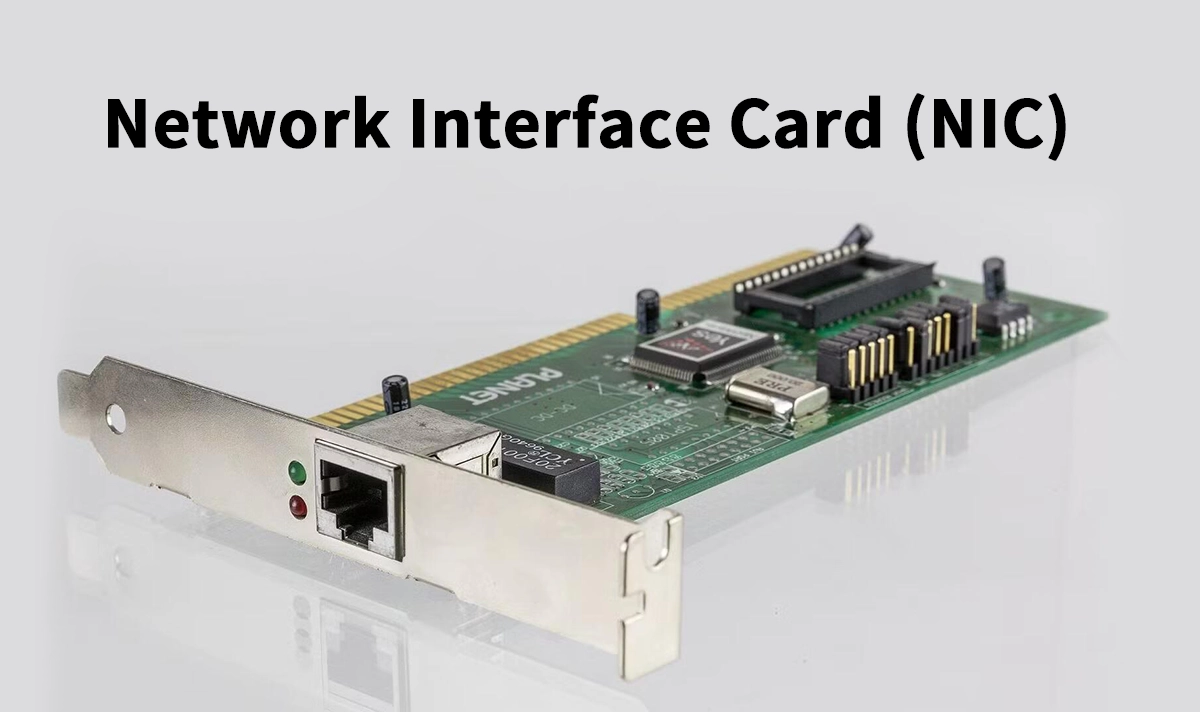
Ethernet NIC
A network interface card that connects a computer to a wired network.
Wireless NIC
A network interface card that connects a computer to a wireless network using Wi-Fi.
PCIe Expansion Card
A card that installs into a PCIe slot to add features to a computer.
CPU Cooling
The process of removing heat from the processor to prevent overheating.
Cooling Fan
A component that moves air through the computer to remove heat.
Heat Sink
A metal component that absorbs and disperses heat away from a CPU or other component.

Thermal Paste
A heat-conductive compound placed between the CPU and heat sink to improve heat transfer.
Thermal Pad
A soft, heat-conductive material used between components and heat sinks.
Liquid Cooling
A cooling system that circulates liquid to transfer heat away from components.
AIO (All-in-One) Liquid Cooler
A preassembled liquid cooling system containing a pump, radiator, fans, and tubing.
Radiator
A component in a liquid cooling system that releases heat from the coolant.
CPU Fan Header
The motherboard connector used to power and control the CPU cooling fan.
System Fan Header
A motherboard connector used to power and control case cooling fans.
Airflow
The movement of air through a computer case to remove heat.