Microstructure and Pulp PPT questions

0.0(0)
Studied by 0 people
call kaiCall Kai
learnLearn
examPractice Test
spaced repetitionSpaced Repetition
heart puzzleMatch
flashcardsFlashcards
GameKnowt Play
Card Sorting

1/21

encourage image

There's no tags or description

Looks like no tags are added yet.

22 Terms

1
New cards

C

1. This is a mid-root cross section, incisal view. What tooth is it?

a. maxillary right lateral incisor

b. mandibular left cuspid

c. maxillary right central incisor

d. maxillary left central incisor

<p>1. This is a mid-root cross section, incisal view. What tooth is it?</p><p>a. maxillary right lateral incisor</p><p>b. mandibular left cuspid</p><p>c. maxillary right central incisor</p><p>d. maxillary left central incisor</p>
2
New cards

D

2. This is a mid-root cross section, apical view. What tooth is it?

a. maxillary right lateral incisor

b. mandibular left cuspid

c. maxillary right central incisor

d. maxillary left central incisor
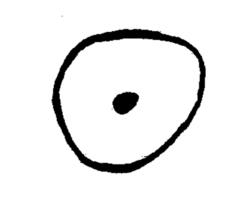
<p>2. This is a mid-root cross section, apical view. What tooth is it?</p><p>a. maxillary right lateral incisor</p><p>b. mandibular left cuspid</p><p>c. maxillary right central incisor</p><p>d. maxillary left central incisor</p>
3
New cards

D

3. This is a mid-root cross section. What tooth is it?

a. maxillary lateral incisor

b. mandibular cuspid

c. maxillary first premolar

d. maxillary central incisor

<p>3. This is a mid-root cross section. What tooth is it?</p><p>a. maxillary lateral incisor</p><p>b. mandibular cuspid</p><p>c. maxillary first premolar</p><p>d. maxillary central incisor</p>
4
New cards

D

4. This is a diagram of a mesiodistal pulp outline, it was most likely taken from a permanent maxillary

a. lateral incisor

b. cuspid

c. first premolar

d. central incisor

<p>4. This is a diagram of a mesiodistal pulp outline, it was most likely taken from a permanent maxillary</p><p>a. lateral incisor</p><p>b. cuspid</p><p>c. first premolar</p><p>d. central incisor</p>
5
New cards

D

5. This is a mid-root cross section of which tooth

a. maxillary lateral incisor

b. maxillary cuspid

c. mandibular first premolar

d. mandibular central incisor

<p>5. This is a mid-root cross section of which tooth</p><p>a. maxillary lateral incisor</p><p>b. maxillary cuspid</p><p>c. mandibular first premolar</p><p>d. mandibular central incisor</p>
6
New cards

C

6. This is a mid-root cross section, apical view, of which tooth

a. maxillary right central incisor

b. maxillary left cuspid

c. maxillary right first premolar

d. mandibular left second premolar
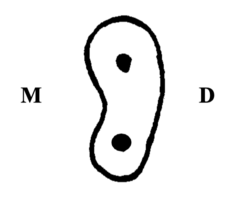
<p>6. This is a mid-root cross section, apical view, of which tooth</p><p>a. maxillary right central incisor</p><p>b. maxillary left cuspid</p><p>c. maxillary right first premolar</p><p>d. mandibular left second premolar</p>
7
New cards

C

7. This is a mid-root cross section, occlusal view, of which tooth

a. maxillary right central incisor

b. maxillary left cuspid

c. maxillary left first premolar

d. maxillary right second premolar
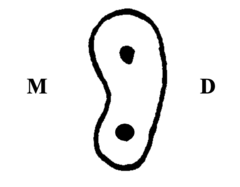
<p>7. This is a mid-root cross section, occlusal view, of which tooth</p><p>a. maxillary right central incisor</p><p>b. maxillary left cuspid</p><p>c. maxillary left first premolar</p><p>d. maxillary right second premolar</p>
8
New cards

C

8. This is a mid-root cross section of which tooth

a. maxillary central incisor

b. maxillary cuspid

c. maxillary first premolar

d. maxillary second premolar

<p>8. This is a mid-root cross section of which tooth</p><p>a. maxillary central incisor</p><p>b. maxillary cuspid</p><p>c. maxillary first premolar</p><p>d. maxillary second premolar</p>
9
New cards

A

9. This is a cross section at the CEJ of which tooth

a. mandibular first molar

b. mandibular second molar

c. maxillary first molar

d. maxillary second molar

<p>9. This is a cross section at the CEJ of which tooth</p><p>a. mandibular first molar</p><p>b. mandibular second molar</p><p>c. maxillary first molar</p><p>d. maxillary second molar</p>
10
New cards

C

10. What is the tooth number?

a. 18

b. 15

c. 30

d. 31

<p>10. What is the tooth number?</p><p>a. 18</p><p>b. 15</p><p>c. 30</p><p>d. 31</p>
11
New cards

C

11. This is a cross section at the CEJ of which tooth?

a. mandibular first molar

b. mandibular second molar

c. maxillary first molar

d. maxillary second premolar

<p>11. This is a cross section at the CEJ of which tooth?</p><p>a. mandibular first molar</p><p>b. mandibular second molar</p><p>c. maxillary first molar</p><p>d. maxillary second premolar</p>
12
New cards

D

12. This is a mid-root cross section occlusal view of which tooth

a. mandibular left first molar

b. mandibular left second molar

c. maxillary left first molar

d. maxillary right first molar

<p>12. This is a mid-root cross section occlusal view of which tooth</p><p>a. mandibular left first molar</p><p>b. mandibular left second molar</p><p>c. maxillary left first molar</p><p>d. maxillary right first molar</p>
13
New cards

C

13. This is a mid-root cross section apical view of which tooth

a. mandibular left first molar

b. mandibular left second molar

c. maxillary left first molar

d. maxillary right first molar
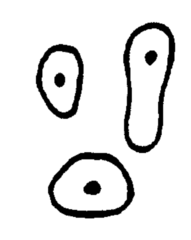
<p>13. This is a mid-root cross section apical view of which tooth</p><p>a. mandibular left first molar</p><p>b. mandibular left second molar</p><p>c. maxillary left first molar</p><p>d. maxillary right first molar</p>
14
New cards

A

14. This is a mid-root cross section view of which tooth

a. mesial root of mandibular molar

b. mandibular second premolar

c. maxillary first molar

d. maxillary first premolar

<p>14. This is a mid-root cross section view of which tooth </p><p>a. mesial root of mandibular molar</p><p>b. mandibular second premolar</p><p>c. maxillary first molar</p><p>d. maxillary first premolar</p>
15
New cards

B

15. This diagram is a mid-root cross section. The root canal pointed to by arrow "A" is correctly identified as the

a. lingual root canal

b. mesiobuccal root canal

c. mesiolingual root canal

d. distobuccal root canal

e. distolingual root canal
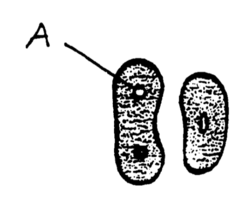
<p>15. This diagram is a mid-root cross section. The root canal pointed to by arrow "A" is correctly identified as the </p><p>a. lingual root canal</p><p>b. mesiobuccal root canal</p><p>c. mesiolingual root canal</p><p>d. distobuccal root canal</p><p>e. distolingual root canal</p>
16
New cards

A

This diagram is a mid-root cross section. The outline pointed to by arrow "A" is most likely the

a. lingual surface

b. mesial surface

c. buccal surface

d. distal surface

<p>This diagram is a mid-root cross section. The outline pointed to by arrow "A" is most likely the </p><p>a. lingual surface</p><p>b. mesial surface</p><p>c. buccal surface</p><p>d. distal surface</p>
17
New cards

D

A

B

Match the diagrams to the appropriate section/tooth

17. maxillary canine - mid-root section

18. maxillary canine - mesiodistal section

19. maxillary second premolar - buccolingual section

<p>Match the diagrams to the appropriate section/tooth</p><p>17. maxillary canine - mid-root section </p><p>18. maxillary canine - mesiodistal section </p><p>19. maxillary second premolar - buccolingual section</p>
18
New cards

C

E

Match the diagrams to the appropriate section/tooth

20. maxillary canine - faciolingual section

21. maxillary central - cervical section

<p>Match the diagrams to the appropriate section/tooth</p><p>20. maxillary canine - faciolingual section </p><p>21. maxillary central - cervical section</p>
19
New cards

B

22) Which of the following is contained in greatest proportion in tooth enamel?

a. Calcium fluoride

b. Calcium phosphate

c. Calcium carbonate

d. Potassium carbonate

e. Potassium phosphate

20
New cards

B

23) Which of the following is the correct sequence of dental tissues from softest to hardest?

a. Dentin, cementum, enamel

b. Cementum, dentin, enamel

c. Dentin, enamel, cementum

d. Cementum, enamel, dentin

21
New cards

E

24) Following the initial period of functional activity, an appreciable alteration in size of the pulp chamber is a direct result of

a. pulp fibrosis.

b. morphodifferentiation.

c. dentinal dysplasia.

d. deposition of primary dentin.

e. deposition of secondary dentin.

22
New cards

C

25) The percentage of dentin that is organic is

a. 3-5%.

b. 10-15%.

c. 20-30%.

d. 40-50%.

e. 50-60%.



