Geo - Metamorphic rocks
 Call Kai
 Learn
 Practice Test
 Spaced Repetition
 Match
 Flashcards
 Knowt Play
1/37

Earn XP
Description and Tags
please let me get an A
38 Terms
Metamorphic rocks
rocks made from material that has been changed by temperature, pressure, and/or fluids
both igneous and sedimentary rocks can become metamorphic rocks, as well as other metamorphic rocks
metamorphism is caused by plate tectonic motion
provides information on past metamorphic processes
Protoliths
preexisting rocks
metamorphic rocks are solid state alterations of protoliths
uses of metamorphic rocks
building and construction (quartzite, marble, slate, etc.)
monuments
roofing/paving
decorative stone
jewlery
industry
phase change
new minerals form with:
same chemical formula
different crystal structure
changes texture
main types of metamorphism
Heat (T)
Pressure (P)
Compression and shear
Hot fluids
heat driven metamorphism
heat energy causes solid state diffusion (atomic bonds breaking and rearranging)
occurs at temperatures from 200C up to 700C - 1100C
where does metamorphism take place?
in the lithosphere & upper mantle
metamorphism due to Pressure (P)
creates denser material
involves phase change or recrystallization
formation of many minerals depends on both P & T
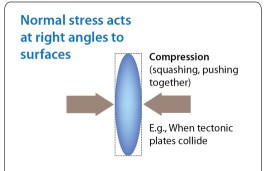
normal stress
acts at right angles
shear stress
acts parallel to surface

elastic deformation
strain that is reversable after stress is released
ex. rubber band returns to normal when not stretched
ductile deformation
changes in shape due to stress are permanent
ex. bending a metal bar keeps it in that shape
brittle deformation
rocks fraction under increasing stress
confining pressure
pressure exerted from rocks above is matched by equal pressure from all sides
causes chemical reactions just like heat

directed stress
unequal balance of stress from multiple directions
generated by movement of lithospheric plates
occurs at much lower pressures and doesn’t result in chemical changes

recrystallization
minerals dissolve from an area of rock experiencing high stress and regrow in a lower stress location
minerals change size and shape but not identity
chemically reactive fluids
expelled by crystallizing magma
react with minerals in protolith changing chemical and mineral composition
dominant near mid ocean ridges
metasomatism
hydrothermal alteration
foliation
parallel surfaces or layers in metamorphic rocks

foliated metamorphic rocks
slate
phyllite
schist
Gneiss
mineralogy temp
Light colored (felsic) melts at lower T
Dark colored (mafic) melts at higher T
non-foliated
lack a planar fabric

low grade
low temp and pressure
high grade
high temp and pressure
arrange schist, migmatite and slate from lowest to highest grade
slate, schist, migmatite

as grade increases
new and larger minerals form
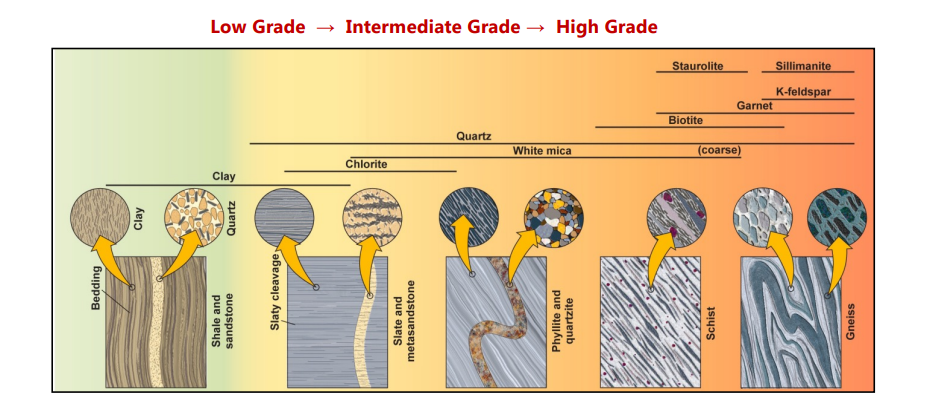
index minerals
form at certain temps and pressures
at a temp of 800C and a pressure of 6 km, what mineral is present?
sillimanite

thermal metamorphism
heat by plutonic intrustion
burial metamorphism
increases in P and T by burial in a basin
dynamic metamorphism
shearing in a fault zone
regional metamorphism
P and T alteration due to mountain building
produces the most metamorphic rock


hydrothermal metamorphism
alteration by hot water leaching
subduction metamorphism
high P low T alteration in subduction zones
shock metamorphism
extreme high P resulting from meteorite impact

shields
ancient high grade rocks
remanent of eroded mountain belts
why they are important
provide insight on physical and chemical changes deep within Earth
metamorphic minerals have economic value