Solubility and pH
 Call Kai
 Learn
 Practice Test
 Spaced Repetition
 Match
 Flashcards
 Knowt Play
1/15

There's no tags or description
Looks like no tags are added yet.
16 Terms
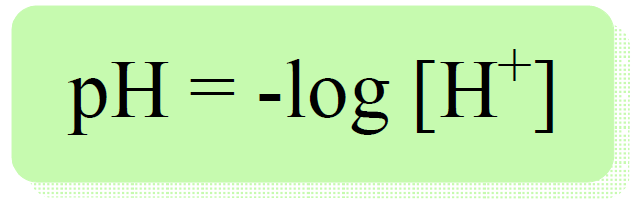
pH formula
pH = -Log [H+] or Log 1/[H+]
Strong acids and bases
Substances that completely dissociate in aqueous solution without forming equilibrium.
Weak acids
Substances that partially dissociate in water due to lower capacity to donate protons.
Weak bases
Substances that partially dissociate in water due to lower capacity to accept protons.
Bronsted-Lowry definition of acids
Acids are proton donors.
Bronsted-Lowry definition of bases
Bases are proton acceptors.
Acid dissociation constant (Ka)
The equilibrium constant of a weak acid in its ionised and unionised forms.

pKa definition
The negative logarithm of the acid dissociation constant (pKa = -log Ka).

Henderson-Hasselbalch equation for acids
pH = pKa + log([A-]/[HA])

Acidic drug ionisation and pH
Solubility and ionisation of acidic drugs increase above their pKa.
Basic drug ionisation and pH
Solubility and ionisation of basic drugs increase below their pKa.
Intrinsic solubility (So)
The solubility of an ionisable drug in its unionised form. Solubility of drugs greatly increases in its dissociated charged form.
Relationship between pKa and solubility

Log D vs Log P
Log D accounts for pH-dependent partitioning, whereas Log P does not.

Amphoteric drug
A drug that exhibits both acidic and basic properties.
pKa at 50% ionisation
The pKa is the pH at which a drug is 50% ionised and 50% unionised.