L46- blood volume
 Call Kai
 Learn
 Practice Test
 Spaced Repetition
 Match
 Flashcards
 Knowt Play
1/17

There's no tags or description
Looks like no tags are added yet.
18 Terms
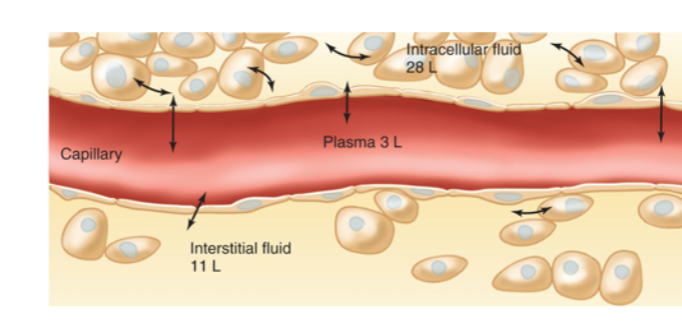
what are the two major fluid compartment
extracellular- outside cells (14l)
intracellular -inside cells ( 28l)
then the plasma (3l) and the interstitial fluid (11l)
describe how volumes in each compartment is maintained
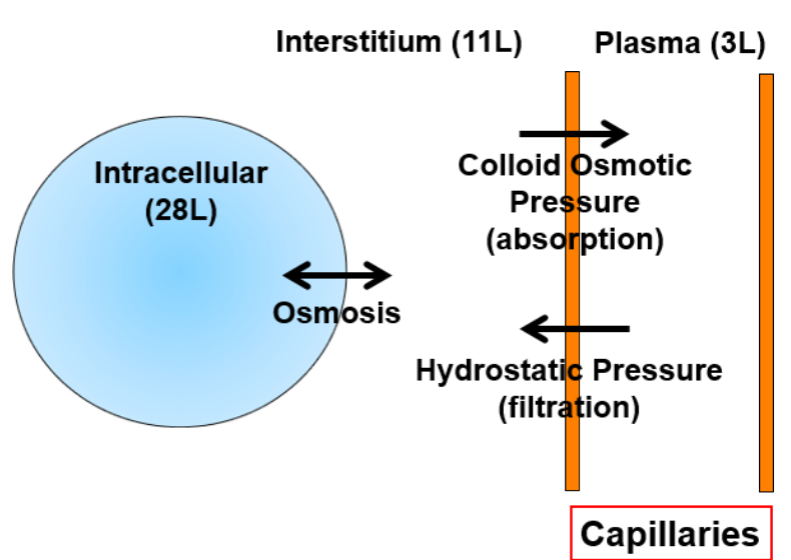
osmosis controls the volume of water inside and outside cells
the colloid osmotic pressure and the hydrostatic pressure maintains the volume of water in the interstitial fluid and the plasma ( these only work through the capillaries as its thin enough )
what can failure to maintain fluid compartment lead to
oedema- accumulation of excess fluid in the body
what is osmosis
its the net diffusion of water across a selectively permeable membrane from a region of high water concentration to a region of low water concentration
how is the total number of particles measured
in terms of osmoles
one osmole=1 mole ( 6.02X10²³ ) of solute in 1L
what is osmotic pressure
its the pressure required to prevent osmosis and its proportional o the number of osmotically active
what is a isotonic, hypertonic and hypotonic
isotonic- the solute concentration/ ions concentration inside and outside of the cell is equal
hypertonic- the solute concentration outside the cell in higher so water moves out and cells shrinks
hypotonic- the solute concentration inside cell is higher so water moves in so cell swells
how is colloid osmotic pressure created
the capillary membrane is semi-permeable like the plasma and allows ions, water oxygen, nutrients and waste
not proteins
the difference in protein concentration between the plasma and the interstitial fluid is what causes the osmotic pressure difference between the two
what is colloid osmotic pressure
its the pressure exerted by the higher levels of protein in the plasma compared to the interstitials fluid
the pressure draws water back into the plasma by osmosis
what is hydrostatic pressure
its the pressure that’s exerted by the blood upon the capillary walls ( blood pressure )
it drive blood from the plasma into the interstitial space
the pressure drops as blood moves through the capillaries
what is the equation for the capillary net filtration pressure

describe the bulk flow of fluid from plasma
at the start of the capillaries the hydrostatic pressure is highest and forcing liquid out
but at the venous end colloidal osmotic pressure is highest absorbing water into the capillaries
this causes a net loss of around 8l of liquid which needs to be removed otherwise it accumulates in the body
the lymphatic system removes it and takes it back into the blood
what are the two main functions of the lymphatic system
it drains fluid from the tissues and returning to the cardiovascular system
maintenance of the immune response
explain the lymphatic system role of drainage
8l of fluid passes to the interstitial fluid a day
the excess fluid passes into lymph capillaries through lymph nodes before passing back to the blood stream at the neck
the lymph nodes contain valves and fluid is forced along by action of muscles and breathing
it also collects fats from the liver and the intestines and deposits them into the veins
describe the lymphatic systems role in immunity
the lymph fluid contains white immune blood cells ( lymphocytes, macrophages, dendritic cells )
collects antigens ( proteins produced by pathogens )
antigens recognised by B-lymphocytes in lymph nodes lead to activation of immunity
b-cell proliferate to produce antibodies. lymph nodes also contain multiple other immune cells.
explain how heart failure leads to odema
during heart failure there’s excessive kidney retention of water in order to try and increases the blood pressure
this causes the blood volume to increases so the arterial pressure also increases
so there’s a net flow of liquid going out of the body on both ends- due to the increased hydrostatic pressure

what can happen if there’s malnourishment
there’s reduced plasma proteins and there’s loss of proteins in the blood
this causes a decrease in colloidal osmotic pressure so theres a net movemnt of fluid out of the capillary

describe what happens when the lymph nodes are blocked
the fluid it typically drains accumulates in the area of the lymph node
