How do Drugs Control the Brain
 Call Kai
 Learn
 Practice Test
 Spaced Repetition
 Match
 Flashcards
 Knowt Play
1/52

There's no tags or description
Looks like no tags are added yet.
53 Terms
What are GLUTAMATE RECEPTORS (GluRs)?
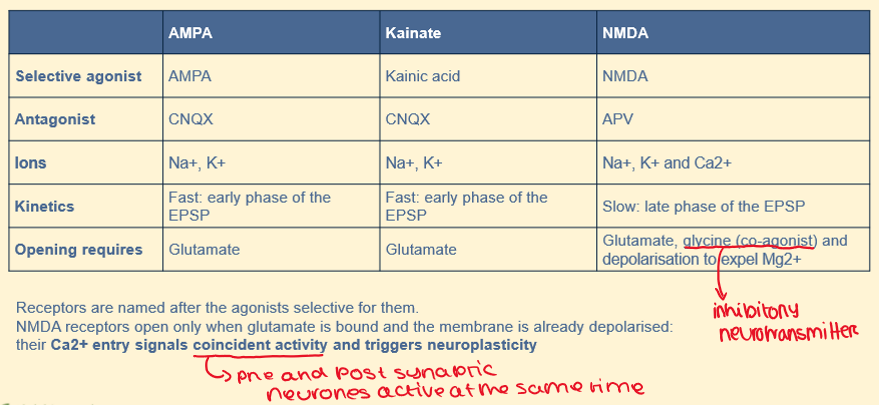
Based on their pharmacology, three types of ionotropic receptor have been described that respond to glutamate:
1)NMDA
2)AMPA
3)Kainate
Names based on the agonists selective for them
What are the DIFFERENCES between AMPA, KAINATE and NMDA?
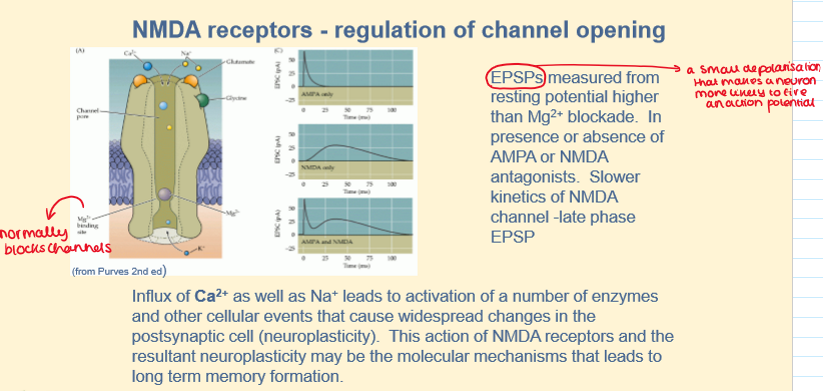
NMDA Receptors - Regulation of Channel Opening
NMDA Receptor Dysregulation - SCHIZOPHRENIA

NMDA Receptor Dysregulation - GLUTAMATE EXCITOTOXICITY

Main Neuronal Types - PROJECTION NEURONS

Main Neuronal Types - LOCAL INTERNEURONS

Inhibitory Control of Cortical Pyramidal Neurons
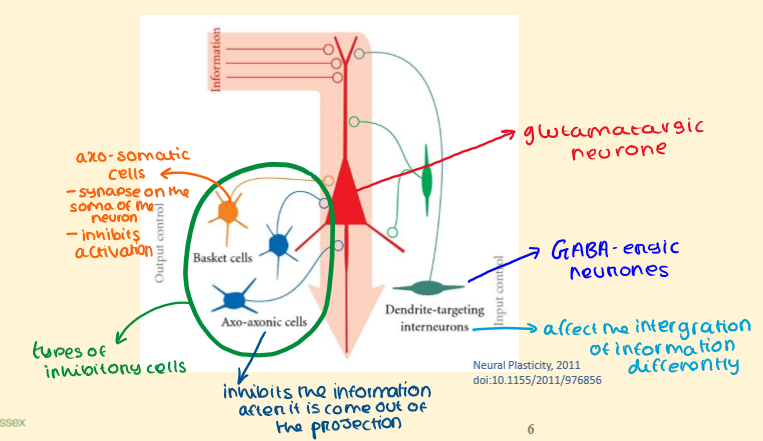
What is the GABAergic System?
1) Widespread distribution throughout the brain
2) Inhibitory interneurons - keep the excitation in check.
Why must Syanptic Inhibition be TIGHTLY REGULATED?
1) Synaptic inhibition must be tightly regulated in the brain
Too much GABA - loss of consciousness and coma
Too little GABA - leads to convulsions and seizures
2) Many epilepsy treatments act to enhance GABA transmission
Main Families of GABA Receptor - GABA(A)

Main Families of GABA Receptor - GABA(B)

GABA-A VS GABA-B

What are GABA-A Receptors?

GABA-A Receptor - Benzodiazepine Action

What is the EFFECTS of Benzodiazepine?
Effects of benzodiazepine are to:
1) Reduce anxiety
2) Cause sedation
3) Reduce convulsions
4) Relax muscles
5) Cause amnesia
Inverse agonists bind to benzodiazepine site and have opposite effects
1) Produce anxiety and predisposition to convulsions
What are the DRUGS acting on GABA-A Receptors?

Question 1

Question 2

What is the NEUROTRANSMITTER System?
1) Glutamate and GABA the main workhorse of the brain
2) Glutamate neurons - primary route of sensory and motor information and relay neurons between brain areas
3) GABA neurons - interneurons, maintain balance between excitation and inhibition
What is the DIFFUSE MODULATORY System?
The Diffuse Modulatory Systems
1) Specific populations of neurons that project diffusely and modulate the activity of Glutamate and GABA neurons in their target areas.
Dopaminergic (DA)
Serotonergic (5-HT)
Noradrenergic (NA/NE)
Adrenergic
Cholinergic (ACh)
Histaminergic
Patterns of Communication in the NS

What is the DOPAMINERGIC System?

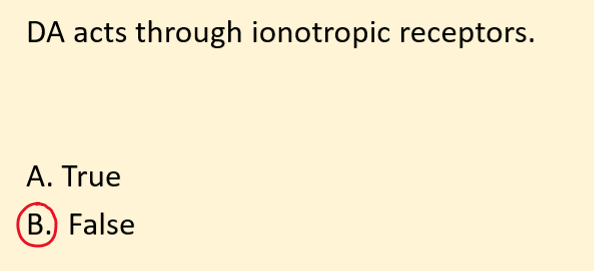
Dopamine Receptors - METABOTROPIC Receptors

The Dopaminergic System - NIGROSTRIATAL System
Nigrostriatal system – cell bodies in the substantia nigra project to the striatum (caudate nucleus and putamen)
Important part of the basal ganglia involved in movement.
Nigrostriatal System - Dysfunction
1) Parkinson’s disease
Destruction of DA projections from SN to basal ganglia
2) Huntington’s disease
Destruction of DA target neurons in striatum
Nigrostriatal System - DRUGS
L-DOPA, Monoamine oxidase (MAO) inhibitors, Dopamine receptor agonists -treatments for Parkinson’s Disease
The Dopaminergic System - MESOLIMBIC System

Mesolimbic System - Dysfunction
Addiction - most drugs of abuse lead to enhanced DA release in the Nacc, e.g. Cocaine and Amphetamine (psychomotor stimulants)
The Mesolimbic System - Immediate Effects of Dysfunction
Immediate Effects
1) Give the feeling of increased alertness and self confidence, a sense of exhilaration and euphoria and a decreased appetite.
2) Large doses can cause stereotypy and psychosis
3) Cause peripheral effects that mimic activation of the sympathetic division of the ANS, increased heart rate and blood pressure, dilation of pupils etc.
The Mesolimbic System - Long Term Effects of Dysfunction

The Dopaminergic System - MESOCORTICAL System
Mesocortical system – VTA projections to prefrontal cortex
Role in functions such as working memory and planning.
The Mesocortical System - DYSFUNCTION
Schizophrenia
The Mesocortical System Drugs - TYPICAL ANTIPSYCHOTICS
1) Typical antipsychotics (e.g. chlorpromazine and haloperidol)
- DA receptors antagonists (pre and postsynaptic)
- Increase DA turnover - lose autoreceptor inhibiton
- Blockade of postsynaptic receptors - upregulation
2) Antipsychotic effects - action in mesocortical system
3) Side effects - action on other dopaminergic systems
4) Extrapyramidal side effects (EPS) - tardive dyskinesia etc.
(chronic blockade causes system to become supersensitive)
The Mesocortical System Drugs - ATYPICAL ANTIPSYCHOTICS
1) Atypical antipsychotics (e.g. clozapine)
specific to receptor subtype
e.g. Clozapine - antagonist of D4 receptors (cortex only)
2) Reduce psychosis associated with schizophrenia
3) Antipsychotic effects without EPS
Question 3
What is the SEROTONERGIC System?
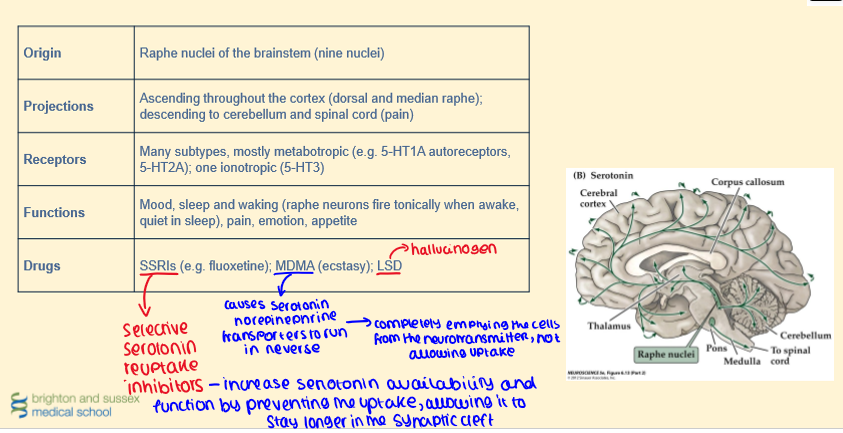
Drugs with General Effects on Serotonergic System - Selective Serotonin Reuptake Inhibitors
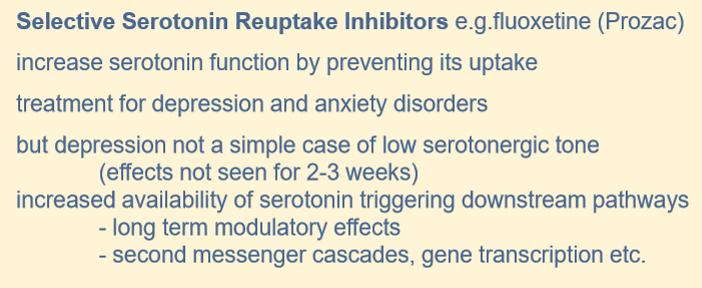
Drugs with General Effects on Serotonergic System - MDMA
Methylenedioxymethamphetamine (MDMA) - ecstasy
1) Causes serotonin (and norepinephrine) transporters to run in reverse
2) Increased release of serotonin and blocked reuptake
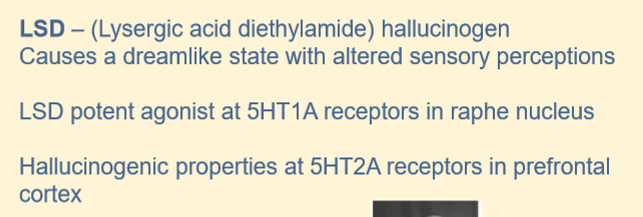
Drugs with Effects on Serotonergic Receptors
What is the NORADRENERGIC and ADRENERGIC System?

What is the CHOLINERGIC System?

Disorders of the Cholinergic System - Peripheral -MYASTHENIA GRAVIS
Peripheral
Myasthenia gravis
Autoimmune disease - destroys cholinergic receptors in the muscle - muscle weakness and eventual loss of muscle activity
Disorders of the Cholinergic System - Brain - ALZHEIMER’S DISEASE
Brain
Alzheimer’s disease
Loss of cholinergic neurons in the basal ganglia - possibly underlies deficits in memory associated with the disease.
Disorders of the Cholinergic System - Brain - ADDICTION
Addiction: nicotine addiction
Disorders of the Cholinergic System - BRAIN - EPILEPSY
Epilepsy
Autosomal dominant nocturnal frontal lobe epilepsy (ADNFLE) associated with mutations in nicotinic receptor genes.
Disorders of the Cholinergic System - OTHER
Other psychiatric disorders, such as schizophrenia, substance abuse, personality disorders
Comorbidity with smoking
What are ACETYLCHOLINESTERASE INHIBITORS?

Muscarinic Receptors - Metabotropic

Nicotine Receptors - Ionotropic

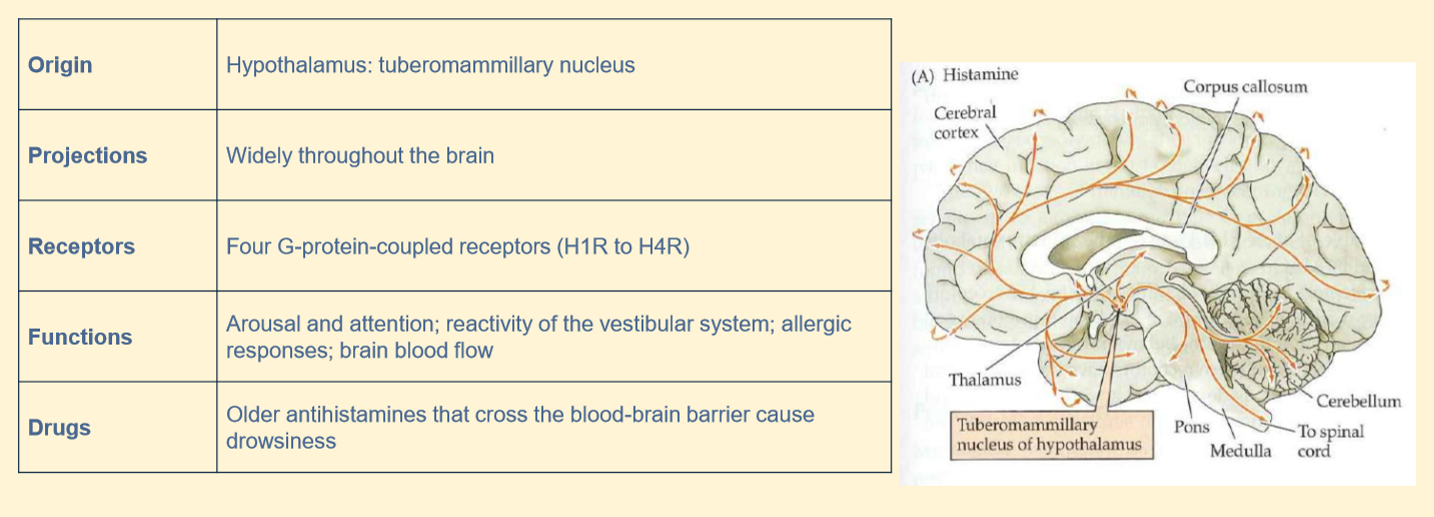
What is the HISTAMINERGIC System?
Summary
1) Modulation of brain activity and function by Glu, GABA and the diffuse neurotransmitter systems
2) Many receptors for each neurotransmitter
3) Diverse receptor properties and differential distribution throughout the brain allows single neurotransmitters to modulate multiple behaviours
Question 4
